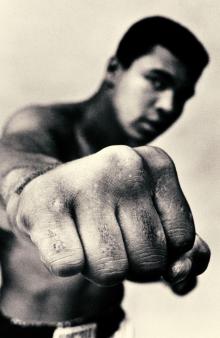
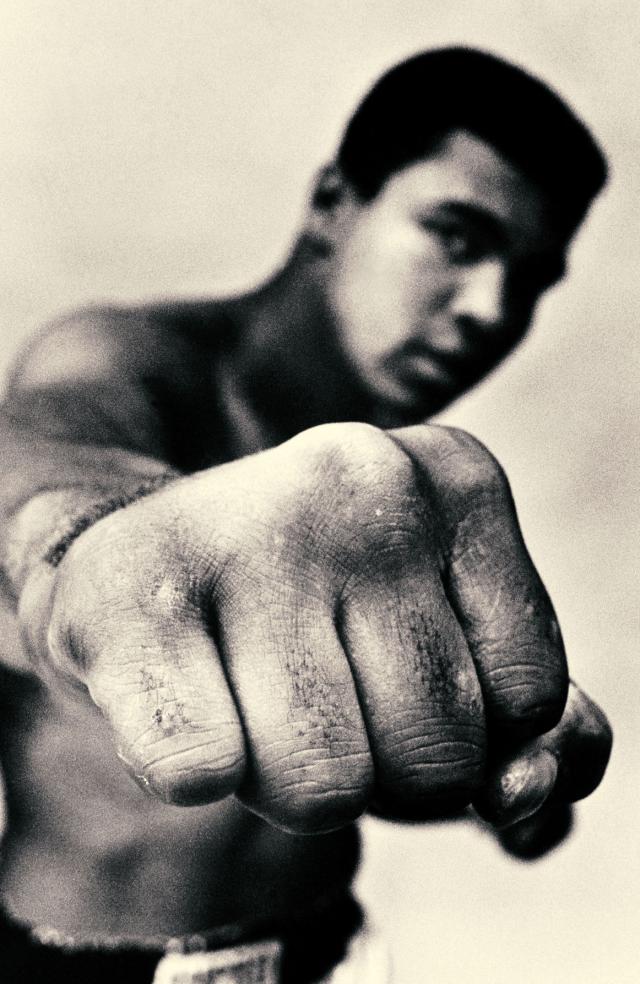
Ali, p.65
Ali,
p.65


“a great evil”: “The Day Henry Clay Refused to Compromise,” Smithsonian.com, December 6, 2012, http://www.smithsonianmag.com/history/the-day-henry-clay-refused-to-compromise-153589853/.
continued to own scores: U.S. Census.
that slave was John Henry Clay: Keith Winstead, interview by author, June 16, 2016.
“For it is through our names”: Ralph Ellison, The Collected Essays of Ralph Ellison, ed. John F. Callahan (New York: Modern Library, 1995), 192.
“John asks me to give his Xmas compliments”: Henry Clay Jr. to Henry Clay, January 1, 1847, Henry Clay Memorial Foundation Papers, University of Kentucky Special Collections, Lexington.
Herman Heaton Clay quit school: 1940 U.S. Census, www.ancestry.com.
handsome man, strong and tall: Coretta Bather, interview by author, March 28, 2014.
had a baby boy: “Slave Inhabitants in District No. 2,” Fayett County, Kentucky, 1850,U.S. Census, www.ancestry.com.
while playing craps in an alley: Trial transcript, November 12, 1900, Commonwealth v. Herman Clay.
“was going to get hurt”: Ibid.
an illiterate day laborer: 1900 U.S. Census, www.ancestry.com.
“I had this knife”: Trial transcript, November 12, 1900, Commonwealth v. Herman Clay.
“Death was instantaneous”: “Shot through the Heart.”
he and Priscilla divorced: “NINE DIVORCES GRANTED,” Louisville Courier-Journal, November 10, 1901.
After six years in the state penitentiary: “Penitentiary Labor,” Louisville Courier-Journal, May 2, 1906.
December 30, 1909: Kentucky Marriage Records, www.ancestry.com.
killing his wife with a razor: Death certificate, Kentucky Death Records, www.ancestry.com.
“For those who have respect”: Remnick, King of the World, 83.
2. THE LOUDEST CHILD
“Dark Gable”: Keith Winstead, interview by author, June 17, 2016.
luxurious vibrato of his singing voice: “Black Is Best: Mr. and Mrs. Cassius Clay, Sr., Interview,” by Jack Olsen, n.d., sound recording, Jack Olsen Papers, Special Collections and University Archives, University of Oregon Libraries, Eugene.
KING KARL’S THREE ROOMS: Ibid.
twenty-five dollars and a free chicken dinner: Dave Kindred, Sound and Fury: Two Powerful Lives, One Fateful Friendship (New York: Free Press, 2007), 30.
A black man was better off: Rahaman Ali, interview by author, November 10, 2014.
“When Cassius is working on a sign”: “Muhammad Ali’s Father, Cassius M. Clay Sr., Dies,” Louisville Courier-Journal, February 10, 1990.
gin was his usual: Olsen, Black Is Best, 49.
“He couldn’t fight a lick”: Ibid.
“You’re a beautiful lady!”: Rahaman Ali, interview by author, November 10, 2014.
June 25 in St. Louis: Marriage certificate, Cassius Clay to Odessa Grady, June 25, 1941, St. Louis, Missouri, City Recorder of Deeds, St. Louis.
six-pound, seven-ounce baby: Muhammad Ali and Richard Durham, The Greatest: My Own Story (New York: Random House, 1975), 33.
small rectangular mark: Kindred, Sound and Fury, 30.
“most beautiful name”: Olsen, Black Is Best, 42.
West Oak Street: Birth certificate for Cassius Marcellus Clay Jr., January 17, 1942, Kentucky Cabinet for Health and Family Services, Department for Public Health, Office of Vital Statistics, Frankfort.
six or seven dollars a month: Population Schedule, 1940 U.S. Census, www.ancestry.com.
“He cried so much”: Ali and Durham, The Greatest, 33.
wallpaper white with red roses: Rahaman Ali, interview by author, November 10, 2014.
Cassius had the bed by the window: Rahaman Ali, interview by author, October 19, 2016.
seventy-two inches away: measured by author, October 19, 2016.
their clothes came from Goodwill: Ali and Durham, The Greatest, 39.
smelled of paint: Coretta Bather, interview by author, March 28, 2014.
the aroma of Odessa’s fine cooking: Rahaman Ali, interview by author, November 10, 2014.
“Of course, we knew everyone”: Georgia Powers, interview by author, August 6, 2014.
“Our childhood was not difficult”: Alice Kean Houston, interview by author, April 18, 2014.
“Cassius Jr’s life to me”: Odessa Clay, untitled Cassius Clay biography, n.d., Jack Olsen Papers.
“Woody Baby”: Rahaman Ali, interview by author, November 10, 2014.
ate that on the way to school: Olsen, Black Is Best, 43.
“We were like twins”: Rahaman Ali, interview by author, October 19, 2016.
never letting his younger brother win: Rahaman Ali, interview by author, November 10, 2014.
“those kids had some large heads”: Mary Turner, interview by Jack Olsen, transcript, n.d., Jack Olsen Papers.
couldn’t swim at all: Larry Kolb, interview by author, January 2, 2017.
“That Gee would run around”: Owen Sitgraves, interview by author, April 23, 2015.
his father’s plum tree: “Black Is Best: Mr. and Mrs. Cassius Clay, Sr., Interview.”
the police car: Owen Sitgraves, interview by author, April 23, 2015.
“I would make ’em take naps”: Olsen, Black Is Best, 45.
“Cassius Jr. would always go in first”: Ibid.
“a more polite racism”: Tom Owen, interview by author, November 11, 2014.
granted the right to vote: Tracy E. K’Myer, Civil Rights in the Gateway to the South: Louisville, Kentucky, 1945–1980 (Lexington: University Press of Kentucky, 2009), 10.
“where do the colored people work?”: Ali and Durham, The Greatest, 34.
annual median income: U.S. Bureau of the Census, United States Census of Population, 1950, vol. 2, Table 87 (Washington, DC: Government Printing Office, 1952), www.census.gov.
he was permitted to play: George C. Wright, Life behind a Veil: Blacks in Louisville, Kentucky, 1865–1930 (Baton Rouge: Louisiana State University Press, 1985), 276.
“We’d stand by the fence”: Rahaman Ali, interview by author, November 10, 2014.
colored people had to suffer so: Ali and Durham, The Greatest, 34.
Herman boasted: Ibid., 37.
“If we hadn’t stopped to drink”: W. Ralph Eubanks, “A Martyr for Civil Rights,” Wall Street Journal, November 6, 2015.
“Why can’t I be rich?”: Nick Thimmesch, “The Dream,” Time, March 22, 1963, 78.
3. THE BICYCLE
twelve-year-old Cassius pedaled: Rahaman Ali, interview by author, August 8, 2014.
Visitors registered to win: Advertisement, Louisville Defender, October 7, 1954.
popcorn and candy: Ali and Durham, The Greatest, 45.
“what my father would do”: Ibid.
Cassius and Rudy were supposed to share: Rahaman Ali, interview by author, August 30, 2014.
“I almost forgot about the bike”: Ali and Durham, The Greatest, 45.
“hotter’n a firecracker”: Joe Martin, interview by Jack Olsen, Jack Olsen typed notes, n.d., Jack Olsen Papers.
emptying coins from parking meters: Ibid.
“Do you know how to fight?”: Ibid.
“Why don’t you come down here”: Ibid.
parents bought him a motorized scooter: “Black Is Best: Mr. and Mrs. Cassius Clay, Sr., Interview.”
It was all the prompting: Olsen, Black Is Best, 46.
“those boys really went at it”: Ibid., 52.
“He was just ordinary”: “ ‘Who Made Me — Is Me!’ ” Sports Illustrated, September 25, 1961, 19.
good at shooting marbles: Rahaman Ali, interview by author, August 8, 2014.
“I wanted to be a big celebrity”: Muhammad Ali television interview, Good Morning America, ABC, January 13, 1977.
“One needed a handle”: James Baldwin, The Fire Next Time (New York: Vintage International, 1993), 21.
“racing the bus”: Ali and Durham, The Greatest, 38–39.
When the bus stopped: Owen Sitgraves, interview by author, March 30, 2016.
“Sometimes he’d hop on”: Ibid.
who drank almost every day: Vic Bender, interview by author, October 1, 2015.
looking in the mirror at his muscles: Rahaman Ali, interview by author, August 8, 2014.
“It was almost impossible”: Thomas Hauser, with Muhammad Ali, Muhammad Ali: His Life and Times (New York: Simon and Schuster, 1991), 19.
“It’s safe to say”: Claude Lewis, Cassius Clay: A No-Holds-Barred Biography of Boxing’s Most Controversial Champion (New York: Macfadden-Bartell, 1965), 23.
“Any fighter who’d get”: Geoffrey C. Ward, Unforgivable Blackness (New York: Knopf, 2004), 17.
“We are in the midst”: Ibid., 14.
“I grew to love the Jack Johnson”: Remnick, King of the World, 224.
4. “EVERY DAY WAS HEAVEN”
cut him with a knife: Charles Kalbfleisch, interview by Jack Olsen, n.d., Jack Olsen Papers.
“They’ll kill each other”: Ibid.
“He used to go with my aunt”: Howard Breckenridge, interview by author, November 20, 2014.
For three days after suffering: Kindred, Sound and Fury, 36.
“strapped”: Story notes, March 13, 1963, Time magazine article, Nick Thimmesch Papers, University of Iowa Libraries, Iowa City.
two children out of wedlock: Rahaman Ali, interview by author, August 8, 2014.
“Every day was heaven”: Ibid.
“I just know I had a nice time as a kid”: Cottrell, Muhammad Ali, Who Once Was Cassius Clay, 11.
school’s best athlete in 1959: Centralian, 1959, Jefferson County Public School Archives, Louisville.
“About the onliest other sport”: “Playboy Interview: Muhammad Ali,” Playboy, November 1975.
shadowboxed in the halls: Victor Bender, interview by author, October 19, 2016.
“National Golden Gloves Champion”: Olsen, Black Is Best, 64.
“are you listening”: Lewis, Cassius Clay, 19.
27% of whom were black: Omer Carmichael and Weldon James, The Louisville Story (New York: Simon and Schuster, 1957), 14.
“White and Negro children”: “Louisville Quiet as Its Schools End Segregation.” New York Times, September 11, 1956.
district agreed to choose: Ibid.
170 school boards: C. Vann Woodward, The Strange Career of Jim Crow (New York: Oxford University Press, 1966), 154.
The building Cassius attended: Thelma Cayne Tilford-Weathers, A History of Louisville Central High School, 1882–1982 (Louisville: N.p., 1982), 18.
classes in dry-cleaning: Ibid., 19.
“dumb as a box of rocks”: Marjorie Mimmes, interview by author, August 8, 2014.
“Not the sharpest tack”: Owen Sitgraves, interview by author, April 23, 2015.
“I sat next to the skinny kid”: “Ali Delights Pupils Here at a Tribute to Dr. King,” New York Times, January 13, 1973.
he earned a sixty-five: Hauser, with Ali, Muhammad Ali, 22.
“very dyslexic”: Lonnie Ali, interview by author, January 31, 2016.
“made me feel like something different”: Olsen, Black Is Best, 64.
pretended he was a girl: Marjorie Mimmes, interview by author, August 30, 2014.
money in a change purse: Nack, My Turf, 178.
“I don’t know anybody”: Vic Bender, interview by author, October 19, 2016.
Scientists believe dyslexia: “The Advantage of Dyslexia,” Scientific American, August 19, 2014, www.scientificamerican.com.
Baker was a legend: Howard Breckinridge, interview by author, November 20, 2014.
“He was inhuman”: Ibid.
outweighed Cassius: “The Legend That Became Muhammad Ali,” Louisville Courier-Journal, January 28, 2011.
“You’re crazy if you get in the ring with him”: Ibid.
“This ain’t fair!”: Ali and Durham, The Greatest, 43.
“baddest dude I know”: Ibid.
167 amateur bouts: Ibid., 51.
82–8, with twenty-five knockouts: Bob Yalen, interview by author, August 6, 2016.
four-month respite imposed: Cottrell, Muhammad Ali, Who Once Was Cassius Clay,19.
“Rudy had more potential”: Vic Bender, interview by author, June 9, 2014.
eat meatloaf: Rahaman Ali, interview by author, August 30, 2014.
“I know how far I can go”: Ali and Durham, The Greatest, 51.
two trays to carry: Remnick, King of the World, 93.
“I started boxing because”: José Torres, Sting Like a Bee (New York: Abelard-Schuman, 1971), 83.
once found him sleeping: Cottrell, Muhammad Ali, Who Once Was Cassius Clay, 21.
“the black boys couldn’t go”: Remnick, King of the World, 96.
“I’m taller than you”: Nack, My Turf, 181.
Cassius told Dundee: Angelo Dundee and Mike Winters, I Only Talk Winning (Worthing, UK: Littlehampton, 1985), 17.
Turley was short: “Legendary Cowpoke,” St. Petersburg Times, October 1, 1980.
Turley had bloodied: “T. J. Jones of Chinook Reaches Quarterfinals in Golden Gloves,” Billings Gazette, February 26, 1958.
Turley and Cassius traded punches: “Rocky Erickson: Boxer Francis Turley,” Rocky Erickson: Montana Sports Stories, vol. 1, www.youtube.com.
stepped out of the St. Clair Hotel: Ali and Durham, The Greatest, 90.
“Well, that’s some of everything”: Ibid., 93.
“getting shellacked pretty good”: Olsen, Black Is Best, 53.
number of professional boxers: Jeffrey T. Sammons, Beyond the Ring (Urbana: University of Illinois Press, 1990), 149.
rivaled I Love Lucy in the ratings: Ibid., 149.
“New York won an unprecedented”: “Louisville Youth Steal Spotlight in Golden Gloves,” Lawton Constitution, March 26, 1959.
5. THE PROPHET
on his feet, shadowboxing: Lewis, Cassius Clay, 25.
frightened before every one of his fights: Larry Kolb, interview by author, December 7, 2016.
“We trained together”: Hauser, with Ali, Muhammad Ali, 25.
“almost everybody is against discrimination”: Gunnar Myrdal, An American Dilemma (New Brunswick, NJ: Transaction Publishers, 2009), 2:1010.
Before he changed his name: C. Eric Lincoln, The Black Muslims in America (Trenton, NJ: Africa World Press, 1994), 12.
Fard began holding meetings: Ibid., 11.
This philosophy, though unusual: Ibid., 47–48.
He built a base: Ibid., 16.
“an especially anti-American and violent cult”: FBI report, June 28, 1955, FBI Vault.
“Without the failings of Western society”: Louis Lomax, When the Word Is Given (Chicago: Signet, 1963), 10–11.
“Why are we called Negroes”: Recorded by Louis X, www.youtube.com.
“brainwashed, hypnotized”: Olsen, Black Is Best, 134.
“Cassius really knew how to fight”: Ibid., 53.
boxing almost constantly: Cottrell, Muhammad Ali, Who Once Was Cassius Clay,20.
“My mind was not as quick as his”: Rahaman Ali, interview by author, August 30, 2014.
Cassius never wore a watch: “A Split Image of Cassius Clay,” Louisville Courier-Journal, November 25, 1962.
made his brother a promise: Rahaman Ali, interview by author, August 30, 2014.
he competed as a heavyweight: “Jones, Clay Top Gloves Final Night,” Chicago Defender, March 9, 1960.
“WATCH CLAY in the future”: Memo, n.d., Hank Kaplan Boxing Archive, Archives and Special Collections, Brooklyn College Library, Brooklyn, New York.
“Let’s forget the Olympics”: Cottrell, Muhammad Ali, Who Once Was Cassius Clay,22.
6. “I’M JUST YOUNG AND DON’T GIVE A DAMN”
“I’m just young”: “Clay Making Great Mileage in Publicity and Contacts,” Louisville Times, February 28, 1961.
Some boys weren’t interested: Jamillah Muhammad (formerly Areatha Swint), interview by author, December 9, 2014.
the same phobia: Olsen, Black Is Best, 54.
“flips and things”: Ibid., 54–55.
“The decision by Clay”: “Should an Athlete Be Forced to Fly? Clay May Miss Olympics,” Louisville Times, May 2, 1960.
“But then he went to an army supply”: “The Legend That Became Muhammad Ali.”
flight to San Francisco hit turbulence: Cottrell, Muhammad Ali, Who Once Was Cassius Clay, 25.
His previous opponent had: “10 Finals in Olympic Ring Show Tonight,” Daily Independent Sun (San Rafael, CA), May 20, 1960.
“He was the most obnoxious guy”: Tommy Gallagher, interview by author, July 17, 2015.
“I hate to say it”: Ibid.
Hudson and Clay barked: “Black History Month: The Army Boxer Who Knocked Down Muhammad Ali (1960),” The CBZ Newswire, http://www.cyberboxingzone.com/blog/?p=19447.
to lend him money for a train: Joe Martin, interview by Jack Olsen, Jack Olsen typed notes, n.d., Jack Olsen Papers.
“He was not a good student”: “The Legend That Became Muhammad Ali.”
7. AMERICA’S HERO
“Ain’t he gonna get in trouble”: Remnick, King of the World, 101.
What struck newcomers: Baldwin, The Fire Next Time, 48.
“I could’ve converted him to Judaism”: Dick Schaap, interview, ESPN Classic, transcript of broadcast interview, August 25, 2000.
“with a pride and serenity”: Baldwin, The Fire Next Time, 51.
no bragging for once: Dick Schaap, interview, ESPN Classic.
“His usual haughty, disdainful self”: Ibid.
“I was so hurt”: “Playboy Interview: Muhammad Ali,” Playboy, November 1975.
Cassius Marcellus Clay VII: “Clay, McClure Most Colorful Pugilists,” Laredo Times, September 4, 1960.
Clay noticed: “Patterson Clay’s Goal,” Louisville Times, September 6, 1960.
“Be seeing you in about”: Cottrell, Muhammad Ali, Who Once Was Cassius Clay, 27.
“Wouldn’t it be wonderful”: “The Press Box: Have to Make Good,” Louisville Times, August 24, 1960.
Twelve percent of the men: “U.S. Negroes Play Big Role at Olympics,” Winnipeg Free Press, August 30, 1960.
“Is there a crisis for Negroes”: Ibid.
“If there is a Rome winner”: “U.S. Boxers Unimpressive,” El Paso Herald Post, August 18, 1960.