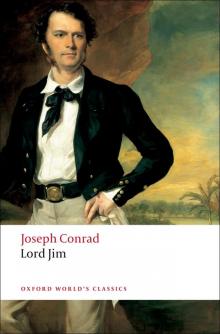
Lord jim, p.45
Lord Jim,
p.45


brigantine: two-masted ship with a brig-rigged foremast and a fore-and-aft (lengthwise) rigged mainmast
brig-rigged: with rectangular sails set across the ship
bull's-eye lamp: lantern fitted with a hemispherical lens
bulwark: raised woodwork running along a ship's sides above the level of the deck
caboose: deckhouse used for preparing meals
canting the stem: pushing the forward end of a vessel sideways
capstan: rotating cylinder used as a pulley or winch to position heavy objects
cat's paws: light breezes or ripples of water caused by them
catting the anchor: raising the anchor to the cathead (the sturdy timber or crane projecting over a ship's bow) to clear the anchor from the side
chart-room: the navigating officer's domain, with nautical tables, charts and instruments to plot the ship's course and measure distances
chocks: cradles in which a ship's boats are secured on deck
clear the falls: operate the tackle for lowering or raising a boat
collision bulkhead: a vertical wall separating a vessel's compartments and intended to contain damage from a collision
companion: (a) covering or skylight over the entrance to a vessel's stairways; (b) ladder or staircase connecting two decks
compound engine: engine with two cylinders and using steam twice through a surface-condenser, the steam used once in high-pressure cylinders and then in low-pressure ones
corvette: flush-decked warship with one tier of guns
counter: curved part of a ship's stern extending from the overhang to the water-line
coxswain: (pronounced ‘cocks'un’) steersman of a rowing-boat or the senior petty officer in a small ship
cranky: said of a ship that is clumsy to handle and liable to tilting over
cuddy: in a larger vessel, the saloon under the poop; in a small vessel, a small cabin
cut the gripes: to cut the fastenings holding the lifeboats in their cradles
davits: small cranes, usually paired, for suspending or lowering a lifeboat
deck-winch: horizontal revolving barrel used to lift up cargo
donkey-man: person responsible for operating an auxiliary steamengine (the donkey-engine)
dug-out: canoe made from a hollowed-out tree-trunk
eight bells: 4 a.m., the conclusion of the watch begun at midnight, the bell being struck eight times (once for each half hour)
flying moor: manœuvre for anchoring while making headway, first by dropping one anchor, and then by dropping a second
forefoot: point where a ship's stem meets the foremost end of her keel
forehold: storage area at the front of a ship
forepeak: compartment in a ship's forward section near the bow
fore-top: platform at the head of the ship's foremast
fore-topsail: (pronounced ‘fourtoppsle’) the second sail set on a ship's foremast
fore-'tween-deck: space between two decks, particularly towards the ship's front
gig: ship's boat, either for sail or oars, normally reserved for the captain's use
gunwale: (pronounced ‘gunnel’) the rail or topmost edge of the side of a boat
harbour office: the government office in port responsible for all shipping matters, including shipping regulations
hatchway: opening in the deck for lowering cargo into the hold, and forming a passage from one deck to another
hawser: cable or rope used in towing
hooker: (sailor slang) a ship overly long in service and in poor condition
Indian Marine: the Indian Navy, formally from 1877 Her Majesty's Indian Marine
jib-sheet: rope operating a ship's jib-sail (a triangular sail set in front of the foremast)
Kalashee watch: watch assigned to a small group rather than to the entire crew in rotation (from Malay kelasi: a sailor)
keel: lowest and longitudinal timber of a wooden ship, supporting the whole frame, or lowest continuous line of plates of a steel or iron ship
lanyard: line or short rope used for securing or attaching
lascars: seamen of East Indian origin (Urdu)
leeward: (pronounced ‘loo'ard’) (a) direction of the ship in relation to the wind, down wind as opposed to up wind; (b) the sheltered side of the ship that faces away from the wind
mail-boat: ship carrying both mail and passengers
main-boom: spar holding the base of a fore-and-aft (lengthwise) mainsail
main gaff: spar on the after-side of the mainmast (the gaff) that supports the head of a sail
mainsail: lowest sail on a ship's main mast
mast-head: highest part of a vessel's mast
middle watch: spell of duty between 12 a.m. and 4 a.m.
mizzen-mast: sailing ship's third, aftermost, mast
mud pilot: pilot responsible for guiding ships up-river
night-glasses: high-powered binoculars adapted for night use
out reefs: to expose all of a ship's sails to the wind in order to put on speed
outward bound: in context, a ship originating in England and going to the Far East or Australia
patent log: mechanical device for measuring the distance covered and marking each mile by the ringing of a bell
poop: raised deck at the stern, which in larger ships contains accommodation for the master and officers
port-side: when looking forward, a ship's left side
prau: long, narrow, swift vessel in various sizes and equipment used in the Malay Archipelago
pulled stroke in the first cutter: to be the principal oarsman in a small boat fitted for rowing and sailing
quartermasters: petty officers responsible for the ship's helm, binnacle and signals
Red Rag: familiar or affectionate name for the Red Ensign, from 1864 the ensign of the British Merchant Service
ridge-poles: poles used to secure a protective covering or an awning
riding light: a special light displayed by a ship when she is lying or ‘riding’ at anchor
roadstead: sheltered expanse of water near shore where ships may ride safely at anchor
running gear unrove: with a ship's ropes, usually run through pulleys, removed from their stored position
Sailors’ Home: institution for sailors ashore providing lodgings and meals at a modest fee
screw-pile lighthouse: lighthouse built upon foundation piles with upward-projecting screws
shakings: odds and ends made up of, for instance, old rope, sacking and canvas
ship before the mast: to be employed as an ordinary seaman not as an officer
spar: stout wooden pole as is used for a mast, gaff or boom
stanchion: upright bar or post serving as a support
starboard: when looking forward, the right side of a vessel
stem: the curved upright timber at a ship's bow, into which the bow's planks are joined
stem-head: top end of a vessel's prow or stem
stern: the rear of a vessel
stern… low: with the rear of the ship pushed upward as her head moves down
stern-port: opening at a ship's rear
stern-sheets: area in a boat between the stern and the nearest rowing-bench
stoke-hold: compartment housing the boilers, where the furnaces are stoked
submarine cables: telegraph lines placed on the seabed and linking major ports
taffrail: a ship's aftermost rail, following the curve of the stern
thole-pins: wooden pins holding an oar in place, affixed to a boat's gunwale
thwart: a plank in a boat extending crosswise for strengthening and used for seating
tiller: horizontal bar fitted to the head of the ship's rudder for steering
top-gallant yards: spars that cross the top-gallant mast horizontally and from which its sail is suspended
training-ship: a shipboard school providing training in sailing and seamanship
Union down: signal of distress, the Red Ensign, which features a Union Jack in the corner, being flown upside down
watch: (a) any of the four-hour periods beginning at midnight and again at noon during which part of the ship's crew are on duty; (b) the officers and crew on duty during a specified watch
water-breaker: cask or small barrel for storing drinking water
water-logged: state of a ship become heavy and inactive at sea, from the quantity of water leaked into her
wheel-chain: chain used to connect the steering-wheel to the tiller
windlass: rotating cylinder for lowering or raising an anchor
wind-sail: canvas tube or funnel conveying air from the upper deck to lower compartments
without steerage-way: still; lacking the minimum motion that would permit steering
Glossary of Foreign Words and Phrases
This glossary defines all foreign words used in the novel. Present-day Malay spellings are indicated and follow the Kamus Besar Bahasa Indonesia (Jakarta: Ministry of Education, 1988; 2nd edition, 1989).
absit omen: (Latin) May the omens be favourable
ach: (German) oh
ach so: (German) I see
ah ça! par exemple: (French) What a thing, indeed!
allez: (French) come on
bien entendu: (French) of course
bleibt ganz ruhig: (German) keep quite still
campong: (Malay, now kampong) hamlet or small village comprising clusters of houses and gardens
cassis à l'eau: (French) water mixed with slightly fermented blackcurrant juice taken as a cordial
c'est bien ça: (French) yes, quite right
Dieu merci: (French) thank God
Donnerwetter: (German) by thunder; literally, ‘thunder weather’
eh bien: (French) oh, well
enfin: (French) well
es ist ein' Idee: (German) that's a thought
ewig: (German) forever
Ewigkeit: (German) ‘eternity’ or ‘the everlasting’
gelungen: (German) successfully achieved; finished
gewiss: (German) of course
gharry: (Hindi; later Anglo-Indian) small box-like horse- or pony-drawn carriage for hire
gharry-wallah: (Hindi; later Anglo-Indian) a wallah is someone performing a task (here driving a gharry)
Gott im Himmel: (German) good heavens (literally, ‘God in heaven’)
in articulo mortis: (Latin) at the point of death
Inchi: (Malay, now encik) roughly equivalent to ‘Mr’
ja! ja!: (German) well, well
kris: (Malay: keris) dagger, sometimes of serpentine shape and ornamented
marins de l'État: (French) naval personnel
mein Gott: (German) my God
mon Dieu: (French) good God
na: (German) and so
nakhoda: (Malay from Persian) ‘master’ or ‘captain’; a shipowner or his representative in a ship and, by extension, a merchant
naturellement: (French) of course
nicht wahr: (German) isn't that so
pangeran: (Malay) prince
panglima: (Malay) general or commander
parbleu: (French) by Jove
que diable: (French) what the devil
rajahs: (Malay from Hindi) local rulers or ‘kings’
sarong: (Malay) piece of clothing made of a single piece of cloth tied at the waist and covering to above the ankle
schön: (German) fine
schwein: (German) ‘pig’ or ‘swine’
sehen Sie: (German) you see
serangs: (Malay) boatswains
serviteur: (French) your servant
solah topi: (Hindi, later colonial English) pith helmet
soutane: (French) cassock: the full-length black garment formerly worn by Roman Catholic priests as daily apparel
table d'hôte: (French) fixed bill of fare or a public dining-room in a hotel
tunku: (Malay) title of respect indicating noble rank; roughly equivalent to ‘lord’
usque ad finem: (Latin) until the very last
verdomde: (Dutch) ‘cursed’ or ‘damned’
verfluchte: Damned, or similar, from German verfluchen, to curse
was: (German) what?
wie: (German) how?
Joseph Conrad, Lord Jim
(Series: # )