Best of friends, p.13
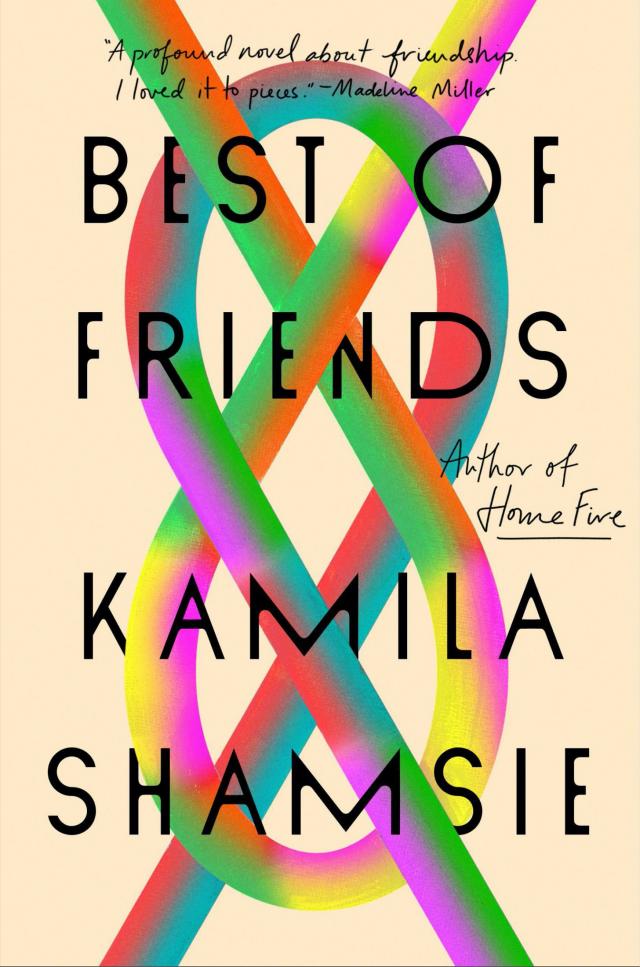
Best of Friends,
p.13


“I’m expressing an entirely professional concern about an unprecedented assault on our democratic way of life,” she says. I ask how clear the boundaries between Zahra Ali’s personal and professional concerns are, and she says, “Clear to me,” with a tight smile that tells me nothing will be achieved by this line of questioning.
If she does take the government personally, that may be a two-way street. Earlier this week, CCL won a landmark judgment in the Court of Appeal against the police’s use of facial recognition cameras. The Home Secretary responded by accusing not CCL but Zahra Ali directly of imperiling Britain’s security and siding with criminals. Westminster insiders claim the government sees Ali as the real Leader of the Opposition, having seen off the parliamentary opposition with a resounding victory in last month’s elections. Does she ever consider a more direct political role? She looks horrified at the idea. “I’ve never met a party line I wanted to toe,” she says, and I believe her.
One final question, and this is the one that yields the most surprising answer. Why didn’t she want to leave London for New York?
“Love,” she says, simply. “I love it here. I even love the weather.” And with that, she’s off to make a meal of the next MP thrown in her path, or perhaps to rub elbows with Emma Watson and George Clooney.
yahoo! finance
Tech Capital News
March 23
Top venture capitalist Maryam Khan talks her career, women in tech, and turning failure into success
[VIDEO LINK]
Maryam Khan is one of the leading figures in the UK tech scene. She is a founding partner at Venture Further, a leading early-stage technology and internet VC firm in London, and was ranked #13 in the Wired UK Tech 100 list in 2017–18. Her wide range of investments includes the photo-and-video-sharing app Imij, the board of which she chairs. Speaking to TCN’s Maha Phillips, Khan discussed her career and the role of failure in her life. She also spoke optimistically of the new UK government’s investment in tech.
KHAN ON REIMAGINING SUCCESS
Khan hails from a leather-goods dynasty in Karachi and grew up assuming she would inherit the family business. But when she was fifteen her grandfather died and her parents chose to sell the company and move the family to the UK. “Politically, Pakistan didn’t feel stable and they decided we would be better off elsewhere. It was a blow to have to reimagine my future but, fortunately, I was already fascinated by the world of tech thanks to the Apple IIGS that my parents bought for me when I was thirteen.” She studied software engineering at Imperial and graduated just in time to be caught up in the dot-com boom. “I was a millionaire at twenty-six and living in my parents’ flat because I couldn’t afford rent at twenty-seven.” After a few weeks of “feeling sorry for myself and eating too much ice cream” she walked into the offices of Wright Capital, one of the UK’s top VC firms at the time, and convinced the legendary tech guru Margaret Wright that her combination of hands-on experience with start-ups and her smart predictions of which internet companies would thrive beyond the present moment made her a perfect match for venture capital as the industry suffered drawdowns from investors after the dot-com bubble burst.
“Our high failure rate is the dirty secret of the VC world,” Khan says. “The industry pretends that around twenty-five percent of new start-ups fail, but the real figure is closer to seventy-five percent. At Venture Further we’ve reduced that percentage substantially, but I never pretend to the companies I invest in that there’s a guaranteed path to success. Some people say I’m ruthless about calling time on investments that aren’t working out, but no one spends more time than I do following up with founder-CEOs who didn’t succeed at their first outing. I bring to the table my experience of how what looks like the end of a dream can be a springboard to success.”
KHAN ON WOMEN IN TECH
Khan believes the tech industry is trending in the right direction when it comes to greater inclusion for women, though she recognizes there’s a long way to go. “Women must be willing to make demands and take up more space. Of course, there are cultural forces that hold women back from doing so and that’s why it’s important to have role models. I had Margaret Wright, who continues to be a trusted adviser even now that she’s retired, and I hope I have played and will continue to play a similar role to young women in tech. When I look at my daughter and her friends I hear the sound of glass ceilings not just shattering but being blown to smithereens.”
She also has a word of advice for the men who walk into her office for pitch meetings. “Don’t try your power stances and your crushing handshakes on me.”
KHAN ON FINDING SPACE IN CROWDED MARKETS
Khan was the first to invest in Imij, seeing possibilities in the video-and-photo-sharing app when other investors thought it would be unable to grow successfully in a crowded social media market. “Everyone else saw where it replicated existing features—but Imij delivers so much more to its users than its competitors. The editing suite gets most of the attention, but for me the real star is the sophistication of its facial tagging.”
KHAN ON THE UK’S NEW GOVERNMENT
Khan is optimistic about the new government. “It’s early days, but they’re making all the right noises about investment in tech. And I was very pleased to hear the Prime Minister talk about the need to boost skilled migration. I know there’s a great deal of concern around migration numbers but there’s little gained by placing every kind of migrant in the same boat. For the sake of our economy and our global standing we need to attract entrepreneurs from around the world, and we need to retain the best of the students who come here to take advantage of the UK’s educational system.” Few people epitomize the benefits of attracting and retaining foreign-born talent better than Maryam Khan.
Zahra sat on a bench in Primrose Hill, sipping her coffee and watching two spaniels bound past in the grass, ears lifting like wings. March in London always brought such a sense of renewal with it. “That part of London does spring so well,” someone who she remembered only by the poshness of his vowels had said to her years ago, when she’d moved to her neighborhood; she’d thought it a ridiculous statement at the time, but earlier today, as happened every year, she found herself thinking, Yes, it does! as she walked the pathway from the Hampstead Theatre to the Swiss Cottage Library, where branches heavy with the season’s first blossoms called to mind feathered fans such as might have swished alongside Cleopatra on a barge moving down the Nile.
Two young women walked past, in animated conversation. “I don’t know. How can I know?” one of them was saying, in that fraught way of one who felt the rest of her life hinging on the decisions confronting her. Zahra crossed one booted leg over the other, felt the ease of being a woman in her forties.
She resisted the urge to look at her phone, which was buzzing to announce a new message every few seconds; the new intern liked to scour the weekend papers for stories about civil-liberties-related outrages and send them to Zahra in a cascade of links, with furious comments or emojis appended. Zahra hadn’t yet had the heart to tell her to stop, or at least wait until Monday. You couldn’t say that sort of thing to a twenty-one-year-old on her maiden voyage into the depths of the world’s injustices. Or you could, but with the understanding that her adulation of you would be dented by your insistence on being allowed a weekend. #FascismDoesntStopOnFridayEvening.
A few moments later a man and his pointer ambled along the path. The man saw Zahra, dipped his head in a manner that acknowledged he knew who she was but didn’t want to disturb her by making the acknowledgment so evident that she would feel compelled to respond. They learned this form of politeness young in North London—she’d received exactly that nod from a schoolgirl the other day. Maryam claimed it wasn’t politeness so much as an English need to make you aware that just because they knew who you were didn’t mean they were going to get excited about it.
“Beautiful dog,” Zahra said.
“Thank you,” the man said, with a gravity that extended beyond pet ownership.
He moved on, she took another sip of her coffee. It was a triumph, if you were a woman, to move between visibility and invisibility in a way that suited you rather than being scrutinized and ignored in equal, infuriating measure. She held her face up to the sunshine, too filled with well-being to remember to mind that she was being made to wait, as happened every Sunday, though she’d had to walk almost a mile to get here and Maryam was just down the road. The phone buzzed again and this time she took it out of her pocket, just in case it was something she shouldn’t ignore. As expected, her notifications were almost all from the new intern, but nestled among them was a message from a Singapore area code.
Hey—saw the Guardian profile. Just wanted to say wow.* Really impressive everything you’re doing. You probably don’t have the best memories of me but I’d love to buy you a drink (halal or haram, whatever you prefer) next time I’m in London to try and make up for things and so we can get to know the adult versions of each other. Possible? Hammad (Riaz, from school).
*both the article and the picture
Zahra clicked on the thumbnail-sized profile picture and the screen filled with an entirely recognizable version of Hammad, no sign of the slackening jawline or paunch that had started to blur so many of the boys she’d been at school with even while the schoolgirls turned sharper at their edges as they made their way into their midforties. She remembered the word taut.
There was a shift in the weight distribution along the bench. Maryam had sat down. “It is hard not to think of a panther,” she said, with a tone of revelation.
“Oh god,” Zahra said, slipping her phone into her pocket. “Since when do you read The Guardian?”
“Since the alert I’ve set up for you tells me you’re in it.”
“You have an alert set up for me? And here I thought you were indifferent to my professional life.”
“You don’t have one for me?”
“Any attempts to find out what you’re up to are stymied by a Maryam Khan, model, represented by Venture Modelling Agency, who is best known in her native Canada for a high-profile shoot in leather trousers and nothing else after years of campaigning for animal rights.”
“I like the sound of my namesake. Everyone should be up-front about having exceptions to their principles if the price is right.”
“Are we walking or just sitting here?” Zahra aimed her empty coffee cup at the nearest bin, and watched it bounce off the rim. She stood quickly to retrieve it before someone with a camera phone caught her littering.
Together, they turned toward the eastward exit. When they wanted a shorter walk, they’d cut through Primrose Hill toward London Zoo, stopping at the giraffe enclosure to marvel at the improbability of the animals, and then down to the rose garden in Regent’s Park. Other days, when they were in the mood for something more urban, the canal path would call to them, taking them through Camden Market to King’s Cross. But today it was Hampstead Heath, a decision reflected in their choice of footwear—badly scuffed olive-green Hunters for Maryam, who saw no need to part with anything in her wardrobe once she’d reached a relationship of comfort with it, and gleaming black slim-fit Scandinavian Wellies for Zahra, who didn’t like the snobbery associated with any of the upmarket rain boots, so found a pair that cost as much but had a logo that was unrecognizable to almost everyone in London. She’d expected teasing from Maryam about it and had been disconcerted to receive an approving, “Good thinking—you don’t want to damage your brand,” instead.
Her stride shortened, Maryam’s picked up pace. How many miles had they walked together in the course of their lives—from perambulations in the schoolyard to these Sunday walks in all weather? Talking endlessly about nothing, or about the same things over and over, with the occasional swerve into the most soul-piercing conversations that relived the intensity of their teenage years. It was the Sunday walks that had prompted Zahra to buy “gear” she’d never imagined owning—Wellies, rain jackets, waterproof hats and trousers. Maryam drew the line at the waterproof trousers, but was perfectly cheerful about sopping fabric sticking to her skin in that space between the bottom of her rain jacket and the top of her boots. “You look like a pair of middle-aged white ladies,” Zola had said one Sunday, as she opened the door to them coming in from the pouring rain, red with cold, dripping so much they had to divest themselves of their outer layers before stepping inside.
“And she thinks it’s the ‘white’ that stings,” Maryam had responded, lifting Zola into her arms before calling out to Layla that their daughter was getting too big to carry, could they exchange her for a smaller one?
Today was sunshine. Their boots were ridiculous as they walked along England’s Lane and through Belsize Park, but would soon be necessary for the mud in those particular, known areas of the Heath where rain left its mark long after the ground had dried and hardened everywhere else. It was the first time in months they were walking without bulky winter jackets, and Maryam’s unusual attention to posture told Zahra she was more than usually pleased with the figure she cut. It was true that the health and fitness regime that Layla had imposed on her in the last year in response to elevated cholesterol levels meant that the Maryam striding alongside Zahra was as toned and glowing a Maryam as had existed in a long time, but in losing the slight plumpness that had crept onto her face in her midthirties she had also lost all its softness. There came a point in life when your face became more noticeable for character than features; they weren’t either of them anywhere near that point yet, but it had begun.
“What do you mean, you think I’m indifferent to your professional life?” Maryam said, as they neared South End Green and Zahra stopped at the fruit-and-veg stall outside Hampstead Heath Station to consider what she might buy on the walk back. “I’ve been signed up to CCL’s mailing list for years now.”
“Ever signed one of our petitions?”
“Ever achieved anything with one of your petitions?”
The Zahra of a few years ago would have taken the bait and delivered a lecture that was meant to convey to Maryam the significance of CCL’s role in the UK. The Zahra of now simply said, “Ouch.”
“Did I say that out loud? Stop eying the rhubarb. It just rots in your fridge.”
“Yes, and you also said, ‘You can’t put all migrants in one boat,’ out loud.” Zahra turned her attention from the rhubarb to the early-season asparagus.
“I didn’t. When?”
“Your interview. Babar sent me the link.”
“Well, that’s an unfortunate choice of words.”
“Mm-hmmm.”
“I better make sure Layla doesn’t see it.”
“Oh, I already forwarded the link to her during the ritual wait on the park bench for you. I suggested she withhold sex as punishment.”
“Won’t happen.”
“Smug bastard.”
Maryam tugged at her sleeve, and they resumed walking.
When they reached the Heath it was more crowded than it had been since New Year’s Day, and the pathway leading from the mixed bathing pond toward Parliament Hill looked particularly intolerable. Zahra and Maryam turned onto a wilder, less traveled path. The trees, bright with young leaves, were unreal in their greenness after the bare months of winter. Here came the mud, a welcome sight, keeping away those who hadn’t thought, or known, to prepare for it. They squelched along, Maryam pausing to pet any dogs who came by. “Maybe a border collie,” she said, as a black-and-white dog, wet from a pond, came along, sniffing at her. Her own dog, an Irish wolfhound called Woolf with a philosophical air about her, was too old and infirm now for Sunday walks, and Maryam had taken to talking about the next puppy she’d get, as though this might mitigate the grief that would soon be upon her.
They stopped by a pond with lily pads floating on its surface, a red arched bridge as backdrop, white clouds and blue sky above. Maryam crouched down and plunged her hands all the way into the water to wash off wet-dog. “Did you mean what you said in the interview, or is it part of the whole public persona thing?”
Zahra picked up two pebbles, and attempted to skim one along the surface of the pond. It sank on contact with the water. “I tend to mean what I say.”
“Don’t get huffy,” Maryam said, taking the other pebble. “I was surprised, that’s all. All that stuff about the oppressiveness of growing up under military rule, worrying about the intelligence services listening in on every phone call. I mean, come on, the only thing anyone really worried about was crossed lines with someone from your social set.”
Maryam’s pebble skipped—once, twice, three times—across the water. “I notice you didn’t mention that the absolute worst scariest thing that happened in your childhood took place the day after Benazir was inaugurated—that’s really how our experience of democracy kicked off. With the feeling that any awful thing could still happen.”
“What worst scariest thing?”
Maryam turned to her, jamming her hands in her spring jacket. “Jimmy.”
Zahra took a moment to consider the direction in which Maryam would have walked to the park bench, the possibility that she might have seen Zahra looking at Hammad’s profile picture. “What made you think about him?”
“I often think about him.”
“Still? Was that really the day after Benazir was inaugurated?” Looking back, what came most strongly to her about that evening was the memory of standing alone and awkward in Saba’s garden, feeling the cold seep into her skin but unable to roll down the sleeves of her denim shirt because it would look uncool. All that inadequacy arising from the sight of Maryam dancing close to Hammad, his hand on her waist.