Faceless, p.20
Faceless,
p.20


“I’m going to kill you. Kill you all. I’m from the people’s army.”
“Uh . . . before you kill us, might you tell us your name?” Alice asked.
“Why?” the child snarled.
“I . . . I just feel that it’s polite.”
“But you’ll be dead. Why do you need to know? You going to tattle on me to God? God is on my side.”
“And do you know what side we are on?” Alan asked. By this point, Posie and Louise were wide awake.
“Yes, yes, it would be proper, dear, for us to introduce ourselves,” Posie spoke in her most motherly voice.
“My name is Max!” the boy blurted out.
“Max!” Alice exclaimed. “Like Max and Moritz.”
“Yes,” the boy cried with sheer delight. “You like Max and Moritz?”
“My very favorite comic strip in the whole wide world. I’m going to be a teacher when I grow up. And I’m going to insist that for homework every night, every kid has to read a Max and Moritz cartoon. And then we’re going to learn how to draw the characters.” The boy’s eyes grew wide.
“What’s your favorite Max and Moritz story?” he asked.
Alice put one finger thoughtfully against her cheek as if thinking. “Well it’s a tie, really. I love the one where they put the beetles in the uncle’s bed, but I also like the one about the Widow Bolte and the frying chickens.”
“Oh, that one is so funny! And the part where they get the fishing rods and climb onto the roof of the barn and then fish for the frying chickens and then the widow . . .” He now sounded like every eight-year-old boy Alice had ever encountered. They had to tell you every single part of a complicated plot in any story—a movie, a book, or a comic strip. “You know what?” Max’s brown eyes opened even wider as he looked at Posie Winfield, whose own eyes were fixed on the huge rifle. “Your mum over there looks a lot like the Widow Bolte.”
“Hmmm . . .” Alice said in a reflective tone. “I don’t quite see it. But maybe.”
“Maybe not!” flashed Posie. “I’m not nearly as fat as the Widow Bolte.”
“Oh, you read comic strips too!” Max was clearly delighted.
“Not that much, but I’ve seen the ones my daughter reads.”
“Well, you’re not as fat, but there’s something about your face.”
Posie smiled. Alice thought she saw the shimmer of tears welling up in her mother’s eyes.
“Max,” said Alice. “Come over here and sit beside me and tell me the rest. Want some chocolate? I have a Good Chew here. I can share it with you.”
“You have a Good Chew?”
“Indeed I do.” Without a thought, the boy laid down his gun and came and sat by Alice.
For the next twenty minutes, they talked Max and Moritz stories and ate candy, for the Winfields had packed at least two dozen bars. When Alice began to tell the one about Max and the angry teacher, Max burst out. “Oh, I didn’t know that one! The teacher stories are my sister’s favorite!”
“Ah, then you can tell her this one.”
His face suddenly turned somber.
“Nope,” he said crisply. “She’s dead.”
“I’m so sorry to hear that.” Alice said.
“My mum and dad too.”
“Oh dear,” Posie moaned softly. She stood up and walked over to where he sat next to Alice. “Tell me, Max, would you like to join us?”
He didn’t answer for what seemed to Alice as the longest time. He looked over at the gun he had laid on the ground. There was an unbearable tension that seemed to seize the air.
“Are you going to surrender?” he asked.
“You can call it what you like, son.” Alan Winfield walked up to him. “But we are going to live, and you still have a lot of growing to do.”
“Yes, sir. My father was six feet three inches tall.”
“Oh, I bet you’ll be too,” Alan Winfield said. “Come along, son.” Alice watched her father put a hand on the boy’s shoulder. Then Max reached up and took Alan’s hand, and they all began to walk west.
They left their bikes in the woods and walked several miles until they reached the Elbe River. They spent hours crouched behind the wreckage of a panzer tank on the east side of the Elbe and watched. The bridge that spanned the river had been destroyed, and what was left was a twisted mass of steel rearing from the water like a warped sea monster.
“How will we get across?” Louise whispered. “The war is over, but we’re stuck here.”
“Look!” Alan Winfield said. “Look at those soldiers!”
Two soldiers were scrambling over the crumpled remains of the bridge. One carried a Russian flag, the other an American flag.
“They’re climbing out on that broken bridge,” Alice whispered. “I can’t believe it.”
“They’re shaking hands,” Louise said.
“We’re going home!” Posie sighed as tears streamed down her face. She turned toward Max. “Would you like to come all the way home with us, Max?”
“Where is home?” His little face looked up at her.
“England, child. England!”
Epilogue
Five days later on a transport ship across the English Channel, Alice and Louise stood by the railing, watching the coast of England emerge. The public address system crackled to life. Not with the voice of the captain, but of BBC newscaster Alvar Lidell.
“This is London Calling. Here is a dispatch just in. German radio minutes ago announced that Hitler is dead. I’ll repeat that. Hitler is dead. He died of a self-inflicted gunshot wound, forty hours after marrying Eva Braun. Some say that an aria from his favorite composer, Richard Wagner, was playing at the time of his suicide.”
Louise turned to Alice. “My little Valkyrie. Mission accomplished!”
“No Valhalla for him!” Alice muttered. She sighed. “I’ve been to hell and back.” Then she sighed again. “I’m retiring.”
“At the ripe old age of fourteen, you’re retiring?”
“Almost fifteen,” Alice replied. “Remember—or maybe you don’t—you missed my fourteenth.”
“And your face?”
“I like my face—just the way it is.” She paused. Then, in barely a whisper, she said to herself, “Yes. Just the way it is.”
Acknowledgments
I have had an endless fascination with World War Two. So Faceless is my fourth book about this war. I would first like to give thanks to those who are not here—the Greatest Generation. From that generation I need to single out a few: my uncle Jack Hurwitz, who was in the Battle of the Bulge and served as a radio operator; my aunt Mildred Falender Hurwitz, who enlisted as a WAVE, a branch of the United States Naval Reserve unit; and my cousin Jack Lasky, who served in North Africa under the command of General George S. Patton.
I would also like to acknowledge the lives of more than a dozen distant cousins who died in the Nazi concentration camps.
These people are all gone, but thank you, Uncle Jack and Cousin Jack and Aunt Mildi, for your service. And to my cousins who died, a blessing on your memory.
But there are those who are living who helped me so much with this book. First, my editor Alyson Day at Harper Collins: thanks for her expert eye and delicate touch with a manuscript. Also, eternal gratitude to Tom Ricks, who knows wars and warfare and has deep insights into military history. Tom graciously allowed me to poke around in his cellar library and sift through his enormous collection of books on World War II, secret intelligence agencies, and spycraft.
A deep thanks to my son-in-law, Andrew Nelles, who has seen war up close as a photo journalist and has twice gone to Afghanistan to document that war. Andrew’s deep knowledge of aircraft and weaponry, both past and present, was very important for this book. Whom else could I have asked about the minutia of details concerning the Lysander aircraft that dropped Alice and her mom, Posie, into Germany?
And finally, I am eternally grateful to my husband, Christopher Knight, who has for more than fifty years encouraged and cheered me on. No one matches Chris for patience with a wife who is a total Luddite when it comes to electronics and basically other technology ranging from toasters (yes, I consider a toaster not high-tech but still a problem for me) to computers.
Author’s Note
The novel Faceless is the fourth book I have written about World War Two—a war that started six years before I was born and ended two months before my first birthday. What did I know about this war at a very young age, growing up in Indiana, so far from those battlegrounds?
I knew that my uncle Jacob Hurwitz was a radio operator during the Battle of the Bulge, scrambling around in the Ardennes with a transmitter radio strapped to his back, dodging land mines and Nazis. This was Hitler’s last gasp. Nineteen thousand American troops killed in action, 47,500 wounded. I knew that my Aunt Mildred Falender Hurwitz was a lieutenant in the WAVES, the women’s branch of the United States Naval Reserve, and that she was married to Jacob in her snappy WAVES uniform. And that she sometimes wore it after the war for Thanksgiving dinners.
I knew that my cousin Jack Lasky, twenty years older than me, was one of the 33,000 men who served under General George Patton in the North African Campaign.
That’s what I knew.
This is a war that has endlessly fascinated me. When I was in the fifth grade, I started reading books about the war, both fiction and nonfiction. Yes, I did read a lot about the Holocaust. But I actually read more about the war itself. I read Stalag 17 and Slaughterhouse Five. I had to read Slaughterhouse Five because it was by Kurt Vonnegut, who came from my hometown! I read From Here to Eternity. I read The Naked and the Dead when I was in the sixth grade. Why did I read it? Because my parents were reading it. I read The Young Lions by Irwin Shaw and A Bell for Adano by John Hersey. And of course I read The Diary of a Young Girl by Anne Frank, and in the seventh grade I read Elie Wiesel’s book Night.
I liked battle books more, and I was simply crazy for Winston Churchill. I read everything I could about him. But I did not read The Gathering Storm, which both my parents read and of which we had two copies. My mom moved one to my bedroom, knowing how much I loved Churchill. I tried. I was in the sixth grade then, but I couldn’t get past the first ten pages. However, The Bridge Over the River Kwai had been translated from French into English when I was ten years old, and I read that and then saw the movie three times.
I was steeped in these war stories since I was a middle grader. It came as no surprise to me that when I grew up and became a writer, I would eventually write a war book. Now I’ve written four. The first book was Ashes, set in Berlin in 1933. It centered around the Nazi book burnings in May of that year. The second book, The Extra, was the story of a Roma who was plucked from a Roma internment camp and forced to work in a movie being made by Hitler’s favorite filmmaker, Leni Riefenstahl. The third was Night Witches, the story of the heroic young Russian women who flew intrepid bombing missions in the defense of Stalingrad and then chased the Nazis all the way back to Germany.
What is interesting is that I have never told any of these war stories from a Jewish point of view, yet eighteen cousins of my generation perished in extermination camps. Why would I not tell a story from the Jewish point of view? The answer is simple. I always wanted to explore what non-Jewish people were thinking. Were they merely complicit? Or was there something deeper? What was going through their minds? Did they have any empathy, like Oskar Schindler, in some way?
In my own World War Two novels I wanted to get beyond the tropes, the predictable narratives, and find the one narrative of empathy—empathy from the least expected sources. For me it is this search for empathy that is inspiring and can be extraordinary.
There is a question that I often have to field: “You’re Jewish, so why don’t you have more Jewish content in your war books?” The answer is that I want to explore more than just writing about my Judaism. And I have written about my Judaism in many books—The Night Journey, Broken Song, Marven of the Great North Woods, Blood Secret. I’ll continue to do so.
But it is when I am not in my own skin but writing through the eyes of another that I am at my most revolutionary, my most authentic, and able to upend traditional perspectives.
I know that I can tell a more compassionate war story if I step into another person’s skin and begin to search for the humanity, the empathy that I continue to believe lurks in every human’s soul.
Historical Figures Featured—Background Information
While many of the characters in this book are made up, some are real people. Here is background information on some of the historical figures that Alice encounters.
Adolf Hitler was an Austrian-born German politician who was dictator of Germany from 1933 to 1945. He rose to power as the leader of the Nazi Party, becoming chancellor in 1933 and then Führer in 1934. During his dictatorship, he initiated World War II and the Holocaust, the genocide of six million European Jews during the war.
Eva Braun was the companion of Adolf Hitler for several years. She met Hitler in Munich when she was seventeen years old. For less than forty hours, she was his wife. They committed suicide together on April 30, 1945.
Joseph Goebbels was minister of propaganda for Nazi Germany from 1933 to 1945. He and his wife, Magda, committed suicide on May 1, 1945.
Hermann Göring is known for being one of the primary architects of the Third Reich Nazi police state in Germany. He established the Gestapo secret police and concentration camps. In addition, he organized the plundering of art collected by prominent Jewish families—the Rothschilds, the Wildensteins, and the Rosenbergs. He was arrested and found guilty in the subsequent Nuremberg war trials and sentenced to death. He committed suicide shortly before his execution.
Emmy Göring was the wife of Hermann.
Claus von Stauffenberg was a German army officer best known for Operation Valkyrie, his failed attempt, on July 20, 1944, to assassinate Adolf Hitler at the Wolf’s Lair. He was arrested a short time after this. He received a death sentence and was shot at midnight by a firing squad in the courtyard of the Bendlerblock in Berlin.
Winifred Wagner, born in England, was the daughter-in-law of Richard Wagner, the composer of many operas, including the Ring Cycle. She had married Wagner’s son, Siegfried, who was the director of the Bayreuth Festival. After his death she became the director of the festival. She was passionately devoted to Hitler and the Nazi regime. She died in 1980.
Martin Bormann was head of the German Nazi Party Chancellery and Adolf Hitler’s private secretary. He became party minister of the National Socialist German Workers’ party after Hitler’s suicide on April 30, 1945, and later fled and is thought to have committed suicide in May 1945.
Elisabeth Kalhammer was Hitler’s housekeeper at the Berghof. She began when she was nineteen years old. She kept her job a secret for seventy years following Hitler’s death.
Traudl Junge was Hitler’s last personal secretary. Hitler called upon her to type out his will shortly before he committed suicide.
Inspiration for Faceless Condition
Several years ago, I read a novel about a boy who had witnessed a murder but could not remember the murderer’s face. It turned out that he had a cognitive disorder called prosopagnosia, in which people simply cannot register other people’s faces. It wasn’t the face itself that triggered this response. It was something in that person’s brain. A kind of dyslexia that made them unable to recall faces. So, I started thinking, what if it were the reverse? What if there was a small group of people whose faces in and of themselves were simply not memorable. What if the entire world had this cognitive disorder for those particular people? Wouldn’t a person with such a face make a great spy? Hence the Rasas, as in Tabula Rasa, came to be.
About the Author
Photo by Jean Fogelberg
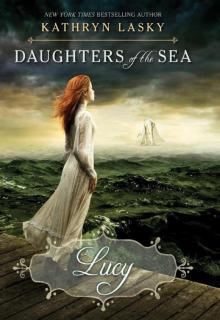
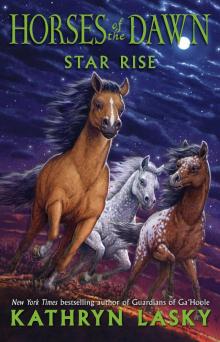
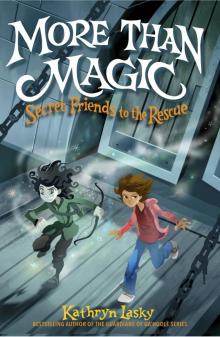
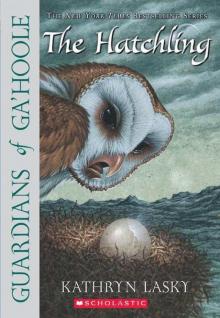
KATHRYN LASKY is a New York Times bestselling author of many children’s and young adult books, which include her Tangled in Time series; her picture book She Caught the Light; her bestselling series Guardians of Ga’Hoole, which was made into the Warner Bros. movie Legend of the Guardians: The Owls of Ga’Hoole; and her picture book Sugaring Time, recipient of a Newbery Honor. She has twice won the National Jewish Book Award, for her novel The Night Journey and her picture book Marven of the Great North Woods. She lives in Cambridge, Massachusetts, with her husband.
www.kathrynlasky.com
Discover great authors, exclusive offers, and more at hc.com.
Back Ad
Copyright
FACELESS. Copyright © 2021 by Kathryn Lasky. All rights reserved under International and Pan-American Copyright Conventions. By payment of the required fees, you have been granted the nonexclusive, nontransferable right to access and read the text of this e-book on-screen. No part of this text may be reproduced, transmitted, downloaded, decompiled, reverse-engineered, or stored in or introduced into any information storage and retrieval system, in any form or by any means, whether electronic or mechanical, now known or hereafter invented, without the express written permission of HarperCollins e-books.
www.harpercollinschildrens.com
Cover art © 2021 by Iacopo Bruno
Cover design by Joel Tippie
* * *
Library of Congress Cataloging-in-Publication Data
Names: Lasky, Kathryn, author.
Title: Faceless / Kathryn Lasky.
Description: First edition. | New York, NY : Harper, an imprint of HarperCollins Publishers, [2021] | Audience: Ages 8–12. | Audience: Grades 4–6. | Summary: Growing up in 1943 war-torn England, thirteen-year-old Alice and her older sister Louise are members of a centuries-old spy clan, but when Louise decides to spy for the enemy, their bond is changed forever.
Identifiers: LCCN 2020052741 | ISBN 9780062693310 (hardcover)