Temperance brennan 06.., p.29
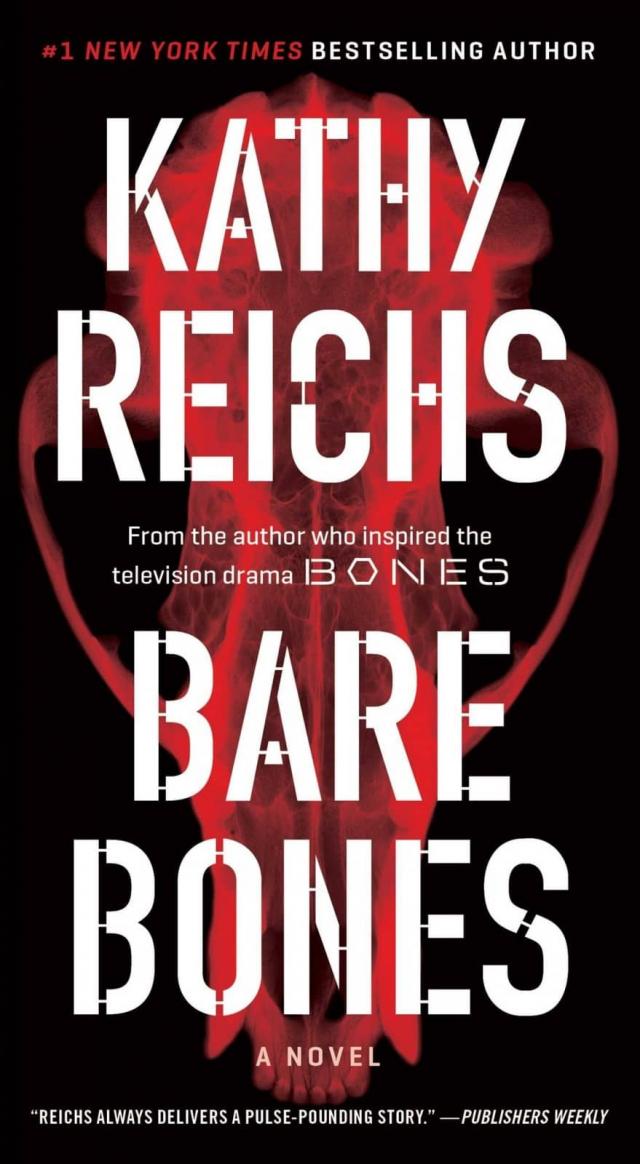
Temperance Brennan 06 - Bare Bones,
p.29


“Where was she?”
“Spending a few days in Asheville with Pete. She didn’t bother to tell me because she was miffed over my pressing her about the Grim Reaper e-mails. But it doesn’t matter, anyway. Katy called from Charlottesville this morning all agog over some premed student named Sheldon Seabourne.”
“Ah, fickle youth.”
Ryan and I settled back to our reading. With each page I was realizing how naïve my faith in the Green Movement had been. At moments my disgust boiled over. One such moment arrived shortly.
“Did you know that more than nine million turtles and snakes were exported from the United States in 1996?”
Ryan dropped his book to his chest. “Bet you can think of a couple you wish had been among them.”
“Ever hear of the Captive Bred Wildlife Foundation in Arizona?”
“No.”
“Their slogan is ‘When turtles are outlawed, only outlaws will have turtles.’”
“That’s idiocy that rings a bell.”
“These kind citizens will be happy to sell you a pair of Galápagos tortoises for eight to ten thousand bucks. You could take a sparrow, put it on the endangered species list, and some asshole would pay two grand for it.”
“There’s CITES,” Ryan said. “And the Endangered Species Act.”
“Protection on paper,” I said with disdain. “Too many loopholes, too little enforcement. Remember Rachel Mendelson’s tale of the Spix’s macaw?”
Ryan nodded.
“Listen to this.” I quoted from the article I’d been reading. “‘In 1996 Hector Ugalde pled guilty to federal conspiracy charges in Brazil for smuggling hyacinth’s macaws.’” I looked up. “Ugalde got three years’ probation and a ten-thousand-dollar fine. That’ll really stop him.”
Boyd came over and put his snout on my knee. I stroked his head.
“Everyone knows about whales, and pandas, and tigers, and rhinos. Those animals are sexy. They have foundations and sweatshirts and posters.”
Boyd followed a sandpiper with his eyes, considered.
“Fifty thousand plants and animals become extinct each year, Ryan. Within half a century one-quarter of the world’s species could be gone.” I flapped a hand at the ocean. “And it’s not just over there. One-third of all U.S. plants and animals are at risk of extinction.”
“Take a breath.”
I did.
“Listen to this.” I resumed reading, selecting excerpts. “‘At least four hundred and thirty medicines containing eighty endangered and threatened species have been documented in the United States alone. At least one-third of all patented Oriental medicine items available in the United States contain protected species.’”
I looked up.
“The illegal trade in black bear galls in California alone is estimated at one hundred million a year. Think about that, Ryan. Ounce for ounce, bear gall is worth more than cocaine, and hairbags like Dorton and Park know that. They also know they’ll get a slap on the wrist if they get caught.”
I shook my head in disgust.
“Deer are killed for their antler velvet. Siberian tigers are hunted for their bones and penises. Sea horses are killed to help men grow hair.”
“Sea horses?”
“Rhinos are shot, electrocuted, and driven into pits lined with sharpened bamboo stakes so men in Yemen can make dagger handles. There are only a few thousand rhinos left in the world, Ryan. Jesus, you can go on the Web and buy smoked gorilla paws.”
Ryan got up, squatted by my chair.
“You feel very strongly about this.”
“It sickens me.” I let my eyes travel to Ryan’s. “A cache of six metric tons of elephant ivory was seized in Singapore last June. Now a group of South African countries is talking about reversing the ban on ivory trading. Why? So people can make ornaments out of elephant tusks. Every year the Japanese take hundreds of whales for research. Yeah. Right. Research that ends up in the seafood market. Do you have any idea of the length of the evolutionary process that created the animals we have today, and the shortness of the time needed to kill them off?”
Ryan took my face in both his hands.
“We helped do something about it, Tempe. Park and Tyree are going down. No more bears or birds will be dying because of them. It’s not much, but it’s a start.”
“It’s a start,” I agreed.
“Let’s keep at it.” Ryan’s eyes were blue as the Atlantic and steady on mine. “You and me.”
“Do you mean that, Ryan?”
“I do.”
I kissed him, wrapped my arms around his neck, and pressed my cheek to his.
Pulling free, I wiped sand from his forehead and settled back to my reading, eager to find a place to begin.
Ryan took Boyd for a run on the beach.
That night we ate shrimp and crab on the docks at Shem Creek. We walked in the surf, made love, then fell asleep listening to Ryan’s eternal ocean.
From the Forensic Files of Dr. Kathy Reichs
For legal and ethical reasons I cannot discuss any of the real-life cases that may have inspired Bare Bones, but I can share with you some experiences that contributed to the plot.
Monsieur Orignal
Shakespeare spoke of “murder most foul” (Hamlet, 1.5), but not all forensic anthropology cases are the result of violence.
A variety of bones find their way to my lab: trophy skulls smuggled from foreign lands; teaching skeletons spirited from classrooms to fraternity houses; Confederate soldiers buried in unmarked graves; pets laid to rest in backyards or crawl spaces.
It happens all the time. Bones or body parts are discovered. Local authorities, unfamiliar with anatomy, send them to the coroner or medical examiner. Occasionally the “vic” turns out to be a reptile or bird, but most are members of the class Mammalia. I’ve examined spareribs, deer metapodia, ham bones, and elk horns. I’ve gotten kittens in gunnysacks and wood rats mixed in with murder victims. Bear paws, which particularly resemble human hands and feet, also sometimes show up at my lab.
The skeletal remains that found their way into Bare Bones actually entered my life during a blizzard in Montreal on a Thursday in November 1997. Driving as a Southerner versed in snowfall panic, edging my speed up to thirty only in the tunnel, I arrived late to the lab and thus missed the morning meeting at which the day’s cases had been discussed and assigned. One document lay on my desk, a Demande d’Expertise en Anthropologie.
Wasting no time, I skimmed for critical information: case number, morgue number, coroner, pathologist. I was being asked to examine cut marks on leg and pelvic bones to determine the type of saw used for dismemberment. The summary of known facts included one French word unfamiliar to me: orignal. Guilty over my tardiness, I headed straight for the bones, opting for a vocabulary check at a later time.
Throwing on a lab coat, I crossed to the counter reserved for new cases. When I unzipped the pouch, my jaw dropped. Either this victim had a colossal pituitary disorder, or I was looking at Goliath himself.
About-face. Dictionary.
Orignal: élan, n. m. Au Canada on l’appelle orignal.
My dismemberment victim was a moose.
On more careful reading of the request-for-expertise form, I discovered that the analysis had been requested by the Société de la faune et des parcs, the Quebec equivalent of the U.S. Fish and Wildlife Service. A poacher had been killing moose for years with blatant disregard for the annual quota. Conservation agents had decided to prosecute and wanted an opinion. Could I tie the cut marks on the moose bones to a saw recovered from the suspect’s garage?
I could.
Big bones. Big animal. Big lesson in proceeding rapidly while not fully cognizant of the mission.
No need for Shakespeare here.
Thoreau put it well: “Some circumstantial evidence is strong, as when you find a trout in the milk” (Walden).
Or Bullwinkle in a body bag.
ACKNOWLEDGMENTS
I WISH TO EXPRESS GRATITUDE TO CAPTAIN JOHN GALLAGHER (retired); to Detective John Appel, Guilford County, North Carolina, Sheriff’s Department (retired); to Detective Chris Dozier, Charlotte-Mecklenburg Police Department; and, especially, to Ira J. Rimson, P.E., for help with the Cessna/drug scenario.
Many of those working to protect endangered wildlife gave generously of their time and expertise. Special thanks to Bonnie C. Yates, forensics specialist, Morphology/Mammals Team Leader, and Ken Goddard, director, Clark R. Bavin National Fish and Wildlife Forensics Laboratory; to Lori Brown, investigative assistant, and Tom Bennett, resident agent in charge, United States Fish and Wildlife Service; and to Agent Howard Phelps, Carolyn Simmons, and the staff at the Pocosin Lakes National Wildlife Refuge. You are on the front lines, battling to save what we can’t afford to lose. Your efforts are appreciated.
David M. Bird, Ph.D., McGill University, provided information on threatened bird species. Randy Pearce, DDS, and James W. Williams, J.D., shared their knowledge of the Melungeons of Tennessee. Eric Buel, Ph.D., director, Vermont Forensics Laboratory, coached me on amelogenin. Michael Baden, M.D., and Claude Pothel, M.D., enlightened me on the details of diatoms and death by drowning.
Captain Barry Faile, Lancaster County Sheriff’s Department, and Michael Morris, Lancaster County coroner, were patient with my questions. Michael Sullivan, M.D., welcomed me at the Mecklenburg County Medical Examiner facility. Terry Pitts, D.Min., NCFD, offered suggestions on funeral home basements. Judy H. Morgan, GRI, kept me accurate on Charlotte real estate and geography.
I appreciate the continued support of Chancellor James Woodward of the University of North Carolina–Charlotte. Merci to André Lauzon, M.D., chef de service, and to all of my colleagues at the Laboratoire de Sciences Judiciaires et de Médecine Légale.
A thousand thanks to Jim Junot for answers to a million questions.
Thanks to Paul Reichs for comments on the manuscript, and to the whole ragtag beach bunch for title suggestions and other minutiae.
My incredibly patient and brilliant editor, Susanne Kirk, took a rough piece of work and made it flow.
A special thanks to my supersonic agent, Jennifer Rudolph Walsh. You delivered Wyatt Z. the same day I delivered Bare Bones. It was a very good year.
ABOUT THE AUTHOR
KATHY REICHS, like her fictional creation Temperance Brennan, is a board-certified forensic anthropologist for the Laboratoire de Sciences Judiciaires et de Médecine Légale for the province of Quebec, a position she also held at the Office of the Chief Medical Examiner, State of North Carolina. She is Vice President of the American Academy of Forensic Sciences and serves on the National Police Services Advisory Council in Canada. A professor of anthropology at the University of North Carolina at Charlotte, Dr. Reichs received her Ph.D. at Northwestern University. She now divides her time between Charlotte and Montreal. Her debut novel, Déjà Dead, brought her fame when it became a New York Times bestseller, a #1 international bestseller, and winner of the 1997 Ellis Award for Best First Novel. Bones to Ashes, her tenth Temperance Brennan novel, is forthcoming in hardcover from Scribner.
Her website is www.kathyreichs.com.
Kathy Reichs, Temperance Brennan 06 - Bare Bones