Bones never lie a novel, p.30
Bones Never Lie: A Novel,
p.30



I asked for Perrier. Hull wanted a Bud. While Sean got the drinks, we considered the menu. Which took some time, since the place had a tapas format.
“How’s Slidell?” Hull asked when we’d ordered—I’d ordered. Hull had just tossed the menu and rolled her eyes. Which were large and the color of Hershey’s syrup.
“Skinny’s like the heroine in a bad horror movie,” I said.
“Still breathing at the credits.”
“Always.”
“And Tinker?”
“No idea.”
Once all the little dishes arrived, we served ourselves, then turned to developments since last we talked.
“The DNA from the lip print was a match to McGee?” Hull poked at a mussel.
I nodded. “The results came back yesterday. Her face must have brushed Leal’s jacket as she was transporting the body.”
“No one knows diddly about the hair found in Estrada’s throat.”
“It’s gone?”
“Like the wind.”
“Not surprising, given the ineptness of the autopsy report.” I helped myself to a meatball. “Plowing through all the surveillance video paid off. Twice they’ve got what was probably McGee’s Impala heading in the direction of I-485.”
“The night Leal was left under the overpass.”
I nodded again. “They’re hoping enhancement will allow them to read the plate.”
Hull smiled wryly. “The two-digit match to Ajax was just coincidence.”
“And the child seen on Morningside wasn’t Leal. Talk about the world’s unluckiest sex offender.”
“How about the laptop?” Hull eyed the beef carpaccio, opted for another fried oyster.
“Pure gold. It appears McGee found Nance through chat rooms that answer questions about nursing as a career.”
“She’d already moved from Vermont to Charlotte?”
“Looks that way. Five years later, she spotted Leal in the ER. Used the opportunity to tip the kid to the dysmenorrhea forum. Communicated with her there.”
We went silent, thinking about the vulnerability of children amid the pitiless anonymity of the Internet.
“Any evidence of contact with Colleen Donovan?” she asked.
“Nothing so far. Donovan was living on the street and may not have had access to a computer.”
“She’s still in the wind?”
“Yeah.”
A few beats passed as we ate.
“So McGee laced Ajax’s coffee, then set him up in his car,” Hull said. “Why?”
“Slidell’s phone calls and visits to the ER and to her apartment must have triggered some sort of paranoid spiral. Knowing the cops suspected Ajax, McGee killed him and planted evidence in his trunk to close the deal.”
“Why do you suppose Ajax let her in?”
“Undoubtedly, she’d concocted some plausible story about the ER and when he’d be able to return. McGee may be deeply disturbed, but she’s cunning.”
“And clever at hiding the fact that she’s psycho.”
Not exactly PC, but true.
“McGee used chloral hydrate to subdue her vics. How come the stuff only showed up in Ajax?”
“Mary Louise Marcus had chloral hydrate in her system. The toxicologist found it because he knew to look. Standard drug screens typically test for alcohol, narcotics, sedatives, marijuana, cocaine, amphetamines, and aspirin.”
“But we’re talking dead kids. No one went beyond standard testing?”
“The girls’ bodies weren’t found right away. For Gower it was eight days, for Nance fourteen, for Estrada four. Even if you’re looking for chloral hydrate, which no one was, decomposition can mask its presence.”
Hull’s brows dipped in confusion.
“On a gas chromatograph, decomp chemicals will peak higher than chloral hydrate. Even if further testing had been done, it might have been missed.”
“You think McGee killed Gower by herself? Or after she hooked up with Pomerleau?”
“Murder was never Pomerleau’s style.”
Hull dipped her chin and tipped her head. Seriously?
“You know what I mean. Of course it was murder. But in Pomerleau’s case, the killing was a by-product of cruelty and deprivation. Not a primary objective.”
“Right.”
“Anyway, unless McGee tells us, we may never know where she was living when Gower went down. Or if she acted alone.”
“Or if Gower was her first.”
I’d had the same grim thought.
“Why’d McGee break the pattern of dates and grab Marcus?”
“Same answer. Slidell’s probing sent her spiraling out of control.”
Hull’s chewing slowed as she rolled that around. Then, “I get the dates. She’s killing on the anniversaries of abductions or deaths in Montreal. Kids she knew. Maybe kids she saw die. But why the hair, the tissues soaked with saliva? Why plant Pomerleau’s DNA on her victims?”
I’d posed that question to Pamela Lindahl during the many hours we’d spent on the phone. Though difficult to assess long-distance, the psychiatrist’s tone had suggested agonizing guilt.
I took a moment to organize my thoughts. And have a bite of sweet-corn risotto.
“McGee’s therapist is convinced the arousal didn’t come from degrading or controlling, as with many serial killers. She feels McGee’s psychosis is two-pronged. First, she’s reenacting the deaths of the original victims, but killing them quickly and leaving them ‘in the sun’ to assure that her victims will never suffer as she did.”
“That’s why the bodies were placed out in the open, arranged with care and free of trauma or disfigurement.”
“Exactly. Second, McGee was seeking revenge on Pomerleau. But at the same time, she was diverting attention from herself, should she ever fall under suspicion.”
“So the shrink says she was driven by both love and hate.” Dubious. “And an instinct for self-preservation.”
“Yes.”
“Targets were chosen because they resembled one of Pomerleau’s Montreal victims?”
“Probably McGee herself. She was abducted at age twelve.”
“McGee made the calls six months out? Checking to see if the cops had anything on Donovan or Estrada?”
“Probably,” I said.
Hull bunched and tossed her napkin. Leaned back. Crossed her arms and wagged her head slowly. “Don’t sound like enough crazy to me.”
I pictured a girl in a trench coat and crooked beret. Felt sorrow clot any response I might have offered.
I knew the drill. So did Hull. McGee’s mental competence would be determined by pretrial motions and hearings and judges and lawyers.
Sane. Insane. Either finding would result in Tawny McGee’s worst nightmare, one she’d already endured. A life in one type of prison or another.
It had to be.
Even the damaged cannot be allowed to damage.
The next morning I drove to Heatherhill Farm. Like the magnolia at Sharon Hall, the azaleas and rhododendron winked both waxy green and dull brown. I imagined the upside-down leaves, startled by the warm spell, turning for instruction from their roots.
River House itself was half in shade and half in bright sun. Its windows also looked confused, undecided between reflecting and ingesting light.
Mama was on the back deck, bundled in a parka and scarf, stretched out on the same chaise she’d occupied Thanksgiving week. As I had then, I paused a moment to study her. Perhaps to fix her image forever in my memory.
She’d lost weight, though the bulky jacket made that appraisal difficult. Her hands were chapped, the treasured hair a bit dull. Still, my mother looked beautiful.
It was a pleasant visit. No rancor. No resentment. I didn’t bring up chemo. She didn’t correct my manners or dress.
I told Mama about the arrest of Tawny McGee. About the CAIS. About the psychopathology of hatred and love. She called it Pomerleau’s legacy of madness.
I thanked Mama for her input. Said the YouTube cycling video had been the big break in the case. Ryan’s big bang.
She asked if I’d seen Ryan. I said not for a while. She didn’t persist.
Then I told her the good news. The police had located Kim Hamilton’s brother, now living in Miami. He was saddened to learn of his sister’s death and troubled by not knowing the location of her remains. Mostly, he was comforted by confirmation of a truth he’d always felt in his soul. Kim hadn’t turned her back on her family by running away.
At noon Mama and I shared a lunch of avocado salad and grilled chicken breast. At one Goose trundled Mama off for her nap.
That evening I turned in early. As was common since I’d met Umpie Rodas two months earlier, memories bombarded me the instant I closed my eyes. Unbidden apparitions involving bones and corpses and children.
I had no say in the order or arrival times of these sad visitations. Only in their duration. As soon as a reel began to play, I’d shut it down.
For some reason, that night I let my mind roll.
I saw Nellie Gower pedaling her bike, brown hair flying and catching the sun. Tawny McGee tightening the drawstring of a plastic bag under her chin.
Lizzie Nance practicing pliés and arabesques at a ballet bar. McGee closing her lifeless little fingers around a bunched white tissue.
Tia Estrada walking hand in hand with her mother. McGee tucking long blond hairs deep into her throat.
Shelly Leal tapping a keyboard, face radiant in the glow of the screen. McGee arranging her still body on a highway embankment.
I imagined the girls at the moment their worlds halted forever. Did they know death was at hand? Did they ask why?
In addition to the ballet slipper and clippings, McGee’s souvenir box had contained a yellow ribbon identical to the one found in Hamet Ajax’s trunk. Avery Koseluk’s mother didn’t recognize the ribbons. Laura Lonergan said they had not belonged to Colleen Donovan. Neither had yielded DNA.
I pictured those ribbons, wondered if they’d once bound the hair of my Jane Doe skeleton. Of another little girl as yet unknown to us. Though we might never learn for certain if there had been other victims, Barrow and Rodas would investigate on the U.S. end, Ryan in Canada.
I saw my Jane Doe, a sad collection of bones labeled ME107-10. Wondered if somewhere a family was searching.
I saw Colleen Donovan. Avery Koseluk. Hoped one day each would enter a police station seeking help.
We’d never know who removed Donovan’s name from the list of MPs on the NamUS site. It was back there now. With Koseluk and the scores of others either missing or lying anonymously in morgues or police evidence rooms.
Anique Pomerleau. Tawny McGee. Victims. Monsters. Their childhoods stolen. Their adult games played out with cold-blooded cunning.
It was finished now.
Yet it wasn’t.
The next morning I ran two miles. A quick shower, a bout of paper shuffling. Then I began grading lab exercises for the spring-semester course I was teaching at UNCC.
Earlier in the week, my front doorbell had begun sounding like a seagull with adenoid issues. I’d gotten halfway through the stack when a wobbly squawk interrupted.
Curious, I hurried to the door and peered through the peephole.
A spectacularly blue eye peered back.
Startled, I jumped.
Great.
Conscious of my wet hair and baggy yoga pants, I opened the door.
Ryan was wearing jeans, a leather jacket, and a black wool muffler. His cheeks were blotchy red. Probably due to overheating.
For a moment no one spoke. Then we both tried at once.
“This is a surprise,” I said.
“I should have phoned,” he said.
“You go first,” I said.
“Marry me,” he said.
“I—What?” That couldn’t be right.
“I’m proposing.”
“Proposing.”
“Marriage.”
“Yes.”
“It’s my first time.”
“Yes.”
“I’d envisioned a much more romantic pitch.”
“Your delivery was clear.”
“Shall I practice and try again later?”
“You were fine.”
“Or we could do dinner.”
“I often eat dinner.”
Ryan pulled me close. I put my arms around him and pressed my cheek to his chest. A beat, then I stepped back.
We looked at each other.
“Eight o’clock?” he asked.
“Eight is good,” I said.
Then Ryan was gone.
Zombie-like, I went inside. Closed and leaned on the door.
I couldn’t say how long I stood taking in the familiar. The known.
Harry’s chenille throw on the sofa back. Gran’s sweetgrass basket on the rug by the armchair. Mama’s silver candlesticks on the mantel.
My gaze fell on an item confiscated at the apartment on Dotger. A child’s painting—the one Mary Louise had made of Birdie that she’d wanted to show me.
In my mind, I saw ice-blue eyes. Heard again and again the offer of an altered future.
I thought of endless uncertain possibilities. Of impediments I could neither foresee nor control.
I felt a smile nudge my lips.
Maybe.
Just maybe.
But today I would frame the painting of the white cat playing with the red plaid mouse.
For
Alice Taylor Reichs
born August 3, 2012
and
Miles Aivars Mixon
born August 11, 2012
As usual, I owe a huge debt of thanks to a whole lot of people.
Bones Never Lie benefited greatly from all those at the Charlotte-Mecklenburg Police Department Homicide/ADW and Cold Case units who shared their time, their memories, and their expertise with me. A special shout-out to Chuck Henson, Dave Philips, and Lisa Mangum.
I am grateful to Mike Bisson, Michael Baden, and Diane Seguin for answering many questions, and to Courtney Reichs for input on hospitals and the nursing profession.
Cheri Byrd and Michelle Skipper provided copious quantities of buoyant enthusiasm. And wine and giggles.
I appreciate the continued support of Chancellor Philip L. Dubois of the University of North Carolina at Charlotte.
Sincere thanks to my agent, Jennifer Rudolph-Walsh, and to my rock star editors, Jennifer Hershey and Susan Sandon.
I also want to acknowledge all those who work so very hard on my behalf. At home in the U.S.: Gina Centrello, Libby McGuire, Kim Hovey, Scott Shannon, Susan Corcoran, Cindy Murray, Kristin Fassler, Cynthia Lasky, and Joey McGarvey. On the other side of the pond: Simon Littlewood, Glenn O’Neill, Georgina Hawtrey-Woore, and Jen Doyle. North of the forty-ninth: Kevin Hanson and Amy Cormier. At William Morris Endeavor Entertainment: Caitlin Moore, Maggie Shapiro, Tracy Fisher, Cathryn Summerhayes, and Raffaella De Angelis.
I appreciate Paul Reichs’s insightful comments on the manuscript.
As always, a big merci to my readers. It is gratifying that you follow Tempe’s adventures, attend my signings and appearances, visit my website (KathyReichs.com), like me on Facebook, and follow me on Twitter (@kathyreichs). You guys dazzle!
If I left anyone out, I apologize. If the book contains errors, I own them.
BY KATHY REICHS
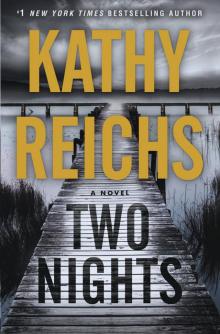
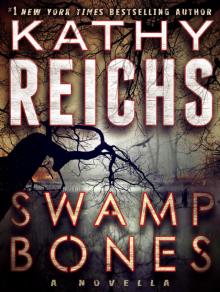
Bones Never Lie
Bones of the Lost
Bones Are Forever
Flash and Bones
Spider Bones
206 Bones
Devil Bones
Bones to Ashes
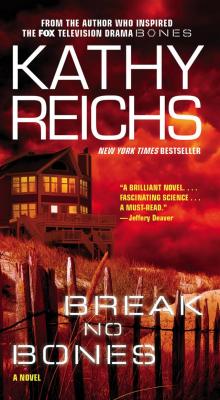
Break No Bones
Cross Bones
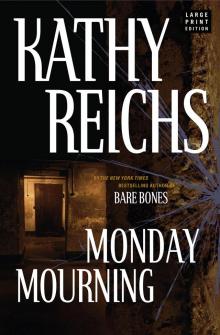
Monday Mourning
Bare Bones
Grave Secrets
Fatal Voyage
Deadly Décisions
Death du Jour
Déjà Dead
Bones in Her Pocket (short story)
YOUNG ADULT FICTION
(WITH BRENDAN REICHS)
Exposure
Code
Seizure
Virals
Swipe (novella)
Shift (novella)
ABOUT THE AUTHOR
KATHY REICHS is the author of sixteen New York Times bestselling novels featuring forensic anthropologist Temperance Brennan. Like her protagonist, Reichs is a forensic anthropologist—one of fewer than one hundred ever certified by the American Board of Forensic Anthropology. A professor in the department of anthropology at the University of North Carolina at Charlotte, she is the former vice president of the American Academy of Forensic Sciences and serves on the National Police Services Advisory Council in Canada. Reichs’s own life, as much as her novels, are the basis for the TV show Bones, one of the longest-running series in the history of the Fox network.
kathyreichs.com
Facebook.com/KathyReichsBooks
@KathyReichs
Kathy Reichs, Bones Never Lie: A Novel