I survived the great ala.., p.6
I Survived the Great Alaska Earthquake, 1964 (I Survived #23),
p.6


Ninety percent of all earthquakes happen along the Ring of Fire, shown here by the gray shading. The circle represents the 1964 Alaska earthquake.
Parts of the world are more prone to earthquakes than others. In the United States, the top spots are along the West Coast — Alaska, California, Washington, and Oregon.
But we should all know what to do if an earthquake strikes. I live in Connecticut but many years ago found myself in a strong earthquake in Los Angeles, California.
I wasn’t yet writing I Survived. But I did know something about earthquakes — enough to know how to stay safe.
And you can, too. Here’s how to get started — and learn more.
1. KNOW THE SAFEST SPOTS
If an earthquake strikes, you will have a few seconds to find safety. If you are inside, try to go to a room that is deep inside your house, away from windows. Bathrooms and closets often work well.
If you are outside, try to get to an open area away from buildings, telephone poles, and other big structures. Being near a building is especially dangerous since people can be hit by falling debris and glass.
2. DROP, COVER, HOLD ON
If you are in an earthquake at school or at home, drop down to the ground and try to take cover under something strong. A table or a desk can work. With one arm, hold tight to the leg of the table or desk. Put your other arm over your head and neck. Stay there until the shaking has stopped.
Most schools have earthquake drills, so you have probably practiced this. But do it at home, too.
3. IF YOU LIVE NEAR THE OCEAN, FIND HIGHER GROUND
Tsunamis can happen within minutes of an earthquake. If you are near the ocean, get to high ground as quickly as possible. Many communities have a tsunami plan — make sure you know it. Often there are signs showing where to go. If not, try to get to the top of a very high hill (at least 100 feet higher than the sea). If you can’t do that, walk as quickly as you can away from the water. Try to get at least a mile from the coast.
4. MAKE A FAMILY PLAN
If you live in a place prone to quakes, talk to your family about a plan. If you’re at home when it happens, where would you all go? Do you have an earthquake “go bag”? This is a bag of important things that are already packed so you and your family can make a quick escape — medicine, some money, a change of clothes, and other necessities.
If you’re not together, decide where you will all meet, or who you will call — a family member or friend who lives outside of your area is ideal.
5. MEMORIZE IMPORTANT PHONE NUMBERS
If you are old enough to have your own phone, chances are important numbers are in there. So, you don’t need to know them by heart, right? Wrong! You could lose your phone, or it could go dead when you need it most. Also, cell service often goes out when a natural disaster strikes. That’s why you need to also store important phone numbers … in your brain! These include numbers for members of your family, a trusted neighbor, and that all-important family friend I mentioned above.
6. HELP THOSE IN NEED
When a big earthquake strikes, people can lose their homes and all their belongings. You, your family, and your friends can help them by donating money and other supplies. Make sure you are working with a good organization who will guarantee that donations make it into the hands of people who need them most.
Some suggestions:
Save the Children
savethechild.org
American Red Cross
redcross.org
World Vision
worldvision.org
A Red Cross worker distributes supplies following a 2010 earthquake in Haiti.
LEARN MORE
The United States Geological Survey created a resource that is packed with facts, history, and earthquake tips for kids:
Earthquake.USGS.gov
You can also check my website for ideas on how to help people who have been impacted by natural disasters and other challenging events:
LaurenTarshis.com
HERE ARE SOME OF THE BOOKS THAT HELPED ME RESEARCH THIS BOOK
Bad Friday: The Great & Terrible 1964 Earthquake, by Lew Freedman, Epicenter Press, 2018
Coming into the Country, by John McPhee, Farrar, Straus and Giroux, 1977
“The 1964 Great Alaska Earthquake and Tsunamis — A Modern Perspective and Enduring Legacies,” by Thomas M. Brocher, John R. Filson, Gary S. Fuis, Peter J. Haeussler, Thomas L. Holzer, George Plafker, and J. Luke Blair, United States Geological Survey: Perspectives on a Changing World, March 2014
The Great Quake: How the Biggest Earthquake in North America Changed Our Understanding of the Planet, by Henry Fountain, Crown, 2017
Indigenous Continent: The Epic Contest for North America, by Pekka Hamalainan, W. W. Norton, 2022
This Is Chance: The Shaking of an All-American City, a Voice That Held It Together, by Jon Mooallem, Random House, 2020
Valdez Rising, by Tabitha Gregory, Sapphire Mountain Books, 2022
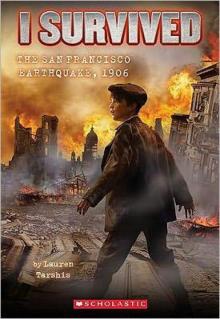
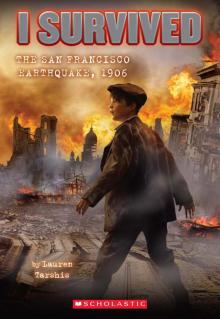
I Survived the San Francisco Earthquake, 1906
I Survived the Japanese Tsunami, 2011
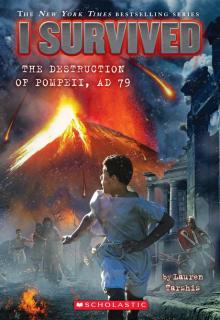
I Survived the Destruction of Pompeii, AD 79
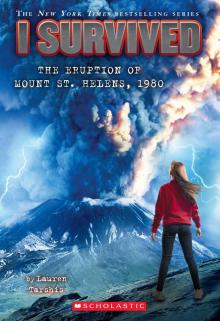
I Survived the Eruption of Mount St. Helens, 1980
Lauren poses on Alaska’s Glenn Highway, near the Matanuska Glacier.
Lauren Tarshis’s New York Times bestselling I Survived series tells stories of young people and their resilience and strength in the midst of unimaginable disasters and times of turmoil. Lauren has brought her signature warmth, integrity, and exhaustive research to topics such as the September 11 attacks, the American Revolution, Hurricane Katrina, the bombing of Pearl Harbor, and other world events. Lauren lives in Connecticut with her family, and can be found online at laurentarshis.com.
THE DESTRUCTION OF POMPEII, AD 79
THE AMERICAN REVOLUTION, 1776
THE BATTLE OF GETTYSBURG, 1863
THE GREAT CHICAGO FIRE, 1871
THE CHILDREN’S BLIZZARD, 1888
THE GALVESTON HURRICANE, 1900
THE SAN FRANCISCO EARTHQUAKE, 1906
THE WELLINGTON AVALANCHE, 1910
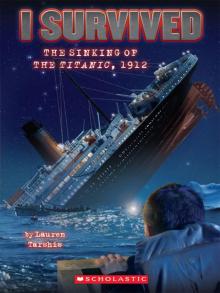
THE SINKING OF THE TITANIC, 1912
THE SHARK ATTACKS OF 1916
THE GREAT MOLASSES FLOOD, 1919
THE HINDENBURG DISASTER, 1937
THE BOMBING OF PEARL HARBOR, 1941
THE NAZI INVASION, 1944
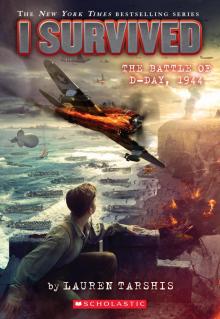
THE BATTLE OF D-DAY, 1944
THE GREAT ALASKA EARTHQUAKE, 1964
THE ATTACK OF THE GRIZZLIES, 1967
THE ERUPTION OF MOUNT ST. HELENS, 1980
THE ATTACKS OF SEPTEMBER 11, 2001
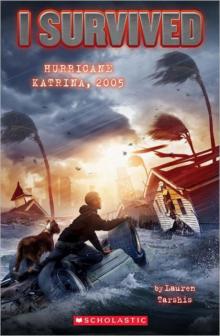
HURRICANE KATRINA, 2005
THE JAPANESE TSUNAMI, 2011
THE JOPLIN TORNADO, 2011
THE CALIFORNIA WILDFIRES, 2018
Text copyright © 2023 by Dreyfuss Tarshis Media Inc.
Illustrations copyright © 2023 by Scholastic Inc.
For your reference, the page numbers that appear in the print version of this book are listed below. They do not match the page numbers in your eBook. Please use the “Search” function on your eReading device to find items of interest.
Photos ©: 99: Jeff Schultz/Newscom; 100: Wulff (Barry) Collection, Valdez Museum & Historical Archive; 103: Courtesy of Tom Gilson; 105: Courtesy of Dorothy Moore; 112: NOAA Central Photo Library; 113 top: Science History Images/Alamy Stock Photo; 113 bottom: U.S. Geological Survey; 115: NOAA Central Photo Library; 117: NICHOLAS KAMM/AFP via Getty Images; 119: GraphicsRF.com/Shutterstock; 121: U.S. Geological Survey; 121, 126 icons: Vectorstock1/Shutterstock; 123: Ned Rozell; 124: ZUMA Press Inc/Alamy Stock Photo; 126: Jim McMahon/Mapman ®; 129: Dzm1try/Shutterstock; 130: Tomas Nevesely/Shutterstock; 132: THONY BELIZAIRE/AFP/Getty Images. All other photos by David Dreyfuss.
Special thanks to Henry Fountain, Tom Gilson, Dorothy Moore, Caron Oberg, Faith Revell, and Caroline Wiseman.
This book is being published simultaneously in hardcover by Scholastic Press.
All rights reserved. Published by Scholastic Inc., Publishers since 1920. SCHOLASTIC, SCHOLASTIC PRESS, and associated logos are trademarks and/or registered trademarks of Scholastic Inc.
The publisher does not have any control over and does not assume any responsibility for author or third-party websites or their content.
While inspired by real events and historical characters, this is a work of fiction and does not claim to be historically accurate or to portray factual events or relationships. Please keep in mind that references to actual persons, living or dead, business establishments, events, or locales may not be factually accurate, but rather fictionalized by the author.
First printing 2023
Cover art by Colin Anderson
Cover design by Katie Fitch
e-ISBN 978-1-338-89765-4
All rights reserved under International and Pan-American Copyright Conventions. No part of this publication may be reproduced, transmitted, downloaded, decompiled, reverse engineered, or stored in or introduced into any information storage and retrieval system, in any form or by any means, whether electronic or mechanical, now known or hereafter invented, without the express written permission of the publisher. For information regarding permission, write to Scholastic Inc., Attention: Permissions Department, 557 Broadway, New York, NY 10012.
Lauren Tarshis, I Survived the Great Alaska Earthquake, 1964 (I Survived #23)