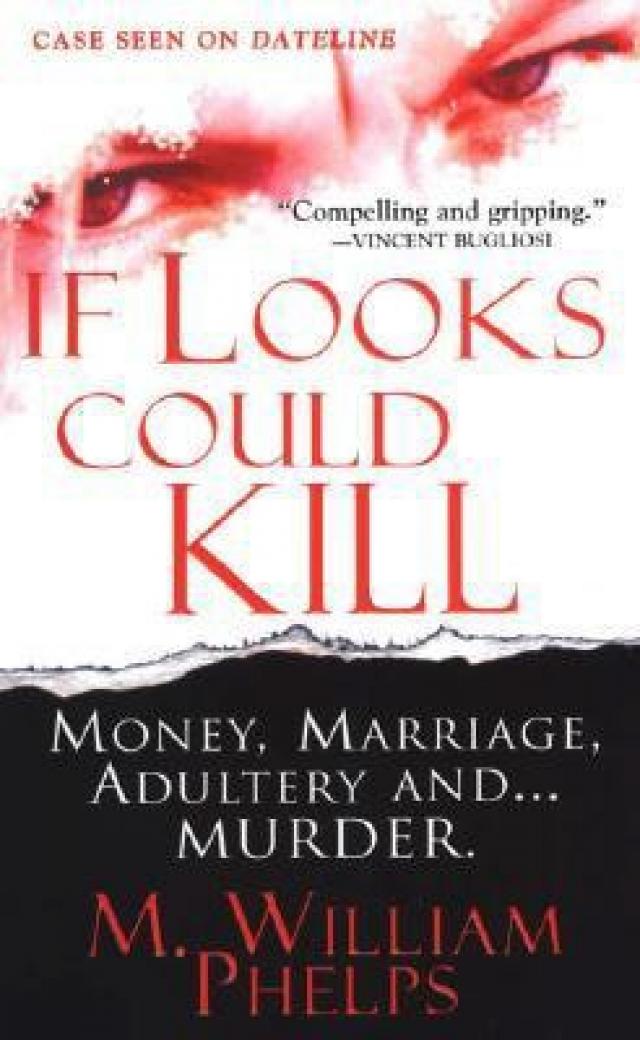
If looks could kill, p.11
If Looks Could Kill,
p.11


“Kibbutz?” answered Elayne. “What?”
In retrospect, subscribing to life in the kibbutz was an interesting choice for Jeff Lieberman. According to a condensed version of Britannica’s Encyclopedia, the kibbutz is an “Israeli communal settlement in which all wealth is held in common and profits are reinvested in the settlement.” The first kibbutz was established in the state of Palestine somewhere around 1909. The breakdown of everyday life is strictly controlled—and maybe that’s what attracted Jeff to it. Adults live in “private quarters,” while “children are generally housed and cared for as a group.” All meals are “prepared and eaten communally. Members have regular meetings to discuss business and to take votes on matters requiring decisions. Jobs may be assigned by rotation, by choice, or skill. The kibbutz movement declined dramatically in the late 20th century. But kibbutzim continued to play [an] important role in the tourism industry in Israel, attracting students and other short-term residents, mostly Jews from overseas seeking a link with the past.”
Taking the way the group operated into consideration, it appeared as though Jeff wanted to get in touch with his Jewish roots possibly to find out who he was. He obviously yearned for structure and discipline, yet clearly felt the American military couldn’t offer it to him. “He was really angry,” Elayne said, speaking to that period when Jeff took off. “It wasn’t really at me, I knew that. It was at this girl that broke up with him. He couldn’t take it. He was tough to be around all the time. He had a very forceful personality.”
Elayne wasn’t happy that her son was halfway across the world in a new state, living like a soldier and gypsy among strangers. But what could she do?
“How did you end up in Israel, Jeffrey?” Elayne asked.
“I’m in the army here now,” Jeff said.
“How did that happen?”
“All people in Israel end up in the army, Ma.”
Jeff’s dream was to be an Israeli pilot, said to be the most regimented and professional in the world. But for reasons he never explained, Jeff wasn’t able to do that, so he joined a paratrooper unit instead.
Family members later told police Jeff was “very pro-Israeli.” Jeff’s stepfather, David Zack, believed Jeff had “dual citizenship—America and Israel.”
One thing Jeff liked to do with his stepfather was hang out at a popular cigar shop in Akron. The owner of the place was an Arab. Although Jeff and the guy were “acquaintances,” they often argued heatedly about the state of Palestine and Middle East politics. “They had a falling-out once,” David Zack explained to the CAPU, “and the guy and Jeff stopped speaking.” Even more interesting to detectives when they found out, according to David, the owner of the cigar shop was “connected to” Ed George in some way.
Three years after Jeff’s trip to Israel, he returned to Detroit, but Israel hadn’t really changed him much. “He had the most phenomenal personality when he wanted,” Elayne said, fighting back tears. “But he could be manic, too. He had the potential to do whatever he wanted. He could have been someone, but was, of course, held back by these flaws, fears and things he couldn’t face, not to mention the sadness over his dad.”
Elayne had married David Zack by the time Jeff returned to the States. David got a job in Phoenix and they were planning to move. Along with Jeff, one of his brothers was adopted by David and took the Zack name, while Jeff’s other brother, Ricky, chose to keep Lieberman as nothing more than a personal choice.
What was clear to detectives as they continued to interview Elayne was that she was proud of her son in many ways, but knew—and was honest about—the person Jeff had become. She was totally forthcoming about Jeff, both good and bad points. Jeff had spoken six languages (English, Hebrew, Arabic, Russian, German and Spanish). “He could have done anything he wanted to do,” Elayne said that first afternoon detectives interviewed her. “Anything.”
One of the reasons Elayne gave for her son changing jobs as often as shoes was that she believed once Jeff “conquered a job, he got bored with it and would move on to something else.” Most astonishingly, the result of the affair Jeff had with Cynthia George made it seem, at least in the way family members later viewed the situation, as if Jeff had two families, each of whom knew about the other. Elayne and David Zack had been over to the Georges’ mansion for parties and get-togethers. Regardless how she felt about the affair, Elayne liked Cynthia. It seemed Cynthia was a good influence on Jeff. She kept him grounded and gave him a sense of worth. “Jeff just adored Cindy,” Elayne explained to Moriarty. “Whenever me and David were in town, Cindy would visit us and seemed to follow us wherever we went, to restaurants and such.”
Detectives saw this as an awfully awkward situation, yet an understandable motive for murder. The further along they got into Jeff Zack’s life with Cynthia George, the more it seemed like the person that could help the investigation the most was the one person who didn’t want to talk to them.
23
The APD detective’s bureau investigating Jeff Zack’s murder was bombarded with leads by the end of the day on Monday, June 18, 2001. Reports and interviews with witnesses were coming in at such a clip that it appeared as though an AMBER Alert had been issued. For detectives, gathering information became a tedious, gumshoe process—that, if patience was applied, could yield results. In fact, in some respects, during the early days of the investigation, the CAPU had too much information to sift through.
The person in charge of keeping track of all those tips coming in was twenty-three-year-old Carrie Stoll, a pleasant, cute, absolutely dedicated CAPU secretary. Many of the detectives in the unit went out of their way to say Carrie was the absolute “heartbeat” of the office. Without her, they would be lost in a mountain of paperwork, telephone messages, reports and minor details that would ultimately keep them cooped up behind a desk and off the street, where the true magic of any investigation occurred. “Carrie is, well,” Dave Whiddon said later, “she’s great. Without her, we couldn’t run this unit. She’s our eyes and ears. We don’t know how she does it, but Carrie keeps everything in front of us and never lets us forget what we’re working on.”
More than that, Carrie took many of the calls coming into the CAPU. She transcribed all the tape-recorded interviews and telephone calls. She was in charge of keeping a list of every detectives’ assignments and all of the tips piling up. Initially she kept a database of the tips that came in on motorcycles that matched the description of the one leaving the scene of the homicide. “I also assisted with the telephone records (trying to find subscriber information and identifying the numbers),” Carrie said later.
Late that Monday afternoon, Carrie received a call that would, in effect, throw the investigation into an entirely new direction. A secret Jeff Zack had been keeping from mostly everyone around him was about to be unearthed. It was a fact so incredibly unbelievable, it was going to take a court order to prove, once Moriarty and the CAPU felt their hunch might be true. But before that, it was back to sorting through Jeff’s life. Police work—the old-school way—was going to get to the bottom of any type of international conspiracy or mafia hit behind Jeff’s murder. In truth, the CAPU felt confident the mafia or an international group of radicals was not behind Jeff’s murder. However, they took the insinuations seriously and checked out every lead or tip that led them in that direction.
As they did that, however, and Jeff’s family continued to talk, one name kept coming up. “Jeff had once told me,” David Zack explained to the CAPU, “‘If Ed George ever finds out about [my affair with Cynthia], he’ll kill me.’”
Ed and Cynthia George. No matter what parties the CAPU spoke to, where they looked, the investigation routinely led them back to the Georges. The only problem was that the Georges were still refusing to talk.
While detectives interviewed Jeff’s brothers inside Bonnie’s Temple Trail home, David Zack, looking on, came up with an idea that might change that situation. “Why don’t we have Elayne call Cynthia?”
The telephone call was a good suggestion. Maybe Elayne could get Cynthia to say something. Cynthia liked Elayne. She surely wouldn’t hang up on her.
“If that is a normal thing for Elayne to do,” one of the detectives said to David Zack, “then we would not be opposed to it. If she does talk to Cindy, however, we would be interested in knowing what the conversation consisted of.”
“I’ll ask her,” David said, walking into the kitchen, where Elayne was sitting.
“One minute, though, Mr. Zack,” a detective said, stopping David. “Do you think Elayne would object to us recording the phone call?”
“No, of course not.”
David went out to the kitchen and grabbed Elayne.
“Yes,” she said enthusiastically, walking into the living room. “I’ll call her and you can record it.”
Lieutenant Dave Whiddon and Russ McFarland were at Benjamin Fluellen’s apartment discussing the last days of Jeff Zack’s life when Fluellen brought up an important point. An African-American, Fluellen said he and Jeff had become “close friends” throughout the final few weeks of Jeff’s life. So close, in fact, Jeff’s death had impacted the thirty-four-year-old in a way he had not expected. “I had never,” Fluellen said, “gotten that close to a white man before.” Fluellen wasn’t thrilled to have McFarland and Whiddon in his apartment, but said what he knew overshadowed any concern he might have regarding his uncertainties about cops.
“I appreciated Ben’s honesty about his feelings toward whites, and especially white police officers,” Whiddon said later. “He first told Russ and I that if it wasn’t for Jeff, he wouldn’t even have let us in his apartment. I know he really admired Zack and looked up to him. I got the sense that he was someone who would believe everything that Jeff told him.”
That aluminum-siding job Carl and Seth had supposedly “burned” Jeff on became a topic and motive for murder once again. As Fluellen explained it, after allowing McFarland and Whiddon into his apartment, right up until the last time he had seen Jeff, he said, Jeff was extremely “pissed off” about the deal and he believed Jeff wanted to see Seth and Carl pay for what they had done to him.
“How so?” asked Whiddon.
“Seven thousand dollars. Jeff lost seven grand,” Fluellen said.
“He was upset about that, huh?”
“Wouldn’t you be? Hell yeah, he was upset about it—but also the threats.”
“What threats?” McFarland asked.
“Jeff told me [recently] that he was getting death threats from one of those two guys.”
“No kidding.”
“Last Friday, Jeff told me he filed an insurance report…because one of those two guys had forged his name and cashed a check. The death threats were supposed to keep Jeff from going to the cops about it.”
“Did he mention what was actually said?”
“What bothered Jeff most was that the threats included his family. Oh, man, that really got to him.” Fluellen came across sincere and truthful. He was simply telling it the way he heard it, which was all McFarland and Whiddon wanted. “Jeff really loved his wife and son. He was afraid something was going to happen to them.”
“Anybody would be,” Whiddon said.
Later, Whiddon observed, “The more I talked to Ben, the more I actually liked him. I kind of felt sorry for him because he was really devastated when Zack was killed. I think he and Zack were that close.”
As Fluellen explained, Jeff was supposed to help him on the Saturday he was murdered. They were going to fix a floor at Fluellen’s girlfriend’s house. Jeff was eager to help. He told Fluellen that all he had to do was check several of his vending machines and then he could meet up with him to help with the floor. Fluellen, however, overslept and called the job off at the last minute.
“You know any other jobs Jeff did?”
“Vending business.”
McFarland asked Fluellen if he knew where Jeff bought his merchandise. Although subtle, it was an important question. The killer certainly knew.
“I don’t know for sure,” Fluellen responded, “maybe some place in…Arlington?” He shrugged. “Not sure.”
“Did you know Jeff had ladies on the side?”
“Huh? No way. He never got into his personal life, like if he had a girlfriend or not. I would have never guessed, though. Especially the way he loved his wife and son. He took that kid everywhere.”
“You’ve been helpful. Thanks.”
“You know,” Fluellen said as they concluded the interview, “I think someone followed Jeff.”
“What makes you say that?” McFarland asked.
“Jeff wasn’t a ‘f- - - you’ type.” What Fluellen meant was, if someone had pissed Jeff off on the road, he believed Jeff would have more or less ignored it. He wasn’t a vengeful driver, Fluellen said. He knew this because he had driven with Jeff plenty of times. “It wasn’t road rage,” Fluellen added. “No way.”
“You don’t think so, huh?” Whiddon asked.
“Nope.”
“What do you think happened, then?”
“One of those two guys”—Seth or Carl—“that ripped him off for that check. That’s my bet.”
“Thanks a lot, Ben. We appreciate this. If you hear anything at work, give us a call.”
24
When Elayne Zack agreed to call Cynthia George and have the CAPU record it, the prevailing notion was that the telephone call might allow detectives a closer look into the relationship Cynthia had with Jeff. Or, more important, what caused the split. As an added bonus, maybe Cynthia, without knowing it, would say something damaging about her husband’s potential role in Jeff’s demise. Any way they looked at it, the telephone call could help.
Ed Moriarty fixed the cassette tape into the recorder and pressed play and record, saying, in his deep baritone, “There’s about to be a phone call made from Elayne Zack to Cynthia George and this tape will contain that conversation.”
Then, pointing at the telephone, Moriarty looked at Elayne, who was standing, waiting for the signal from Moriarty to dial the numbers. Walking toward him, she said, “I think I should do it privately. I’ll be more natural.”
There was another detective standing with Moriarty. “We can leave if you want, Mrs. Zack?” he said.
It seemed like a good idea.
After a few tries, Cynthia picked up. “Cindy, it’s Elayne.”
“Hi, Elayne. Hold…hold on one second, OK?”
“Cindy, please.” Elayne was a bit impatient. She wanted a moment of Cynthia’s time. Considering the circumstances, it wasn’t all that much to ask.
“Hold on a second, can you?”
“Please, please talk to me, Cindy.” Elayne sounded frazzled and panicked. She assumed Cynthia was trying to blow her off.
“I don’t know what…just hold on, Elayne, OK?” Cynthia sounded as if she were thinking, Enough already, lady, just wait a damn minute.
Then a pause.
“Hello?” Cynthia said.
“Cindy, Cindy,” Elayne said fast, “what happened to Jeffrey, he was killed?”
“I know,” Cynthia said. She sounded saddened by the remark.
“Cindy, weren’t you his best friend? He loved you.”
“I know,” said Cynthia. But then changed the subject quickly, saying, “You know what, I didn’t know whether to call…I…you know, I tried calling once.”
“Cindy, I cannot believe you weren’t at the funeral and I can’t believe I didn’t hear from you.” Elayne was finding her comfort zone. Emotion was still raw, but she sounded sincere. “I thought he loved you so much, what happened?”
“I was afraid Bonnie would be mad at me.”
“Cindy, what happened?” Elayne asked again. “Why? What happened between you? He was so hurt by you. What happened?”
Cynthia was at a loss for words, or didn’t want to broach the subject of the affair. It was an odd circumstance for her to be in: the affair was common knowledge among the Zacks. Bonnie knew, Elayne was sure of it. However, no one really talked about it—the proverbial white elephant.
Finally Cynthia said, “Uh…I…” and then went silent.
“Please tell me, Cindy. I have to know.”
A mother had just buried one of her sons. She felt she deserved an explanation regarding what went wrong in the relationship, seeing that Jeff had expressed on numerous occasions to his mother the love he felt for Cynthia.
“You know what, I don’t, I don’t know. I just don’t know. At the end of, he was just…I don’t know if he was…I don’t know…I don’t know if he was on drugs or what.”
Elayne was taken aback by the comment. Drugs? What a lame excuse, she thought. Jeff Zack wasn’t into drugs. He was—many who knew him later said—against drugs. Detectives had found a small amount of marijuana in his pockets when they went through his belongings after his death. Although pot wasn’t considered the same as methamphetamine, cocaine or “hard-core” substances, it proved Jeff Zack did take illegal drugs of some sort from time to time. So Cynthia, whether Elayne knew it or not, was speaking from experience.
“Drugs!” Elayne shot back. “Jeffrey never would take a drug, you know that, Cindy. He came to Arizona, he was so calm, but he told me he was so hurt by you and he wouldn’t tell my why. What did…what happened? Please tell me.” Elayne paused. Despite the secretive nature of the telephone call, she sounded genuinely upset. She was Jeff’s mother now, not some witness trying to get Cynthia to open up. “I have to know.”
“I know that—”
Elayne interrupted, “Please tell me, Cindy.” Her voice was pleading.
“It’s like, I, I didn’t, I…I was so worried about Bonnie. I called there and I just, I…I…I…I…thought well, you know, maybe that you’ll call me or something.”
“I had to call you, because I know he loved you so much.”
“I know…I know—”