The indians won, p.1
The Indians Won,
p.1


The Indians Won
Native Edge
David Heska Wanbli Weiden, Series Editor
Native Edge will highlight established and emerging Native voices producing experimental and genre work in fiction and creative nonfiction: mystery, horror, science fiction, and noir sitting side by side with experimental literary fiction and creative nonfiction. Intended for general readers and classroom use, these books will offer compelling original work bearing on the Native experience in North America and worldwide, and the series will also explore past works that may have gone underappreciated in their day and are now judged to be ripe for revival.
Also available in the Native Edge series:
The Strangers: A Novel by Katherena Vermette
The Indians Won
Martin Cruz Smith
University of New Mexico Press
Albuquerque
© 1970 by Martin Cruz Smith
All rights reserved. Published 1970 by Belmont Productions
University of New Mexico Press edition published
2024 by arrangement with the author
Printed in the United States of America
ISBN 978-0-8263-6604-7 (paper)
ISBN 978-0-8263-6605-4 (ePub)
Library of Congress Cataloging-in-Publication data is on file with the Library of Congress.
Founded in 1889, the University of New Mexico sits on the traditional homelands of the Pueblo of Sandia. The original peoples of New Mexico—Pueblo, Navajo, and Apache—since time immemorial have deep connections to the land and have made significant contributions to the broader community statewide. We honor the land itself and those who remain stewards of this land throughout the generations and also acknowledge our committed relationship to Indigenous peoples. We gratefully recognize our history.
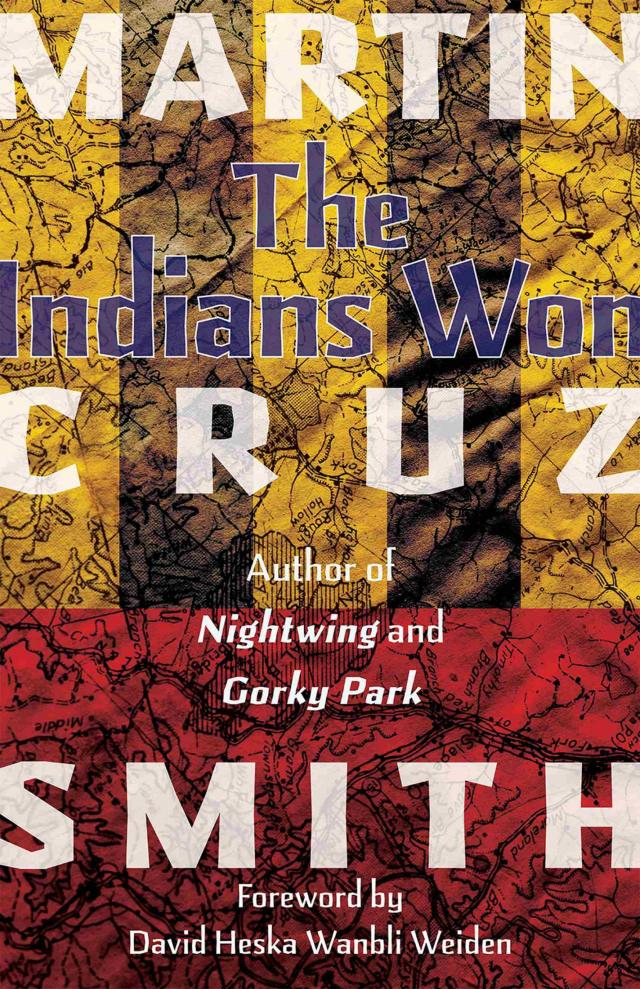
Cover photograph by Nik Shuliahin via Upsplash
Designed by Isaac Morris
Composed in Pilsner and Utopia
For Em and in memory of Robert Riggs
Contents
Foreword
David Heska Wanbli Weiden
Prologue
Chapter One
Chapter Two
Chapter Three
Chapter Four
Chapter Five
Chapter Six
Foreword
Let me just say it up front: The Indians Won is a groundbreaking work of Native American fiction and deserves to be included in the canon of Indigenous literature. The novel is apparently the first alternate history to be written by a Native author, though others would take up the form in years to come. The book is enormously entertaining to read, but there’s a deeper message within its pages. The Indians Won presents a unique vision of Indigenous sovereignty and identity, one that’s even more important today than when it was published.
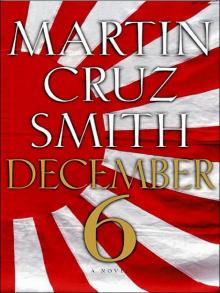
I imagine many readers are surprised by the description of Martin Cruz Smith, bestselling author and Mystery Writers of America Grand Master, as a Native American writer. I’ll admit that I was as well, as Smith is not usually included in discussions of major Indigenous authors. But Martin Cruz Smith is Pueblo, as noted in the first edition of the novel;1 his mother, Louise Smith, was a jazz singer later known for her work in support of Native American rights. I discovered this fact in the early 2010s, when I was doing thesis research for my MFA degree at the Institute of American Indian Arts in Santa Fe. That thesis was an attempt to trace the first Native American crime writers, and my work led me to Smith’s novel Nightwing,2 arguably the first thriller written by an Indigenous author. I’d long been a fan of Smith’s Arkady Renko novels, including the wildly successful Gorky Park, and I was astounded to discover that Smith is, in fact, Native American. Delving more deeply into Smith’s books, I found references to his first published novel, The Indians Won, long out of print and difficult to find in the rare book marketplace.
After several weeks of searching, I was able to locate a battered copy of the original Belmont Books paperback edition, which listed the author as “Martin Smith” and noted that he was twenty-seven years old, a recent graduate of the University of Pennsylvania, and lived in New York with his wife and small daughter. I later learned that Smith added his maternal grandmother’s maiden name, Cruz, in the 1970s in order to distinguish himself from the other Martin Smiths who were writing at the time. I was (and still am) impressed by the fact that Smith wrote the novel just several years out of college, and while raising a family and working in journalism. What I found in the yellowed and frayed pages of my copy of The Indians Won surprised me.
The novel is divided into two alternating timelines. The first, set in the mid-1800s, imagines a world in which the great leader Crazy Horse had not been assassinated and instead worked, along with the fictional character John Setter (also known as Where The Sun Goes), to unite all of the Native nations in North America. Backed by weapons supplied by European powers, the unified Natives defeat the American forces and establish a pan-Indian nation in the middle of the continent. The narrative is filled with historical figures such as Sitting Bull, Geronimo, Red Cloud, and Wovoka, and it details their actions in the alternative universe wherein the Natives were able to defeat the colonizers and retain their freedom and land. The second timeline envisions the same country, known as the Indian Nation, in the 1970s. The nation, now well established and governed by Indigenous principles, is a nuclear power and engaged in a cold war with the United States, which exists only on the coasts.
My favorite sections of the novel are Smith’s vivid descriptions of the battles between the American and Indian forces in the first timeline. We see famous American generals completely overwhelmed by the military strategies employed by Indigenous leaders, primarily Crazy Horse. For the Native reader, these passages are, of course, incredibly satisfying. I found myself pumping my fist and actually cheering while reading these chapters.
But the machinations and maneuvers of these well-known Natives in their battles to create their own country reveals something else: a vision of how a pan-Indian nation would have come into being, and how such an Indigenous state would have differed from the Western capitalistic system that ultimately prevailed. It’s tempting to focus on the book’s descriptions of Native forces overwhelming the American army, but—in my opinion—the enduring value of the book lies in its conception of Indigenous governance, culture, and ideals of the Indian Nation, the fictional state formed after the defeat of the American forces.
I’ll argue that The Indians Won not only depicts what might have been historically, but what still could be. That is, the novel envisions a world in which Indigenous principles are used to benefit and unite Native peoples in a way that’s radically different than in Western democracies. In the twentieth-century timeline, the Indian Nation stays neutral in World War II, declines to join the United Nations, disavows economic and political expansionism, and remains true to traditional Native values. There are no banks, because “the idea of hoarding money was repugnant.”3 Foreign trade is discouraged, and factories create goods only for Native citizens. Yet this rejection of modern capitalism serves the Indian Nation well. “It had no wars since its liberation, no mass depressions economically or spiritually, never shown signs of intellectual discontent.”4
Smith’s historical reimagining depicts how a traditionally communitarian political system might have operated and provides a roadmap of sorts for Native communities in the twenty-first century, one in which Indigenous citizens work together for common goals.5 Collective resistance and activism—from Alcatraz to Standing Rock—has remained an important part of the struggle for Indigenous rights, and these movements are likely to continue. The Indians Won provides an alternative vision for a Native future, one in which Indigenous values are central for intergenerational self-determination, liberty, and equality.
In the end, The Indians Won is a great read by one of the masters of modern fiction. I believe the time is right to introduce this wonderful book to a new generation, one that will enjoy it and embrace its lessons as we continue the struggle for sovereignty and justice around the world.
–David Heska Wanbli Weiden, Native Edge Series Editor
Notes
1. Martin Smith, The Indians Won (New York: Belmont Productions, 1970).
2. Martin Cruz Smith, Nightwing (New York: W. W. Norton & Co., 1977).
3. Smith, The Indians Won, 201.
4. Smith, The Indians Won, 205.
5. I acknowledge my debt to an excellent scholarly article by Sara Spurgeon and recommend it to those interested in further commentary on the novel. Sara Spurgeon, “‘The Bomb Was like the Indians’: Trickster Mimetics and Native Sovereignty in Martin Cruz Smith’s The Indians Won,” American Quarterly, 66, no. 4 (2014): 999–1020.
The Indians Won
Prologue
In the chateau of Azay le Rideau, in the summer of 1875, a private conference was being held between representatives of five nations. These men had met during the past five years to discuss international monetary affairs. They did not represent their countries so much as they represented countries within countries; that is, the sources of power behind a nation’s power.
The topic of discussion was investment. All had experience in individual investment, especially in Africa. This they cared to refer to as primitive finance. The next step, made in twos and threes, finally achieving a sort of concert, had been in China. This entente found that dividing the spoils beforehand was a more efficient manner of colonization and reduced friction between themselves. They were among the most advanced thinkers of thei
r time.
As their carriages drove along the Loire, they expanded their thoughts into that land between fantasy and profit. When a man named John Setter came to talk to them, he found them naturally receptive. They had considered America before, the land they had left such a short time before.
During the Civil War in the United States, they succeeded in having the Confederacy named a “belligerent” and liable to international acknowledgement. They welcomed Confederate agents in London and Paris and bought fifteen million dollars in Confederate bonds. They built warships for the Confederacy and the English government took them past the Union blockade. Sympathy for the Confederacy in European upper-class circles was overt.
In 1861, Emperor Napoleon III sponsored a coalition by the states of Europe for intervention. The Czar refused to join and the first coalition died. A second coalition was proposed in 1862. Part of Queen Victoria’s cabinet voted in favor of it but it was decided to wait another year. A third coalition arose in 1863 with general agreement between the parties that a statement would be made recognizing the Confederacy. Lee, on his way to Philadelphia, was stopped at Gettysburg and the Confederate Armies retreated. There were no more coalitions for intervention. One battle had ended their speculation.
There were other investments, though. A poor one by Louis Napoleon on his own in Mexico, installing the doomed Maximilian. More cautious ones followed the end of the war. The Credit Mobilier financed construction of railroad lines into the Indian Territories with just a little less return than it got from its Chinese investment, taking forty-four million dollars from the Union Pacific venture after bribing a member of the United States Congress to serve as president and persuading the vice president to do its lobbying. They were not completely unaware of the wealth to be made in developing nations.
The representative of the English houses, for example, had visited Canada, the north country that the Americans were always implying would soon fall into their hands. Canada had been invaded twice in vain by the ambitious Yankees, and now the vast English monopoly on the Far West fur trade was being challenged. The logic of the Americans seemed to be that since they owned Washington and Alaska, they should have everything in between, too.
The Frenchman, the host, was offended by the slight France had received in the execution of Maximilian. His friend Jules Ferry demanded a return to la gloire, but bad news was being received from Hanoi where the French Annamese empire was shaken by the Black Flag guerrillas. His hopes were encouraged by the German representative, an appreciator of the local Vouvray. The German followed his chancellor’s policy of diverting French energies into colonial concerns to take their minds off the fact that they had lost Alsace and Lorraine to Germany during the 1870 war.
The other two representatives were less passionate about new speculations. The Russian came along mostly to be sure that nothing was said behind his back about Asia. In regard to the rest of the world, he was most idealistic. Before he went to sleep each night, his lips made out the words “Trans-Siberian Railroad.” The Belgian representative was pure good humor. Belgium, a small nation, sat on the Congo while its missionaries surveyed a railroad line across the interior of China. There were profits enough for all, he said. Let us be friends.
They all agreed that it would be enjoyable to see the United States humiliated in some fashion but that they did not see how the humiliation might occur. The possibility that Setter suggested, an Indian Nation cutting the United States in half, was so unlikely as to be ridiculous. Certainly, if the Indians could come together and achieve some sort of military stability and demanded only equipage in return for contracts to the last great source of natural wealth in the world, they would be interested.
But everyone knew that Indians couldn’t stick together.
Chapter One
Nothing lives long, Except the earth and the mountains
—White Antelope
A few feet above the grass hung a flat layer of blue-grey smoke. It seemed to cut in half the warriors who walked through it. Below, out of danger from the smoke, were the bodies of the soldiers, naked and white and red where trophies had been taken.
The bodies stretched through a depression over the prairies and on up to a hill. It was on a retreat to the hill that most of them had died. There were two hundred Wasichu, white men, sprawled among their dead horses, their belts and caps. All of their Springfields had been taken. They had come to the Greasy Grass along the Little Big Horn to herd the people they called Sioux back to their fort. They had also come for revenge.
Twice, already, the army under Generals Crook and Terry had been thrown back by the Lakota, as the Sioux called themselves. Crook had almost lost the Seventh Cavalry at the Battle of the Rosebud. Only a charge by his Shoshone scouts under Chief Washakie had saved him from disaster. It was the job of General Custer to fix the Lakota in one place and hold them until Terry arrived.
Even as they left the safety of their fort, the song “Garryowen” beating jig time, the Seventh Cavalry was expected. Sitting Bull hung from the sacred tree of the Sun Dance until his breasts were torn out and he achieved a vision. Hundreds of soldiers were falling upside down onto the Greasy Grass. He would not be able to fight but he would be able to say that the attack by Reno was only a feint to divert the Indian defense.
When Custer drew up his horses to charge through the camp, as he had charged so well throughout the Civil War and through undefended Indian villages since, he gave the order to dismount instead. In front and on his flanks were the Lakota, the Tsitsistas, Inuna-Ina (Arapaho), their councils of San Arc, Oglala, Uncpapa, Yankton, Santee, and Brule. In front, their bonnets quivering in the air, were the great chiefs Gall, White Shield, White Bull, and Big Road of the Lakota; Wolf That Has No Sense, Yellow Nose, and Two Moons of the Tsitsistas; and in front of all, Tashunka Witko, They Fear His Horses, the chief they called Crazy Horse. There were fifteen thousand Indians in all.
It took little more than an hour. Pte-san-hunka, White Bull, twenty-six years old, had only been bruised by a bullet. He knelt over a body, stripping it. His friend Bad Soup staggered over with the exhilaration of the fight and asked whether White Bull wanted the scalp. White Bull said that the hair was too short, although the struggle had been hard. The Wasichu had shot at him, had clubbed him with a rifle and then tried to bite his nose off.
“Look at him,” Bad Soup said. “Pehin hanska, Long Hair, thought he was the greatest man in the world. Now he is there.”
White Bull stood up and displayed a matched pair of pearl-handled pistols. When the pistols were brought to They Fear His Horses, riders were sent out to agencies in the West, the South, and north to the Siksika, the Blackfeet. Two riders were sent with a small herd of ponies for relays to the Canadian border.
On July 6, the news had reached the East. In a ladder of descending headlines, the New York World said: “Custer Killed—Disastrous Defeat of the American Troops by the Indians—Slaughter of Our Best and Bravest—Grant’s Indian Policy Come to Fruit—A Whole Family of Heroes Swept Away—Three Hundred and Fifteen American Soldiers Killed and Thirty-One Wounded.” The policy derided was the new one of concentration, a change from the previous one of extermination. General Sheridan was placed in charge of ending the insurrection that had defeated two armies and liquidated a third. Orders were sent from Washington via St. Louis that as the Indians broke their vast camp and divided for fresh food for the winter, Crook and Terry should follow them and wipe them out one by one.
Along the Canadian border, the Siksika were not roaming in small families as usual. For years their hunting parties had been smaller and smaller, just as the buffalo herds had been smaller and smaller. In antelope shirts almost pure white, in bright leggings made of Hudson’s Bay Company blankets, the tall Siksika, the ones called Blackfeet, were coming together instead. The eight bands of the North Siksika, the fifteen bands of the Bloods, the twenty-five bands of the Piegan were all coming together and heading south over the Sweetgrass Country. By the times they assembled in Montana Territory, Big Lake would count six thousand of his people.