Commitment, p.44
Commitment,
p.44



“Do you remember, Julie, when Mom wanted to check herself in to a sanatorium?” Donnie asked.
“Oh, Diane always had a sense of drama.”
It was refreshing to have a memory of Julie young.
“She could have been a movie star, your mom.”
They agreed. Cremation.
“And then what?” Donnie asked. Lily held her mother’s hand in the corner.
“Some people bury, too. Diane did go to church growing up. I think she thought you could sprinkle some of the ashes and keep a few, for each of you. I’d like a little, too.”
The head nurse finally called someone to pick up Diane’s body. By the time the man arrived it was nearly two. He threw her light form over his shoulder, the sheet still wrapped around, and took her away. Then he was gone.
Donnie still didn’t want to leave. Walter stood up holding his keys.
“It’s too late to drive all that way,” Julie said.
The head nurse had one of the janitors open Dr. Moss’s old house, which was being turned into a museum. The downstairs was already set up with exhibits, but they could sleep in the old bedrooms upstairs. She’d sent someone over already with sheets. The new superintendent lived off campus.
* * *
—
Walter, Lina, and Troy decided to walk. Even in the dark they saw mountains, a denser black, against the small stars.
“Did I ever tell you, in Berkeley, I lived for a while in an attic. I liked the way I was then,” Walter said. “Maybe I’ll stop working. Go back to school.”
“I’m relieved to have a job,” Lina said. “That’s why I came back; I saw a world going on and wanted to join it. I’m painting more now that I have a job. It’s less pressure. For a long time, I thought there was something I had to pull out of myself; I didn’t know if it was a huge talent or a huge rage, but if I didn’t get it into the air it would be my fault for not trying hard enough. It felt like there was one conversation going on in the art world. I wanted to be in it. There seemed no other reason for me to be alive.”
“There are plenty of reasons. I need you to talk to me when we’re old.”
“Remember once I told you I worried about getting what Mom had and you said that I was different? That did a lot for me.”
“Good,” he said, “’cause it’s true.”
Walter’s benediction proved true over the following years, though there were days, sometimes two or even four, when Lina stayed in bed. She couldn’t imagine what Sacha would have done with her when she was like that. She would have had to strain, as her mother had. When it happened, Troy assumed his business voice on the phone, saying the director was sick and shouldn’t be expected back this week. He brought her a tray with food and a cool towel. Still, most days during the decades that followed, Lina was well. She and Troy threw their first dinner parties. On Saturdays, they liked shopping at out-of-the-way places for household things. Lina remembered her mother’s and Julie’s excitement once in a store with Scandinavian enamel cookware, when they were each organizing their young homes.
It’s a pot, Mom, Lina had said. “I was a brat,” she told Troy.
She read that Keats put on a clean white shirt in the evening, to write his poems. She and Troy both worked after dinner and all day long on Sundays. She’d kept up her research on treatment of what had once been called a female illness and collected notations from doctors, nurses, and patients during the long twentieth century. Some of her materials now were found, not made. She’d also begun to paint simple objects with no context in egg tempura. She’d always loved Morandi’s flat backgrounds. It felt important that she and Troy had known each other from the beginning. They understood what the other aspired to, the risks, disappointments, and accommodations. Troy’s collages became larger and larger. She loved what he made.
“The one I’m worried about now is Donnie,” Walter said, walking over to the doctor’s house. “He was so close to Mom. I think he could be heading for trouble.”
Lina tensed. “You mean drugs?”
“No, just depression.” But nothing like that happened for a long time, not until Sylvie died, and then Caroline and the kids brought him a puppy before he was ready, and did the night bathroom-training sessions until he took over.
* * *
—
The morning they awoke in the superintendent’s house, Shirley climbed upstairs, thumping an umbrella. “I was just at the morgue,” she said. “My Diane.”
Shirley still lived in Norwalk and was working as a travel agent. In fact, she said, she was leaving for a cruise on the Yangtze River with her granddaughters in two weeks—industry perks; she was glad she was here now, to say goodbye.
Walter and Lina had been teenagers when they’d met Shirley. It had been pure luck, a slip of paper in a hat, that Shirley had been their mother’s nurse. Lina had never thought of her mother as lucky during the years Lina considered the tragic period of her life. But in this place—among the falling-down buildings and poor-quality grass, the trees that had not been pruned for decades—here was Shirley, still radiant today, as her face folded in comprehending sorrow. She came to the hospital two Fridays a month now, she said, to work with another retired nurse on the archive. They’d put together the museum downstairs. She would invite them to the ribbon-cutting ceremony when it opened.
They walked through what had once been the doctor’s house. In the daylight, they saw that the living room had been painted olive green, and when you pressed a button, the new round-faced superintendent delivered a speech in his lilting accent on a video monitor. He said that the hospital was changing. He said the things people say on a weekday morning in an institution that has been evidently failing for years. Here we want to acknowledge and honor our past. Of course, not everyone would agree to honor what had been done in hospitals like this in the past.
But this hospital had mostly done right by their mother, Lina thought, as she wandered through the room, past pictures of the hospital in its manicured prime. There were explanations of a complicated history stenciled on the walls. The hospital had been first sited for Beverly Hills.
In what had been the dining room, where she’d long ago eaten a tuna sandwich, there were portraits of old people taken by student interns. Mounted next to these color pictures were the black-and-white class photographs of the nurses, in the white uniforms and hats that they’d worn. “When we stopped wearing the uniforms, your mom asked me, ‘What happened to all the little mothers?’ ”
You pressed a button next to a portrait and heard a voice. There was a portrait of Dr. Moss, but no button. He’d died before the oral history project.
Lina pressed a button and a thin voice came out of the speaker.
There used to be a whistle, when you came onto work and then again when your shift ended.
We used to stand at attention when the doctor walked on the ward. Most everyone that worked in the hospital lived on the grounds then. The doctors had their own residences and there were buildings for the rest of us. We had to eat our meals in the cafeteria but the doctors could order canned goods and flour from the storeroom, to cook in their residences. They also had patient help.
“We lived in those apartments when we were first married,” Shirley said. “You know I met my husband working here.”
A vitrine displayed the machine that administered electroshock with its old black-coated wires hanging, the clamps empty. The chairs they’d used for ECT, the bakery bowls, corsets for camisole restraint, the booties the patients wore on the wards—were all put in glass cases with typed labels.
“Remember the bread?” Shirley said.
Walter headed to the morgue to ask when they could pick up the ashes. Lina wanted to see James Hall. She would probably never come here again. Inside was a pretty auditorium, nicely finished with high windows and a modern stage, lighting, and sound equipment. It reminded Lina of the community room at her school. She’d known Walter sent a check, but he’d probably also sketched these windows, and sourced the wide-plank floors. He’d told her once that there had been a wedding here—two patients, he thought. Walter had always loved love stories. Lina asked, “Did two patients ever get married here?”
“No. Couldn’t have been. We always kept them apart. Even at the dances, the female patients could only dance with doctors or staff. Patients were not allowed to dance with other patients.”
They walked over to 301, where Lina collected their mother’s few belongings. Shirley headed to the library, where the other retired nurse was already working. Julie said maybe today she’d join. She had an idea about making a display of some pictures she’d taken of Diane’s flowers.
Donnie wanted to go to the geri unit with Sylvie to say hi. Everyone in Geri remembered Sylvie.
In the small room where Shirley and the other retired nurse worked, boxes of files covered every surface. The mountains of papers were enormous, clearly more than these women could sort if they worked every day between now and when they died.
Walter finally returned with a receipt. “They asked for Mom’s maiden name. People whose mothers were murderers are still probably asked what is their mother’s maiden name.”
Then it was time for them to leave. This was the last time they’d ever be here. Walter asked if they’d seen the inscription on the lintel of James Hall. It was a poem Carrie had once given him.
An autumn night
Don’t think your life
Didn’t matter.
—Basho
“He wrote that in 1694,” Walter said. The last year of his life.
Acknowledgments
I’ve been amused, consoled, and inspired by daily conversations about fiction with Michelle Huneven, whose suggestions have made not only this book but also my life better. My Friday page exchanges with Yiyun Li (LMWN!) turned writing these novels into a companionable effort. A writer couldn’t have a more sustaining family. Richard Appel, a treasured early reader for decades, and Gabriel Jandali-Appel offered insights from early drafts on: thank you; Grace Jandali-Appel has become my lifelong reading partner. I owe much to Elma Dayrit for beauty and order in my home life.
Randall Kennedy, a daily friend through the years of writing Commitment, coached me with encouragement, humor, and intellectual provocation. John Shumate saved me, time and again, from ruinous losses at the hands of Microsoft Word. I’m grateful to Christopher Bollas, not only for his important and mind-expanding work, but for our discussions about medical and spiritual varieties of despair. Thomas Helscher teaches me about resilience, layer by layer. James Rosenfield provided my education in development, decency, and neighborhood.
Rebecca McClary, Cindy Lusch, and Bin Plume at Metropolitan State Hospital spoke to me about hospital life and led me to Emily Wong, Erma Aalund, and especially Shirley Olmsted, three indefatigable women who were exceptionally generous with their memories. I’m moved by their archival work to preserve records of efforts to ameliorate the suffering of now long-forgotten patients. Any inaccuracies are mine, not theirs. Metropolitan State Hospital allowed me to visit multiple times, which helped me gain a sense of the physical grounds and their lingering past.
Binky Urban has been a friend and advocate for decades, years before I published my first book—thank you for your enduring support. I’ve worked with Ann Close since 1985 and have always benefited from her subtle, unerring ability to discern the inner wishes of a story. Her voice, in its distinctive accent, is by now embedded in my sensibility. This book was written in memory of my mother, our past, and what might have been and dedicated to Kevin Thomas, my future.
A Note About the Author
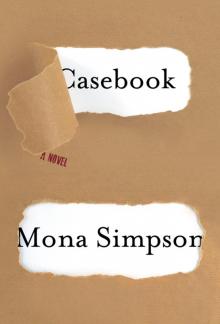
Mona Simpson is the best-selling author of Anywhere But Here, The Lost Father, A Regular Guy, Off Keck Road, My Hollywood, and Casebook. She has received a Whiting Writers’ Award, a Hodder Fellowship at Princeton, a Guggenheim grant, a Lila Wallace–Reader’s Digest Writers’ Award, an American Academy of Arts and Letters Literature Award, and the Mary McCarthy Prize. Off Keck Road was a finalist for the PEN/Faulkner Award and won the Heartland Prize from the Chicago Tribune. She was recently elected to the American Academy of Arts and Letters and is the publisher of The Paris Review, where she worked as an editor in her twenties. She lives in Santa Monica, California. She’s on the faculty at UCLA, where she often teaches Middlemarch.
What’s next on
your reading list?
Discover your next
great read!
Get personalized book picks and up-to-date news about this author.
Sign up now.
_142879849_
Mona Simpson, Commitment