Tuck everlasting 50th an.., p.1
Tuck Everlasting, 50th Anniversary Edition,
p.1
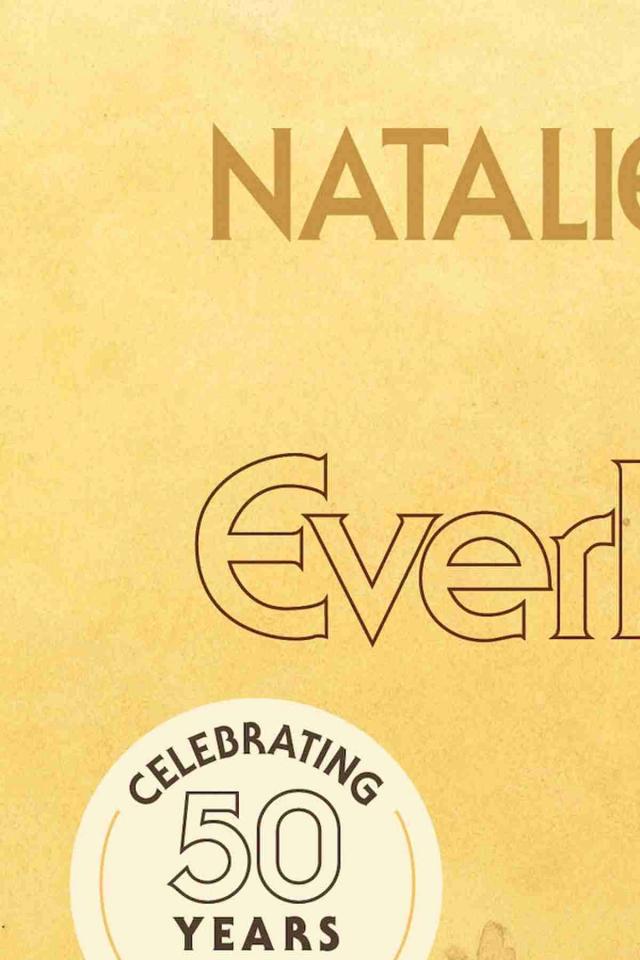


Begin Reading
Table of Contents
About the Author
Copyright Page
Thank you for buying this
Farrar Straus Giroux Books ebook.
To receive special offers, bonus content,
and info on new releases and other great reads,
sign up for our newsletters.
Or visit us online at
us.macmillan.com/newslettersignup
For email updates on the author, click here.
The author and publisher have provided this e-book to you for your personal use only. You may not make this e-book publicly available in any way. Copyright infringement is against the law. If you believe the copy of this e-book you are reading infringes on the author’s copyright, please notify the publisher at: us.macmillanusa.com/piracy.
Foreword
• GABRIELLE ZEVIN •
When you are a child, there are talks for every subject: how babies are made, how to deal with a stranger or a bully, how to behave on an airplane or at a sleepover. There are talks for everything, except, strangely, death! Death, a child is meant to figure out for herself. The revelation may be brutal, arriving on the heels of a pet’s or grandparent’s abrupt exit from this earth. A child is justified in thinking, “We spent weeks on airplane trips! Why didn’t we cover the end of you and me, and everyone and everything we love?” The subject of death, when it is addressed, is often ceded to children’s book authors.
I cannot remember when I knew I would die, but I do remember the first time I read Natalie Babbitt’s Tuck Everlasting. I was nine years old, and my closest friend was my teacher. I lived in New York, not too far from the place Tuck is set. I remember seeing Tuck’s distinctive yellow cover (with its painting by the author) around my elementary school. It was one of those books that everyone in my class had read even though it hadn’t been assigned, the increasingly battered library copy making its way from one kid to the next. Tuck Everlasting was rumored to be terribly sad, but in a pleasurable way, like Katherine Paterson’s Bridge to Terabithia, Lois Lowry’s A Summer to Die, or E. B. White’s Charlotte’s Web. The ultimate insult in the 1980s was to be called a “crybaby,” and yet, we loved to make ourselves cry! The measure of a good children’s book was how much we wept while reading it. The first time I read Tuck Everlasting, I cried a lot—it was a very good book.
My child self deemed Winnie Foster, the protagonist of Tuck Everlasting, an entirely convincing ten-year-old, and my adult self agrees. When we meet Winnie, she is aggrieved by both the confinements of her life and the way she is perceived by her family. She longs for adventure but is scared to spend the night at someone else’s house. Something I admire in Babbitt’s characterization is how often Winnie is depicted in solitude. She doesn’t confide in a friend. She has adults who care for her, but none with whom she can share the innermost secrets of her heart. She puzzles out the mysteries of the world alone. The questions she contemplates in Tuck are enormous for a person of any age: If you could live forever, would you? What is the value of a mortal life? Is killing sometimes justified? Winnie may be ten, but Babbitt believes her to be up to the task.
Reading Tuck today, thirty-seven years after I first read it, I am struck by its lack of condescension—both in the way Winnie is depicted and in the demands Babbitt makes of her ostensibly young audience. Consider the moment in the book when Winnie observes Tuck, the father, watching another man die:
She turned her eyes away quickly, looking to Tuck for relief. But Tuck was not looking back at her. Instead, he was gazing at the body on the ground, leaning forward slightly, his brows drawn down, his mouth a little open. It was as if he were entranced—and yes, envious—like a starving man looking through a window at a banquet. Winnie could not bear to see him like that. She reached out a hand and touched him, and it broke the spell.
Winnie’s observation that it is possible for a person to be “envious” of a dying man is extraordinary, but within this paragraph, we also see Winnie’s transition from child to adult: She seeks comfort, but then finds herself offering it instead. Throughout the text, I appreciate the interactions between Winnie and all the members of the Tuck family. They treat her like a person capable of understanding complex things. They offer explanations, but they allow her the space to come to her own conclusions. It is a space given to the readers of Tuck, too.
This kind of space can occasionally be scary for adults. In an interview in Publishers Weekly for the fortieth anniversary of the book, Natalie Babbitt described a father punching a school principal because he found the book too scandalous to be taught in schools. The article doesn’t say what the father found so provocative in the text. It’s tempting to imagine this interaction as the relic of a less enlightened era until you remember that we are currently living through a similarly unenlightened era.
I found myself wondering what had scandalized that father so much. Although it is fewer than two hundred pages, Tuck Everlasting contains a kidnapping, a prison break, a murder, a potential hanging, attempted extortion, and, of course, that magical spring. There is an almost marriage proposal, a mouse in a drawer, an immortal toad, and an evil land developer. But I don’t believe the man was provoked by any of those things. Natalie Babbitt once said, “I wrote Tuck to help [my daughter] Lucy understand what life is all about—that we all get born and we all have to die … I wanted to be sure Lucy would not grow up scared.” There are some adults who do want children to grow up scared, and I suspect the principal-assaulting father might have been among them. On some level, isn’t this the great work of the children’s book author? To discuss the hardest subjects, the ones parents would rather avoid. To help a child not grow up scared.
For a children’s book, the most expedient path to immortality—the magical spring, if you will—is winning a prize. In an interview for the twenty-fifth anniversary of the book, Natalie Babbitt discussed Tuck Everlasting’s failure to receive either the Newbery Medal or an Honor. The interviewer, Betsy Hearne, speculated that the book’s omission was because Tuck’s themes are too morally complicated for a child reader. Babbitt said she had heard from a prize committee member that Tuck lost because of a perceived logical fallacy in the book. Babbitt’s theory aligns with what I know of children’s book prize committees. They sometimes seem to confuse literary ambiguity with error. A great novel, and Tuck Everlasting is a great novel, should not ever entirely resolve itself in one’s mind. A great novel does not need to anticipate every perceived objection to it. A great novel poses as many questions as it answers.
When I was asked to write this introduction, I thought, “How can Tuck Everlasting be fifty years old?” And then I remembered that I am approaching fifty years old! Tuck Everlasting is only two years older than me, and this, my friends, is how time works. Natalie Babbitt was forty-three when she wrote Tuck, and now she is dead; I am forty-six as I write these words, and if any of my books last fifty years and merit anniversary editions, I will likely be dead, too. I believe I am the first person to write an introduction for Tuck Everlasting who read the novel as a child. The tragedy of children, of course, is that they are future old people. This is something that all good children’s book authors know. Whether Winnie Foster will join the ranks of the old is perhaps the novel’s central question. When the answer comes in the book’s final pages … well, that’s the part of the book that gets me every time.
“Dying’s part of the wheel,” the elder Tuck explains to Winnie at an earlier point in the novel, “right there next to being born. You can’t pick out the pieces you like and leave the rest. Being part of the whole thing, that’s the blessing.” I cried at age nine. I cried again when I revisited the text in my twenties around the time I was writing my first children’s novel: Elsewhere even quotes from Tuck at a key emotional moment, the part where everyone cries. I cried yet again when I read Tuck to write this introduction. And so the wheel turns. Much has changed about my taste in novels since I was nine, but the one consistent thing is that Tuck Everlasting will always make me cry.
Prologue
The first week of August hangs at the very top of summer, the top of the live-long year, like the highest seat of a Ferris wheel when it pauses in its turning. The weeks that come before are only a climb from balmy spring, and those that follow a drop to the chill of autumn, but the first week of August is motionless, and hot. It is curiously silent, too, with blank white dawns and glaring noons, and sunsets smeared with too much color. Often at night there is lightning, but it quivers all alone. There is no thunder, no relieving rain. These are strange and breathless days, the dog days, when people are led to do things they are sure to be sorry for after.
One day at that time, not so very long ago, three things happened and at first there appeared to be no connection between them.
At dawn, Mae Tuck set out on her horse for the wood at the edge of the village of Treegap. She was going there, as she did once every ten years, to meet her two sons, Miles and Jesse.
At noontime, Winnie Foster, whose family owned the Treegap wood, lost her patience at last and decided to think about running away.
And at sunset a stranger appeared at the Fosters’ gate. He was looking for someone, but he didn’t say who.
No connection, you would agree. But things can come together in strange ways. The wood was at the center, the hub of the wheel. All wheels must have a hub. A Ferris wheel has one, as the sun is t
he hub of the wheeling calendar. Fixed points they are, and best left undisturbed, for without them, nothing holds together. But sometimes people find this out too late.
1
The road that led to Treegap had been trod out long before by a herd of cows who were, to say the least, relaxed. It wandered along in curves and easy angles, swayed off and up in a pleasant tangent to the top of a small hill, ambled down again between fringes of bee-hung clover, and then cut sidewise across a meadow. Here its edges blurred. It widened and seemed to pause, suggesting tranquil bovine picnics: slow chewing and thoughtful contemplation of the infinite. And then it went on again and came at last to the wood. But on reaching the shadows of the first trees, it veered sharply, swung out in a wide arc as if, for the first time, it had reason to think where it was going, and passed around.
On the other side of the wood, the sense of easiness dissolved. The road no longer belonged to the cows. It became, instead, and rather abruptly, the property of people. And all at once the sun was uncomfortably hot, the dust oppressive, and the meager grass along its edges somewhat ragged and forlorn. On the left stood the first house, a square and solid cottage with a touch-me-not appearance, surrounded by grass cut painfully to the quick and enclosed by a capable iron fence some four feet high which clearly said, “Move on—we don’t want you here.” So the road went humbly by and made its way, past cottages more and more frequent but less and less forbidding, into the village. But the village doesn’t matter, except for the jailhouse and the gallows. The first house only is important; the first house, the road, and the wood.
There was something strange about the wood. If the look of the first house suggested that you’d better pass it by, so did the look of the wood, but for quite a different reason. The house was so proud of itself that you wanted to make a lot of noise as you passed, and maybe even throw a rock or two. But the wood had a sleeping, otherworld appearance that made you want to speak in whispers. This, at least, is what the cows must have thought: “Let it keep its peace; we won’t disturb it.”
Whether the people felt that way about the wood or not is difficult to say. There were some, perhaps, who did. But for the most part the people followed the road around the wood because that was the way it led. There was no road through the wood. And anyway, for the people, there was another reason to leave the wood to itself: it belonged to the Fosters, the owners of the touch-me-not cottage, and was therefore private property in spite of the fact that it lay outside the fence and was perfectly accessible.
The ownership of land is an odd thing when you come to think of it. How deep, after all, can it go? If a person owns a piece of land, does he own it all the way down, in ever narrowing dimensions, till it meets all other pieces at the center of the earth? Or does ownership consist only of a thin crust under which the friendly worms have never heard of trespassing?
In any case, the wood, being on top—except, of course, for its roots—was owned bud and bough by the Fosters in the touch-me-not cottage, and if they never went there, if they never wandered in among the trees, well, that was their affair. Winnie, the only child of the house, never went there, though she sometimes stood inside the fence, carelessly banging a stick against the iron bars, and looked at it. But she had never been curious about it. Nothing ever seems interesting when it belongs to you—only when it doesn’t.
And what is interesting, anyway, about a slim few acres of trees? There will be a dimness shot through with bars of sunlight, a great many squirrels and birds, a deep, damp mattress of leaves on the ground, and all the other things just as familiar if not so pleasant—things like spiders, thorns, and grubs.
In the end, however, it was the cows who were responsible for the wood’s isolation, and the cows, through some wisdom they were not wise enough to know that they possessed, were very wise indeed. If they had made their road through the wood instead of around it, then the people would have followed the road. The people would have noticed the giant ash tree at the center of the wood, and then, in time, they’d have noticed the little spring bubbling up among its roots in spite of the pebbles piled there to conceal it. And that would have been a disaster so immense that this weary old earth, owned or not to its fiery core, would have trembled on its axis like a beetle on a pin.
2
And so, at dawn, that day in the first week of August, Mae Tuck woke up and lay for a while beaming at the cobwebs on the ceiling. At last she said aloud, “The boys’ll be home tomorrow!”
Mae’s husband, on his back beside her, did not stir. He was still asleep, and the melancholy creases that folded his daytime face were smoothed and slack. He snored gently, and for a moment the corners of his mouth turned upward in a smile. Tuck almost never smiled except in sleep.
Mae sat up in bed and looked at him tolerantly. “The boys’ll be home tomorrow,” she said again, a little more loudly.
Tuck twitched and the smile vanished. He opened his eyes. “Why’d you have to wake me up?” he sighed. “I was having that dream again, the good one where we’re all in heaven and never heard of Treegap.”
Mae sat there frowning, a great potato of a woman with a round, sensible face and calm brown eyes. “It’s no use having that dream,” she said. “Nothing’s going to change.”
“You tell me that every day,” said Tuck, turning away from her onto his side. “Anyways, I can’t help what I dream.”
“Maybe not,” said Mae. “But, all the same, you should’ve got used to things by now.”
Tuck groaned. “I’m going back to sleep,” he said.
“Not me,” said Mae. “I’m going to take the horse and go down to the wood to meet them.”
“Meet who?”
“The boys, Tuck! Our sons. I’m going to ride down to meet them.”
“Better not do that,” said Tuck.
“I know,” said Mae, “but I just can’t wait to see them. Anyways, it’s ten years since I went to Treegap. No one’ll remember me. I’ll ride in at sunset, just to the wood. I won’t go into the village. But, even if someone did see me, they won’t remember. They never did before, now, did they?”
“Suit yourself, then,” said Tuck into his pillow. “I’m going back to sleep.”
Mae Tuck climbed out of bed and began to dress: three petticoats, a rusty brown skirt with one enormous pocket, an old cotton jacket, and a knitted shawl which she pinned across her bosom with a tarnished metal brooch. The sounds of her dressing were so familiar to Tuck that he could say, without opening his eyes, “You don’t need that shawl in the middle of the summer.”
Mae ignored this observation. Instead, she said, “Will you be all right? We won’t get back till late tomorrow.”
Tuck rolled over and made a rueful face at her. “What in the world could possibly happen to me?”
“That’s so,” said Mae. “I keep forgetting.”
“I don’t,” said Tuck. “Have a nice time.” And in a moment he was asleep again.
Mae sat on the edge of the bed and pulled on a pair of short leather boots so thin and soft with age it was a wonder they held together. Then she stood and took from the washstand beside the bed a little square-shaped object, a music box painted with roses and lilies of the valley. It was the one pretty thing she owned and she never went anywhere without it. Her fingers strayed to the winding key on its bottom, but glancing at the sleeping Tuck, she shook her head, gave the little box a pat, and dropped it into her pocket. Then, last of all, she pulled down over her ears a blue straw hat with a drooping, exhausted brim.
But, before she put on the hat, she brushed her gray-brown hair and wound it into a bun at the back of her neck. She did this quickly and skillfully without a single glance in the mirror. Mae Tuck didn’t need a mirror, though she had one propped up on the washstand. She knew very well what she would see in it; her reflection had long since ceased to interest her. For Mae Tuck, and her husband, and Miles and Jesse, too, had all looked exactly the same for eighty-seven years.