

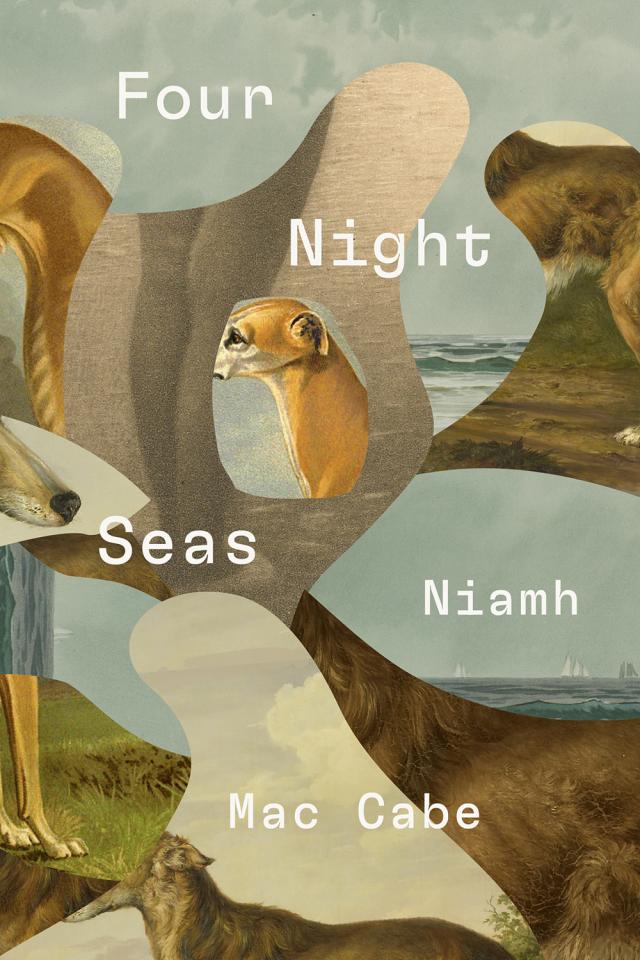
Four night seas, p.12
Four Night Seas,
p.12


The sound of shivery flute rises, like a ghost is on its way. Couples come onto the dance floor. It’s ‘Bright Eyes’ by Garfunkel, it’s the Slow Set. Me and this boy, we’re still standing together on the edge of the floor, standing where we don’t belong because the Slow Set is for couples only. The real ones are starting to dance around us like zombies. I reach my hand up to touch his shoulder. He turns, says thank you and leaves.
I’m standing on the edge, half-in, half-out, my hand still held up. I shove it deep into my pocket, my brother’s jeans pocket, why did I wear these, what the feck is wrong with me, no cop. I feel the pebbles, and my compass. I close my fingers around it. These stupid trousers are too big for me. I look down at the floor. The coloured lights are weaving east and west, north and south, marking figure eights on the floorboards.
Things I Should Have Done Instead of What I Did
Legged it off the dance floor the moment YMCA was spelt out for the last time, saying ‘thank-you-good-night’ to the boy
Replied: ‘To this shite? Not in a trillion light years’ when he asked me to dance in the first place
Headed straight for the ladies’ jacks the minute I arrived, and stayed there, counting the dead moths
Remained in the Cortina and told The Wally to drive me around if he likes driving that much
Stayed in my room
I hear the sneering begin. Some of the couples have started to bump into me for the laugh, saying oops a speed bump. And here’s Garfunkel chanting away, what is it, a glorious death-river to be followed downstream by those with cop, it appears. Deep breath is what Mam always suggests when things go black. I get the idea of what to do. She’d be disappointed. Sorry, Mam.
I think of my room, just six fields, a wood and one slow stream away. My room, not much more than a half-hour trek from here, as the crow flies. My good thing south-west of where I’m currently standing among these gits. I shove hard the next couple who bash into me. They skittle into another couple. The lot of them give me wide berth then, gawking at me standing there with the compass in my hand.
Look, yes, the fire is lit, I have it hot-strong in my head. I’m thinking about the bees, how they dance for each other, to tell each other the fastest way to a good thing nearby, nectar for the babies, nectar for the queen. I check the compass, and turn to face south-west. I picture a figure-of-eight pattern on the floor, put myself in the eight’s centre, twirl once for the crowd like the ballerina in my old wind-up music box, and start to do the bees’ Waggle Dance. March forward leftwise, quivering like a belly dancer, two, three, four steps, a wide turn to the right, circle back to the starting point, one foot in front of the other, no one says a word other than Garfunkel’s keening about eyes on fire, another waggle run forward, two, three, four steps, turn to the left, back to the starting point and forward again, a jittering spectacular is I, six fields, a wood, a stream is what I’m saying, it’s not far, go.
I’m thinking of The Twins (forward shudder) their eyes (turn to the right) somewhere out there (circle back). And now I feel tears rising, my fire dousing. I do one more run-through. When the final circuit is nearly finished, I ready myself. Don’t stall, don’t look around. Go. I run in the direction of the door. Some start to clap. I push through the crowd and it parts, closing in after me like a zipper. I leave, into the night air, the door swings shut behind.
The Wally is already parked up, waiting, leaning against the bonnet, practising his smoke rings. He doesn’t see me. I give the two fingers to his back, slow and special for him, then say loud Well fancy meeting you here, Big Wally. When he turns, I tell him I think he’s a brilliant driver. Really? he says, you messing or what? He opens the passenger door. I blow him a kiss. Must dash, I say.
I skirt around the back of the building. I hear him calling after me. I run into the dark, up over the ditch, across the night fields, towards my wood, my cold little stream, and I know now what this summer’s school project’s going to be, it’s going to be about the sword razor shells I found in the woods, them so very far from shore, and all the possible reasons how they got to be in that particular place among the trees many many miles from where they belong.
GOLDEN STONE TERRITORY
It’s early evening, after the last feed of the day. She’s meandering through a garden thick with hoverflies and scents. She pauses frequently, gathering pockets of information, some new, some old, some ancient, cross-referencing each with her memories of the same journey this time yesterday. Her path appears chaotic: forward, reverse, a tight circle, stall, forward. She only knows what she’s looking for when she finds it. Pausing, she analyses each find before moving on towards the next.
Nose down, the tips of the grass catch the diamanté B that tinkles from her collar. She finds a place where another bitch has urinated. The mark wasn’t there yesterday. Snorting the scent, she notes: unfamiliar, close to oestrus, well-fed, a recent trespass. Manoeuvring her rump over the spot, she urinates in short robust spurts, and pads on.
She’s making for the rear of the house. Though her snout skims the ground, her ears are cocked for sound. Usually the old man has appeared at the door at this point, roaring in her direction and striking the doorstep with his stick. She always slinks away from this challenge, her ghost tail held between her legs (it was docked at birth but she does not know this), heading back towards the scraggy hole she made in the privet hedge separating her home territory from this no-man’s-land compilation of scents.
Yesterday, on her way back home through the hedge, she sniffed out a mystery: her own faeces, which she’d excreted earlier in no-man’s-land, now wrapped in a small plastic bag, hanging caught on her side of the hedge, the scent of her excrement paired with the scent of the old man.
Sometimes there is commotion, an exciting hostility, when he flings stones from the driveway at her as she retreats. She chases down these trophies in the grass. This seems to make him even more aggressive. The game, if the man plays it, is this: he shouts and throws, she catches and runs for escape, muzzle aloft, holding the prized golden stone stamped with the thrilling smell of her human territorial rival. Back home, she deposits these trophies among her collection of sticks and stones by her own back door, gifts for her pack.
This evening, there’s no man. She gives this little consideration, dealing only with what there is, being incapable of dealing with what there is not. Reaching the top of the garden, she defecates, and paws clumps of soft lawn over her excrement before moving nervously onto the golden gravel of the driveway, in front of the old man’s door.
Here, among the small pebbles, she detects a series of unfamiliar scents. All human. One female, two males. Adults. Not the man from the front door. Latticed around these humans are curious traces of agitation. She notes the scents but does not linger, having edged onto what is undeniably the old man’s territory. Heading for the rear, a place where territorial rights are still in dispute, she trots across the gravel and skirts past the side of the house. Poking her head around the back corner, she spots the cat’s bowl.
The cat is sitting on the threshold at the back door, staring at her, having discerned her approach long before. He flattens his ears, swings his tail, but both know this is no contest. She ignores the faint feline hiss and pads up to his bowl, barely noticing the cat jumping away with a grousing flourish. She gnaws at the remains of the cat food; there are some dried bits left clinging to the sides but no tinge of morning-milk remnant. She’s about to investigate the yielding hatch of the compost bin when she senses the cat engaging. He’s sitting now inside the threshold, enveloped in the safety of the man’s interior terrain. His tail curls contentment around neat paws. He jeers at her through the open back door.
This is new. There is a wide-open door. There is no old man, no stick, no shouting, no game in motion. The two animals lock stares. The cat streaks inward. She follows him, hopping over the conceded threshold, entering the house.
The old man’s domain is dark. She draws in layered indications of him. Other unsettling scents linger from the recent past; on the walls, the floor, the stairs. The kitchen door is agape, the room is empty of life. She walks in.
The combined essence of the three humans she identified earlier is here, vestiges of adrenaline edged with less tangible elements of panic. She pads over the broken crockery and sniffs at the upturned drawers and overturned chairs. No immediate edibles here, though she can ascertain the possibility of food behind the strewn sachets of granulated soup and boxes of dried marrowfat peas on the floor.
An intimation of cat floats in. Turning to find the source, she sees him crouching on the stairs, glaring at her through the banisters. His pupils are wide with alarm. Whiskers lifting, he starts to hiss again. His anxiety excites her. She yips, running straight at him. He flees hissing up the stairs. She chases, her high-pitched yelping resounding off the walls as she scales the steps in giant little leaps.
She stops on the landing. The scents here frighten. The old man: present. Blood: his. Urine: his. Blended undertones of fear, of injury, relics of a troubling wound. Several doors are open. She enters the room that contains the source.
She cowers. Here is the old man. He’s sitting slumped on a chair pulled up to an iron-frame bed. His torso is tied to the chair, his arms are tied behind him and bound to the bed frame with reams of duct tape. The tape covers his mouth, torn strips running around his head. Blood-stained mucus trickles from his nose, over the tape, tracking through a stubbly chin before dripping onto the old floral carpet. His eyes are open, he’s looking towards the door, towards her.
She determines he is immobile, no immediate threat. She sits and observes him. He snorts, but there’s no challenge in the tone, just pain, exhaustion, dehydration, a fragment of anticipation.
She looks away, registers the cat perched on top of the wardrobe. He begins to emit a low grumbling whirr, gawping down at her.
The iron bed is against the wall, by the window. A mottled shaving mirror on the bedroom’s old mantelpiece reflects the setting sun slicing in through the window’s half-drawn curtains. The bedside drawers have been toppled, their contents scattered. Papers, glasses, a blue-crowned bottle of Lourdes holy water, pens, photographs, cufflinks tied with fishing line, a comb. Nothing menacing here. She turns her head to scissor-itch her hindquarters, paws scratching purchase on the carpet.
Blinking dried blood from his eyelids, the old man starts to moan. After a struggle, he arranges the gurgling sound into a sing-song incantation, raising the pitch at the end of each bar. She knows this is directed at her. Without turning her head from her rump, she listens, considering the nuances of his tone. Suddenly recognizing the inflection as an invite to play, she replies with an excited yelp and jumps up, docked tail wagging. Pelt-stiff, the cat crescents. Trouser-leg sodden with urine, the man taps his foot on the carpet. She runs to the spot, whimpering with delight, scratching furious where he has indicated. He moves his foot and taps a different place. She jumps to the new indication, looks up at him, anticipating. She knows this type of game, she plays it at home.
Stretching his foot forwards, he taps the holy-water bottle. She yelps, runs to it, grabs it in her mouth, runs to the door, runs back, whirls several elated tight circles in front of him, drops it at his feet, yelping a cracked full stop. She waits, tongue lolling, gazing back and forth from his face to his feet, her little barrel chest surging.
He turns his head slowly, looking around the darkening room. Small whines rise from his lungs. The distress she discerns in him confuses her. She draws in her tongue, cocks her head.
His eyes come to rest on a colourful mantelpiece ornament propped beside his shaving mirror. The ceramic figurine depicts a jolly, ruddy-cheeked, balding man brandishing a fishing rod. The engraving on the base reads: To Desmond on your Retirement Best Wishes from your Neighbours Nora & Gerard (& your pal Bantam!)
He slides his torso down the chair as low as his ties will allow. Pelvis perched on the edge, he stretches out his leg towards the fireplace. She observes, eagerly following the foot’s progress.
The man’s foot travels up the fire-surround and reaches the edge of the mantelpiece. The figurine is pushed back against the wall. He positions his foot in front of it, taps, stops, taps again, intoning with a series of high-pitched little whines from behind his gag the sing-song invitation to play.
She has watched his foot’s journey, has deciphered what’s expected of her. She jumps. Her muzzle tips the edge of the mantelpiece, she falls back down. Pushing onto her squat haunches, she jumps again, higher, angling her head in towards the ceramic figurine. She grabs at it. She has it. She celebrates in frenzied twirls, yelping through clamped jaws, then drops the prize at his feet.
He pulls himself back into an upright sitting position, wincing behind his spittle-filled gag. Bringing his foot over the dropped figurine, the man hovers there, bolstering Bantam’s attention. Ears raised, she whines in expectation. He taps on it. She snatches it up into her mouth, runs to the door, runs back to him, circles his legs, runs to the door, runs back, drops it once more at his feet.
He taps again, she grabs it again, getting a firm grip, familiar now with the game. She runs in spinning twirls towards the door, the figurine held tight in her jaws, her nose tipping her tail-stump. Round and round she chases herself, delaying the drop at his feet to draw out the thrill.
As she spins, he raises his leg high, pauses, brings it crashing down onto the floor. The powerful thump shocks her. She stops short, figurine still gripped. Stares at him. This is not the game.
He inhales fast through blocked nostrils, and lets out as loud as sharp a shriek as he can through his gag. Atop the wardrobe, the cat begins to bawl, ears flat as blades. The man starts to wriggle, violently, shaking the chair. Cold fear rising in her, she continues to stare. He bashes his foot hard off the floor once more, then kicks out repeatedly at the iron legs of his bed, the sounds clamouring against the walls.
She flees, ghost-tail held tight between her legs, the terror-howls of man and cat chasing her. She bolts down the stairs, out the back door, across his golden stones, heading straight for the privet portal, the figurine trophy with his name emblazoned on it still held in her strong little terrier jaws, back to her own territory, back to her own pack who’ll be waiting for her, wondering where she’s been, wondering why there are no lights on next door, none for these past two nights, at least.
THE SUNDIAL PILGRIMAGE
It’s morning. I’m off again to my tree, my bundle of tricks slung over my shoulder, the summer solstice having played out a few weeks ago.
Every year since the event, when summer is beginning to close in, I go to a different part of the vast forest. There, I select a tree. I always have difficulty choosing. Last year I did a young silver birch, its leaves still sapping green. It took me until early autumn, tangled up in the filigree of lean branches from dawn to dark. The little heart-shaped leaves were difficult to work. My fingers were pricked red-raw, my old eyes gone askew. But all these leaves deserve a chance, and for as long as I’m standing I’m not giving up on a single one.
This summer, I’ve headed east. I found a spindly rowan tree, old enough to have proved its viability and young enough to warrant my help. Rowan leaves are fragile, rowans fancy themselves as strapping ash but in truth they’re nothing like that. The delicate leaflets are arranged around a stem, about twenty to each, though every baby thinks it’s the only one.
I set to, selecting a slender needle from my bag. With it, I choose a silk thread, blue in contrast to the leaf’s green in order to map my progress as I work. I’ve learnt that one unbroken thread-length is best for use on all leaflets radiating from the central stem. Doubling it up and releasing as I sew. A tiny knot at the end. I place the initial snick cautiously, beside a minuscule vein for strength and some ballast for my knot. I start at the terminal leaf, gently piercing the fine-grained cuticle.
The first leaf is always challenging. Sometimes I ask whether it feels pain, any panic in the young tree it’s clinging to, sap fizzing, does it understand the struggle ahead, the stealthy magnet below. Sometimes, when I sense fear from the leafling, I sing a lullaby.
Centred between apex, petiole and midrib, I pull the thread through. When there’s a neat line of stitches perforating the leaf side to side, I sew down towards where the leaf grasps the axis, weaving the thread with the blade’s vascular network. On reaching the base, I circle it, trussing the embroidered leaflet to its stem. I pull the thread taut, without strangling the living anchor, then stitch my way back up the adjoining leaflet in an unbroken track of blue filament.
I know I’m being overly specific, too intricate, but I don’t know which detail could reasonably be left out and which is integral to the structure, a joist, girder, a load-bearing beam. Even if I wanted to, it’s impossible for me now to revert to succinct, to detached abstractions, impossible after everything that has happened.
I work through each glossy blade, fastening them to the stem. I’m careful not to tear the tender green lamina or angle any leaf away from the sky. Each one of them has a predestined position on the stem which I don’t entitle myself to interfere with, my parameters rigidly set from the beginning. To follow the rules without enquiry is the strongest tool in my tricks-bag. Ready, wily as a weasel, I sew.


