Lafayette in the Somewhat United States

Lafayette in the Somewhat United States

Sarah Vowell

Nonfiction / Entertainment

From the bestselling author of Assassination Vacation and Unfamiliar Fishes, a humorous and insightful account of the Revolutionary War hero Marquis de Lafayette—the one Frenchman we could all agree on—and an insightful portrait of a nation's idealism and its reality. On August 16, 1824, an elderly French gentlemen sailed into New York Harbor and giddy Americans were there to welcome him. Or, rather, to welcome him back. It had been thirty years since the Revolutionary War hero the Marquis de Lafayette had last set foot in the United States, and he was so beloved that 80,000 people showed up to cheer for him. The entire population of New York at the time was 120,000. Lafayette's arrival in 1824 coincided with one of the most contentious presidential elections in American history, Congress had just fought its first epic battle over slavery, and the threat of a Civil War loomed. But Lafayette, belonging to neither North nor South, to no...
Read online
  • 17
A Clockwork Orange (UK Version)

A Clockwork Orange (UK Version)

Anthony Burgess

Nonfiction / Literature & Fiction

In Anthony Burgess’s A Clockwork Orange, Burgess creates a gloomy future full of violence, rape and destruction. In this dystopian novel, Burgess does a fantastic job of constantly changing the readers’ allegiance toward the books narrator and main character, Alex. Writing in a foreign language, Burgess makes the reader feel like an outsider. As the novel begins, the reader has no emotional connection to Alex. This non-emotional state comes to a sudden halt when Alex and his droogs begin a series of merciless acts of violence. The reader rapidly begins to form what seems to be an irreversible hatred toward the books narrator. However, as time progresses, Burgess cleverly changes the tone of his novel. Once wishing only the harshest punishments be bestowed upon him, it is these same punishments that begin to change how the reader feels. In fact, by the end of the book, one almost begins to have pity for Alex. The same character that was once hated soon emerges as one of many victims taken throughout the course of the book. Throughout Alex’s narration, Burgess manages to change the readers’ allegiance toward a once seemingly evil character. Alex is the type of character one loves to hate; he makes it all too easy to dislike him. He is a brutal, violent, teenage criminal with no place in society. His one and only role is to create chaos, which he does too well. Alex’s violent nature is first witnessed during the first chapter, and is soon seen again when Alex and his gang chose to brutally beat an innocent drunkard. This beating off the homeless man serves no purpose other then to amuse Alex’s gang. The acts committed were not performed for revenge, the one reason given was that Alex did not enjoy seeing a homeless drunk, “I could never stand to see a moodge all filthy and rolling and burping and drunk, whatever his age might be, but more especially when he was real starry like this one was”. Alex continues to explain his reason for dislike, “his platties were a disgrace, all creased and untidy and covered in cal”, from this explanation one realizes his reasons for nearly killing a man are simply based on pleasure, desire, and a dislike toward the untidy. By the end of the second chapter Burgess’s inventive usage of a different language to keep the reader alienated from forming opinions about Alex ceases to work. At this point in time Alex’s true nature is revealed, and not even his unfamiliar Nadsat language can save him from being strongly disliked by the reader. The more the reader learns of Alex, the more and more he is disliked; Alex’s relationship with his parents only builds on ones already negative opinions toward Alex. Coming from a normal family and a sturdy household free of domestic violence, there is no excuse for Alex’s violent nature. In fact, Alex’s loving parents are just as baffled by his immoral personality as the reader, although because of their naivete, they know much less of what he does. This leaves the reader uninformed and wondering: why is Alex the way he is? Fortunately, just as one begins to question Alex’s motives, Alex gives an answer, “badness is of the self, the one…is not our modern history, my brothers the story of brave malenky selves fighting these big machines? I am serious with you, brothers, over this. But what I do I do because I like to do”. He could not have explained it more clearly. While from one point of view Alex visions himself as a revolutionary, even simpler then that, he is basically admitting he commits violent acts because he enjoys doing so. Later in the book Alex offers another solution for his violent nature, “Being young is like being one of these malenky machines…and so it would itty on to like the end of the world”. These malenky machines he is referring to are very similar to the clockwork orange Burgess talks to in his introduction. Whatever reasons he gives, none of them are valid enough to prevent the reader from hating Alex. In spite of all the hatred aimed toward Alex at this point, seemingly it is not enough to prevent the pity one begins to feel when Alex is abandoned by his “droogs”. Knowing he is the leader of his group, Alex constantly gives orders to his gang. Unfortunately it is due to his tendency to need leadership that a quarrel begins with his gang. After settling the original dispute that arises, Alex and his “droogs” are not so successful at ending their second squabble. Framed by his friends, Alex is arrested while they run away. Furthermore, he is beaten by the police, and sentenced to fourteen years of jail. It only takes two of them for the reader to realize the difficulties that Alex is living through. Throughout the first part of the book, there is in fact only one sign that Alex is not utterly evil, that being his music. Along with his abandonment from friends, it is the music that Burgess uses to help change the readers opinion, and eventually to have pity toward his young antagonist. As the reader continues to pry deeper into Alex’s life it is shocking to learn of the music he listens to, it is because of this music and the actions taken against him that one truly begins to feel sorry for Burgess’s little Alex. The music that Alex chooses to listen is very ironic. While it causes him to do evil things, the fact remains that he listens to normal music, one of the first things he is not disliked for, “lying there on my bed with glazzies tight shut and rookers behind my gulliver, I broke and spattered and cried aaaaaaah with the bliss of it". His particular interest in Ludwig Van arises during one of his sessions while undergoing Ludivico’s Technique. Upon hearing what he perceives to be heavenly music Alex cry’s out about the injustice in the procedure, “I don’t mind about the ultra-violence and all that cal. I can put up with that. But it’s not fair on the music”. It is during this same treatment that the reader really begins to feel sympathy toward him. Striped of his ability to choose right from wrong, and now the same clockwork orange that F. Alexander earlier told him about, Alex becomes one of the governments’ machines. Forced to do exactly what they want him to, become their “true Christian”, Alex poses the question to his doctors, “How about me? Where do I come into all this? Am I like just some animal or dog…am I to be just like a clockwork orange?” Alex is all alone in the world, no longer capable of performing cruel deeds, he is denied by all whom he once knew. The same character one used to wish the harshest punishment upon received it, and when he got it, it becomes strikingly evident that it was much more then even the worst person would ever deserve. Burgess does a magical job at making the reader quickly forget the horrible deeds Alex once committed. Instead by making powerful moral statements, Burgess goes so far that the reader not only turns the other cheek toward Alex’s crimes, but also feels genuinely sorry for him. Alex may not be completely cured, but that is not the issue at hand. Through means of pity and by playing with the readers’ emotions throughout the book, during A Clockwork Orange, Burgess is constantly playing with the reader’s allegiances.
Read online
  • 17
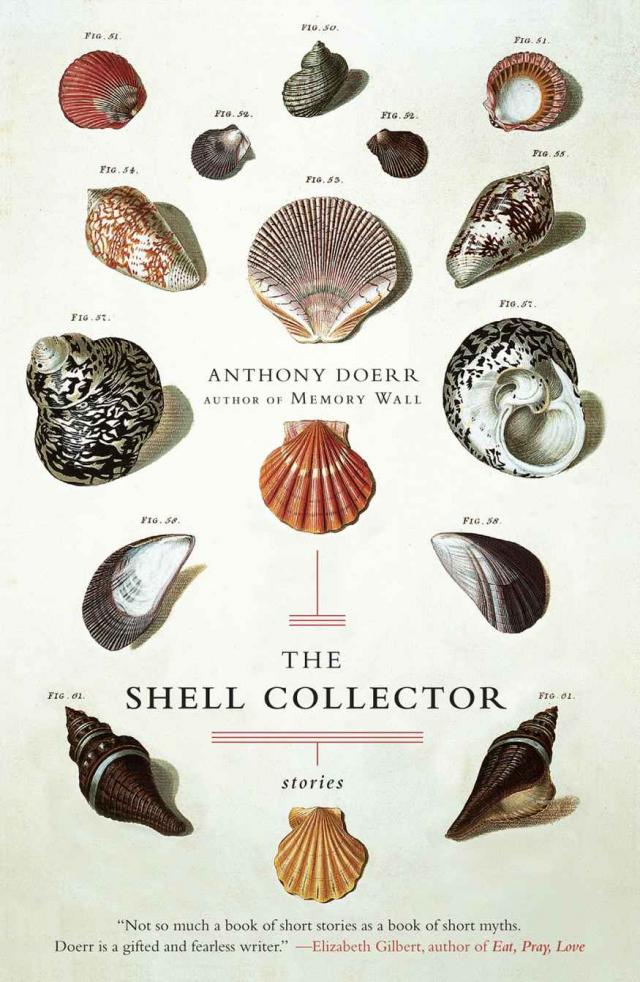
Shell Collector

Shell Collector

Anthony Doerr

Literature & Fiction / Nonfiction

A remarkable collection of stories from a young American writer of huge potential: 'A show-stopping debut, as close to faultless as any writer could wish for' Los Angeles Times 'His fingers dug the shell up, he felt the sleek egg of its body, the toothy gap of its aperture. It was the most elegant thing he'd ever held. "That's a mouse cowry," the doctor said. "A lovely find. It has brown spots, and darker stripes at its base, like tiger stripes. You can't see it, can you?" But he could. He'd never seen anything so clearly in his life.' In this assured, exquisite debut, Anthony Doerr takes readers from the African coast to the suburbs of Ohio, from sideshow pageantry to harsh wilderness survival, conjuring nature in both its beautiful abundance and its crushing power. The blind hero of the title story spends his days roaming the beaches of Kenya, his fingers ploughing through sandy granules of grace and intrigue, his German shepherd at his side. And then there are whale-watchers and fishermen, hunters and mystics, living lives uncompleted or undone, caught, memorably, as they turn toward the reader. A natural storyteller, Doerr explores the human dilemma in all its manifestations: longing, grief, indecision, heartbreak and slow, slow recuperation. Shimmering with elegance and invention, The Shell Collector is an enchanting and imaginative book by a young writer just setting off on what will surely be a hugely compelling literary odyssey.
Read online
  • 17
Talking to Animals

Talking to Animals

Jon Katz

Literature & Fiction / Nonfiction / Children's Books

New York Times bestselling author Jon Katz offers us a deeper understanding of the inner and outer lives of animals and teaches us how we can more effectively communicate with them, made real by his own remarkable research and experiences with a wide array of creatures great and small.Eighty years ago, in 1928, author and naturalist Henry Beston issued an important call in his beloved book Outermost House: humans must develop a more intuitive understanding of animals. But despite the book's continued popularity, Beston's call was never truly answered. We seem to need animals in our disconnected lives more and more, yet we understand them less and less. In Talking to Animals, New York Times bestselling author Jon Katz—who left his Manhattan life behind two decades ago for life on a farm where he is surrounded by dogs, cats, sheep, horses, cows, goats, and chickens—marshals his experience to offer us a deeper insight into animals...
Read online
  • 17


The Advocate's Devil

The Advocate's Devil

Alan M. Dershowitz

Politics / Nonfiction

From the legal tactician who has represented such famous clients as Mike Tyson, O.J. Simpson, and Michael Milken, comes a novel that goes far beyond the limits of the courtroom thriller to probe our deepest fears and asks the controversial legal question--What do you do if you are a defense attorney who suspects your client is guilty and dangerous?
Read online
  • 16
Grand Canary

Grand Canary

A. J. Cronin

Nonfiction / Literature & Fiction

Destiny brings two lonely people together in this moving love story by A J Cronin, one of the master story-tellers of our time. Dr Harvey Leith, brilliant research scientist, awakes from a drunken stupor to find himself aboard a liner bound for the romantic Canary Islands. His past life is in ruins, and his hopes for the future are shattered. But he meets the lovely Mary Fielding on the ship, also looking for a new purpose in her life. It seems to her that they have met somewhere before, in some other place, and that they are meant for each other. There is only one problem – she is already married. Dr Leith's life becomes inextricably involved with those of the other passengers and he gradually begins to forget the bitterness of the past. In the sultry atmosphere of Grand Canary he finds he has to conquer himself to achieve happiness.
Read online
  • 16
A History of Reading

A History of Reading

Alberto Manguel

Literature & Fiction / Nonfiction

In this marvelous book, acclaimed around the world, Alberto Manguel takes us on a fascinating exploration of what it means to be a reader of books. A History of Reading is a brilliant reminder of why we cherish the act of reading--despite distractions throughout the ages, from the Inquisition to the lures of cyberspace. He shows us what happens when we read; who we become; and how reading teaches us how to live. He reminds us that we live in books as well as among them--how we find our own stories in books, and traces of our lives. He shows us how our reading habits have developed over the centuries, and how, ever since humans first transcribed their thoughts and deeds on clay and papyrus, the act of reading is itself a part of being human.Alberto Manguel is a lover of reading, and he brings a lover's delight and enthusiasm to his history of reading. His stories take us across a breathtaking range of time and experiences. From the invention of the reader to Pliny...
Read online
  • 16
The Devil in the Red Dress

The Devil in the Red Dress

Abigail Rieley

True Crime / Nonfiction

Ireland has been gripped by the story of a housewife from County Clare who, when her millionaire partner refused to marry her, googled a hitman and arranged to have him killed.Over the course of almost two months, the story of Lyingeyes and Hire_hitman unfolded in a flurry of emails. The website, hitmanforhire.net might have looked amateurish and carried a disclaimer but it attracted serious interest.One person who was interested was Sharon Collins, the "devil in the red dress". Desperate to get her hands on a share of her partner's fortune, she took drastic action. She turned to Google to solve her problem. A Mexican marriage certificate was obtained but wasn't enough. On 8 August 2006, she contacted hitmanforhire.net and started to arrange the hit.This is one of the most bizarre stories to ever appear before an Irish court. Filled with intrigue, betrayal, sex, money and would-be murder, it has all the ingredients for a best-selling thriller...
Read online
  • 16
Descent Into Chaos

Descent Into Chaos

Ahmed Rashid

Nonfiction / Politics / History

The #1 New York Times bestselling author provides a shocking analysis of the crisis in Pakistan and the renewed radicalism threatening Afghanistan and the West.Ahmed Rashid is "Pakistan's best and bravest reporter" (Christopher Hitchens). His unique knowledge of this vast and complex region allows him a panoramic vision and nuance that no Western writer can emulate.His book Taliban first introduced American readers to the brutal regime that hijacked Afghanistan and harbored the terrorist group responsible for the 9/11 attacks. Now, Rashid examines the region and the corridors of power in Washington and Europe to see how the promised nation building in these countries has pro-gressed. His conclusions are devastating: An unstable and nuclear-armed Pakistan, a renewed al' Qaeda profiting from a booming opium trade, and a Taliban resurgence and reconquest. While Iraq continues to attract most of American media and military might, Rashid argues that Pakistan and Afghanistan...
Read online
  • 16