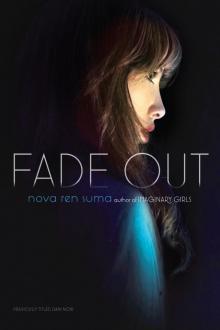
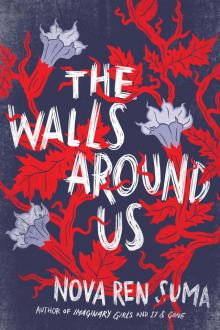
Foreshadow, p.8
Foreshadow,
p.8


Her parents, asleep at home, none the wiser.
It has become so easy to sneak out that Beth has begun to wonder if her parents actually know what she’s doing and just don’t bother to stop her.
She wonders if they know that even if she is sneaking out, she’ll only be with Naia. She wonders if they trust Naia too.
The thought makes her hands shake when she picks up the bag from the counter.
She has to tell Naia.
Before they end things this way, with something so huge locked up inside her that Beth can barely breathe sometimes. After all, there are some things that can’t be undone, that can’t be rewritten once they exist in the universe.
Maybe two of those things will happen tonight.
The bell on the door jingles as Beth heads back outside. The wind has picked up and brought a chill with it, sending trash skittering across the parking lot like something in the shadows.
“Did you . . .” Beth swallows. “Did you do anything to . . . prepare for tonight?”
“Listened to the new Shawn Mendes album on repeat.” Naia sighs. “Just in time, thankfully.”
“I mean like . . . I don’t know. Say goodbye.” Beth can’t help herself—she searches for the slightest chance that Naia gave something—someone—any last considerations.
Naia’s eyebrows knit, but her expression smooths over quickly. “To who?” she murmurs.
And then Beth sees it—something she has never seen in Naia’s eyes before, at least never directed at her.
Doubt.
Beth tries to read Naia’s face, desperately hoping she’s seeing it wrong, that Naia’s eyes aren’t saying Maybe I chose the wrong person, that the way her lips are slightly parted and her chin is set don’t whisper Maybe I shouldn’t have trusted you with this.
Beth blinks away the words written on the backs of her eyelids and shakes her head, popping open a bag of chips. She forces a smile. “You mean to tell me you really didn’t want to grab one last milkshake at Davey’s? Not one?”
And just like that, the doubt disappears, replaced with a flicker of relief. A sheepish smile crosses Naia’s face. “Yeah, yeah. Get in the car.”
The radio signal is back when they get on the road, but Naia plugs in her phone instead, blasting Shawn Mendes and singing along with renewed energy. Beth watches the roadside carefully as they speed by, but there’s no sign of hitchhikers.
There’s no sign of anyone at all.
As she tosses the empty bag of chips onto the floor of the back seat, Beth spots an empty milkshake container under the seat.
When Naia meets Beth’s eyes in a glance, Beth pretends she doesn’t notice. There’s nothing left to say. She had her chance at the gas station to tell Naia, and she didn’t—she couldn’t—and now they’re careening toward the end whether she likes it or not.
The flashlight seems almost too bright as they step into the desert. The car doors slamming shut echo like shotgun cracks across the night. Even the highway noise doesn’t reach down here; they’re surrounded by cliffs that stretch toward the sky, walling them in. Naia pulls a pickax out of the trunk and shoulders it. Beth grabs two water bottles.
They narrowly avoid the chubby arms of cholla cacti that reach toward them, grabby spines clinging for a ride. Holes pock the dirt. Beth wonders what might be sleeping beneath her feet, warmed under the desert crust, away from the night’s tight-lipped chill. Rattlesnakes curled into woven piles. Voles huddled together with shaking fur. Perhaps something else—an energy waiting to stretch its jaws wide and sink its teeth into the world.
She suppresses a shiver. She keeps her eyes on Naia ahead of her in the darkness, following her lead into the unknown.
Eventually Naia stops walking.
“Here.”
It doesn’t look like much, the end of the world. It looks like a slight aberration of purple quartz embedded into rusty red pegmatite and spotted limestone, the splattered colors of rock and bone that paint the raised hilltops in the valley as barrel cacti spring from the cliffs like weeds through pavement.
There is life out here, Beth thinks.
For now, anyway.
She swallows hard as she watches Naia kneel, reverent to the ground with her hands pressed flat. Beth remembers the way Naia’s gaze ignited her before she ever imagined she’d be standing here. What has been waiting under the earth for Naia, watching, counting the days till she arrived? Her best friend, her confidante, her everything. The destroyer of worlds, the unmaker, the girl in the volleyball tank top and ripped leggings.
If she could undo Beth with a look, how much more powerful would her touch be?
Standing up, Naia takes the pickax and raises it over her head, swinging it down with all her might.
Beth winces and waits for the explosion of dirt. But when she opens her eyes, there’s barely an indent in the hard ground.
Naia’s eyes narrow.
They take turns with pickax, chipping away at the dirt. It’s nearly sunrise when Naia swings, slams, and a sound unlike any they’ve heard so far echoes from the point where the pickax hit.
She drops it to the ground with a clatter, exhaustion painted in smudges of dirt on her face and neck, and kneels again. Beth peers over her shoulder.
A shiver runs through Beth’s entire body, the wonder of finding something she had known would be there all along.
Something more.
We’re magic.
The desert is dark, but deep in the earth, impossibly far down in the crack between their feet, there’s a glow, a sparkle of the start of something.
Naia’s eyes gleam. “It’s here,” she murmurs.
Somewhere far away, a bird calls, its voice hanging in the air. The wind picks up, rustling the clusters of brittlebush and the long arms of ocotillos.
The glow is barely visible in Naia’s eyes, pinpricks of light that should not exist, exposing the beating heart of a world that also, perhaps, should not exist, and soon won’t.
Beth crouches, wiping back the strands of hair stuck to her forehead. She finishes the last water bottle and sets it aside.
When she looks up, Naia is giving her a pointed look.
“What?”
“Don’t litter.” Naia nods at the water bottle.
Beth’s jaw drops. “Seriously?”
“Just because we’re about to end the world doesn’t mean we have to suddenly lose all our principles.”
“Well . . .” Beth looks around. “Where should I put it?”
“You could take it back to the car.”
Beth glances back at the shadowy outline of the car, tiny at the edge of the road where it meets the slope. “You’re seriously going to make me walk all the way back to the car for this?”
Naia sits up and puts her hands on her hips. “On our last night together, don’t become someone who litters.”
So Beth takes it back to the car.
Shutting the trunk after she tosses the empty water bottle inside—along with a piece of plastic she found on the walk back, just so she won’t feel guilty—Beth makes up her mind.
If Naia can do something this grand, this life-altering and terrifying and huge—
Beth can too.
“You’re not allowed to say anything for the next thirty seconds,” Beth blurts out when she returns. She makes the mistake of glancing up at Naia, and the sight nearly takes her breath away: Naia standing next to the fissure in the ground, painted against the sky as it purples and blooms into a bruise. She looks like a thunderstorm about to break, all that power contained in a thin bolt of lightning, gone in a flicker.
“I don’t know how to . . . I mean, I probably should’ve brought this up earlier, I just wasn’t . . . I don’t know if I even really believed we’d—I mean, here we are, and—screw it.”
You could ruin me.
“I love you,” Beth breathes in a rush, and it feels huge, and the words are happening here and now, but they also feel like just words—too small to contain what’s in her heart and too big to say out loud without risking everything.
“I mean, obviously, but not just in the normal way—not that it’s not normal. I just mean in a different, in a more, bigger . . .” Beth’s mind races to explain. To not blow this one chance. “I’m saying—I’m saying I love you the way you love Shawn Mendes.”
She waits for the crack in the earth to shake, widen, and swallow her whole. This must be what it feels like, the end of the world.
Naia stares at her. She shakes her head, makes a sound of disbelief, then looks up at the sky. “I thought—this whole time I thought—god.”
Beth suddenly feels very, very cold. For the first time ever, she cannot read what’s written on Naia’s face.
You have ruined everything.
“I can’t believe I . . .” Naia shakes her head again.
The world blurs. Beth wonders if she’s about to pass out before she realizes there are tears filling her vision, making everything run colors in front of her, the darkness bleeding into the glowing ground. She knew—somewhere—she knew there was a scenario where Naia might reject her, but she didn’t actually think it would come true. After everything that has proven magic is real, how can it end like this?
It’s only when Beth wipes her eyes that she sees, to her shock, that tears are running down Naia’s face too.
Naia steps past the crack in the earth, spinning toward Beth, and she is suddenly so close so quickly that Beth can’t move away, and though the color of Naia’s eyes is hidden by the darkness, Beth still searches them for something to hang on to, anything to keep her from free-falling.
“This whole time I thought I’d been searching for someone to destroy the world with me,” Naia whispers. “And when I found you, I knew.” She laughs and wipes away her own tears. “And I was right, it’s you—but I was wrong too.”
When Naia blinks, the red glow of the earth’s pulse and the white sheen of the moon’s lone light mix together in her eyes, and Beth’s heart nearly jumps out of her chest when she sees it—gold. Treasure. The space between them unlocked.
Naia presses her hands to the sides of Beth’s neck, encircling her with a gentle brush of skin, and though her lips tremble and her eyes are wide, she looks confident, radiant, glowing. “I was searching for a reason not to destroy it all.”
The air in Beth’s lungs rushes out all at once.
“You are the joy of my life,” Naia says breathlessly, and it sounds so much better this way than it did in her terribly accented French, and she does that slow sweep of her eyelashes, and Beth realizes sometimes there are words that fit.
“What a line,” Beth half chokes through a laugh. Naia laughs too, and all Beth can do is reach out and wrap her arms around this girl made of gold.
“I thought you never paid attention in class.” Naia’s words are muffled in her ear, and Beth holds on tighter.
The sun peeks over the desert, slowly warming the ground. The stars disappear into sunlight. As the sun rises, the glow from the crack in the earth fades until it’s barely visible. The daylight drowns it out, turns it into another hole in the ground that blends in with the miles upon miles of deserted land, never to be found again.
The end of the world, barely averted, is quickly forgotten when Naia’s arms are around her.
Before she can lose her nerve, Beth blurts out, “Do you want to go get a milkshake with me?”
That smile spreads across Naia’s face. “Like, a lot.”
And so they do.
Author’s Note
I knew I wanted to write a story about two girls who could unmake the world, but only if they wanted to. Girls are magic, after all. They are powerful, electric, can create and destroy, can love and hurt and save each other all in the same breath. Beth and Naia hold the power to rip the world apart at the seams—and perhaps they will, someday.
The setting is inspired by my many long nights driving from California to Arizona and back in the silent, freezing desert. The state prison sign is real, located around Exit 222 eastbound on the 10. I’ve not seen any hitchhikers yet, but I’d probably heed the sign’s advice and keep driving.
There’s also a real fault line at the bottom of the Grand Canyon, located in an otherwise unremarkable patch of brush in Diamond Creek, where you can stand with your feet on either side of the split. All it would take is a little digging.
Emotional Resonance in GLOW
by Nova Ren Suma
Imagine a whole story charged by yearning, by the simple fact of wanting someone and not being able to express it in words until all the long-unspoken feelings burst out at the last possible moment . . . a moment that might be the literal end of the world. This is GLOW.
But how is emotion communicated with such decisive force?
We gain emotional resonance—when a feeling vibrates through a story and is transferred to the reader—by instances like the one where Beth recounts the first time she ever saw Naia on the volleyball court, performing a flying leap that seems suspended in air for a breathless series of electric moments. “Did everyone see what I just saw?” Beth wonders in disbelief. We did see, thanks to the beauty of the description, but more importantly, we felt it in the way the moment was prolonged and held.
When Beth “wonders what might be sleeping beneath her feet,” her imagination soars beneath desert crust and slithering rattlesnakes into something unfathomable: “an energy waiting to stretch its jaws wide and sink its teeth into the world.” Even after she’s let the words loose, she’s so terrified she’s ruined everything that she waits for the earth itself to swallow her. The landscape has spoken. It illustrates the emotion Beth cannot find the words to articulate.
Emotional resonance can come through in a single meaningful glance across a room between two characters, but it also can be woven into the world surrounding the characters: in roadways, in gas stations, in the sweeping expanse of land, the dangers on all sides, the wide open sky. How can place reveal what a character is feeling? In GLOW, “the world is brighter, bolder, stranger now that [Beth has] noticed Naia,” and this is proven by the visuals as the story unfolds. What does Beth see reflected back in Naia’s eyes? The “red glow of the earth’s pulse.” She sees “the white sheen of the moon’s lone light.” And in the end, most of all, the color of “treasure,” which tells us everything we need to know. She sees gold.
Story Prompt: The End of the World
What kind of story resonates with a reader, especially a reader of YA? One that matters to the characters. The events of the story can be as gigantic as the literal end of the world . . . or something far less explosive, so long as it’s meaningful to the protagonist.
Think of how dramatic even the smallest event can feel for a teenager at times, and how that can often be belittled by adults (a friendship breakup, a crush gone wrong, a detention slip at school . . . ). To a teen, any of those things might feel as terrible, as stomach-dropping as the world ending.
So . . . write the end of the world.
You can choose to interpret this literally, or you can focus on an event that’s earth-shattering only for the character in your story.
Escape
Tanvi Berwah
“ESCAPE is a mesmerizing account of love, loss, and revenge, entwined with a mythic family history. It’s all spikes and rising oddity, a sharp-toothed thing that nods to Helen Oyeyemi and Kelly Link, but does its own thing.”
—Melissa Albert, author of The Hazel Wood
The day my mother’s cancer relapsed she still had the pochette. She would have warned me about it, had she the time. Nobody else bothered. Not in a way that mattered. But I wasn’t surprised. Nobody actually warned me what was happening to my mother, either.
My cousin Jolene was sent to babysit me when my mother returned to the hospital, but all she did was stick her nose to her phone, obsessing over her horoscope and that of her new boyfriend. Everyone liked Sean. He wore leather jackets even when the weather was warm (he had a good excuse: he looked amazing) and rode a bike, and girls had Snapchat streaks running into triple digits with him, which meant he was perfect to Jolene.
Then Jolene asked if I knew where Mama kept the pochette. The second she said the word pochette I glanced involuntarily in the direction of Mama’s room. I ran, but Jolene got there first and snatched the pochette off the bed. She said I was too young for it and it was fate, anyway, her finding something red the day her horoscope mentioned her lucky color of the day.
The pochette wasn’t just red, it was the color of glossy apples. Fancy like those Louis Vuitton purses. Big enough to hold a human heart. It had a real gold buckle that no one had been successful in opening so far. No matter; it was a family heirloom. Specifically, it was my heirloom. My mother had it, her mother had it, and her mother before.
But then Mama died, and Jolene took it permanently.
The pochette had a habit of biting if touched unexpectedly. I know what that sounds like, but just bear with me. I did notice wounds on the faces of some women in the family, either claw or finger marks, and that made no sense. Unless, somehow, every time they took the pochette, they got into violent fights.
The color of the wounds rotted, visible even beneath layers of makeup.
On Christmas Eve, my sixteenth birthday, I decided I was old enough. My heirloom would be with me. The living room bubbled with my grandmother and her sister, my aunts and my uncles, my cousins and their cousins, some spouses, and others they dragged along, including, of course, the ever-present charmer, Sean.
We were never content with just fourteen Woodrings in the family, so we were always looking to add more on every street we walked.
As I tried to make my way out, Woodrings clamored around the glittering room, hollering half-remembered carols, laughing and bellowing and jabbering, while the kids practiced running across the room for when they challenged Usain Bolt one day. Would-be Woodrings nervously sipped their eggnog.