Masterpieces the best sc.., p.52
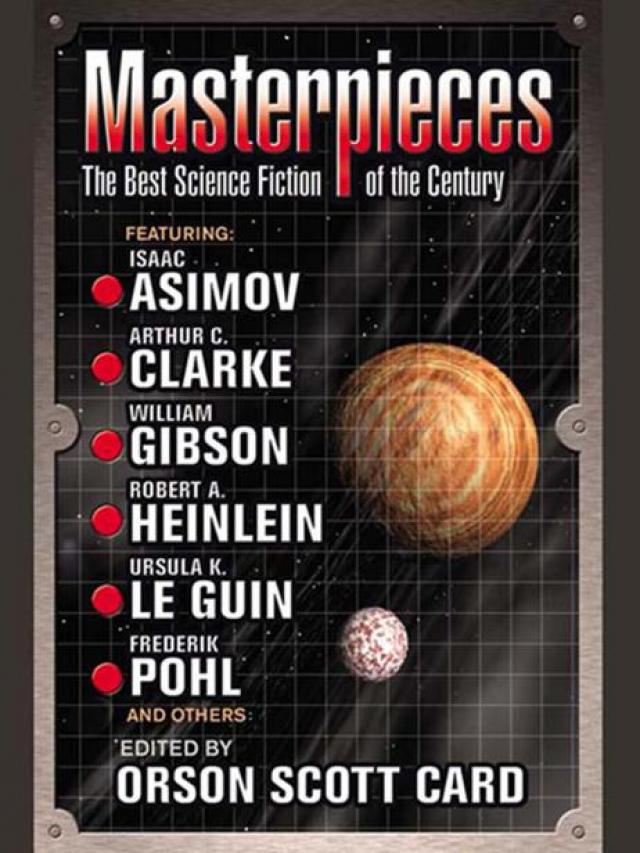
Masterpieces: The Best Science Fiction of the 20th Century,
p.52


ACCESS, and she takes dresses one by one from her closet, and holds them against her body, and studies the effect in a tall mirror, and puts them back again. She had a funny face, which she never made except when looking at herself in the mirror, a face made for no one but herself, that was actually quite unlike her. The mirror Georgie.
RESET.
ACCESS. By a bizarre coincidence here she is looking in another mirror. I think the Wasp could be confused by mirrors. She turns away, the Wasp adjusts; there is someone asleep, tangled in bedclothes on a big hotel bed, morning, a room-service cart. Oh, the Algonquin: myself. Winter. Snow is falling outside the tall window. She searches her handbag, takes out a small vial, swallows a pill with coffee, holding the cup by its body and not its handle. I stir, show a tousled head of hair. Conversation—unintelligible. Gray room, whitish snow light, color degraded. Would I now (I thought, watching us) reach out for her? Would I in the next hour take her, or she me, push aside the bedclothes, open her pale pajamas? She goes into the john, shuts the door. The Wasp watches stupidly, excluded, transmitting the door.
RESET, finally.
But what (I would wonder) if I had been patient, what if I had watched and waited?
Time, it turns out, takes an unconscionable time. The waste, the footless waste—it’s no spectator sport. Whatever fun there is in sitting idly looking at nothing and tasting your own being for a whole afternoon, there is no fun in replaying it. The waiting is excruciating. How often, in five years, in eight thousand hours of daylight or lamplight, might we have coupled, how much time expended in lovemaking? A hundred hours, two hundred? Odds were not high of my coming on such a scene; darkness swallowed most of them, and the others were lost in the interstices of endless hours spent shopping, reading, on planes and in cars, asleep, apart. Hopeless.
ACCESS. She has turned on a bedside lamp. Alone. She hunts amid the Kleenex and magazines on the bedside table, finds a watch, looks at it dully, turns it right side up, looks again, and puts it down. Cold. She burrows in the blankets, yawning, staring, then puts out a hand for the phone but only rests her hand on it, thinking. Thinking at four A.M. She withdraws her hand, shivers a child’s deep, sleepy shiver, and shuts off the light. A bad dream. In an instant it’s morning, dawn; the Wasp slept, too. She sleeps soundly, unmoving, only the top of her blond head showing out of the quilt—and will no doubt sleep so for hours, watched over more attentively, more fixedly, than any peeping Tom could ever have watched over her.
RESET.
ACCESS.
“I can’t hear as well as I did at first,” I told the director. “And the definition is getting softer.”
“Oh sure,” the director said. “That’s really in the literature. We have to explain that carefully. That this might be a problem.”
“It isn’t just my monitor?” I asked. “I thought it was probably only the monitor.”
“No, no, not really, no,” he said. He gave me coffee. We’d gotten to be friendly over the months. I think, as well as being afraid of me he was glad I came around now and then; at least one of the living came here, one at least was using the services. “There’s a slight degeneration that does occur.”
“Everything seems to be getting gray.”
His face had shifted into intense concern, no belittling this problem. “Mm-hm, mm-hm, see, at the molecular level where we’re at, there is degeneration. It’s just in the physics. It randomizes a little over time. So you lose—you don’t lose a minute of what you’ve got, but you lose a little definition. A little color. But it levels off.”
“It does?”
“We think it does. Sure it does, we promise it does. We predict that it will.”
“But you don’t know.”
“Well, well you see we’ve only been in this business a short while. This concept is new. There were things we couldn’t know.” He still looked at me, but seemed at the same time to have forgotten me. Tired. He seemed to have grown colorless himself lately, old, losing definition. “You might start getting some snow,” he said softly.
ACCESS RESET ACCESS.
A gray plaza of herringbone-laid stones, gray, clicking palms. She turns up the collar of her sweater, narrowing her eyes in a stern wind. Buys magazines at a kiosk: Vogue, Harper’s, La Mode. Cold, she says to the kiosk girl. Frio. The young man I was takes her arm: they walk back along the beach, which is deserted and strung with cast seaweed, washed by a dirty sea. Winter in Ibiza. We talk, but the Wasp can’t hear, the sea’s sound confuses it; it seems bored by its duties and lags behind us.
RESET.
ACCESS. The Algonquin, terribly familiar morning, winter. She turns away from the snow window. I am in bed, and for a moment watching this I felt suspended between two mirrors, reflected endlessly. I had seen this before; I had lived it once and remembered it once, and remembered the memory, and here it was again, or could it be nothing but another morning, a similar morning. There were far more than one like this, in this place. But no; she turns from the window, she gets out her vial of pills, picks up the coffee cup by its body: I had seen this moment before, not months before, weeks before, here in this chamber. I had come upon the same scene twice.
What are the odds of it, I wondered, what are the odds of coming upon the same minutes again, these minutes.
I stir within the bedclothes.
I leaned forward to hear, this time, what I would say; it was something like but fun anyway, or something.
Fun, she says, laughing, harrowed, the degraded sound a ghost’s twittering. Charlie, someday I’m going to die of fun.
She takes her pill. The Wasp follows her to the john and is shut out.
Why am I here? I thought, and my heart was beating hard and slow. What am I here for? What?
RESET.
ACCESS.
Silvered icy streets, New York, Fifth Avenue. She is climbing, shouting from a cab’s dark interior. Just don’t shout at me, she shouts at someone; her mother I never met, a dragon. She is out and hurrying away down the sleety street with her bundles, the Wasp at her shoulder. I could reach out and touch her shoulder and make her turn and follow me out. Walking away, lost in the colorless press of traffic and people, impossible to discern within the softened snowy image.
SOMETHING WAS VERY wrong.
Georgie hated winter, she escaped it most of the time we were together, about the first of the year beginning to long for the sun that had gone elsewhere; Austria was all right for a few weeks, the toy villages and sugar snow and bright, sleek skiers were not really the winter she feared, though even in fire-warmed chalets it was hard to get her naked without gooseflesh and shudders from some draft only she could feel. We were chaste in winter. So Georgie escaped it: Antigua and Bali and two months in Ibiza when the almonds blossomed. It was continual false, flavorless spring all winter long.
How often could snow have fallen when the Wasp was watching her?
Not often; countable times, times I could count up myself if I could remember as the Wasp could. Not often. Not always.
“There’s a problem,” I said to the director.
“It’s peaked out, has it?” he said. “That definition problem?”
“Actually,” I said, “it’s gotten worse.”
He was sitting behind his desk, arms spread wide across his chair’s back, and a false, pinkish flush to his cheeks like undertaker’s makeup. Drinking.
“Hasn’t peaked out, huh?” he said.
“That’s not the problem,” I said. “The problem is the access. It’s not random like you said.”
“Molecular level,” he said. “It’s in the physics.”
“You don’t understand. It’s not getting more random. It’s getting less random. It’s getting selective. It’s freezing up.”
“No, no, no,” he said dreamily. “Access is random. Life isn’t all summer and fun, you know. Into each life some rain must fall.”
I sputtered, trying to explain. “But but . . .”
“You know,” he said. “I’ve been thinking of getting out of access.” He pulled open a drawer in the desk before him; it made an empty sound. He stared within it dully for a moment and shut it. “The Park’s been good for me, but I’m just not used to this. Used to be you thought you could render a service, you know? Well, hell, you know, you’ve had fun, what do you care?”
He was mad. For an instant I heard the dead around me; I tasted on my tongue the stale air of underground.
“I remember,” he said, tilting back in his chair and looking elsewhere, “many years ago, I got into access. Only we didn’t call it that then. What I did was, I worked for a stock-footage house. It was going out of business, like they all did, like this place here is going to do, shouldn’t say that, but you didn’t hear it. Anyway, it was a big warehouse with steel shelves for miles, filled with film cans, film cans filled with old plastic film, you know? Film of every kind. And movie people, if they wanted old scenes of past time in their movies, would call up and ask for what they wanted, find me this, find me that. And we had everything, every kind of scene, but you know what the hardest thing to find was? Just ordinary scenes of daily life. I mean people just doing things and living their lives. You know what we did have? Speeches. People giving speeches. Like presidents. You could have hours of speeches, but not just people, whatchacallit, oh, washing clothes, sitting in a park . . .”
“It might just be the reception,” I said. “Somehow.”
He looked at me for a long moment as though I had just arrived. “Anyway,” he said at last, turning away again, “I was there awhile learning the ropes. And producers called and said, ‘Get me this, get me that.’ And one producer was making a film, some film of the past, and he wanted old scenes, old, of people long ago, in the summer; having fun; eating ice cream; swimming in bathing suits; riding in convertibles. Fifty years ago. Eighty years ago.”
He opened his empty drawer again, found a toothpick, and began to use it.
“So I accessed the earliest stuff. Speeches. More speeches. But I found a scene here and there—people in the street, fur coats, window-shopping, traffic. Old people, I mean they were young then, but people of the past; they have these pinched kind of faces, you get to know them. Sad, a little. On city streets, hurrying, holding their hats. Cities were sort of black then, in film; black cars in the streets, black derby hats. Stone. Well, it wasn’t what they wanted. I found summer for them, color summer, but new. They wanted old. I kept looking back. I kept looking. I did. The further back I went, the more I saw these pinched faces, black cars, black streets of stone. Snow. There isn’t any summer there.”
With slow gravity he rose and found a brown bottle and two coffee cups. He poured sloppily. “So it’s not your reception,” he said. “Film takes longer, I guess, but it’s the physics. All in the physics. A word to the wise is sufficient.”
The liquor was harsh, a cold distillate of past sunlight. I wanted to go, get out, not look back. I would not stay watching until there was only snow.
“So I’m getting out of access,” the director said. “Let the dead bury the dead, right? Let the dead bury the dead.”
I DIDN’T GO back. I never went back, though the highways opened again and The Park isn’t far from the town I’ve settled in. Settled; the right word. It restores your balance, in the end, even in a funny way your cheerfulness, when you come to know, without regrets, that the best thing that’s going to happen in your life has already happened. And I still have some summer left to me.
I think there are two different kinds of memory, and only one kind gets worse as I get older: the kind where, by an effort of will, you can reconstruct your first car or your serial number or the name and figure of your high school physics teacher—a Mr. Holm, in a gray suit, a bearded guy, skinny, about thirty. The other kind doesn’t worsen; if anything it grows more intense. The sleepwalking kind, the kind you stumble into as into rooms with secret doors and suddenly find yourself sitting not on your front porch but in a classroom. You can’t at first think where or when, and a bearded, smiling man is turning in his hand a glass paperweight, inside which a little cottage stands in a swirl of snow.
There is no access to Georgie, except that now and then, unpredictably, when I’m sitting on the porch or pushing a grocery cart or standing at the sink, a memory of that kind will visit me, vivid and startling, like a hypnotist’s snap of fingers.
Or like that funny experience you sometimes have, on the point of sleep, of hearing your name called softly and distinctly by someone who is not there.
JAMES PATRICK KELLY
Rat
James Patrick Kelly began contributing to magazines and anthologies in the late 1970s and quickly established a reputation as a writer of well-crafted stories that take a variety of approaches to an eclectic mix of themes. Much of his fiction is firmly grounded in social commentary. “Death Therapy” envisions a future justice system where simulated death is used to rehabilitate criminals. “Still Time” and “Crow” present opposing viewpoints on typical human behavior in the shadow of nuclear war. “Pogrom” presents the generation gap in terms of future civil war. “Big Guy” explores the breakdown of personal relationships and interactions coincident with the rise of rapid telecommunications and virtual reality. Kelly’s best short fiction has been collected in Think Like a Dinosaur and Other Stories. His work as a novelist includes the diptych Planet of Whispers and Look into the Sun, concerned with life on the planet Aseneshesh, where political and religious strife replicates problems that cripple third world countries on Earth. His novel Wildlife explores the conflict between parent and offspring in the context of biogenetic engineering, with its tale of a young woman who rebels against the personality and destiny her father has engineered for her. He has also collaborated with John Kessel on Freedom Beach.
RAT HAD STASHED the dust in four plastic capsules and then swallowed them. From the stinging at the base of his ribs, he guessed they were now squeezing into his duodenum. Still plenty of time. The bullet train had been shooting through the vacuum of the TransAtlantic tunnel for almost two hours now; they would arrive at Port Authority/Koch soon. Customs had already been fixed, according to the maréchal. All Rat had to do was to get back to his nest, lock the smart door behind him, and put the word out on his protected nets. He had enough Algerian Yellow to dust at least half the cerebrums on the East Side. If he could turn this deal, he would be rich enough to bathe in Dom Perignon and dry himself with Gromaire tapestries. Another pang shot down his left flank. Instinctively his hind leg came off the seat and scratched at air.
There was only one problem; Rat had decided to cut the maréchal out. That meant he had to lose the old man’s spook before he got home.
The spook had attached herself to him at Marseilles. She braided her blonde hair in pigtails. She had freckles, wore braces on her teeth. Tiny breasts nudged a modest silk turtleneck. She looked to be between twelve and fourteen. Cute. She had probably looked that way for twenty years, would stay the same another twenty if she did not stop a slug first or get cut in half by some automated security laser that tracked only heat and could not read—or be troubled by—cuteness. Their passports said they were Mr. Sterling Jaynes and daughter Jessalynn, of Forest Hills, New York. She was typing in her notebook, chubby fingers curled over the keys. Homework? A letter to a boyfriend? More likely she was operating on some corporate database with scalpel code of her own devising.
“Ne fais pas semblant d’étudier, ma petite,” Rat said, “Que fais-tu?”
“Oh, Daddy,” she said, pouting, “can’t we go back to plain old English? After all, we’re almost home.” She tilted her notebook so that he could see the display. It read: “Two rows back, second seat from aisle. Fed. If he knew you were carrying, he’d cut the dust out of you and wipe his ass with your pelt.” She tapped the Return key, and the message disappeared.
“All right, dear.” He arched his back, fighting a surge of adrenaline that made his incisors click. “You know, all of a sudden I feel hungry. Should we do something here on the train or wait until we get to New York?” Only the spook saw him gesture back toward the fed.
“Why don’t we wait for the station? More choice there.”
“As you wish, dear.” He wanted her to take the fed out now, but there was nothing more he dared say. He licked his hands nervously and groomed the fur behind his short, thick ears to pass the time.
The International Arrivals Hall at Koch Terminal was unusually quiet for a Thursday night. It smelled to Rat like a setup. The passengers from the bullet shuffled through the echoing marble vastness toward the row of customs stations. Rat was unarmed; if they were going to put up a fight, the spook would have to provide the firepower. But Rat was not a fighter, he was a runner. Their instructions were to pass through Station Number Four. As they waited in line, Rat spotted the federally appointed vigilante behind them. The classic invisible man: neither handsome nor ugly, five-ten, about one-seventy, brown hair, dark suit, white shirt. He looked bored.
“Do you have anything to declare?” The customs agent looked bored, too. Everybody looked bored except Rat, who had two million new dollars’ worth of illegal drugs in his gut and a fed ready to carve them out of him.
“We hold these truths to be self-evident,” said Rat, “that all men are created equal.” He managed a feeble grin—as if this were a witticism and not the password.
“Daddy, please!” The spook feigned embarrassment. “I’m sorry, ma’am; it’s his idea of a joke. It’s the Declaration of Independence, you know.”
The customs agent smiled as she tousled the spook’s hair. “I know that, dear. Please put your luggage on the conveyor.” She gave a perfunctory glance at her monitor as their suitcases passed through the scanner, and then nodded at Rat. “Thank you, sir, and have a pleasant . . .” The insincere thought died on her lips as she noticed the fed pushing through the line toward them. Rat saw her spin toward the exit at the same moment that the spook thrust her notebook computer into the scanner. The notebook stretched a blue finger of point discharge toward the magnetic lens just before the overhead lights novaed and went dark. The emergency backup failed as well. Rat’s snout filled with the acrid smell of electrical fire. Through the darkness came shouts and screams, thumps and cracks—the crazed pounding of a stampede gathering momentum.