The complete works of os.., p.139
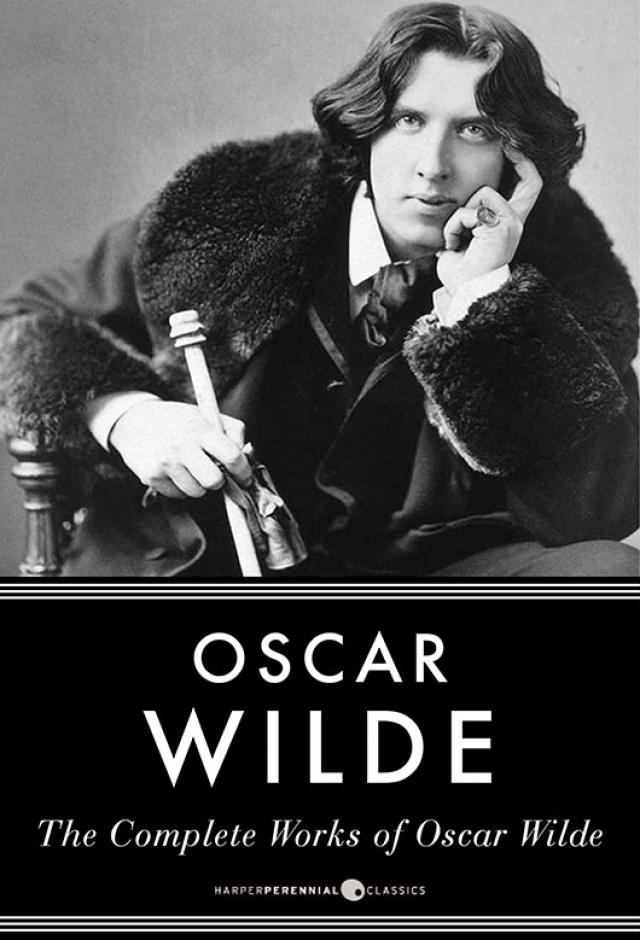
The Complete Works of Oscar Wilde,
p.139


Other miserable men, when they are thrown into prison, if they are robbed of the beauty of the world, are at least safe, in some measure, from the world’s most deadly slings, most awful arrows. They can hide in the darkness of their cells, and of their very disgrace make a mode of sanctuary. The world, having had its will, goes its way, and they are left to suffer undisturbed. With me it has been different. Sorrow after sorrow has come beating at the prison doors in search of me. They have opened the gates wide and let them in. Hardly, if at all, have my friends been suffered to see me. But my enemies have had full access to me always. Twice in my public appearances at the Bankruptcy Court, twice again in my public transferences from one prison to another, have I been shown under conditions of unspeakable humiliation to the gaze and mockery of men. The messenger of Death has brought me his tidings and gone his way, and in entire solitude, and isolated from all that could give me comfort, or suggest relief, I have had to bear the intolerable burden of misery and remorse that the memory of my mother placed upon me, and places on me still. Hardly has that wound been dulled, not healed, by time, when violent and bitter and harsh letters come to me from my wife through her solicitor. I am, at once, taunted and threatened with poverty. That I can bear. I can school myself to worse than that. But my two children are taken from me by legal procedure. That is and will remain to me a source of infinite distress, of infinite pain, of grief without end or limit. That the law should decide, and take upon itself to decide, that I am one unfit to be with my own children is something quite horrible to me. The disgrace of prison is as nothing compared to it. I envy the other men who tread the yard along with me. I am sure that their children wait for them, look for their coming, will be sweet to them.
The poor are wiser, more charitable, more kind, more sensitive than we are. In their eyes prison is a tragedy in a man’s life, a misfortune, a casualty, something that calls for sympathy in others. They speak of one who is in prison as of one who is ‘in trouble’ simply. It is the phrase they always use, and the expression has the perfect wisdom of Love in it. With people of our rank it is different. With us prison makes a man a pariah. I, and such as I am, have hardly any right to air and sun. Our presence taints the pleasures of others. We are unwelcome when we reappear. To revisit the glimpses of the moon is not for us. Our very children are taken away. Those lovely links with humanity are broken. We are doomed to be solitary, while our sons still live. We are denied the one thing that might heal us and help us, that might bring balm to the bruised heart, and peace to the soul in pain.
And to all this has been added the hard, small fact that by your actions and by your silence, by what you have done and by what you have left undone, you have made every day of my long imprisonment still more difficult for me to live through. The very bread and water of prison fare you have by your conduct changed. You have rendered the one bitter and the other brackish to me. The sorrow you should have shared you have doubled, the pain you should have sought to lighten you have quickened to anguish. I have no doubt that you did not mean to do so. I know that you did not mean to do so. It was simply that ‘one really fatal defect of your character, your entire lack of imagination.’
And the end of it all is that I have got to forgive you. I must do so. I don’t write this letter to put bitterness into your heart, but to pluck it out of mine. For my own sake I must forgive you. One cannot always keep an adder in one’s breast to feed on one, nor rise up every night to sow thorns in the garden of one’s soul. It will not be difficult at all for me to do so, if you help me a little. Whatever you did to me in old days I always readily forgave. It did you no good then. Only one whose life is without stain of any kind can forgive sins. But now when I sit in humiliation and disgrace it is different. My forgiveness should mean a great deal to you now. Some day you will realise it. Whether you do so early or late, soon or not at all, my way is clear before me. I cannot allow you to go through life bearing in your heart the burden of having ruined a man like me. The thought might make you callously indifferent, or morbidly sad. I must take the burden from you and put it on my own shoulders.
I must say to myself that neither you nor your father, multiplied a thousand times over, could possibly have ruined a man like me: that I ruined myself: and that nobody, great or small, can be ruined except by his own hand. I am quite ready to do so. I am trying to do so, though you may not think it at the present moment. If I have brought this pitiless indictment against you, think what an indictment I bring without pity against myself. Terrible as what you did to me was, what I did to myself was far more terrible still.
I was a man who stood in symbolic relations to the art and culture of my age. I had realised this for myself at the very dawn of my manhood, and had forced my age to realise it afterwards. Few men hold such a position in their own lifetime and have it so acknowledged. It is usually discerned, if discerned at all, by the historian, or the critic, long after both the man and his age have passed away. With me it was different. I felt it myself, and made others feel it. Byron was a symbolic figure, but his relations were to the passion of his age and its weariness of passion. Mine were to something more noble, more permanent, of more vital issue, of larger scope.
The gods had given me almost everything. I had genius, a distinguished name, high social position, brilliancy, intellectual daring: I made art a philosophy, and philosophy an art: I altered the minds of men and the colours of things: there was nothing I said or did that did not make people wonder: I took the drama, the most objective form known to art, and made it as personal a mode of expression as the lyric or the sonnet, at the same time that I widened its range and enriched its characterisation: drama, novel, poem in rhyme, poem in prose, subtle or fantastic dialogue, whatever I touched I made beautiful in a new mode of beauty: to truth itself I gave what is false no less than what is true as its rightful province, and showed that the false and the true are merely forms of intellectual existence. I treated Art as the supreme reality, and life as a mere mode of fiction: I awoke the imagination of my century so that it created myth and legend around me: I summed up all systems in a phrase, and all existence in an epigram.
Along with these things, I had things that were different. I let myself be lured into long spells of senseless and sensual ease. I amused myself with being a flâneur, a dandy, a man of fashion. I surrounded myself with the smaller natures and the meaner minds. I became the spendthrift of my own genius, and to waste an eternal youth gave me a curious joy. Tired of being on the heights I deliberately went to the depths in the search for new sensations. What the paradox was to me in the sphere of thought, perversity became to me in the sphere of passion. Desire, at the end, was a malady, or a madness, or both. I grew careless of the lives of others. I took pleasure where it pleased me and passed on. I forgot that every little action of the common day makes or unmakes character, and that therefore what one has done in the secret chamber one has some day to cry aloud on the housetops. I ceased to be Lord over myself. I was no longer the Captain of my Soul, and did not know it. I allowed you to dominate me, and your father to frighten me. I ended in horrible disgrace. There is only one thing for me now, absolute Humility: just as there is only one thing for you, absolute Humility also. You had better come down into the dust and learn it beside me.
I have lain in prison for nearly two years. Out of my nature has come wild despair; an abandonment to grief that was piteous even to look at: terrible and impotent rage: bitterness and scorn: anguish that wept aloud: misery that could find no voice: sorrow that was dumb. I have passed through every possible mood of suffering. Better than Wordsworth himself I know what Wordsworth meant when he said:
Suffering is permanent, obscure, and dark
And has the nature of Infinity.
But while there were times when I rejoiced in the idea that my sufferings were to be endless, I could not bear them to be without meaning. Now I find hidden away in my nature something that tells me that nothing in the whole world is meaningless, and suffering least of all. That something hidden away in my nature, like a treasure in a field, is Humility.
It is the last thing left in me, and the best: the ultimate discovery at which I have arrived: the starting-point for a fresh development. It has come to me right out of myself, so I know that it has come at the proper time. It could not have come before, nor later. Had anyone told me of it, I would have rejected it. Had it been brought to me, I would have refused it. As I found it, I want to keep it. I must do so. It is the one thing that has in it the elements of life, of a new life, a Vita Nuova for me. Of all things it is the strangest. One cannot give it away, and another may not give it to one. One cannot acquire it, except by surrendering everything that one has. It is only when one has lost all things, that one knows that one possesses it.
Now that I realise that it is in me, I see quite clearly what I have got to do, what, in fact, I must do. And when I use such a phrase as that, I need not tell you that I am not alluding to any external sanction or command. I admit none. I am far more of an individualist than I ever was. Nothing seems to me of the smallest value except what one gets out of oneself. My nature is seeking a fresh mode of self-realisation. That is all I am concerned with. And the first thing that I have got to do is to free myself from any possible bitterness of feeling against you.
I am completely penniless, and absolutely homeless. Yet there are worse things in the world than that. I am quite candid when I tell you that rather than go out from this prison with bitterness in my heart against you or against the world I would gladly and readily beg my bread from door to door. If I got nothing from the house of the rich, I would get something at the house of the poor. Those who have much are often greedy. Those who have little always share. I would not a bit mind sleeping in the cool grass in summer, and when winter came on sheltering myself by the warm close-thatched rick, or under the penthouse of a great barn, provided I had love in my heart. The external things of life seem to me now of no importance at all. You can see to what intensity of individualism I have arrived, or am arriving rather, for the journey is long, and ‘where I walk there are thorns.’
Of course I know that to ask for alms on the highway is not to be my lot, and that if ever I lie in the cool grass at night-time it will be to write sonnets to the Moon. When I go out of prison, Robbie will be waiting for me on the other side of the big iron-studded gate, and he is the symbol not merely of his own affection, but of the affection of many others besides. I believe I am to have enough to live on for about eighteen months at any rate, so that, if I may not write beautiful books, I may at least read beautiful books, and what joy can be greater? After that, I hope to be able to recreate my creative faculty. But were things different: had I not a friend left in the world: were there not a single house open to me even in pity: had I to accept the wallet and ragged cloak of sheer penury: still as long as I remained free from all resentment, hardness, and scorn, I would be able to face life with much more calm and confidence than I would were my body in purple and fine linen, and the soul within it sick with hate. And I shall really have no difficulty in forgiving you. But to make it a pleasure for me you must feel that you want it. When you really want it you will find it waiting for you.
I need not say that my task does not end there. It would be comparatively easy if it did. There is much more before me. I have hills far steeper to climb, valleys much darker to pass through. And I have to get it all out of myself. Neither Religion, Morality, nor Reason can help me at all.
Morality does not help me. I am a born antinomian. I am one of those who are made for exceptions, not for laws. But while I see that there is nothing wrong in what one does, I see that there is something wrong in what one becomes. It is well to have learned that.
Religion does not help me. The faith that others give to what is unseen, I give to what one can touch, and look at. My Gods dwell in temples made with hands, and within the circle of actual experience is my creed made perfect and complete: too complete it may be, for like many or all of those who have placed their Heaven in this earth, I have found in it not merely the beauty of Heaven, but the horror of Hell also. When I think about Religion at all, I feel as if I would like to found an order for those who cannot believe: the Confraternity of the Fatherless one might call it, where on an altar, on which no taper burned, a priest, in whose heart peace had no dwelling, might celebrate with unblessed bread and a chalice empty of wine. Everything to be true must become a religion. And agnosticism should have its ritual no less than faith. It has sown its martyrs, it should reap its saints, and praise God daily for having hidden Himself from man. But whether it be faith or agnosticism, it must be nothing external to me. Its symbols must be of my own creating. Only that is spiritual which makes its own form. If I may not find its secret within myself, I shall never find it. If I have not got it already, it will never come to me.
Reason does not help me. It tells me that the laws under which I am convicted are wrong and unjust laws, and the system under which I have suffered a wrong and unjust system. But, somehow, I have got to make both of these things just and right to me. And exactly as in Art one is only concerned with what a particular thing is at a particular moment to oneself, so it is also in the ethical evolution of one’s character. I have got to make everything that has happened to me good for me. The plank-bed, the loathsome food, the hard ropes shredded into oakum till one’s finger-tips grow dull with pain, the menial offices with which each day begins and finishes, the harsh orders that routine seems to necessitate, the dreadful dress that makes sorrow grotesque to look at, the silence, the solitude, the shame – each and all of these things I have to transform into a spiritual experience. There is not a single degradation of the body which I must not try and make into a spiritualising of the soul.
I want to get to the point when I shall be able to say, quite simply and without affectation, that the two great turning-points of my life were when my father sent me to Oxford, and when society sent me to prison. I will not say that it is the best thing that could have happened to me, for that phrase would savour of too great bitterness towards myself. I would sooner say, or hear it said of me, that I was so typical a child of my age that in my perversity, and for that perversity’s sake, I turned the good things of my life to evil, and the evil things of my life to good. What is said, however, by myself or by others matters little. The important thing, the thing that lies before me, the thing that I have to do, or be for the brief remainder of my days one maimed, marred, and incomplete, is to absorb into my nature all that has been done to me, to make it part of me, to accept it without complaint, fear, or reluctance. The supreme vice is shallowness. Whatever is realised is right.
When first I was put into prison some people advised me to try and forget who I was. It was ruinous advice. It is only by realising what I am that I have found comfort of any kind. Now I am advised by others to try on my release to forget that I have ever been in a prison at all. I know that would be equally fatal. It would mean that I would be always haunted by an intolerable sense of disgrace, and that those things that are meant as much for me as for anyone else – the beauty of the sun and moon, the pageant of the seasons, the music of daybreak and the silence of great nights, the rain falling through the leaves, or the dew creeping over the grass and making it silver – would all be tainted for me, and lose their healing power and their power of communicating joy. To reject one’s own experiences is to arrest one’s own development. To deny one’s own experiences is to put a lie into the lips of one’s own life. It is no less than a denial of the Soul. For just as the body absorbs things of all kinds, things common and unclean no less than those that the priest or a vision has cleansed, and converts them into swiftness or strength, into the play of beautiful muscles and the moulding of fair flesh, into the curves and colours of the hair, the lips, the eye: so the Soul, in its turn, has its nutritive functions also, and can transform into noble moods of thought, and passions of high import, what in itself is base, cruel, and degrading: nay more, may find in these its most august modes of assertion, and can often reveal itself most perfectly through what was intended to desecrate or destroy.
The fact of my having been the common prisoner of a common gaol I must frankly accept, and, curious as it may seem to you, one of the things I shall have to teach myself is not to be ashamed of it. I must accept it as a punishment, and if one is ashamed of having been punished, one might just as well never have been punished at all. Of course there are many things of which I was convicted that I had not done, but then there are many things of which I was convicted that I had done, and a still greater number of things in my life for which I was never indicted at all. And as for what I have said in this letter, that the gods are strange, and punish us for what is good and humane in us as much as for what is evil and perverse, I must accept the fact that one is punished for the good as well as for the evil that one does. I have no doubt that it is quite right one should be. It helps one, or should help one, to realise both, and not to be too conceited about either. And if I then am not ashamed of my punishment, as I hope not to be, I shall be able to think, and walk, and live with freedom.
Many men on their release carry their prison along with them into the air, hide it as a secret disgrace in their hearts, and at length like poor poisoned things creep into some hole and die. It is wretched that they should have to do so, and it is wrong, terribly wrong, of Society that it should force them to do so. Society takes upon itself the right to inflict appalling punishments on the individual, but it also has the supreme vice of shallowness, and fails to realise what it has done. When the man’s punishment is over, it leaves him to himself: that is to say it abandons him at the very moment when its highest duty towards him begins. It is really ashamed of its own actions, and shuns those whom it has punished, as people shun a creditor whose debt they cannot pay, or one on whom they have inflicted an irreparable, an irredeemable wrong. I claim on my side that if I realise what I have suffered, Society should realise what it has inflicted on me: and that there should be no bitterness or hate on either side.