Cascade, p.1
Cascade,
p.1
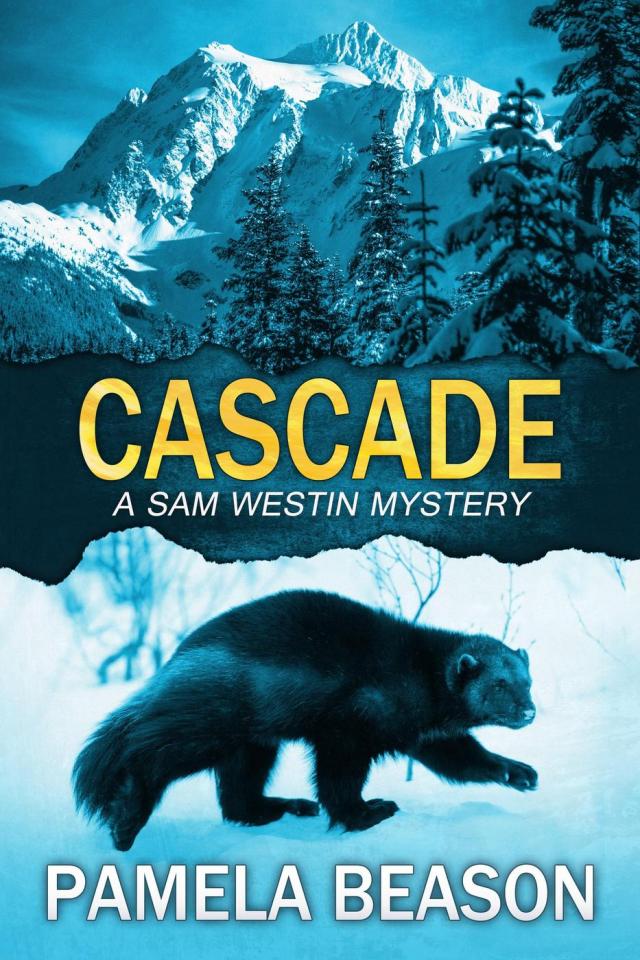


CASCADE
Pamela Beason
WildWing Press
Bellingham, Washington, USA
This book is dedicated to all ski patrol employees in the mountains
and to all those who work to protect wildlife
in the United States.
Notes from the Author
CASCADE Chapter 1
Chapter 2
Chapter 3
Chapter 4
Chapter 5
Chapter 6
Chapter 7
Chapter 8
Chapter 9
Chapter 10
Chapter 11
Chapter 12
Chapter 13
Chapter 14
Chapter 15
Chapter 16
Chapter 17
Chapter 18
Chapter 19
Chapter 20
Chapter 21
Chapter 22
Chapter 23
Chapter 24
Chapter 25
Chapter 26
Chapter 27
Chapter 28
Chapter 29
Chapter 30
Chapter 31
Chapter 32
Chapter 33
Chapter 34
Chapter 35
Chapter 36
Chapter 37
Chapter 38
Chapter 39
Chapter 40
Chapter 41
Chapter 42
Chapter 43
Chapter 44
Chapter 45
Chapter 46
Chapter 47
Chapter 48
Acknowledgments
Copyright Page
Books by Pamela Beason
About the Author
Notes from the Author
Although I have used real locations in this book, the story is purely fictional. Although minor earthquakes and avalanches are common in the North Cascades, to my knowledge there has never been a series of avalanches as severe as depicted in Cascade, and I hope there never will be. In real life, the Mt. Baker Ski Area and the Raven Hut Day Lodge are still in beautiful condition and ready to welcome skiers.
In Cascade, I also mention a tiny-home community in Bellingham, designed to provide temporary housing for those experiencing homelessness. In real life, the residents of tiny homes are carefully vetted to be sure they are not criminals or dangerously mentally ill. Alcohol, drugs, and weapons are not allowed, and the communities are managed. Although I have Maya living in a tent as a temporary guest in this book, tents are not allowed in tiny-home communities, as far as I know.
CASCADE
Chapter 1
The woman hung upside down in the air as if she were skiing on the cobalt sky above her feet. Summer “Sam” Westin held her breath until the contestant in the Mount Baker Aerial Freestyle Competition finally righted herself to land neatly on her skis. The sparse crowd on the sidelines roared in approval.
The daring of these young athletes astounded Sam; they seemed to have no sense of mortality. How did they even practice these incredible stunts without breaking their necks? She would be terrified of ending up a paraplegic on her first try at a maneuver like that one.
Sam could imagine her young friend, Maya Velasquez, taking a flying leap into space like that with no hesitation. As a teenager, Maya had fearlessly tackled building hiking trails in the Olympic National Forest. Then, after aging out of the foster care system, she led troubled teens in a wilderness training school, understanding them better than an older instructor because she, too, had been a delinquent only a short time ago.
At least that had been the old Maya. Last year’s Maya. Now the young woman seemed to be headed again for an aimless life.
The next contestant completed an amazing twisting double flip and nailed her landing without even a spritz of snow, sailing smoothly across the finish line to the cheers of the crowd. Sam tapped off the video Record button and then slid her cell phone into her jacket pocket. Noting the number on the girl’s contest bib, she matched the number on the clipboard tucked under her arm, and checked the girl’s name off her list, noting the time the contestant had finished her run.
Thank heavens this contest was nearly over. Only one more skier to go. When she’d taken this part-time gig at Out There magazine, she hadn’t expected the reporting jobs to be so awkward. Her imagination, typically confined to all things nature-oriented, hadn’t included every sport from motorcycle riding to snowboarding. When she signed up to write about “outdoor adventures,” she thought she’d write about backpacking and kayaking and scuba diving and such. Adventures that included wilderness and wildlife, not people out to win competitions in front of crowds.
She also hadn’t imagined the physical requirements of this job would be so uncomfortable; she really needed another arm to hold onto all the gear. Still, just to see so many outdoor lovers gathered again after all the months of quarantine made the experience worthwhile. Sam could hardly believe she was getting paid to be here.
This late-season contest was obviously a hastily thrown together affair. The launch ramp was a temporary construction that would be torn down as soon as the event was over. Now, in late April, the snow was skin-grating gravel in the morning, slush by midafternoon, and ice by midnight. A dark bank of clouds was slowly slithering in from the Salish Sea to the west, and Sam was glad that she and her friends would be off the mountain when that weather system arrived. But at the moment, the sky overhead was blue, and the mood of the crowd was celebratory. Both experienced and novice skiers and snowboarders were thrilled to taste the rush of speeding down the slopes, and observers were celebrating the freedom to hug friends and talk without the muffle of masks. The lodges were doing a booming business today selling food and drink to happy customers.
“Sam.” The sound of her name was accompanied by a sharp tug on her sleeve at the elbow.
She shifted on her snowshoes, twisting around in surprise. Gina Canfield stood at her shoulder, rocking from foot to foot, her graying ponytail askew. Gina, a fellow wildlife biologist, was dedicated to various volunteer efforts in the North Cascades, most notably to installing and monitoring cameras throughout the local wilderness areas to document the wildlife there.
“Gina!” Sam greeted her. “I’m surprised to see you here. I thought you didn’t do crowds. I’d hug you if I had a free hand. Out There has me covering this event. Thank God it’s almost done. One more contestant, and then all I have left is the award ceremony. My feet are numb from standing here.”
The loudspeaker announced the last competitor, and Sam pulled out her cell phone again, raising it into position and thumbing on the video recorder to catch the stunt. A young man this time. Aerial Freestyle was a co-ed contest. But could she use that word in her story on this event? Did anyone say “co-ed” anymore? The term sounded so old-fashioned in her head. Ambi-gender? Multi-gender? Would Google know?
The kid’s twisting flip was impressive, but he wiped out as he landed, his skis slipping from beneath his feet. He finished his run sliding on his butt, his board scraping up a bow wave of snow in front of him.
“Sam!”
She focused on Gina again. “Chase is skiing with Blake and Claude over at the White Salmon area, near Raven Hut.” Then she added, trying not to sound bitter, “And his old FBI partner, Nicole, is with them too. Some Homeland Security meeting up in—”
Scowling, Gina flicked a mittened hand impatiently through the air. “I don’t care about your lover and your housemate and their friends! I need you.”
Sam couldn’t remember the last time anyone except her housemate Blake had said they needed her for anything, and Blake usually only wanted her to sample his latest culinary experiment.
Gina’s face was tense. “We have to go now. We need to rescue Feisty.”
The muscles between Sam’s shoulder blades tensed at the urgency in her friend’s voice. “Rescue? Why? What’s going on?”
“Feisty’s radio signal hasn’t moved more than a foot for hours now. Something really bad has happened to her.”
“Radio signal? She has a collar?” Although she was trained as a wildlife biologist and she knew the value of research from radio tracking, Sam hated to see wild animals wearing collars. It seemed so wrong to burden a wild creature with the bulky human device. In some states, hunters actually used the signals to track and kill their prey. In Africa, the codes were routinely stolen or bought by poachers to kill rhinos and other endangered species. Sometimes a collar was not only an awkward inconvenience, but also a death sentence for a wild animal.
Still frowning, Gina nodded. “Not my choice, but yes, so I could get funding to continue my study in the North Cascades.”
Sam noted that her friend’s hands were empty. “Where’s your tracker?”
Gina tapped her pocket. “Cell phone. It’s a satellite feed. Sometimes we can get photos and videos, too.”
“You can do that? Set up a remote camera with a cell phone connection?”
“You’ve been living under a rock, haven’t you?” Gina responded dryly. “In this century, some collars and tags and wildlife cameras can use cell phone networks. Some come with attached solar panels. But ours are usually hidden in the trees, so my geek squad volunteers rigged up a system to connect to a solar panel on top of a tree. Which sometimes works when the panel’s not covered with snow. In between times, our cameras rely on the batteries. But right now, I’m getting the signal from her collar.”
“Got it.” Sam felt like a dolt. “So where is Feisty?”
&nbs
p; “Close to my camera location. She might be in a trap.”
Sam’s imagination immediately delivered a nightmarish vision of a wolverine with one foot clamped between the shark-toothed jaws of an old-fashioned steel trap. Her stomach lurched. Taking a deep breath, she reminded herself that there were more benign traps. She’d read a book about studying wolverines in Glacier National Park, and the biologists working there had built traps that resembled tiny log cabins.
“Who would trap her? Another biologist?”
“An asshole, more likely,” Gina growled. “Probably one of the Priests.”
“A priest?” Had she heard that wrong? The clergy was trapping wild animals?
“Yeesh, Sam.” Gina’s expression confirmed she was a nitwit. “One of Anton Priest’s clan. The Priests live near Glacier; they’ve set traps in this area before.”
Sam checked her watch. “When did Feisty last move?”
“I checked fifteen minutes ago. She was still moving then, just not much. She’s been captured by that camera quite a lot recently. We think she has a den nearby. But she’s never been this stationary.”
Sam caught her lower lip between her teeth. The female wolverine probably had kits secluded somewhere close to that camera. Baby wolverines, buried somewhere in a den hidden ten feet under the snow, hungrily waiting for their mother, who was now injured or imprisoned.
So-called “skunk bears” were exceedingly rare in the Lower 48. Washington State had designated wolverines a “Species of Greatest Conservation Need,” which seemed to mean only that they merited farther study, and the current federal authorities stubbornly refused to put them on the national endangered list, along with a multitude of other animals that deserved protection. Sam had seen Feisty only through images captured by Gina’s camera. She’d give anything to see a wolverine up close.
And now this mama wolverine, designated “F3” because she was only the third known female in the North Cascades, was in trouble. What did her trapper have in mind for her? Was she about to become a pelt auctioned off on the internet, like that rare jaguar in Arizona?
Sam quickly surveyed the contest venue. The crowd had already started to melt away toward the parking lots or the day lodge, but others gathered near the flagged area designated for the winners to accept their ribbons. The winners’ names were already listed on the electronic sign above. She snapped a quick photo of that, then stuffed her clipboard into the backpack resting beside her on the hard-packed snow.
“I can catch a ride back to town with you, yes?” When Gina nodded, Sam thumbed her phone. “I’ll send Chase a text message. He’ll get it eventually.” Cell phone communications in the Mount Baker area were iffy, but Chase had a satellite phone and a text would most likely go through here by the lodge. The, she zipped her cell into her jacket pocket. It was a few minutes shy of three o’clock, and sunset was roughly eight o’clock. “It’s around a two-hour hike to reach the camera location, right?”
“At least. We’ll have to hustle to make it back here before dark.”
Sam mentally inventoried the contents of her backpack. She carried her usual winter collection: rain pants, hat, gloves, snow scoop, extendible avalanche pole, first aid kit, extra water, extra food, headlamp, and now, the clipboard. And a small roll of duct tape. She was a big fan of duct tape. “I’m good to go,” she told Gina.
“Figured you would be. I have a pistol and tranq darts if we need ‘em to grab Feisty.”
“Aren’t we just going to free her?” Sam couldn’t quite wrap her imagination around how they’d capture, let alone transport, a pissed-off wolverine. Wolverines were renowned for their ferocity. The largest members of the weasel family, they had long claws, razor-sharp teeth, and bone-crunching jaw strength that rivaled many sharks, and had been known to battle with grizzlies.
“Let’s hope we only need to let her out of a trap,” Gina said. “We’ll only use the tranqs if she’s injured.”
Sam had read that a wolverine’s powerful jaws could snap the thigh bone of an elk. What kind of condition was Feisty going to be in when they sprang the door of that trap? What kind of mood? Would she attack?
The humans might need the tranquilizers more than the wolverine.
Chapter 2
Leaving behind the hubbub of the ski area was a relief. Aside from their breathing and an occasional slosh from a water bottle on her back, the squeak of the hard-packed snow under their snowshoes was the only sound Sam heard after she and Gina had passed over the mountain ridge at the top of the groomed ski slopes. The silhouettes of only three die-hard backcountry skiers bound for Artists Point dotted the patchwork vista of dark evergreens and white snow on the mountainside above their position. The skiers wore climbing skins attached to their skis as they trudged up the slopes.
Sam had climbed up and skied down a few times herself, but now she’d largely given up skis, at least the downhill type, in favor of trekking more slowly through the natural areas, which increased the odds of encountering wildlife.
Thoughts of Maya again oozed into her brain. The girl—no, young woman; Maya was nearly twenty-two now—had suffered so many losses and trials in her short life. The lockdown had only been the latest challenge, with college classes retreating to Zoom, a situation for which Maya had little patience. A study buddy named Brianna had helped for a few months. But then, Brianna had died a horrible death from COVID, gasping for air even while on a ventilator. Maya had promptly dropped out of community college, which caused her, a former foster child, to lose the state funds she received for education and housing.
So, Sam had reluctantly agreed that Maya could once again put up her tent in Sam’s backyard. Then Maya had lost her part-time job at REI during the pandemic and, as far as Sam knew, was not on the roster for leading wayward teens on mountain treks with the local Wilderness Challenge program this summer, either.
The pandemic and lockdown had changed everyone, but now most seemed happy to be emerging from the restrictions. Why was Maya still spiraling downward? The young woman seemed to have reverted to a wayward teen herself. And she spent way too many hours with that creepy kid, the one with long greasy hair and the cold yellow gaze of a snake. Sam was certain that he often slept in Maya’s tent. She didn’t like the thought of him prowling around her backyard in the dark, and she hated even more the idea that he might borrow Maya’s key to take a shower or use the toilet in her cabin.
What was that kid’s name? Something that rhymed with sleaze—Eaze, that was it. What the hell kind of a name was Eaze? Sam had discovered his real name was Ethan Zeran; she’d had Chase run a background check on him. He wasn’t really a kid, either. He was twenty-three years old to Maya’s twenty-one, with a juvie record even scarier than Maya’s. Neither of them seemed to have a plan to become an adult any time in the near future.
Sam’s stomach churned with the suspicion that whatever Maya and Eaze might be up to right now, it was definitely not good. Even if they were doing absolutely nothing, as all the evidence seemed to indicate, that wasn’t any sort of strategy to make a better future. She really needed to put her foot down, tell Maya she could no longer camp out at her house if Eaze was present.
Sam didn’t care where Eaze might end up, but where would Maya go? The girl had no family and no money. Before the discovery of her relationship to Jade Silva last year, Maya had been showing real promise, doing well in school and even serving as a mentor to other teens. Now it seemed like Maya was incapable of recognizing any good in the world, let alone contributing to it.
Sam understood all too well that fuck-it-all mindset, although her own attitude was more a shifting fog of pessimism. In the last few years, several of her friends had died violent deaths. Two of those friends had also been Maya’s co-workers. Sam had also met another earlier victim, and that girl, too, had been a colleague of Maya’s on the trail building crew. Then, to her amazement, Sam discovered that her new friend in New Mexico, Jade Silva, was actually Maya’s half sister. Jade and Maya and even Jade’s mother, Katerina Franco, had been astounded by the connection. But Maya never got the chance to meet Jade. There was so much ugliness and sorrow everywhere.
In the last few years, the COVID pandemic and the accompanying national politics had added a layer of grime to society that might not ever be cleaned away. This world could be a truly hostile place when humans were in charge.