

Murder by moonrise, p.1
Murder by Moonrise,
p.1
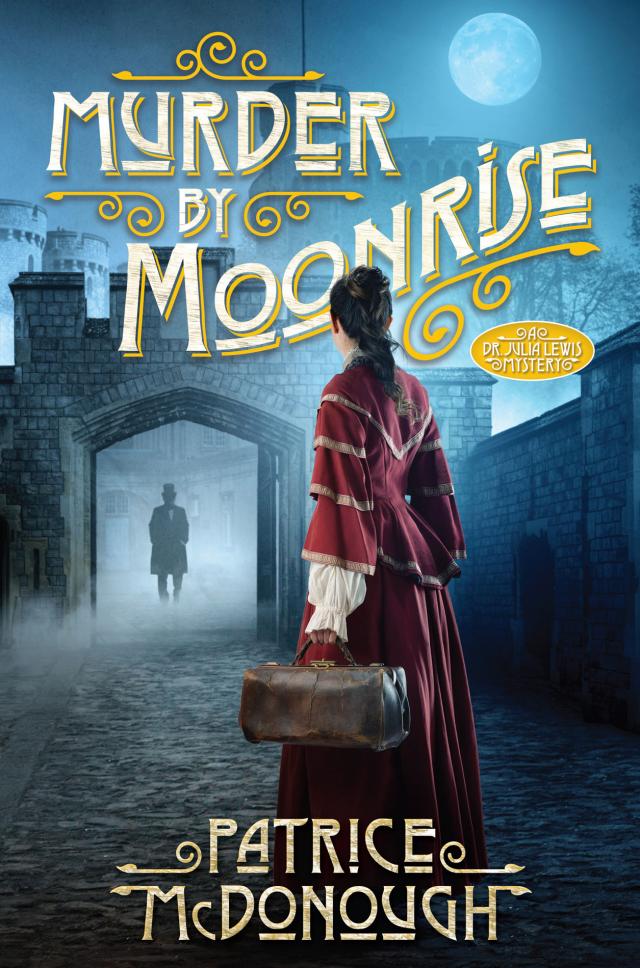


Kensington Books by Patrice McDonough:
Murder by Lamplight
A Slash of Emerald
Murder by Moonrise
This book is a work of fiction. Names, characters, businesses, organizations, places, events, and incidents either are the product of the author’s imagination or are used fictitiously. Any resemblance to actual persons, living or dead, events, or locales is entirely coincidental.
To the extent that the image or images on the cover of this book depict a person or persons, such person or persons are merely models, and are not intended to portray any character or characters featured in the book.
KENSINGTON BOOKS are published by
Kensington Publishing Corp.
900 Third Ave.
New York, NY 10022
Copyright © 2026 by Patrice McDonough
All rights reserved. No part of this book may be reproduced in any form or by any means without the prior written consent of the Publisher, excepting brief quotes used in reviews.
Without limiting the author’s and publisher’s exclusive rights, any unauthorized use of this publication to train generative artificial intelligence (AI) technologies is expressly prohibited.
All Kensington titles, imprints, and distributed lines are available at special quantity discounts for bulk purchases for sales promotion, premiums, fund-raising, educational, or institutional use. Special book excerpts or customized printings can also be created to fit specific needs. For details, write or phone the office of the Kensington Special Sales Manager: Attn. Special Sales Department. Kensington Publishing Corp., 900 Third Ave., New York, NY 10022. Phone: 1-800-221-2647.
Library of Congress Control Number: On file
KENSINGTON and the K with book logo Reg. US Pat & TM Off.
ISBN: 978-1-4967-4642-9
First Kensington Hardcover Edition: March 2026
ISBN: 978-1-4967-4644-3 (ebook)
10 9 8 7 6 5 4 3 2 1
Printed in the United States of America
The authorized representative in the EU for product safety and compliance is eucomply OU, Parnu mnt 139b-14, Apt 123
Tallinn, Berlin 11317, hello@eucompliancepartner.com
Contents
Kensington Books by Patrice McDonough
Title Page
Copyright
Dedication
Preface
Chapter 1
Chapter 2
Chapter 3
Chapter 4
Chapter 5
Chapter 6
Chapter 7
Chapter 8
Chapter 9
Chapter 10
Chapter 11
Chapter 12
Chapter 13
Chapter 14
Chapter 15
Chapter 16
Chapter 17
Chapter 18
Author’s Note
To Carol McDonough, always my first reader
At the rising of the moon, at the rising of the moon … Who would follow in their footsteps at the rising of the moon?
—John Keegan Casey
The tall, pole-thin man in a dark topcoat and bowler hat looked out of place.
He trailed the Moonraker’s tavernkeeper through the crowded, low-ceilinged pub, shouldering past fishermen and dockers who’d labored since sunup. He ducked under a soot-blackened beam, knocking his hat and curling his nostrils at the reek of spilled beer, carp, and sweat.
“He’s in the storeroom.” The barman jerked his thumb at an oak door. “Downing my whisky.”
The newcomer fished in his pocket and flipped the innkeeper a half crown. Then he lifted the iron latch and pushed. A man the size of a steamer trunk in a soiled tweed cap hunched over a half-empty bottle, a shot glass on the table and another in his square, meaty fist.
“Could’ve grown a beard, waiting for you,” he growled, downing his drink.
“And look more a ruffian than you are?”
He dropped his bowler on the table and sat. Light from a hanging oil lamp glinted off hair the color and texture of straw. His eyes were nearly as colorless, shading to light blue at the edge of his irises. He tipped whisky into the empty glass, sipped, and grimaced.
“Bilge. How do you drink this swill?”
The burly man reclaimed the bottle and poured two fingers. “What’s taking you to the island?”
“Spot of bother over a girl, but I’ll arrange things.”
“The maggot couldn’t keep his hands off her, I’m guessing.”
“She’ll be sorted, although he was reluctant at first. As for the shipment—”
“McGrath’s sweating it, saying they know it’s on the way.”
The thin man cocked his head. “That’s what you wanted to tell me?”
“Could be trouble at the port.”
Pale eyes flashed. He grabbed his companion’s wrist, sending a jet of amber liquid across the table. “Don’t go sour on us now, boy-o.”
“Bleeding hell.” He broke the man’s iron grip and rubbed his hand.
“Plenty of sweets for all the kiddies when it’s done and dusted.” The thin man retrieved his bowler and stood. “Hate to break up the party, but the last steamer leaves for the island in an hour.”
Outside, he raised pale eyes to the night sky. A waning crescent moon shone dimly through a bank of thin clouds. He brushed the crown of his bowler, flipped it, and tugged it on by the back of the brim. Then he patted his scowling companion on the shoulder.
“You worry too much,” the thin man said, raising his voice over the rattle and screech of a passing train. “No loose ends … that’s my motto.”
He whistled, strolling away, heading toward Southampton’s docks and the last ferry to the Isle of Wight.
CHAPTER 1
October 1867
Dr. Julia Lewis flinched as a spray of saltwater slapped her face.
She braced herself on the heaving deck as the steamer’s bow rose and fell, the ship plunging toward the Isle of Wight. At that moment, she’d happily exchange her lot for London’s clammy fogs, solid pavements, and a line of patients queuing at her clinic.
Kate Connelly’s right hand anchored her straw bonnet. She took Julia’s arm with her left. “Come away from the rail, Doctor Julie,” her maid said. “You’re looking all green, you are.”
Julia shook her head and tightened her grip. “I’ll disgrace myself on the deck if I look away.”
“’Tis mind over matter, they say.”
“More like my head over the rail in another minute.”
Julia dragged her eyes to where sea and sky met and tried to fix her gaze on the line. It wasn’t easy as the paddle-wheeled vessel pitched and churned. She was never a happy sailor. Julia’s trip across the Atlantic to medical school in America had been a voyage of prolonged torture. As for the steamer to the Isle of Wight, there were many days when the strait that separated the island from Britain’s south coast was in a placid mood. That afternoon, it kicked and scowled.
Things went from bad to worse when word spread among the ship’s passengers that their route had changed.
“Shoals, miss,” the first mate said. “They’ve formed across the approach to the landing at Cowes Harbor, so we’ll swing farther east.”
Julia groaned. “How much longer?”
“Nothing to speak of,” he said. “Quarter of an hour, maybe.”
The sightseers and seasoned sailors with iron stomachs didn’t seem to mind. They crowded the rails and craned their necks: the eastern route afforded a distant glimpse of Osborne House, the queen’s residence in East Cowes.
“The royal standard isn’t flying,” a passenger said, peering through field glasses. “Her Majesty must be away.”
Someone whistled. “Look at the size of that yacht at anchor. Belongs to the Prince of Wales. Wonder what Bertie’s doing at Osborne without the queen?”
A third man elbowed his friend and winked. “While the cat’s away.”
Twenty miserable minutes later, the steamship slipped into the protected waters of Cowes Harbor.
Kate said, “You’re looking less green already.”
Julia smiled wanly. “I may live after all.”
“’Tis just what the doctor ordered, if you don’t mind me saying. New sights and fresh air to breathe.”
“You and I could do with both. Speaking of sights …” Julia peered over the rail, scanning the crowd on the quay. “I don’t see—”
“There they are. Over to the left.” Kate streamed her handkerchief. “’Tis Doctor Lewis and your great-aunt, waiting by a four-wheeler.”
Julia’s grandfather lifted his hat and waved it, his snowy hair catching the early afternoon sunlight. Then he pointed them out to his sister, Lady Aldridge.
Kate left Julia with her doctor’s case and carpetbag and searched for a porter to carry the rest of their luggage. A half hour later, they rolled up to the white, ivy-covered hotel only steps from the seawall. Julia climbed down from the carriage and looked up at the castle-like façade of the Marine Hotel.
“Grandfather, you’ve booked us into a palace by the sea.”
Dr. Lewis took Julia’s arm. “Fit for a future king. Fit for my granddaughter. I’m told the Prince of Wales is a regular guest during the yachting season.”
“How grand.”
“A party of young men in his set is staying here now,” Aunt Caroline said. “Laying up their boats for the winter. Or putting them down. I can’t remember which they said.”
“Odd that the
prince takes rooms here,” Julia said. “Why not stay at Osborne House with the queen?”
“Oh, he stays at Osborne when Her Majesty is away.” Dr. Lewis chuckled. “Keeping out of his mother’s sight affords Prince Bertie, ah …”
“More scope for mischief,” his sister said.
“He’s there, now. Kate and I saw his yacht at anchor.” Julia turned her face to the light breeze. “You were right about the soft air and sunshine, Aunt. On land, at least.”
“The Isle of Wight is just the tonic you need, my dear. But first, a rest is in order.” Lady Aldridge handed Kate the room keys. “After that, join me downstairs for tea.”
“With pleasure.” Julia kissed her aunt on the cheek and followed Kate up the stairs. Six weeks away from London, and she’s longing for the news, Julia guessed. And she’ll want to hear about Richard.
Julia was Scotland Yard’s first female medical examiner and had worked two cases with Detective Inspector Richard Tennant. After a rocky start, their uneasy alliance evolved into a respectful partnership and friendship. And something more?
Lady Aldridge would ask about his hunt for the man who’d slipped the net on their last case. But nearly a month of silence followed Julia’s last letter. Aunt Caroline would want to know the state of the chase and her niece’s heart.
If only I had answers.
Lizzie Dowling sped down the path from Osborne House. Her lithe way of moving made her seem girlish, but when she smiled, fine, radial lines etched lightly from the corners of her green eyes. She wasn’t a child but a woman in her late twenties and lovely enough to turn heads.
The queen’s parlor maid had spent the morning of her half day changing sheets at Osborne House. Just before two o’clock, Lizzie passed through the gate, peering down York Street, afraid she’d missed the omnibus. She pined for the solace of her secret place. If the ’bus had gone, it would be another week until her next free afternoon.
Lizzie pulled a letter from her pocket and hesitated at the pillar box by Osborne’s gate. Her hand hovered at the slot. She hadn’t written to her younger sister since the summer. That was before it started up again. Lizzy sighed, thinking, Granny always said, let sleeping dogs lie.
But when the ’bus rounded the bend, Lizzie pushed the letter into the slot. She signaled the driver and climbed up, relieved to spot an empty seat in the crowded cabin. At least she’d avoid a windy, rocking ride aloft. As the road swung east around a curve, she watched the tall, square towers of the queen’s house vanish behind a stand of gray-barked ashes.
Lizzie settled in, tucking loose strands of auburn hair under her hat. She’ll help me. She’ll tell me what to do. The girl started to make the sign of the cross, then stopped herself, looking around at the other passengers, wondering if they’d noticed. She closed her eyes and said a silent prayer, Hail Mary, full of grace …
Warm weather lingered on the Isle of Wight, the trees showing just a trace of autumn yellow at their tops. The ’bus rumbled through green hedgerow alleys and rolled past golden fields. After a few miles, it rattled over the timbers of Wooten Creek Bridge, and her shoulder bumped the elderly rider beside her. The man smiled at her apology and looked back at his newspaper. As they passed the Old Mill Pond, its glassy surface turned gray, then blue, and gray again as clouds slid across the sun.
Nearly there.
The busman slowed and stopped just before Quarr Lane began its turn away from the sea. Lizzie hurried forward, one hand holding her bonnet in place, and handed the driver a sixpence.
“Don’t forget, lass. The last ’bus of the day returns at five.” He gave her a long look. “You take care in that lonely place.”
But Lizzie never felt alone there, and she wouldn’t be late. All the queen’s servants had watches to keep them on the household’s strict schedule, and she’d pinned hers underneath her shawl. Not that she needed a timepiece. As a child in Ireland, she had lived on a farm. In the days before … Lizzie closed her eyes. She wouldn’t think about that. But she knew the close of day by the churr-churring of the grasshopper warbler and cooling air that felt like a caress across her cheek. She’d be waiting for the ’bus long before moonrise.
’Tis a Hunter’s Moon tonight, she remembered. It would light her way on the dark walk across Osborne Park, the house towers glowing in the moonlight. Lizzie watched the omnibus disappear around the bend and stood for a moment in the sudden quiet. Then she pulled her skirts away from her boots and slipped through an opening in the hedgerow.
Across the road, a figure moved in the shadows of the trees.
Lady Aldridge and Julia sipped tea from the hotel’s flowery, red-and-yellow cups. An observer might have guessed they were relatives. They sat erect in their chairs, looking taller than most women even while sitting. Lady Aldridge’s hair was silver and Julia’s chestnut, but she and her great-niece shared the same high cheekbones, firm chins, and faces better described as handsome than pretty. The arch of their brows was identical, but not the eyes beneath. Julia’s were brown, and her aunt’s a cornflower blue.
“Well, my dear …” Lady Aldridge returned her saucer and cup to the table, leveling her gaze.
Julia, who knew her great-aunt well, thought, Tea, cucumber sandwiches, and interrogation.
“I’m not sure which surprises me more,” Lady Aldridge said. “That you absented yourself from the clinic for three whole weeks or that you traveled here like a lady, for once, in the company of your maid.”
“I thought you’d be pleased,” her niece said, smiling.
Julia had opened her clinic in Whitechapel five years earlier and was used to coming and going unchaperoned. But it was not merely the travel that worried her aunt. Lady Aldridge fretted about the long hours Julia devoted to the clinic. She thought her niece looked worn out on many evenings and told her so. Often.
“How are they managing at the clinic without you?”
“Doctor Barnes will come twice a week and every Saturday. Nurse Clemmie will send any patient needing more than routine care to the London Hospital.”
“High time you had a holiday. The sea air will soon put some color in those cheeks.”
“And Kate’s. She needed to get away.”
“Is she not well?”
“It’s Finsbury Circus that’s ill. The atmosphere in our neighborhood …”
“Atmosphere?”
Julia frowned, fiddling with her teaspoon. “It’s six weeks since you and Grandfather left London.”
“That’s hardly a lifetime. What has changed?”
“You’ve missed the vicious …” Julia pushed away her cup and saucer. “The guilty-by-association judgments from friends Kate has known for years. Fellow servants who work in the houses around Finsbury Circus.”
“I don’t understand.”
“The Manchester outrage in September, Aunt. You must have read about Sergeant Brett. The policeman who died in the raid. He was the cousin of a servant in Kate’s circle of friends.”
“But what has that to do with your maid?”
“The Irish Republican Brotherhood carried out the attack.”
“Ah … Kate Connolly.” Lady Aldridge nodded. “Old hatreds rekindle easily, I’m afraid.”
“They’ve flared up with a vengeance. It’s sickening.” Julia picked up a tea sandwich and then dropped it, pushing away her plate. “Kate, of all people. Is there a kinder soul?”
“I think we’ve had enough, yes?” Lady Aldridge folded her napkin. “Come, my dear. Let’s stroll along the Parade while the light still favors us. You can tell me about it.”
Julia linked arms with her aunt and crossed the street to the seawall. The sun was low in the sky, spangling the strait with flashes of silver. Most boats had called it a day, captains heading to the moorings and furling their sails.
Lady Aldridge sighed. “Poor Kate. That policeman’s death made the front page of The Isle of Wight Observer. Still, I’m not aware of any anger directed against the Irish here.”
“Maybe not, but I doubt this little island has absorbed a large influx from Ireland.”
“Well, not like London, to be sure.”
“Aunt, there are streets and back courts in Whitechapel where nearly every resident is Irish. They want to live in peace, but they’re tarred by the tiny minority who—”
“Resort to violence to break Britain’s hold on Ireland,” Aunt Caroline said. “Oh yes, I see.”


