Loving lovina, p.1
Loving Lovina,
p.1


THE WAY IT USED TO BE
The gravel road was dusty, and as they came out from under the dappled shade of trees on either side, they came into golden sunlight and paused at the sight of a fenced pasture.
“I don’t remember this . . .” she whispered.
“Well, you didn’t live in this exact area,” he said.
“I mean, any of this,” she said, looking up at him. “I don’t remember you! Apparently, I used to kiss you on back roads and agreed to marry you during a buggy ride. Those are the kinds of memories that are supposed to matter!”
“They meant something to me,” he said, and there was a thickness to his tone that betrayed deeper feeling.
“I’m sorry,” she added. “I’m not saying that those things didn’t matter, I’m just saying I don’t remember them, and I’m upset about that. I . . . I want to remember it.”
She wanted to remember feeling something, loving someone, being excited, even. She couldn’t remember anything but confusion and mild fear since she’d woken up in that hospital. And here was a man Elizabeth and Bethany assured her she’d been in love with, and she couldn’t remember any of it. Frustrated tears prickled at her eyes, and she blinked them back.
“You used to hold my hand,” he said quietly. “When we walked together.”
He held his hand out, palm upward, and she looked down at it. His hand was calloused from work, and some of the lines in his hands were stained black.
“Maybe it will help jog a few memories,” he said softly.
She hesitated a moment, and then put her hand in his ...
Books by Patricia Johns
THE BISHOP’S DAUGHTER
THURSDAY’S BRIDE
JEB’ S WIFE
THE PREACHER’S SON
THE PREACHER’S DAUGHTER
LOVING LOVINA
Published by Kensington Publishing Corp.
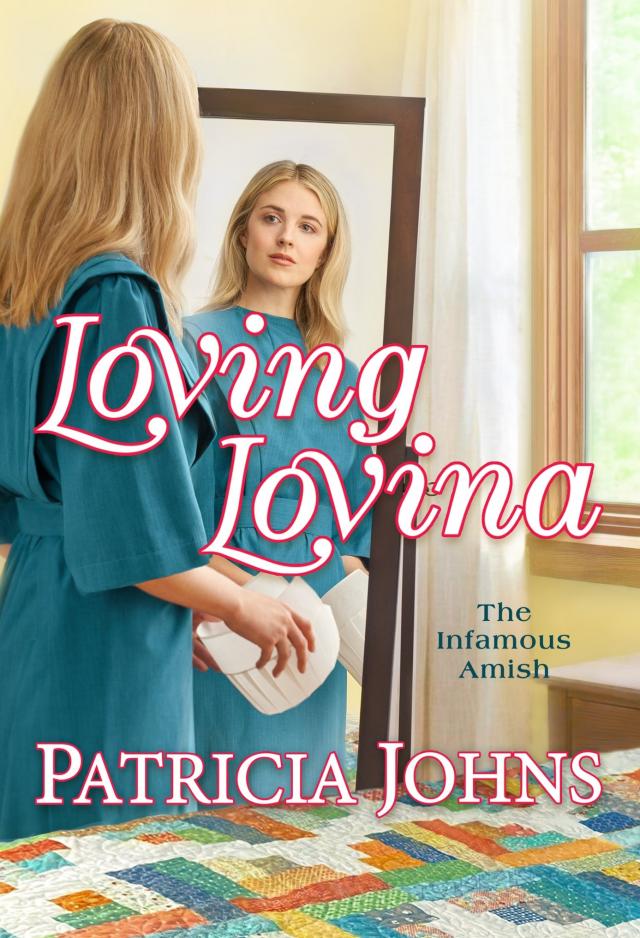
Loving Lovina
The Infacnous Amish,
PATRICIA JOHNS
ZEBRA BOOKS
KENSINGTON PUBLISHING CORP.
www.kensingtonbooks.com
All copyrighted material within is Attributor Protected.
Table of Contents
THE WAY IT USED TO BE
Also by
Title Page
Copyright Page
Prologue
Chapter One
Chapter Two
Chapter Three
Chapter Four
Chapter Five
Chapter Six
Chapter Seven
Chapter Eight
Chapter Nine
Chapter Ten
Chapter Eleven
Chapter Twelve
Chapter Thirteen
Chapter Fourteen
Chapter Fifteen
Chapter Sixteen
Chapter Seventeen
Chapter Eighteen
Chapter Nineteen
Epilogue
ZEBRA BOOKS are published by
Kensington Publishing Corp.
119 West 40th Street
New York, NY 10018
Copyright © 2022 by Patricia Johns
This book is a work of fiction. Names, characters, businesses, organizations, places, events, and incidents either are the product of the author’s imagination or are used fictitiously. Any resemblance to actual persons, living or dead, events, or locales is entirely coincidental.
All rights reserved. No part of this book may be reproduced in any form or by any means without the prior written consent of the Publisher, excepting brief quotes used in reviews.
To the extent that the image or images on the cover of this book depict a person or persons, such person or persons are merely models, and are not intended to portray any character or characters featured in the book.
If you purchased this book without a cover you should be aware that this book is stolen property. It was reported as “unsold and destroyed” to the Publisher and neither the Author nor the Publisher has received any payment for this “stripped book.”
Zebra and the Z logo Reg. U.S. Pat. & TM Off.
BOUQUET Reg. U.S. Pat. & TM Off.
ISBN: 978-1-4201-5238-8
ISBN-13: 978-1-4201-5241-8 (eBook)
Prologue
The hospital bed was rumpled, and she got out of it to pull the sheets smooth again. She hated rumpled sheets. They irritated her; somehow they always came loose. She wore a hospital gown and bathrobe—there wasn’t anything else to wear. Her clothes had been torn in the accident, and they’d been thrown out. Someone had gotten her a pair of socks, which helped keep her feet warm.
A TV hung suspended from a metal arm across the room, and a gardening channel was playing—a woman with a bright smile was pulling plants out of little plastic pots and putting them into the ground, lovingly patting them down. It was soothing.
“How are you today?” A nurse came into the room holding a clipboard.
“I’m fine,” she replied. “How are you?”
The nurse didn’t answer that, but she did hold out a little plastic cup of pudding with a spoon.
“I brought you something,” the nurse said. “I thought you could use a treat.”
She smiled and accepted the gift, then sat on the edge of the bed, peeling back the cover and taking a bite. It was tapioca. She liked this flavor. She also liked this nurse. She was always kind, and tended to bring little treats for her when she checked in to see how she was doing. Once she brought some magazines, and another time she brought her a donut. Sometimes she’d sit and chat with her about whatever was on TV, or about some of the crazy styles in the magazines. It felt good to laugh.
“Do you know what year it is?” the nurse asked.
“No.” She licked the spoon clean, enjoying the tapioca pudding.
“Do you know who the president is?”
“Sorry.” She took another bite and looked up, waiting on the familiar list of questions. They’d done this every day for the last week.
“Where do you live?”
She shook her head.
“What’s your name?”
“Still no idea,” she replied. “Trust me, I’d be very glad to have a name at this point. It’s rather tiring not having one.”
“If someone were to shout to get your attention, what would they say? Someone shouts, you turn, and they say—”
“Hey?” she said with a shrug. “I still don’t remember.”
The nurse jotted something down on the chart. “Okay, here’s a different one for a change—what’s your favorite food?”
And for the first time that week, she had an answer. It jumped into her brain with absolute clarity. She could see it—she could almost smell it.
“Cannelloni,” she replied.
The nurse blinked. “You remember that?”
“I do . . .” She felt a flood of relief. “I do remember it! With the big tube noodles stuffed with this cheese and spinach, and the tomato sauce on top—it’s amazing! I love it!”
A smile spread over the nurse’s face. “My Italian grandmother made the most amazing cannelloni!”
The nurse started writing in the chart again, her pen moving excitedly across the page.
“What’s wrong with me?” she asked. “Why can’t I remember the things that matter?”
“The accident jarred your brain,” the nurse said. “That’s in layman’s terms. And there are some bruises in there. As they heal, your memory will come back.”
“Do you promise?” she asked.
“I’m not allowed to promise anything,” the nurse said with an apologetic smile. “That’s one of the things with working in medicine. But I can tell you that ninety-seven percent of the time with cases just like yours, that is how it works.”
“Those are good odds,” she murmured.
“Now, I need to ask you something, and I want you to just relax and say the first thing that comes to mind,” the nurse said.
“Okay?”
“Is there any chance that you’re Amish?”
She scraped the last of the pudding cup and licked off the spoon.
“Why?” she asked.
“Because there is an Amish man out there who saw your picture at the police station, and he claims to be your father.”
Her heart hammered hard in her throat and the little plastic container slipped from her fingers and bounced across the linoleum floor.
“What did he say my name was?”
“Lovina Yoder.” The nurse looked at her hopefully. “Does any of that feel familiar?”
Chapter One
Lovina lay in her bed in the little Amish house, a crisp white sheet and a light blue and white quilt on top of her. A ray of sunlight slanted across her legs, and she poked a foot out from under the covers to feel the warmth against her skin. From down the hallway she could hear the clank of a pot against the woodstove.
Waking up in this one-story house was so different from waking up in the hospital. A week ago, everything hurt and she was frightened and confused. There were always different nurses and clinical doctors clicking their pens and pursing their lips as they asked her the same questions over and over again.
Do you know what year this is?
Who’s the president right now?
Where do you live?
The hospital staff had been considerate and did their best to make her feel comfortable. She’d enjoyed the company of the one nurse who always brought her treats, too. But when this Amish family had arrived at the hospital, she’d learned another thing about herself: she
could speak and understand Pennsylvania Dutch. And they seemed to have convinced the hospital staff that she belonged with them, because they’d dressed her in a simple Amish dress, complete with kapp and apron, and she’d gone home with these strangers in a bouncing, rocking buggy, listening to them go on about how happy they were to find her and how worried they’d been.
Apparently, she was loved. And Amish.
But she couldn’t verify any of that from memory.
The bedroom was getting hot, and Lovina pushed back the light covers and sat up. Her hair was tangled, and she looked around the room to find a comb waiting for her on the dresser. Elizabeth—the woman who said she was her sister—had shared this room with her last night, but no one had woken her up this morning. She combed her golden hair, and when she ambled over to the closet, she found several dresses hanging there in an array of colors—blue, pink, purple, teal ... A couple of them were smaller—her size—so they were her clothes, presumably. Lovina chose one and looked at the dress and the box of pins on the dresser.
“Do I know how to do this?” she murmured.
She took off the cotton nightgown and slipped into the dress. The pinholes at the waist were at the right place, and her fingers seemed to know the work of pinning the fabric in place. From somewhere else in the house she heard a baby’s wail and a woman’s soothing tones.
The bedroom door opened and Elizabeth poked her head in.
“You’re up!” she said with a smile. “How does it feel to be back in your own clothes?”
“So this is my dress?” Lovina asked. “It seemed like it would fit.”
“Yah, it’s your dress,” Elizabeth replied. “Did you sleep well?”
“I think so.”
“Has anything come back to you?” Elizabeth’s expression froze as she spoke.
“No, sorry.”
“Don’t apologize,” she replied. “That’s not your fault. But you must be hungry, and we’ve been keeping some breakfast warm for you. It’s oatmeal with fresh blueberries—your favorite.”
Was it her favorite breakfast? Somehow, she had a memory of something different—an English muffin with sausage, scrambled egg, and a slice of processed cheese inside. Did that sound right? She couldn’t think of a name for it—but she knew the scent. In her mind there was a little packet of catsup that went with it ... a brown napkin on the side. And it was on a plastic tray. Fast food?
“Are you okay?” Elizabeth asked.
“I’m fine.” Lovina forced a smile. “I am hungry, though.”
“Good—an appetite is an excellent sign!” Elizabeth replied. “Come on, then—”
An excellent sign of what? Everyone had been congratulating her every time she ate, as if it were a lifesaving occupation, but she had a feeling these people were just choosing optimism. Because she still couldn’t remember anything that would identify who she was or where she belonged. All she’d done so far was wake up and get dressed, but she did feel better for being in some clothes.
“Are you going to put your hair up?” Elizabeth asked.
She looked at herself in the mirror—her blonde hair was hanging loose around her shoulders. She liked it down. It was pretty. It was also shorter than Elizabeth’s hair. She’d noticed that last night when Elizabeth had let her hair down to comb it. Elizabeth’s hair went all the way down to her waist, while Lovina’s was just past her shoulders.
“Do I do that?” Lovina asked.
“Yah, we all put our hair up,” Elizabeth said, giving her a funny look. “It’s modesty. Our hair is for our husbands.”
“Oh . . .” Lovina ran her fingers through her hair and then gathered it at the back of her head.
“Let me help you,” Elizabeth said, and she picked up the comb and took over in twisting her hair up into a small bun at the back of her head. “It’ll be easier when it grows longer.”
“But why isn’t my hair longer?” Lovina asked.
“You cut it.” Elizabeth passed her a fresh kapp, and Lovina put it on.
That was a simple enough explanation, but she sensed some reticence in her sister’s reply. She was holding something back. Lovina looked at their reflection, their faces side by side in the mirror. She couldn’t see a family resemblance. Elizabeth was tall and lithe. Lovina was short and slim. Elizabeth had rich brown hair in contrast with Lovina’s pale, fair tresses.
“Come on,” Elizabeth said. “Let’s get some breakfast into you.”
Lovina followed Elizabeth down the hallway toward the kitchen. She could smell the aroma of cooking—the yeasty scent of rising bread and the lingering smell of oatmeal and eggs.
“You’re up!” Bethany said as they came into the room. She had a baby on her hip, and she smiled at the sight of Lovina. “You look like you had a good sleep. Did it help?”
“Not really,” Lovina replied. Because she knew what Bethany was asking—it was the same thing Elizabeth had asked.
Bethany’s gaze flickered toward Elizabeth, and they exchanged a look.
“Well, have a seat,” Bethany said. “And would you hold Mo?”
Without waiting for any reply, Bethany tipped the baby into Lovina’s arms, and she looked down at the surprised face of the tiny boy. He blinked at her, and she couldn’t help but smile.
“You’re cute, aren’t you?” Lovina said, and she adjusted him in her arms, then she looked over to Bethany, who had returned to the stove to dish up oatmeal. “What’s ‘Mo’ short for?”
“Moses,” she replied. “Isaiah and I thought he needed a strong name ... he’ll need it.”
Bethany turned away again, and Lovina looked down at the baby in her arms. He was very sweet, but she didn’t feel any tickle of recognition when she looked at him.
“Why?” Lovina asked.
“Why what?” Bethany asked.
“Why does he need a strong name?” Lovina asked.
Bethany regarded her for a moment, then pink tinged her cheeks.
“We don’t talk about that,” Elizabeth said quickly.
“Oh—” Lovina let out a breath. Would she remember all of this later?
“It’s because Isaiah isn’t Mo’s daet,” Bethany said after a beat of silence, and she cast Elizabeth a helpless look. “Lizzie, she’s family.” Then she turned back to Lovina, her cheeks blooming pinker. “I was pregnant already when your brother and I started courting. I had been engaged before, and my fiancé left our faith. He’s . . . out there somewhere.” She gestured vaguely toward the window. “Mo’s father’s name is Micah. He comes to visit from time to time, so things will be complicated for Mo as he grows up. Isaiah will be the daet who raises him, but everyone will know the truth.”
“I’m sorry . . .” Lovina felt her face heat. “That’s . . . awful.”
“It’s life,” Bethany replied, meeting her gaze evenly.
“It shows what grief comes of leaving the faith,” Elizabeth added. “Our family has learned that lesson the hard way.”
“And it also shows you what kind of man your brother is,” Bethany said quickly, and she shot Elizabeth a warning look. “I thank Gott every day that he’s my husband.”
Lovina dropped her gaze to the baby in her arms, uncomfortable. Why did she feel like she was being preached at here? Mo shoved a fist into his mouth and blinked up at her with wide brown eyes, and Lovina touched his nose with the tip of her finger. He smiled.
“Speaking of husbands,” Bethany said, changing the subject brightly, “Elizabeth, we should work on your wedding quilt today. We’ll have to sew fast to get it done in time, but if we get enough women working on it, I think we’ll manage it!”
Bethany brought a bowl of oatmeal to the table. A dish of fresh blueberries sat within reach, and a pitcher of thick, creamy milk was next to it.
“Oh, and sugar—” Elizabeth brought a bowl of brown sugar to the table and then held out her hands for the baby. “Come here, bobily.”
Lovina handed the baby over and sat down at the sturdy wooden table. She licked her lips and glanced up hesitantly.