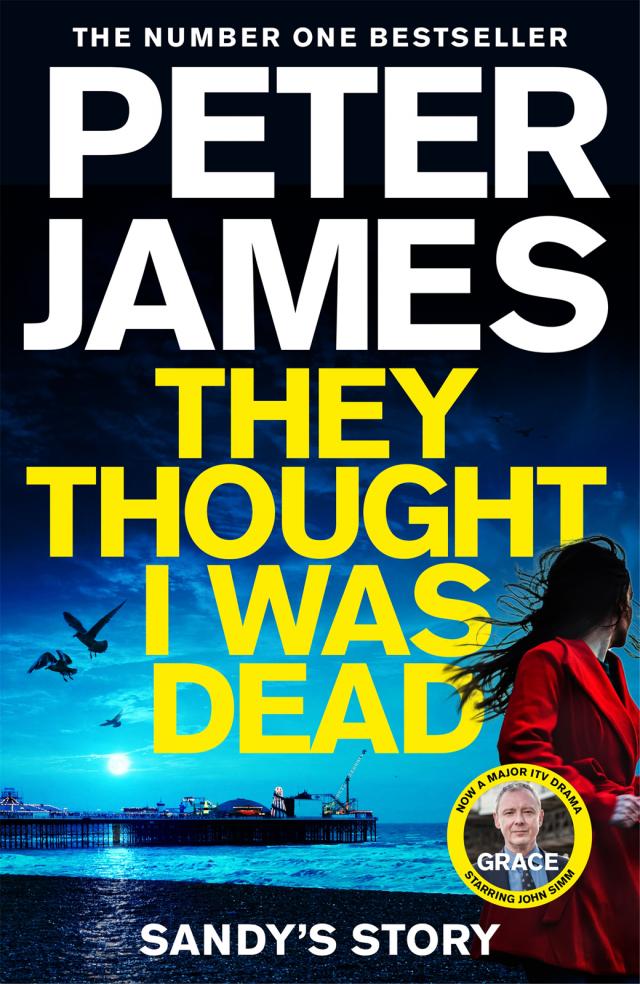
They thought i was dead, p.2
They Thought I Was Dead,
p.2


For some reason I don’t fully understand, he’s still stuck in the custody centre but will be with me, he promises, faithfully, in twenty minutes.
I read out the menu to him and he chooses scallops for his starter and monkfish for his main. I select a bottle of Chablis from the wine list, hang the cost. Although I’m feeling a bit smashed and know I shouldn’t drink much more.
It is now 10.15 p.m. and Roy has texted to say he is still delayed. I’m so ravenous I’ve had my starter and half of the bottle of Chablis. Not sure if I’m feeling more pissed or just plain pissed off. Through my haze of alcohol the restaurant appears to be emptying. Actually, it is empty.
Am I really the only person still here? I look around and see tables all tidied and laid for lunch tomorrow. Around the corner a couple of waiters are chatting by the bar. One of them has just asked, with a slightly desperate look on his face, if I would like my main course or would I still prefer to wait. I can’t remember what I said to him, but I seem to recall ordering some chips. Or French fries, as I’m in a posh place.
Then I hear footsteps clumping down the stairs, and I see a tall man I vaguely recognize, and he appears to vaguely recognize me, too. Everything is vague at this moment. I’m definitely drunk. Last time I went to the bathroom – some while ago – and peered into the mirror, even my hair looked drunk.
This guy is tall, good-looking in a kind of supercilious way, as if everything around him is beneath him, and sharply dressed in a dark jacket, crisp white shirt and tailored jeans. His loafers are so polished they are like black mirrors. I’ve seen him before somewhere, but I can’t think who the hell he is. But he’s walking over to me with a knowing look. When he speaks his voice is posh and measured. ‘Sandy Grace, right?’
I give him a guarded, ‘Yes.’
I’m finding him a bit intimidating. And I’m still trying to think who the hell he is. He smells nice, a cologne I don’t recognize.
‘Charming little restaurant this, isn’t it? Are you and Roy having a pleasant evening?’ He looked down, and I could see he was clocking the untouched other side of the table, the glasses and plates and cutlery.
‘Well, I can’t speak for Roy, but mine’s been a bit rubbish, actually.’
He frowned. Or rather, looked pained. Or bewildered. ‘Right,’ he said, awkwardly. ‘Yes, OK. Right – well . . .’
He looked around him, as if expecting Roy to materialize – perhaps from the loo – at any moment.
‘He’s not here,’ I said to put him out of his misery.
‘Not here? You’ve been stood up?’
I shook my head. ‘Not stood up – not exactly.’ I explained the events. When I finished I picked up the bottle of Chablis from the ice bucket and showed him there was still some left and offered him a glass. He hesitated, saying he was driving, then he said, ‘Why not, I’ve not drunk anything all evening,’ and accepted, sitting down and clinking his glass against mine. ‘I’ve also been stood up,’ he said.
‘Seriously?’
‘My date never showed.’ He shrugged a What-the-hell. ‘You’re wondering who I am and where we’ve met before, aren’t you?’
It threw me, because he was right. ‘I’m trying to place you,’ I replied diplomatically and took a stab. ‘Sussex Police, right?’
‘I’m a DI, we met at the Sussex Detectives’ Ball, at the Grand Hotel in Brighton, last October. I was on the next table to you and your husband – we chatted briefly about how terrible the comedian was. I’m down on secondment to Sussex Police from the Met – briefing the force on counterterrorism.’ He held out his hand and gave a very clammy, limp handshake for much longer than I was comfortable with, all the time staring into my eyes. ‘My name is Cassian Pewe. Maybe I can give you a lift home?’
Have you ever come across someone who you found both attractive and repulsive at the same time? If not, you’ve never met Cassian Pewe. Snake charmers work by hypnotizing venomous reptiles. Cassian Pewe is the reverse. He’s the supercilious reptile with the silver tongue and the golden looks. I knew he was dangerous, but as we talked, there was something about him – I can’t explain what exactly – I found mesmerizing. Hypnotic?
When it got to 11.15 p.m., and the remaining staff in the restaurant were clearly dying to go home but too polite to say so, Roy rang, his voice full of apology. He was still at work, he said, and he would make up for this evening but best I get a taxi to go home.
I hung up on him. Then I accepted Cassian’s gallant offer to give me a lift home in his white convertible Jaguar. He told me it was a classic, although I don’t know much about cars, but it was rather gorgeous, with its soft leather seats and mahogany dashboard, and he was clearly proud of it. It was snug and warm inside, with the roof down and the night air blowing in our hair and on our faces. In my woozy state I imagined for a moment we were in the South of France, Cannes maybe, instead of Brighton.
When we pulled up outside our house ten minutes later, I saw Roy’s car wasn’t on the driveway. He was still at work, still playing with his prisoner. Cassian Pewe suddenly switched off the engine, and before I knew it, had slipped one arm around my neck, pulled me towards him and kissed me passionately on the lips.
Shocked, I was again both attracted and repulsed. Then he stared into my eyes, in the faint glow of a streetlight above us, and said, ‘I really like Roy. I like him a lot.’
‘Well, I hope you don’t kiss him like that,’ I replied.
5
26 July 2007
I’m faced with a choice as I approach Gatwick Airport. The North or South Terminal? If I had a coin, I’d toss it. I decide South. So many decisions I’m completely free to make.
It’s 1.45 p.m. Horrible Roel Albazi can only just about now be figuring I’m a no-show. My mirrors are still clear. But just for belt and braces, to be certain no one is following, I do a full 360-degree loop around the South Terminal before driving up the ramp of the short-term car park. Roy is not going to be happy if he gets stuck with the bill, the size of which will depend on how long it takes them to find my car. But the car is in my name, so it really shouldn’t be a problem for him.
I take my ticket and the barrier rises in front of me. Symbolic in a way, as I drive through and into my new life, which begins with an empty space between a white Porsche Cayman and a purple Nissan Micra on the fourth floor of the short-term car park. I lock my little Golf – I’ve no idea why, habit I guess – toss the keys into a convenient bin, then walk across the bridge into the terminal building.
One bonus, in the situation I find myself in, of being married to a detective is the stuff I’ve learned from Roy that most people would never, ever, even think about. Like how to disappear in our online, digital world.
How to vanish without trace.
Like I’m about to. I am so nervous. Then I remind myself I have no choice.
It’s weird when I look at my left hand and don’t see my wedding ring or my engagement ring, which have been part of my fourth finger for so long. There’s just a faint white band of skin that isn’t suntanned. I may have to pawn them, hopefully not, but not too close to home, in case pawnbrokers become a line of enquiry. I dig my hand into the pocket of my lightweight denim jacket as I stroll around the Departures concourse because I’m oddly self-conscious about that white band, my naked finger.
After stopping at WHSmith to buy a newspaper, I head over to the British Airways check-in area, join a short queue and then check in to flight BA 2771 to Malaga. No luggage, I tell the polite young man behind the desk who is looking at my passport.
After a few moments of tapping on his terminal, he hands my passport back to me. ‘Have a nice flight, Mrs Gordon.’
Instead of heading for security, I head for the loos. Once securely locked inside the ladies’, I open the small holdall slung over my shoulder, pull out a dark brown wig and tug it on. Along with a large pair of dark glasses. Then I reverse my denim jacket, so it is now white. Tug off my jeans and replace them with a sensible skirt. Next, I make my way across to the EasyJet check-in area.
Fifteen minutes later, thanks to my second false passport, Sandra Smith is allocated seat 14C on EZY 243 to Amsterdam. When she arrives, with just hand baggage, she will check in to a London City Airport flight under the name of Sandra Jones. On entering the arrivals lounge there, she will see a limousine driver holding up the name Alison Shipley.
Alison Shipley will be whisked away from the airport in the back of a black Mercedes S Class driven by a courteous man called Meehat El Hadidy, following directions on his satnav to East Grinstead.
Taking her towards her new beginning.
6
Early July 2007 – Roel Albazi
They called him Tall Joe, although he was actually very short. Two inches shy of five feet, with a shaved head, snooker-ball shiny, and the body of a Sumo wrestler, he looked even shorter than his height. He had a problem with walking, due to knackered hips from too many fights, so that he strode along in a kind of pendulum motion that had something of the drunken sailor about it, swinging each leg past him and then sort of throwing his body forward. It looked pretty clumsy, but that was deceptive. Nothing about Tall Joe was clumsy. Joe Karter was a man of precision.
He was also a man of light and dark. On the light side, he was scrupulously polite, funny and charming – charming so long as you paid what you owed, when you owed it. On the dark, he was an aikido eighth dan black belt who had killed two men with his bare hands – and five in more painful ways – permanently disabled another eight, and had become a legend in prison, when serving lengthy time for GBH, by throwing a fridge down two flights of stairs, during a tantrum.
Not many people ever messed with Tall Joe Karter, which was why Roel Albazi employed him. If you owed money to Albazi’s boss, Song Wu, when Joe Karter, always dressed in a suit and tie, looking like an overgrown schoolboy, knocked on your door, you paid it, or you made arrangements, fast. Albazi, and his associate, Skender Sharka, always ensured that any of their debtors who had fallen behind were made aware of Tall Joe Karter’s CV.
Albazi was stressed before he picked up the phone to call Joe, and the fact that his bagman was sounding so calm was making him even more stressed. Not just one but two people he’d given substantial loans to, to cover their gambling debts, had gone missing – done runners. And Joe was in the middle of sodding nowhere, in his car, cheerfully telling him that he didn’t know where they were.
The wife of one, Alan Mitten, who owed £30,000, plus £15,000 of interest, had just told Joe that she hadn’t seen her husband in three weeks and even if she never saw him again it would be too soon. She’d been served a foreclosure notice from the mortgage company, her car had been repossessed and the bailiffs were coming this afternoon to take their furniture. So far, Skender Sharka was making some headway but not quickly enough. Although he was confident of finding him within the next twenty-four hours.
Tall Joe was even more hopeful about the other, Robert Rhys, a lawyer who owed £25,000 plus £15,000 interest. He was close to getting an address. And as soon as Rhys was located, Karter said he would meet him to arrange a payment plan.
‘What payment plan do you have in mind?’ Albazi quizzed.
‘I’ll ask him which bone of his body he would least like me to break, boss,’ Tall Joe replied in his deep, cheeky-chappie voice. ‘So I’ll break another one – a toe or a finger – and tell him I’ll break another one every twenty-four hours, saving the one he really doesn’t want me to break to last, until he’s paid. He’ll pay tomorrow, boss, I’m confident.’
‘He’s a card player, isn’t he, Joe?’
‘Poker.’
‘So he won’t want you to break his fingers, will he?’
‘He won’t, boss.’
Albazi thanked him and hung up, fretting about Alan Mitten. He was a double-glazing salesman and his employers hadn’t heard from him for over two weeks. At least Robert Rhys had decent employment, a partner in a small firm of solicitors. He would have equity in the firm, although the fact that he was in his late forties and living in a flat gave a clue to his gambling habit, that maybe he’d never amassed enough to afford a house. Gambled it all away. Hopefully Tall Joe would work his magic. Poker with your fingers in splints would not be a good prospect.
He leaned back in his swivel chair in his sixth-floor, white-carpeted penthouse office above his restaurant. It had a magnificent picture window view to the south across the river Adur to the houseboats on the far side and the English Channel beyond, and another across Shoreham High Street to the north. He pulled up a map on his screen. His loyal right hand, Skender Sharka, towered over him, looking down at it, too.
Sharka, a freak of nature, was six foot six tall and totally hairless. He’d been nicknamed ‘Deve’ at school, which translated into English as ‘Camel’, because he had two lumps on his skull. He was a gentle person, gentle in all he did, gentle even when he killed.
They’d worked as a team for the past decade, he, Sharka and Tall Joe, collecting debts that weren’t legally enforceable – mostly drug debts – and then Albazi had been approached by a representative of Song Wu with the proverbial offer he could not refuse. Although subsequently he had realized the offer was too good to be true.
The tracking system of locating his debtors, devised by Sharka, was highly effective. People in hiding generally did not travel far. Those who needed to hide in a hurry rarely went out of their comfort zone. Albazi had had enough debtors go bad over the years to warrant his investment in the latest technology, with algorithms created by Sharka, whose principal method of tracking people was through payments to a source on the internet who had access to all the different phone companies’ records. By cross-referencing numbers, he’d been able to see the burner phones each had bought in the mistaken belief these would make them invisible and impossible to track. It worked so brilliantly Albazi had only ever lost one completely. But he had dealt with that swiftly, by having the man’s parents and then grandparents, back in Albania, tortured and murdered.
Now, Song Wu was not happy with him, and he cursed himself for getting reckless. In truth, he hadn’t done the full due diligence he would normally do on a customer before lending them the money, he had come to rely too much on his debt-collecting abilities. On top of Mitten and Rhys, and with Sandy Grace playing games, the situation was a whole lot worse.
He sometimes felt his relationship with the Song Wu organization was like being a man trapped in a watery cul-de-sac with a crocodile. So long as he kept throwing it chickens, the crocodile would keep smiling. And all the time growing bigger and needing more chickens . . .
‘So where is she right now, Skender?’ he asked.
From the moment, a month ago, when Sandy Grace had first defaulted on a repayment instalment to his boss, Tall Joe had placed a tracking device on her car. It was a magnetic transponder, attached beneath the boot, so small she would only have found it if she had been searching for it specifically. Its current location showed as a small blue dot on a map on the computer.
‘Brighton, boss. Looks like she’s in Churchill Square car park.’
Albazi studied the screen carefully as he drilled a hole in the tip of a Cohiba Robusto, then put the stubby cigar in his mouth without lighting it. ‘So she might be trying to get the cash together, as she promised. One hundred and fifty thousand pounds in cash – in fifty-pound notes. Her time is running out. Let’s hope she’s taking the threats seriously.’
Albazi lit his cigar carefully with his gold Dunhill, turning the end over and over in the flame until it was burning evenly. His face disappeared in a cloud of blue smoke. His disembodied voice said, ‘So wait. Watch the blue dot. Tell me when it moves again.’
Skender assured him he would.
‘Know what’s going to happen to you and me if she fails to deliver?’
‘No, boss.’
‘You don’t want to know.’
‘OK.’
‘Which is why I’m going to tell you.’
7
Early July 2007 – Looking back
Where does anything really start, in life? For me, Sandy Grace, or for any of us? The lightbulb moment some people talk about, that sudden flash of inspiration that pops seemingly from nowhere. Or maybe nothing so dramatic, just a simple spark of excitement when we suddenly find ourselves more alive than we ever did before – because we’ve found our mojo – or whatever.
Or the polar opposite. The feeling one morning, when you wake up, that today is the first day of the rest of your life and you don’t want the rest of your life to be this same old, same old, any longer. That was how it was for me. A very short while after I first met Tamzin.
I’ve heard that a bad back is one of the symptoms of unhappiness – when life is not panning out how you want it to be. Maybe that’s true – or maybe people with bad backs say that because misery likes company. Whatever, I’d ricked my back trying to move a sofa into a different place in the living room. I wanted good feng shui in our new home – all that ancient Chinese stuff about bringing balance and good vibes into our living spaces.
So I got great feng shui and a messed-up back. Or, in medical terminology, prolapsed discs L4 and L5. I had sciatica for a year – if you’ve never had it, you are lucky. You have no idea how painful it is. Think of sliding a red-hot wire all the way down inside the skin of your leg, from your bum to your foot, and then twisting it a few times before plugging it into a live socket for several seconds. I’m not exaggerating.
My best friend, Becky Jackson, had joined a Pilates class. Like Roy and me, she and her husband had been struggling to conceive, and she’d read in a magazine about two women with infertility problems who had been helped by Pilates. Becky gets most of her information from magazines. She was raving about how Pilates made her feel, and her instructor had told her it could help my back. So I gave it a go. And one of the girls in the group was Tamzin Heywood.