1997 the truth, p.6
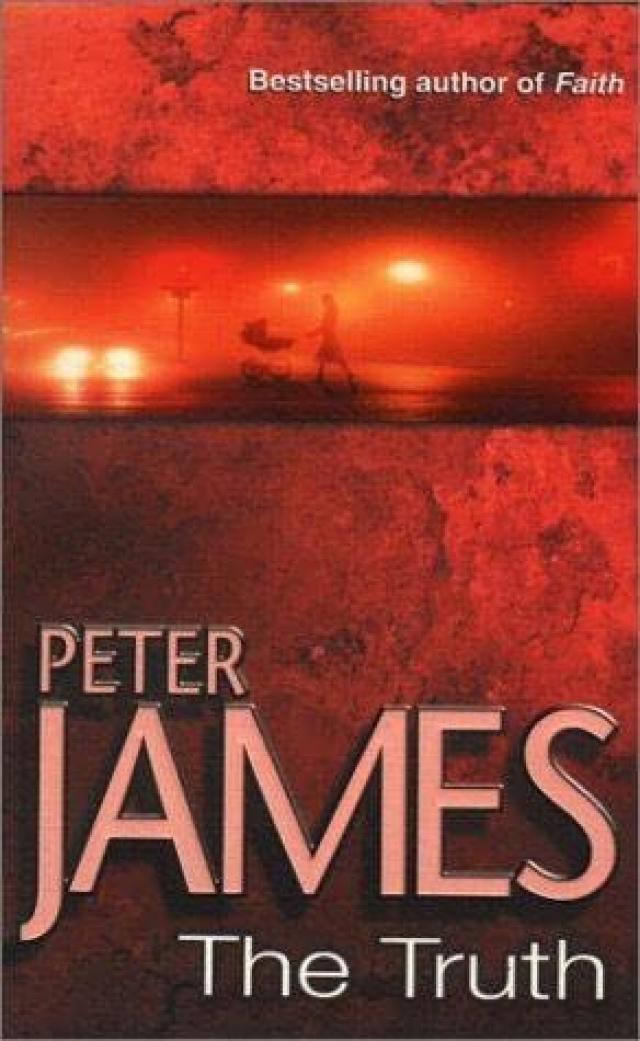
(1997) The Truth,
p.6


It was everything.
Chapter Eight
"So?" Archie Warren said. "What do you think?"
They were driving down the Fulham Road in Archie's Aston Martin Vintage Volante. The car was brand new: he had taken delivery of it that morning, and there were only seventeen miles on the clock. The roof was down and John was cocooned in the cockpit in cream Connolly hide with red piping. The car smelt like a saddlery. A reverberating boom from the exhaust accompanied the Dr. Hook song erupting from the speakers, "I'm rich and I'm having a ball."
Archie Warren was having a ball.
And John, who was normally a bit of a show-off himself, was not up to all this today. He felt self-conscious in this gleaming haemoglobin-coloured monster that was deafening the passers-by, as well as more than a tiny bit jealous.
In answer to Archie's question, he thought that, driving along like this, Archie looked like Mr. Toad. But he didn't tell him that,.
And the more he looked at him, the stronger the resemblance to Mr. Toad became. Archie had fair, thinning hair that was more like bum-fluff, and he'd probably be completely bald on top in a few years" time. He was wearing a loud silk tie, chalk-striped suit and tiny oval sunglasses that were cool to the point of being sinister.
Archie was thirty-four and had the figure of a Vietnamese pot-bellied pig. Yet he usually beat John at squash, and at tennis, and could swim much faster than John and get out of the pool less out of breath. And, what made John really mad, was that Archie could do all this in spite of smoking twenty, maybe thirty, cigarettes a day.
John had always been something of a loner, driven by his ambition, and had drifted apart from his few childhood friends. From school he'd gone to technical college to study architecture, and after only a couple of months working on the Computer Aided Design systems, he had realised the potential market for serious and informative software for home computers.
Building DigiTrak had been his life ever since, and the friends he now had - not by design, but because that was the way it had happened - were all, with the exception of Archie, connected in some way to his business. Susan's friends were drawn from her publishing world.
He probably liked Archie the most because he was different and because Archie always amused him. Another part of the attraction was that Archie was well bred, with a public-school background, and had the careless air of aristocracy about him to which John secretly aspired.
They had met on a ski lift in Switzerland seven or so years ago, both highly ambitious men with an enjoyment of the good life. Although Archie came from the hunting, shooting, fishing set, he had made his money, not inherited it. He had a brace of Purdey shotguns he had bought at auction for over fifty thousand pounds - an amount that had staggered John when Archie had told him. He had an impressive country estate, a villa in France, a small aeroplane, and the rest.
Archie earned an obscene salary, trading Japanese convertible bonds and warrants in the City. In a bad year he cleared a million before tax, and in a good year a whole heap more. He spent as much as he could, some on girlfriends - he was still single - but most on toys and food.
The restaurant to which he took John for lunch seemed happy to oblige Archie's whim for emptying his wallet. Its speciality, assiette de fruits de mer, arrived at the table embedded in crushed ice and stacked on four tiers, accompanied by a full set of surgical instruments. Tackling it, with no appetite, John felt like an archaeologist encountering a cryonically frozen tableau of some past civilisation's excess.
Archie split open a crab claw and the juice squirted onto John's cheek, but Archie didn't notice: he was busy chewing the remnants of a sea snail and washing it down with a glass of Chablis to make room in his mouth for the crab meat. John dabbed his cheek discreetly with his napkin.
"Those whelks are yours," Archie said, pointing. "And that crayfish." "Thanks." John removed the legs from a prawn. He'd had a million questions he was going to put to Archie today, but so far Archie had been more interested in talking about his new car and this new restaurant he'd heard about than suggesting whom John might approach for funding. And John's hint, earlier, that Archie might like to invest in DigiTrak had fallen on deaf ears. That had been his own fault for being impatient. He needed to pick a better moment, perhaps now.
They were on to the second bottle, with most of the first one inside Archie. "I can think of plenty of places," Archie said, suddenly. "The problem. But you're going to have to get rid of that lawsuit before we go.
"How do you mean?"
Archie snuck in a quick prawn before the crab meat. Its tail poked through his lips as he talked, slowly working its way in and disappearing. "Settle it."
"[ don't have the money to settle, and besides -"
"John, no one's going to touch you with a barge pole with a lawsuit like that hanging over you. That's your problem, that's your real buggeratio: factor."
John picked up a narrow stainless-steel implement with a hook on the end. He tapped the prickly spines of a raw sea urchin, but left it on the stack. Half the creatures in front of him should have been left on the ocean floor, he thought. They looked more like relics from the gene pool than anything that would pass a selection committee for the human food chain.
The eyes of a spider crab were eerily fixed on him. "We have a good defence," John said.
Archie pulled the head off another prawn and dropped it on his plate, then dunked the remains in the mayonnaise. "How about biting the bullet, letting DigiTrak go under and starting again with new finance?"
"DigiTrak isn't a limited company, it's a partnership. If it goes under, I go under. We lose the house, the lot."
"Shit."
"And there's another problem."
Archie had the grace to stop eating.
"Susan's kid sister, Casey, I told you about her, right?"
Archie's forehead narrowed. "The one in the home?"
"Yes. She costs two thousand dollars a month, and the insurance runs out in September."
Archie whistled. "That's a lot of boodle. You're going to pay for her? "Susan and me, between us. Susan's going to contribute."
"What about her family in LA?"
John smiled at him and shook his head. "They haven't a bean. They can look after themselves but nothing else."
A waiter filled Archie's glass and put a token splash into John's, which was still full. John asked for another mineral water. Archie nodded at the stack of crustaceans in front of them. "Come on, you're lagging."
John selected a half lobster; lobster was normally one of his favourite but as he ate the first mouthful of this, he was so deep in thought that he barely noticed it. "If I do go under, Susan's going to take it really hard -quite apart from losing everything herself."
Archie nodded. I'll make some calls this afternoon." He lifted a large crab onto his plate.
Swallowing an enormous amount of pride, John said, "I - I was wondering, Arch, if you might be interested in coming into DigiTrak yourself?. It's a great business, and - we're looking at the very real possibility of going public in the next couple of years."
Archie shook his head. "I'll take a look, but I don't think so. Nothing personal, but I'm a trader not an investor. I've sunk money into half a dozen businesses in the past few years - a door-to-door wine outfit, a car-tyre dealership, a mobile-phone operation. Truth is, I've saddled myself with a fucking great mortgage on that pile I've bought in the country and I'm losing a bundle on my investments. I don't have the kind of money you need lying around in readies." Then he smiled at John kindly. "But if you get into real shit, let me know. I'll lend you something to tide you over."
"Thanks, I appreciate it," John replied, "but I don't want to do that." Archie, who had never done anything he didn't want to do in his entire life, smashed open the crab's belly and said, "We all have to do things we don't want to do, sometimes."
Chapter Nine
"OK, this is how I understand it," Susan said. "You freeze water and it turns into ice cubes. You warm those ice cubes and they turn back into water. The state of those molecules is reversed, but that change is still taking place in linear time."
She twiddled with the tag hanging from the new telephone that had been installed early this morning, before she had arrived in the office. There had been some fault with her previous phone, apparently, not that she'd been aware of it.
Fergus Donleavy gave away about as much in his expression as he might if he'd picked up a bum hand of cards in a poker game. He was sitting, in Susan's cramped, hopelessly cluttered office that looked out through grimy glass on to a Covent Garden rooftop, his tall frame folded like an Anglepoise lamp into the solitary armchair in front of her desk.
He was dressed in an old tweed jacket, lumberjack shirt, drainpipe jeans and black boots. His greying, wavy hair was carelessly long. His face was thin and lean, handsome in a Marlboro Country way, which was exactly what he looked like, Susan always thought - an aging cowboy.
Over the past five years working as his editor she'd grown very fond of him: he had become almost a father figure to her. Fergus had been the first person she'd rung to tell when they'd made the decision to buy the house, and he'd approved of the area - although a couple of decades ago, he had warned her, it had been a lot less salubrious.
"You boil an egg," he said, in his quiet voice that was close to a murmur, "and there's nothing you can do that is going to turn it back into a raw egg. A sperm fertilises an egg, there is no way you can reverse that. That's linear, but that's chemistry not physics."
Fergus talked laconically, the voice of a man who had been around life's block a few times, although he wasn't jaded: life was still vibrant for him. "Susan, the point I'm trying to get over to the readers is to make them imagine time as being that water. It can be liquid, fluid, but it can also be solid, like the ice, three-dimensional. It's just a question of how we perceive it at any given moment. Time is both linear and static. It's like Schr6dinger's cat, the wave and the particle -"
Susan stopped him in his tracks. "Fergus, if I'm confused by your argument, and I have a physics background, how's the average reader who has no science background going to feel?"
She had spent the past two weeks grappling with his manuscript. Although worrying desperately about John's problems with DigiTrak, for which there was still no solution on the horizon, she had tried her hardest to concentrate on her work and not be distracted, and all her instincts were telling her that the manuscript in its current form did not work. At the end of the day, this would reflect badly on her.
She sipped coffee from the yellow mug John had given her a couple of years back for her birthday. On it was printed, in bold black lettering, YOU DON'T WANT TO KNOW WHAT I THINK.
"Fergus, when Einstein published his theory of relativity, there were something like only five people in the whole world who could understand it."
Dr. Fergus Donleavy, professor of physics at University College, London, grinned. "I heard it was six, actually."
"Well, we want to outsell A Brief History of Time with this one, and we're only going to do that if people can get their heads around at least some of it. I'm not knocking your thesis, it's the way you've put it across."
Fergus looked at her thoughtfully. "Is it chapter seventeen you're worried about?"
Susan genuinely believed this book could be an international best-seller. Fergus Donleavy had the credentials and the book had the content. That was how it had looked from his six-page synopsis. Now she had on her desk eleven hundred pages that were almost impenetrable. He was going to have to drop everything else he was doing for the next six months and rewrite it. She was trying to be tactful, and had hoped that by gentle manoeuvring she would bring him round to see this, but so far it wasn't happening.
She felt a deep responsibility for this book: she had planted the seed for it in Fergus's head, sold the outline to her firm and commissioned it. It was a great concept: Fergus was going to argue that physics proved the existence of God - or a Higher Intelligence, at any rate. He was going to prove that some being, smarter than humans, had created the universe.
In the book, Fergus demolished the Big Bang theory. He trashed Darwinism as a means of explaining human existence. He demonstrated how it was possible to travel faster than the speed of light. And he had hard evidence to show that earth was not man's natural habitat - that the first humans had been brought here from elsewhere in space.
Her mind veered briefly back to John. He was having another meeting today, another bank, a contact of Archie Warren, and then he was seeing Archie. John had thoughts of trying to put together a consortium of backers, including people who had a vested interest in DigiTrak, like the gynecologist Harvey Addison who hosted their best-selling series, but so far the response had been lukewarm.
It was the lawsuit that was the bitch. John had now been served with a writ from Zak Danziger, and it was looking bad. Although John was trying to keep up a brave face, she knew that he was running out of options. And, to make matters worse, people here at Magellan Lowry were getting increasingly nervous about the impending takeover.
Tomorrow Archie had invited her and John to Ascot and she was looking forward to that break from their worries. Archie did Ascot in style every year, taking a box, and always brought along a string of influential people. Maybe John would meet someone willing to take a punt. But it seemed more likely that he'd lose a few hundred pounds on the horses.
At least Archie's company would be cheerful. She liked him: he made her laugh.
And tonight held possibilities too. They were going to a seriously smart black-tie do at the Guildhall. She wasn't sure why they'd been invited, and neither was John. The invitation had arrived only a week ago, as if they were an afterthought. There seemed to be some link with a book she had once edited on Oriental antiquities, but beyond that she was unclear.
The invitation had impressive names on it - Mr. and Mrs. Walter Thomas Carmichael. She knew that Walter Thomas Carmichael was one of the richest men in America, a philanthropist and a patron of the arts. Initially, John hadn't been that keen to accept, but Susan had persuaded him, telling him that wealthy people would be there and that he might find someone who could help him.
Susan took Fergus Donleavy out to lunch, which was the gentlest way she could think of to break the news that he was going to have to rewrite his book. In the airy restaurant above Covent Garden they ate scared tuna, drank Sancerre and talked about everything except the book. Fergus told her that his daughter by his one and only marriage, which had ended years back, was starting psychology at Duke University, North Carolina, in the autumn. "Now that you've moved into this big house, are you going to start a family?" he asked.
"No." She could see that Fergus was afraid he'd touched a raw nerve, and quickly bailed him out: "We made a decision not to have one. Didn't I ever tell you?"
Fergus cut a slice of tuna and pushed it around to scoop up the juices, but did not eat it. Instead he made a noise somewhere deep in his throat that could have been either approval or disapproval. When he responded, his face was stern, but his voice remained gentle. "That was then." He raised his eyebrows. "You told me that it was John who didn't want children because he'd had a terrible childhood. I was under the impression you went along with that, but hoped to change his mind."
"No," she said awkwardly, because he had touched a nerve inside her. "The - the move isn't going to change anything."
"It's good that you have such a strong marriage."
Susan had to strain to hear his quiet voice against the babble of conversation. "Sure," she said, almost equally quietly. Fergus knew a lot of people. She was wondering whether to tell him about John's problems. But she decided that, in spite of their friendship, it would be unprofessional. The purpose of this lunch was Fergus's book, and she needed to keep the focus on that.
"A lot of people who get married have children because they've run out of things to say to each other," Fergus said.
She smiled. "Maybe."
"So it's good that you and your husband still haven't run out of things to say to each other. If you haven't run out after seven years, you probably won't."
"Did you and your wife run out of things to say to each other?" she asked.
Fergus put the piece of fish in his mouth and chewed it slowly. He looked sad, an old wound opening up again. "There were a lot of things." He fell silent.
Susan drank some wine, letting the subject drop.
"Something I've never asked you," Fergus said. "How do you cope with the biological urges to be a mother? Or don't you have them?"
Susan glanced around the room, checking out who was sitting near them. This was a personal conversation and she didn't want anyone from work hearing her. The publicity director and three men she did not recognise were seated at a nearby table, engrossed in a heavy discussion. "Sure I have them, but I don't let them dictate the course of my life."
Fergus drank some more wine, set down his glass, made that noise again deep in his throat, and murmured, ""Stars rule man, but a wise man rules the stars.""
"That's smart. Who said it?"
"Francis Barrett, in The Magus."
"I didn't know you were knowledgeable about magic."
He inclined his head. "How well do you know me?"
"I don't know you," she said. "Not really. We've been friends a long time, but I don't know you."
He had a distant smile. "How well do you know anyone?"
"How do you mean?"
"How well do you know your husband? Do you really know him? Do you know yourself?. Do you really know yourself?."
Susan raised her hands. "I - think I do but I - I guess I can't be sure."
"None of us knows what we are capable of, until we have to do it." Fergus picked up the stub of lime on the side of his plate and squeezed the last drops of juice onto the remains of his tuna.
"I thought you were a scientist," she said. "Magic is the realm of the paranormal. How do you reconcile that?"
"Arthur C. Clarke once said that magic is any sufficiently advanced technology. I think he's right. The paranormal is the name we give to things science hasn't yet found an explanation for."