Times bounty, p.1
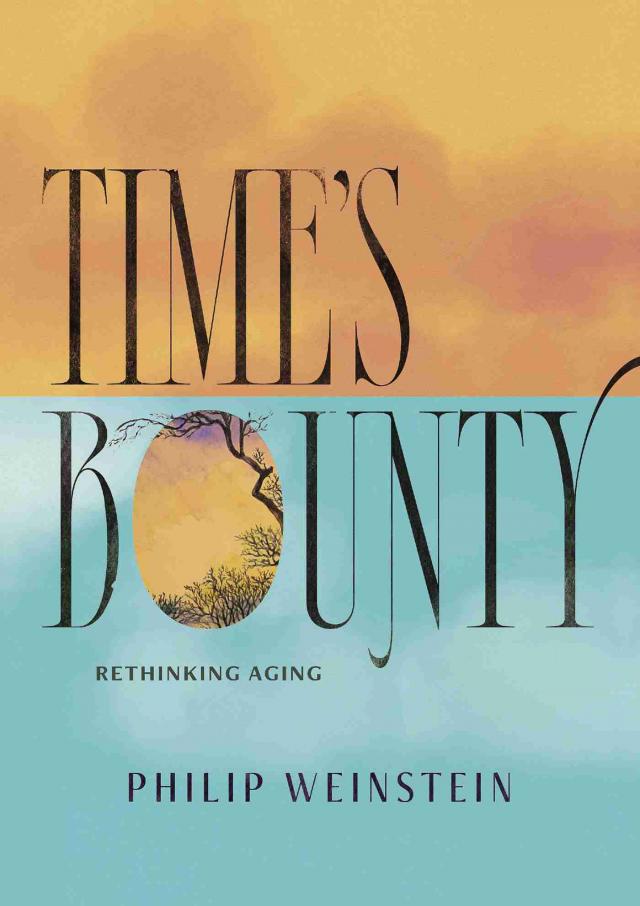
Time's Bounty,
p.1


Also by Philip Weinstein
Soul-Error
Jonathan Franzen: The Comedy of Rage
Simply Faulkner
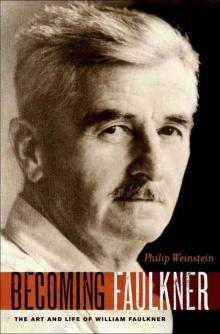
Becoming Faulkner
Unknowing: The Work of Modernist Fiction
What Else But Love?: The Ordeal of Race in Faulkner and Morrison
Faulkner’s Subject: A Cosmos No One Owns
The Semantics of Desire: Changing Models of Identity from Dickens to Joyce
Henry James and the Requirements of the Imagination
Time’s Bounty
Rethinking Old Age
Published in 2025 by
GODINE
Boston, Massachusetts
Copyright © 2025 by Philip Weinstein
all rights reserved.
No part of this book may be used or reproduced in any manner whatsoever without written permission from the publisher, except in the case of brief quotations embodied in critical articles and reviews.
For more information, please visit godine.com
library of congress cataloging-in-publication data
Names: Weinstein, Philip, 1940- author.
Title: Time’s bounty / Philip Weinstein.
Description: Boston, Massachusetts : Godine, 2025.
Identifiers: lccn 2025013466 (print) | lccn 2025013467 (ebook) isbn 9781567928440 (hardcover) | isbn 9781567928457 (epub)
Subjects: lcsh: Old age—Psychological aspects. | Aging.
Classification: LCC HQ1061 .W385 2025 (print) | lcc HQ1061 (ebook) ddc 305.26—dc23/eng/20250616
lc record available at https://lccn.loc.gov/2025013466
lc ebook record available at https://lccn.loc.gov/2025013467
Book design by Natalie C. Sousa
Images used under license from Adobe Stock
For Penny
Contents
Preface
The Mother of Beauty
Less
Dormancy
The Thing Itself
Free
Acknowledgments
Why write a book about old age? My professional training has nothing to do with gerontology. I have had a rewarding career as an English professor for well over forty years, and my publications—eight books and a goodly number of scholarly articles—have all taken the form of literary criticism. Faulkner, Proust, Kafka, Joyce; Dickens and Eliot; Hardy, James, and Conrad: the work of these and other writers has been my abiding subject. Essentially, I have written as a scholar and for other scholars: a discrete world of experts sharing a cluster of intellectual and linguistic orientations. We collectively labored to produce an intricate scholarly discourse, freed forever from the norms and constraints of ordinary language.
When it was good, it was wonderful indeed: professional recognition is no small thing. But the good of that arrangement began eventually to play out, and as it did so, I took the measure—increasingly, uncomfortably—of the arrangement’s cost. I saw that, throughout my academic life—from my thirties into my seventies—I had worked hard to keep my writing clear of my own experience. Although I could not have written a word without tapping into an irrepressible reservoir of personal thoughts and feelings, I had done my best to keep these out of my prose. The writers whose work I loved—and sought to illuminate—were my purpose and my point. Essentially, I was to function as scribe—a sort of “medium” for articulating their beautiful effects onto paper.
As I approached retirement, the omissions troubling these thoughts—that I had devoted my life to a kind of writing that ignored both my own depths and those of my readers—came to a head. I could not help seeing that I would—soon enough—be heading toward my grave, without having tried to explore or set down for others the burden of my thoughts and feelings. Those stances that lived deepest inside me—my “quick” itself, my indwelling take on life—would remain speechless. To keep all this inside and unsaid felt intolerable.
And then everything changed. My fellow travelers, I realized, were no longer other scholars of literature. Nor need the language I could deploy remain the fraught, professional discourse shared by like-minded experts. I saw that I now belonged to a radically different social group: the world of the aged and aging. Your first thought may be: how awful to see yourself in that mirror! In the following pages, I aim to show you otherwise—that this is a world less of depletion than of vital surprises. But to return to my immediate point: I was now grasping my newfound membership in a vast and democratic network: all of us in the boat of life itself, as it moves through the turbulent later chapters.
The liberation thus launched would be hard to overstate. In what follows, I make all that I can of the personal (rather than attempting to repress it). I do so because, wherever my narrative goes—into memorial services, nursing homes, doctors’ offices, literary narratives of aging and discovery, the morning ritual of coffee in bed—it is never just personal. Other people have had these experiences or will have them; I am always in potential company; the mirror is capacious. Moreover, literature—my lifelong field of professional attention—has hardly been banished from these pages. But it functions differently here. No longer the all-compelling subject of my argument, it is the argument’s magnifier, depth-provider, meaning-extender. Its task is to make my book’s narratives of old age as resonant as possible. Its aim is to enrich and enlarge the connection between you and me. To earn and keep your trust, I need to work with language that we all understand.
It was not only I and my calling that changed upon retirement. The reality of time itself changed for me as well. No longer elastic and inexhaustible—a colorless neutral medium within which I would continue my forward-moving career—time began to flaunt its colors and reveal its fickleness. By way of embodied examples increasingly near to me, time was showing me that it could run out altogether. Its passage was becoming a thing of fascination, and I suddenly understood that I had a book on my hands: a book about the passage of time shaping the dramas of the old. In these newfound dramas, what lies behind matters as much as what lies ahead. My task in the following pages is to stage a reckoning with time’s passage, and the most resonant term I can find for that reckoning is bounty. We now enter the realm of Time’s Bounty.
Bounty means a number of things—many involving money. But the meanings that course through this book of reckoning center on bounty as gift and as yield, like the yield (even when unwanted) of a crop we had not known we were sowing or reaping. What unexpected harvest has the passage of time brought forth? At age eighty-four, it is time to take the measure.
I call them “dramas of the old,” and I need to say why drama is the right term. Drama rather than lament or complaint about where we old ones are; drama rather than fantasies that pretend we are not where we are. Drama functions here as an umbrella-term for the sudden arrival and expression of late-stage thoughts, feelings, and actions—the range of unanticipated life-moves made by the elderly. “Unanticipated” because we never before knew we would make such moves—and this because we never before had to make them. Surprise runs through these pages: do we ever get used to what life puts in our path?
Each of my five chapters narrates one such “drama of winter.” Although all five draw on my arrival into a territory that old age seems to mark out as its own, these are not the predictable stories you might anticipate. As mentioned before, no complaints run through my chapters (no “organ recital” is on offer). No sentimental sweetness gets indulged either (the kind of thing that Hallmark cards specialize in). Those seeking to commiserate with a litany of old age’s problems—or longing for a Mr.-Chips-like transcendence of them—will need to look elsewhere. Rather, my aim is to press hard on familiar scenarios, hard enough to make them reveal their surprises. I may go to expected places, but I come upon unexpected findings.
“The Mother of Beauty” explores how a number of old-age situations, assumed to announce the end-of-the-road, actually generate fresh life-moves. As we age, we tend to become “lighter” in more senses than one. Yes, we often find ourselves caught up in bodies that have shrunk in weight, height, and appeal. But, once retired, we are also freed of the projects that used to define us—and are strangely permitted (when not required) to change our ways. Indeed, we may find ourselves catapulted into late-stage “adventures” the young never dream of.
“Less” sheds light on the lessening of fundamental orientations and resources (previously taken for granted) that comes with age—less work, less sleep, less health. These versions of “less”—this fraying of the fabric of our taken-for-granted selfhood—arrive, moreover, in an American setting awash in the values of the young. An American setting incorrigibly in search of more.
“Dormancy” enacts a shift in perspective. Rather than the surprises that old age springs upon us, it focuses on the long-simmering preparations that eventuate into the “bounties” (often unwanted) of life’s last chapters. I explore the drama of slumbering conditions (in the body, in the mind) coming awake. Old age appears here as the setting where chickens of every sort—the familiar as well as the strange—come home to roost. From the curse of cancer and Parkinson’s to the advent of a new self-reckoning, these proceed by way of dormancy—the unremarkable passage of great chunks of “sleep-time”—as the precondition for dramatic emergence.
A book centered on old age has no choice but to confront “The Thing
Itself”—Shakespeare’s phrase (from King Lear) for the unaccommodated human being at the end of the rope, reduced to “a poor, bare, forked animal.” Yet this dire situation—the fate of all bodies—accommodates (in the work of Beckett and Proust) the most provocative seasonings of comedy and pathos. Although all living creatures die, the poet W. B. Yeats noted, only “man has created death.” Only human beings foresee, name, and creatively conceptualize what is coming their way: not just dying (an organic event) but the phenomenon of death (a metaphysical mystery).
“Free”—my last chapter—celebrates a ritual of daily release occurring within a familiar domestic setting, one where the realities of a retired elderly couple would seem to impose constraint rather than permit release. After all, two old people drinking coffee together in bed for thirty or forty-five minutes each morning, engaged in desultory conversation before rising to confront the new day: what, you may wonder, is emancipatory about that?
In sum, on offer here is a mapping of the unexpected dramas that old age springs upon us, seen without complaint or evasion. Nevertheless, I concede that I embark on this journey with some trepidation. Most of us envisage life’s last chapters with anxiety. We do not want to go there in reality and may wonder why we should go there in advance, in our reading. It would be wise to see beyond these hesitations. Current actuarial data stares us in the face. We are living longer lives. Willy-nilly, more and more of us are destined to inhabit this unfamiliar territory for quite a stretch.
That is a cautionary reason for taking the journey with me, but the deeper reason is far from cautionary. There are upsurges of life awaiting us in these later stages—strange discoveries, sudden awakenings, as we come nearer to the ending. And more: these “adventures” may speak compellingly to the younger as well. After all, old age is a realm most of us first encountered when we were still infants. Grandparents, perhaps great-grandparents: how different from us they were then! No less, though, they speechlessly embodied the human reality that we are, all of us, immersed in the great game of life-in-time.
So I invite you, by way of my five chapters, to take a trip you have likely never read about (even if you are living there), into a terrain whose living topography differs resonantly from preconceptions. “The past is a foreign country,” L. P. Hartley wrote in his novel The Go-Between. The future (where we are headed) is more foreign yet. I am no expert guide, but I possess the requisite age. Not by choice, I am becoming familiar with nooks and crannies of wintry landscapes. These are vastly more interesting than anything I anticipated. That is why no nostalgic requiem—the gathered pathos of the vanished years—courses through my chapters. They circulate, instead, around drama where least expected. They center not on depletion but on an unpredictable redirecting of life-energies, as these rise to confront the hazards heading toward us.
Death is the mother of beauty; hence from her,
Alone, shall come fulfilment to our dreams
And our desires.
—Wallace Stevens, “Sunday Morning”
These haunting lines by Wallace Stevens promise more than I have ever managed to understand about death: that it shall bring “fulfilment to our dreams / And our desires.” By contrast, the beauty I have come to discover in endgame scenarios has nothing to do with dreams and desires. Quite the opposite: it is rather that old age’s stark unfoldings—long dreaded as disabling, feared as surcease itself—may nevertheless carry a creative charge that you could not possibly imagine before arriving there. The kind of beauty that emerges is generated not by fulfilment, but rather by an opposing dynamic of change, exposure, the threat of collapse.
Put otherwise, becoming old—approaching death—opens onto unanticipated scenarios that are interesting. Not ethically satisfying—nothing enabling or “rewarding” is happening here—yet aesthetically compelling: emergent dramas that strike you with their undeniable cogency, their “rightness.” When the philosopher Friedrich Nietzsche claimed (in The Birth of Tragedy) that existence can be justified only on aesthetic grounds, he was acknowledging that other criteria for justifying life come up short. Unmastered change is life’s keynote; with the final change we cease to exist. Though life may not ultimately come to mean anything, Nietzsche surmised, its passage generates remarkable beauty along the way—and in special ways as the end approaches. In fact, however macabre this sounds, our journey toward extinction throbs with interest. Nietzsche imagines the enjoyment the gods might derive from observing the human comedy; life’s last chapters exert a bizarre attraction all their own. These are some of the wintry dramas I seek to shed light on.
A distinction associated with another philosopher, Martin Heidegger, may provide further guidance. Though Heidegger can be notoriously difficult, his distinctions sometimes simply hit home. The one I have in mind is the distinction between objects unthinkingly available for use—what he calls the “ready-to-hand”—and objects that have ceased to be useful and have become what he calls the “present-at-hand.” Heidegger himself relishes the resourcefulness of our “ready-to-hand” world. His focus is on our ongoing deployment of a furnished and to-be-acted-upon world—on how we go about, moment by moment, making our world work for us. Which is great: until it stops. That is the point at which what is “ready-to-hand” becomes—oddly, suddenly—merely “present-at-hand.” Just there. In so doing, it announces one of old age’s compelling dramas: the drama of no longer being able to make things work. Yet this is precisely the moment when the elements that have long made up our ambient world (ultimately: our body itself) may become luminous—as only elements shorn of their previous functionality can become luminous. Old age involves our passage from an unthinking resourcefulness (where we just continue to “get on with it”) to a speculative space where nothing can be taken for granted: a space of recurrent radiance.
Wintry Forms of Beauty
The role of death as generator of human values is well known. A bedrock reason we care for others is our half-repressed lifelong awareness that neither we nor they will be here forever. Time’s passage creates human value in the wake of its positing losses to come. Our creativity is hardwired to our premonition, however muffled, that we will eventually cease to be.
But death’s approach generates, as well, a less familiar set of dramas. Involving the beset and failing will, these differ from the projects of our earlier years. Those projects—typically centering on maturation, courtship, family, work, career—focused on becoming. As Nietzsche put it in another context, each of them was “pregnant with a future.” It would be hard not to think of our ongoing life as a narrative composed of challenges encountered and taken on—with rewards (of one form or another) anticipated in the offing. This is a developmental narrative of coming through the storm and finding ourselves renewed. Versions of this story underwrite most of the novels that we read, the movies that we see. However variable the form of this story, its motor is the individual will. Its bedrock premise is a recovered capacity that follows initial setbacks.
But think instead of the dinner party where you hear of the trip gone irreparably wrong because of COVID, the stroke that suddenly occurred, the cancer just diagnosed, the onset of Alzheimer’s. These stories center on bodies no longer doing the bidding of the will, on minds going gamey as well. Whatever beauty obtains here has little to do with a pregnant future. We already know what future awaits. To take a lesser example: think of old people walking, trying not to fall even as they know that eventually they will slip up and fall. If you ask, when did walking take on the interest of a (modest, daily) drama, the answer is that—as with Heidegger’s faulty hammer that compels attention only when it ceases to work—walking compels attention when it ceases to be an unthinking capacity. When it reconfigures as a potentially troublesome activity, requiring care. No longer the automatic moves one makes en route toward somewhere else, walking becomes uncertain as such, an activity newly fraught with risk. Its interest resides not in getting something accomplished, but rather in our newly mandated thinking about ourselves as figures caught out in unmastered motion—and heading toward the fall. What could differ more from the will-directed shaping of a self, the coordination of resources in the pursuit of a goal?