Passage of the Night

Passage of the Night

Amanda Carpenter

Politics

*Kidnapped in the name of love! *Kristie would do anything for her sister Louise, even if it meant kidnapping a man standing in the way of her sister’s big day. Abducting Francis Grayson and stashing him on a remote mountain in Vermont, she’s determined to hold him there until her sister is safely married. Waking up in a totally different location from where he started, confused and understandably angry, Francis doesn’t know what’s going on. Yes, he was dating Louise, but he knew nothing about a wedding, for goodness’ sake! Realizing she doesn’t know the full story, Kristie does know one thing—her captive has definitely captured her attention. This Retro Romance reprint was previously published in August 1991 by Mills & Boon. **
Read online
  • 20
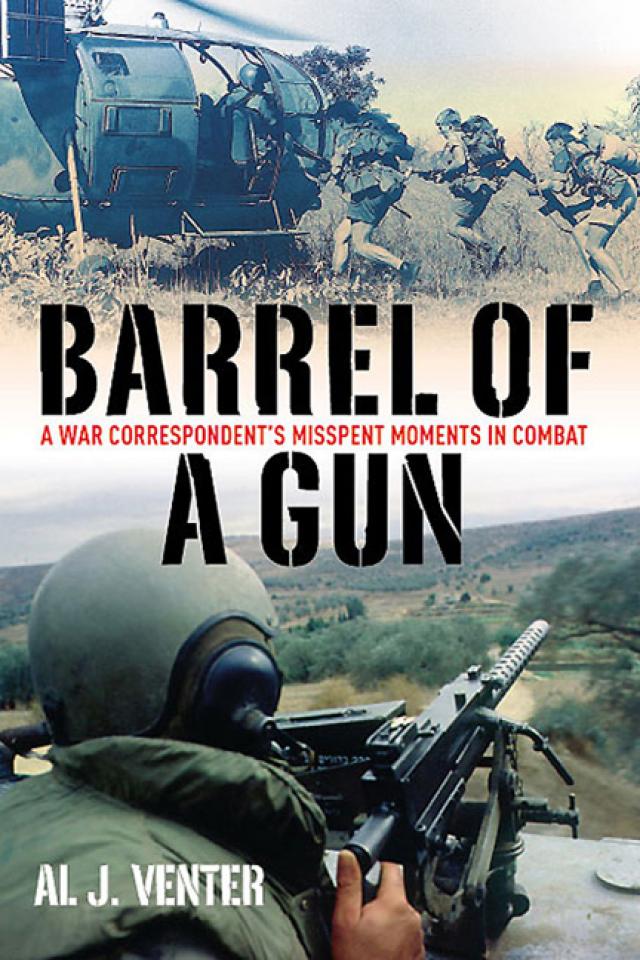
Barrel of a Gun

Barrel of a Gun

Al Venter

Journalism / Military History / Politics

In his journeys, Venter associated with an array of similarly daring soldiers and journalists, from “Mad Mike” Hoare to Danny Pearl, as well as elite soldiers from around the world, many of whom, he sadly relates, never emerged from the war zones they entered. The creator of countless documentaries and books, from warfare to shark diving to nuclear proliferation, Al Venter has here offered the reader his own personal combat experiences, in all their multi-faceted fascination.
Read online
  • 19
Dancing in the Streets

Dancing in the Streets

Barbara Ehrenreich

Nonfiction / Sociology / Politics

From the bestselling social commentator and cultural historian, a fascinating exploration of one of humanity's oldest traditions: the celebration of communal joyIn the acclaimed Blood Rites, Barbara Ehrenreich delved into the origins of our species' attraction to war. Here, she explores the opposite impulse, one that has been so effectively suppressed that we lack even a term for it: the desire for collective joy, historically expressed in ecstatic revels of feasting, costuming, and dancing.Ehrenreich uncovers the origins of communal celebration in human biology and culture. Although sixteenth-century Europeans viewed mass festivities as foreign and "savage," Ehrenreich shows that they were indigenous to the West, from the ancient Greeks' worship of Dionysus to the medieval practice of Christianity as a "danced religion." Ultimately, church officials drove the festivities into the streets, the prelude to widespread reformation:...
Read online
  • 19
The Last Refuge

The Last Refuge

Ben Coes

Mystery & Thrillers / Literature & Fiction / Politics

With time running out to stop the nuclear destruction of Tel Aviv, Dewey Andreas must defeat his most fearsome opponent yet.Off a quiet street in Brooklyn, New York, Israeli Special Forces commander Kohl Meir is captured by operatives of the Iranian secret service, who smuggle Meir back to Iran, where he is imprisoned, tortured, and prepared for a show trial. What they don’t know is that Meir was in New York to recruit Dewey Andreas for a secret operation. Meir had been tipped off that Iran had finally succeeded in building their first nuclear weapon, one they were planning to use to attack Israel. His source was a high-level Iranian government official and his proof was a photo of the bomb itself. Dewey Andreas, a former Army Ranger and Delta, owes his life to Meir and his team of Israeli commandos. Now, to repay his debt, Dewey has to attempt the impossible ---to both rescue Meir from one of the world’s most secure prisons and to find and eliminate Iran’s nuclear bomb before it’s deployed---all without the help or sanction of Israel or America (at the near certain risk of detection by Iran). Unfortunately, Dewey’s first moves have caught the attention of Abu Paria, the brutal and brilliant head of VEVAK, the Iranian secret service. Now Dewey has to face off against, outwit, and outfight an opponent with equal cunning, skill, and determination, with the fate of millions hanging in the balance.About the AuthorBEN COES is the author of the critically acclaimed Power Down and Coup d’Etat. He is a former speechwriter for the George H .W. Bush White House, worked for Boone Pickens, was a fellow at the JFK School of Government at Harvard, a campaign manager for Mitt Romney’s run for governor in 2002, and is currently a partner in a private equity company out of Boston. He lives in Wellesley, Mass.Excerpt. © Reprinted by permission. All rights reserved.1ASPEN LODGECAMP DAVIDCATOCTIN MOUNTAIN PARKNEAR THURMONT, MARYLANDPresident Rob Allaire sat in a comfortable, red-and-white-upholstered club chair. His worn L.L.Bean boots were untied and propped up on a wood coffee table. Allaire wore jeans and a faded long-sleeve red Lacoste rugby shirt. His longish brown hair was slightly messed up, and there was stubble across his chin.To his right, Allaire’s yellow Lab, Ranger, lay sleeping. Another dog, an old English bulldog named Mabel, was napping by the fireplace, the sound of her snoring occasionally making Allaire look up.To most Americans, the sight of the slightly unkempt president of the United States might have been off-putting, perhaps even a little shocking. If Allaire looked as if he hadn’t taken a shower in two days and had worn the same pants an entire weekend, during which he chopped half a cord of wood, hiked ten miles, and shot skeet twice, it was because he had done just that. However, most Americans would have been pleased to see their president in his element, with his unadorned love of the outdoors, his simple joy in physical labor, his affection for his dogs. And now, at five fifteen in the afternoon on a windswept, rainy Saturday in April, his satisfaction at the sight of a bottle of beer, Budweiser to be exact, which one of Camp David’s servants brought him as he sat staring into the fireplace.“Thanks, Ricko,” said Allaire.“You’re welcome, Mr. President.”In President Allaire’s six years in office, he’d been to Camp David 122 times. Allaire would not, by his term’s end, set any records in terms of time spent at the presidential retreat; that record would still belong to Ronald Reagan, who visited Camp David 186 times during his two terms in office. Still, Allaire loved Camp David just as much as Reagan, both Bushes, and every other president since Franklin Roosevelt had the retreat built almost a century before. Allaire loved its rustic simplicity, the quiet solitude, and he loved most the fact that Camp David allowed him to escape the backbiting, lying, sycophancy, and subterfuge of Washington. If Allaire was compared to Reagan for his constant escaping to Camp David, and for his conservative politics, that was okay by him. Allaire believed it was important to have a set of beliefs and to stick by them, through hell or high water, no matter what the polls or the prevailing wisdom said. It’s why America loved Rob Allaire.Allaire sipped his beer as he stared down at the iPad, leaning closer to try and see, adjusting his glasses. He looked up. Seated on the far side of the room, reading a book, was John Schmidt, his communications director.“I can’t read this goddamn thing,” said Allaire.“You’re the one who said you wanted one,” said Schmidt. “Remember? ‘It’s the future’ and all that?”“Yeah, well, I changed my mind. I’m sick of pretending I like these fucking things.”Schmidt nodded.“We’ll go back to the daily notebook, sir.”“Good. In the meantime, have you read this editorial by our friends at The New York Times? How the hell is The New York Times editorial board aware of what’s happening in Geneva?”“It’s coming out of the Swiss Foreign Ministry,” said Schmidt. “They’re taking the credit, which is not necessarily a bad thing. To the extent it adds to the public pressure on Tehran, it’s helpful.”There was a knock on the door and in stepped two men: Hector Calibrisi, the director of the Central Intelligence Agency, and Tim Lindsay, the U.S. secretary of state.Calibrisi and Lindsay, who had been out shooting at the camp’s private skeet range, were both dressed in shooting attire. Calibrisi was an expert shot. He came up through the ranks of the CIA paramilitary and was deft with most weapons known to man. Lindsay, a retired former admiral in the navy, and lifelong hunter, was even better.“Well, if it isn’t Butch Cassidy and the Sundance Kid,” said Allaire, a shit-eating grin on his face as he watched the two men stomp their boots on the welcome mat and remove their Filson coats. “Either of you manage to hit anything?”“No, Mr. President,” Calibrisi said politely. “We thought it would be impolite to hit more clays than you.”Allaire laughed.“Wise guy,” said Allaire as Ricko returned to the sitting area near the fireplace. “Do you two have time for a drink before you leave for D.C.?”“Sure,” said Calibrisi. “Same thing as the president, Ricko.”“Pappy Van Winkle,” said Lindsay, looking at Ricko, “if there’s any left. A couple rocks. Thanks, Ricko.”“Yes, sir,” said the bespectacled servant, who turned and left for the kitchen.“Seriously,” continued Allaire. “Who won?”“It’s not a contest,” said Calibrisi, his confident smile leaving little doubt as to who hit more clays that afternoon. He moved to one of the sofas and sat down.“I’m sixty-four years old, for chrissakes,” said Lindsay, sitting across from Calibrisi, next to Schmidt. “I’m surprised I hit anything.”“I’ve heard that one before,” said Allaire, taking a sip from his beer and shaking his head at Lindsay. “Right before you took twenty bucks off me.”“That was a lucky day, Mr. President,” said Lindsay as Ricko brought a tray with drinks on it.The four men sat talking about skeet shooting and hunting for a long time, the president regaling the others with a story about the time when, as governor of California, he’d gone dove hunting with then vice president Cheney just a few months after Cheney had strafed someone with an errant shot. The story, as with most of Allaire’s elaborate and expertly told stories, left the other three in laughter.Allaire stood and put more wood on the fire, played with the arrangement of the logs for a time, then returned to his chair.“Before we take off, Mr. President,” said Lindsay, “we need to discuss the proposal by the Swiss foreign minister.”“We’ve already discussed it,” said Allaire. “I gave you my answer two days ago, Tim. I refuse to sit down with the president of Iran. It’s that simple.”“Ambassador Veider believes that if we agree to a summit, with you and President Nava meeting one-on-one, that the Iranians will renounce their nuclear ambitions and might even agree to begin talks with the Israelis.”“I trust Iran about as far as I can throw them,” said Allaire. “They’re lying. I’ve seen this movie before, Tim. I don’t like the ending.”Lindsay nodded at the president.“We have to consider the larger objective,” said Lindsay. “The Iranian government is reaching out to us. This meeting would be the first step toward normalizing relations between our countries.”“They’re playing the Swiss and they’re attempting to play us,” said Allaire, nodding across the room at Ricko, indicating he wanted another beer. “President Nava has created a distraction which he’s using to get us to take our eye off the ball. So while he makes the world and The New York Times believe he’s had a change of heart, Iran continues to pour tens of millions of dollars into Hezbollah and Al-Qaeda. And they continue to build a nuclear weapon.”“We don’t have definitive proof the Iranians are constructing a nuclear bomb, sir,” said Lindsay.Allaire glanced at Calibrisi. “Here we go again,” said Allaire, shaking his head.“We know they are, Tim,” said Calibrisi. “They have enough highly enriched uranium to assemble at least half a dozen devices. They have the uranium deuteride triggers. We know that. These are facts. They’re getting close.”“Our objective, Mr. President, is to put Iran in a box,” said Lindsay. “We do that by allowing the Swiss to bring our countries together, and then holding our noses and sitting down with President Nava. He publicly commits, we get inspectors in there, and the box is complete.”Allaire nodded, but said nothing.“We have to be willing to be the adults here,” continued Lindsay. “The reward is worth whatever risk we take by virtue of standing on the same stage as Nava. This is a good deal. They’ve agreed to on-demand inspections, access to their scientists, and details on their centrifuge supply chain.”“Tim, there are certain things that, for whatever reason, you don’t seem to understand,” said Allaire, leaning back. “One of those things is Iran.”“I think I understand Iran, sir,” said Lindsay sharply.“You understand Iran from a policy perspective. You know the names of the cities, the history of the country. You’ve studied their leadership, their institutions, their culture. You’ve been there how many times? Five? Six? A dozen? I know all that. But I don’t think you understand that the Iranians are, quite simply, the most dishonest group of people on this planet.”“You can’t seriously mean that, Mr. President,” said Lindsay.“Yes, I can. And I do mean it. I don’t trust those fuckers one bit. The Supreme Leader, Suleiman, is insane. President Nava is a menace.”“You’re misunderstanding me, sir,” said Lindsay. “I don’t trust them either. But you’ll forgive me if I take a slightly more nuanced view of Iran. It’s a country ruled by a corrupt group of individuals, but a large majority of the country desires freed...
Read online
  • 19
Murder in Amsterdam

Murder in Amsterdam

Ian Buruma

Politics / History / Nonfiction

It was an emblematic crime: on a November day in Amsterdam, an angry young Muslim man shot and killed the Dutch filmmaker Theo van Gogh, iconic European provocateur, for making a movie with the anti-Islam politician Ayaan Hersi Ali. After shooting van Gogh, Mohammed Bouyeri calmly stood over the body and cut his throat with a curved machete. The murder horrified quiet, complacent Holland - a country that prides itself on being a bastion of tolerance - and sent shock waves around the world. In Murder in Amsterdam, Ian Buruma describes what he found when he returned to his native country to try and make sense of van Gogh's death. The result is Buruma's masterpiece: a brave and rigorous study of conflict in our time, with the intimacy and control of a true-crime page-turner.
Read online
  • 19


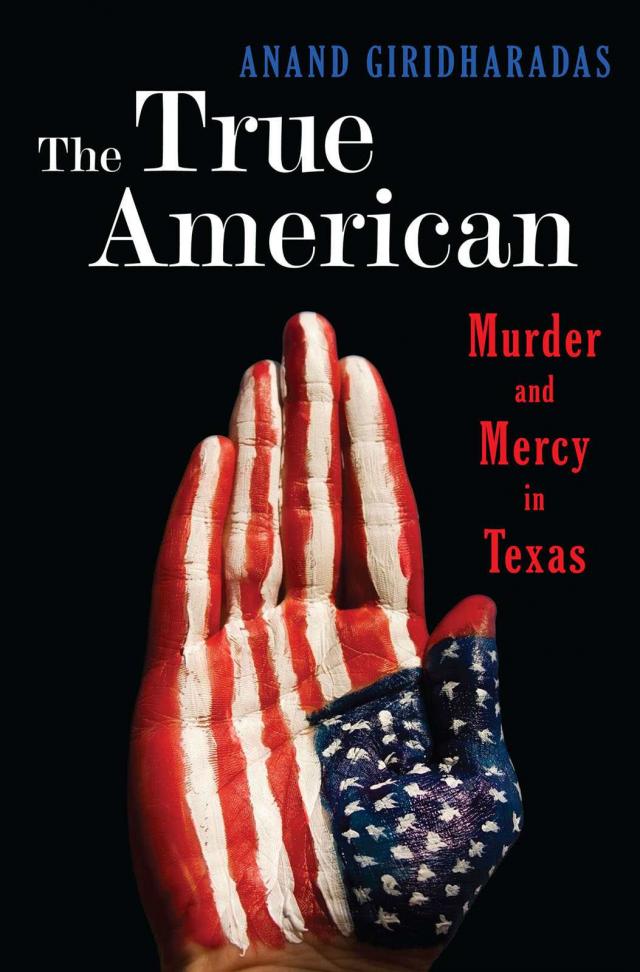
The True American: Murder and Mercy in Texas

The True American: Murder and Mercy in Texas

Anand Giridharadas

Nonfiction / Politics / Economics

RetailImagine that a terrorist tried to kill you. If you could face him again, on your terms, what would you do?The True American tells the story of Raisuddin Bhuiyan, a Bangladesh Air Force officer who dreams of immigrating to America and working in technology. But days after 9/11, an avowed "American terrorist" named Mark Stroman, seeking revenge, walks into the Dallas minimart where Bhuiyan has found temporary work and shoots him, maiming and nearly killing him. Two other victims, at other gas stations, aren’t so lucky, dying at once. The True American traces the making of these two men, Stroman and Bhuiyan, and of their fateful encounter. It follows them as they rebuild shattered lives—one striving on Death Row to become a better man, the other to heal and pull himself up from the lowest rung on the ladder of an unfamiliar country.Ten years after the shooting, an Islamic pilgrimage seeds in Bhuiyan a strange idea: if he is ever to be whole, he must reenter Stroman's life. He longs to confront Stroman and speak to him face to face about the attack that changed their lives. Bhuiyan publicly forgives Stroman, in the name of his religion and its notion of mercy. Then he wages a legal and public-relations campaign, against the State of Texas and Governor Rick Perry, to have his attacker spared from the death penalty.Ranging from Texas's juvenile justice system to the swirling crowd of pilgrims at the Hajj in Mecca; from a biker bar to an immigrant mosque in Dallas; from young military cadets in Bangladesh to elite paratroopers in Israel; from a wealthy household of chicken importers in Karachi, Pakistan, to the sober residences of Brownwood, Texas, The True American is a rich, colorful, profoundly moving exploration of the American dream in its many dimensions. Ultimately it tells a story about our love-hate relationship with immigrants, about the encounter of Islam and the West, about how—or whether—we choose what we become.**Review“Remarkable…a richly detailed, affecting account…Giridharadas seeks less to uplift than illuminate…Which of these men is the "true American" of the title? That there is no simple answer to that question is Giridharadas's finest accomplishment.” (Ayad Akhtar - New York Times Book Review) “This is an enthralling real-life tale of murder and forgiveness and what it means to be an American. Brilliantly reported and powerfully told, this Texas drama personalizes the ethnic diversity that has always been the source of our nation's strength and many of its tensions. It's also a breathtaking account of how a crazed murderer came to know a Muslim immigrant he tried to kill.” (Walter Isaacson, author of Steve Jobs) “Exhilarating and deeply affecting, Giridharadas’s book is not only a captivating narrative; it reminds us of the immigrant’s journey at the heart of the American story and how, in the wake of violent tragedy, one new to our country can help us to see through to the best in ourselves, even when the law requires far less.” (Henry Louis Gates, Jr., Alphonse Fletcher University Professor, Harvard University) “Anand Giridharadas has written a book that is simply impossible to put down. Just when we thought that we had read everything we could possibly absorb about 9/11, The True American finds a new and compelling perspective, one that explores two sharply opposed dimensions of the American experience in a style that neither celebrates nor condemns. We readers become the jury, weighing what it means to be a true American today.” (Anne-Marie Slaughter, president and CEO of the New America Foundation) “Competing visions of the American Dream clash in this rich account of a hate crime and its unlikely reverberations….Giridharadas’ s evocative reportage captures the starkly contrasting, but complementary struggles of these men with sympathy and insight, setting them in a Texas landscape of strip malls and gas stations that is at once a moonscape of social anomie and a welcoming blank slate for a newcomer seeking to assimilate. The result is a classic story of arrival with a fresh and absorbing twist.” (Publishers Weekly (Starred Review)) “An unforgettable story about two men caught in the jaws of history. In this compassionate, tenacious, and deeply intelligent book, Giridharadas casts brilliant new illumination on what we mean by ‘American.’” (Teju Cole, author of Open City) “Meticulously reconstructs two lives that collided in horrific fashion… A compelling, nuanced look at the shifting, volatile meaning of American identity In the post-9/11 era.” (Kirkus Reviews) “Eloquent… From murder to execution, forgiveness, personal responsibility, governmental intervention and more, there are enough dichotomies here to fuel heated book-club discussions for years.” (Booklist) About the AuthorAnand Giridharadas writes the Admit One column for the New York Times's arts pages and the Currents column for its global edition. He is the author of India Calling: An Intimate Portrait of A Nation's Remaking. He lives in Brooklyn, New York.
Read online
  • 19
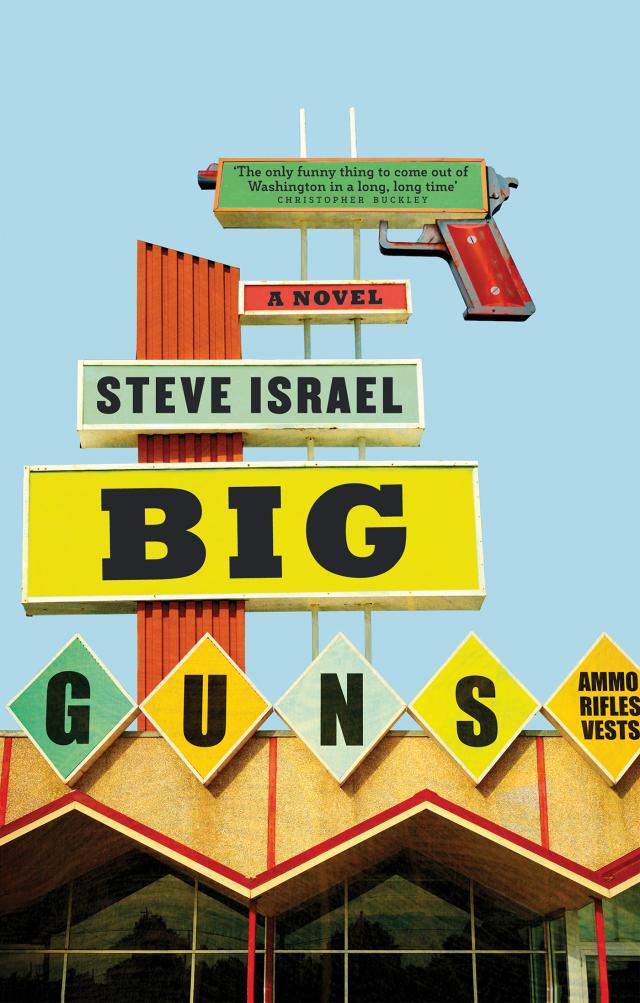
Big Guns

Big Guns

Steve Israel

Fiction / Humor / Politics

When American mayors start a campaign to ban handguns, Otis Cogsworth, CEO of Cogsworth International Arms worries about the effects on his company. He convinces an Arkansas congressman to introduce the 'American Freedom from Fear Act': a law mandating that every American must own a gun. In tiny rural Asabogue, Mayor Lois Leibowitz passes an ordinance to ban firearms. But Otis Cogsworth's holiday mansion sits nearby. Otis orchestrates a recall election against Lois. Asabogue resident Jack Steele, a has-been action star not unlike Steven Seagal, runs against her and brings in the heavy artillery of American politics. Thousands of pro-gun militants armed to the teeth, and their opponents, descend on Asabogue. The village becomes a war zone. Meanwhile, Washington politicians and a cowardly President are caught between a mighty gun lobby and the absurdity of every American man, woman and child carrying a gun. What ensues is a hilarious indictment of American politics, whose...
Read online
  • 19
The Complete Poetry of John Milton

The Complete Poetry of John Milton

John Milton

Poetry / Politics

The first complete annotated edition of Milton's poetry available in a one-volume paperback. The text is established from original sources, with collations of all known manuscripts, chronology and verbal variants recorded. Works in Latin, Greek and Italian are included with new literal translations.
Read online
  • 18
A Shade of Difference

A Shade of Difference

Allen Drury

Literature & Fiction / Politics

The sequel to the Pulitzer Prize winning bestseller Advise and Consent.From Allen Drury, the 20th Century grand master of political fiction, a novel of the United Nations and the racial friction that could spark a worldwide powderkeg. International tensions rise as ambassadors and politicians scheme, using the independence of a small African nation as the focal point for hidden agendas. A cascade of events begun in the General Assembly Hall of the United Nations could lead to the weakening of the United States, the loss of the Panama Canal, and a possible civil war. Allen Drury paints a vivid and laser-accurate portrait of Washington and international politics, from top secret conferences, to elite cocktail parties, club luncheon rooms, and the private offices of the key players in government. A novel as relevant today as when it was first published. The sequel to the Pulitzer Prize winning bestseller Advise and Consent.From Allen Drury, the 20th Century grand master of political fiction, a novel of the United Nations and the racial friction that could spark a worldwide powderkeg. International tensions rise as ambassadors and politicians scheme, using the independence of a small African nation as the focal point for hidden agendas. A cascade of events begun in the General Assembly Hall of the United Nations could lead to the weakening of the United States, the loss of the Panama Canal, and a possible civil war. Allen Drury paints a vivid and laser-accurate portrait of Washington and international politics, from top secret conferences, to elite cocktail parties, club luncheon rooms, and the private offices of the key players in government. A novel as relevant today as when it was first published.
Read online
  • 18
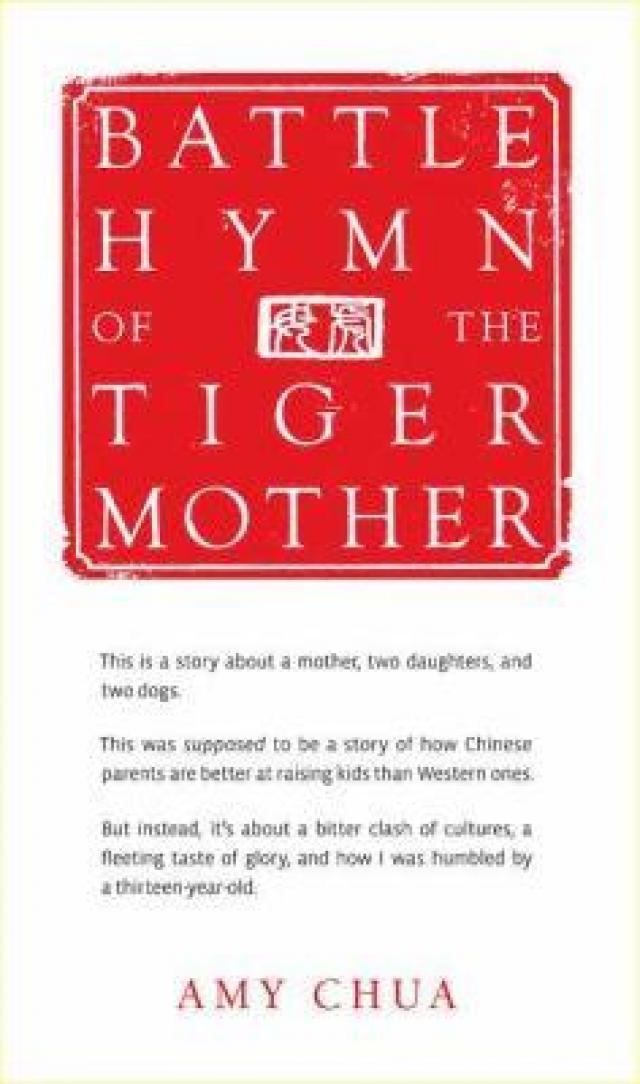
Battle Hymn of the Tiger Mother

Battle Hymn of the Tiger Mother

Amy Chua

Politics / History / Parenting & Families

From Publishers WeeklyChua (Day of Empire) imparts the secret behind the stereotypical Asian child's phenomenal success: the Chinese mother. Chua promotes what has traditionally worked very well in raising children: strict, Old World, uncompromising values--and the parents don't have to be Chinese. What they are, however, are different from what she sees as indulgent and permissive Western parents: stressing academic performance above all, never accepting a mediocre grade, insisting on drilling and practice, and instilling respect for authority. Chua and her Jewish husband (both are professors at Yale Law) raised two girls, and her account of their formative years achieving amazing success in school and music performance proves both a model and a cautionary tale. Sophia, the eldest, was dutiful and diligent, leapfrogging over her peers in academics and as a Suzuki piano student; Lulu was also gifted, but defiant, who excelled at the violin but eventually balked at her mother's pushing. Chua's efforts "not to raise a soft, entitled child" will strike American readers as a little scary--removing her children from school for extra practice, public shaming and insults, equating Western parenting with failure--but the results, she claims somewhat glibly in this frank, unapologetic report card, "were hard to quarrel with." (Jan.) (c) Copyright PWxyz, LLC. All rights reserved. FromChua’s stated intent is to present the differences between Western and Chinese parenting styles by sharing experiences with her own children (now teenagers). As the daughter of Chinese immigrants, she is poised to contrast the two disparate styles, even as she points out that being a “Chinese Mother” can cross ethnic lines: it is more a state of mind than a genetic trait. Yet this is a deeply personal story about her two daughters and how their lives are shaped by such demands as Chua’s relentless insistence on straight A’s and daily hours of mandatory music practice, even while vacationing with grandparents. Readers may be stunned by Chua’s explanations of her hard-line style, and her meant-to-be humorous depictions of screaming matches intended to force greatness from her girls. She insists that Western children are no happier than Chinese ones, and that her daughters are the envy of neighbors and friends, because of their poise and musical, athletic, and academic accomplishments. Ironically, this may be read as a cautionary tale that asks just what price should be paid for achievement. --Colleen Mondor
Read online
  • 17
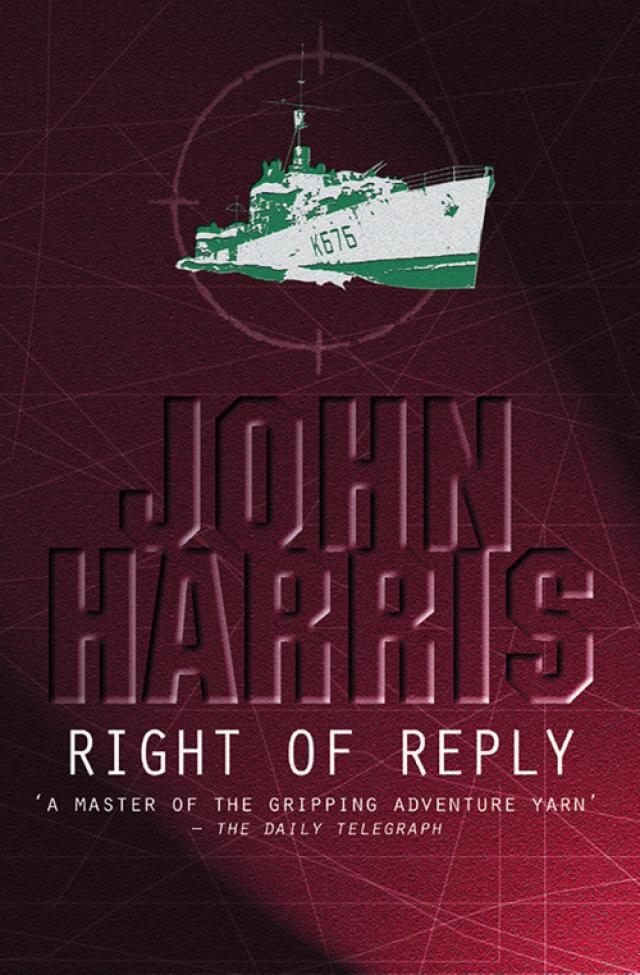
Right of Reply

Right of Reply

John Harris

Politics / Presidents

Struggle, scandal and mutiny run riot in Right of Reply, set in the 1970s in a whirlwind of a political crisis. An invasion is planned by a convoy of British troop ships sighted off the coast of West Africa. A Khanzian base is at stake. The British claim sovereignty but sedition is in the air. Can the British government turn back before it's too late? John Harris leaves us on tenterhooks.
Read online
  • 17
The Collected Poetry of Nikki Giovanni

The Collected Poetry of Nikki Giovanni

Nikki Giovanni

Poetry / Politics / Children's Books

This omnibus covers Nikki Giovanni's complete work of poetry from 1967--1983. THE COLLECTED POETRY OF NIKKI GIOVANNI will include the complete volumes of five adult books of poetry: Black Feeling Black Talk/Black Judgement, My House, The Women and the Men, Cotton Candy on a Rainy Day, and Those Who Ride the Night Winds. Nikki self--published her first book Black Feeling, Black Talk/BlackJudgement in 1969, selling 10,000 copies; William Morrow published in 1970. Know for its iconic revolutionary phrases, it is heralded as one of the most important volumes of modern African--American poetry and is considered the seminal volume of Nikki's body of work.My House (Morrow 1972) marks a new dimension in tone and philosphy----This is Giovanni's first foray into the autobiographical.In The Women and the Men (Morrow 1975), Nikki displays her compassion for the people, things and places she has encountered----She reveres the ordinary and is in search of the...
Read online
  • 17