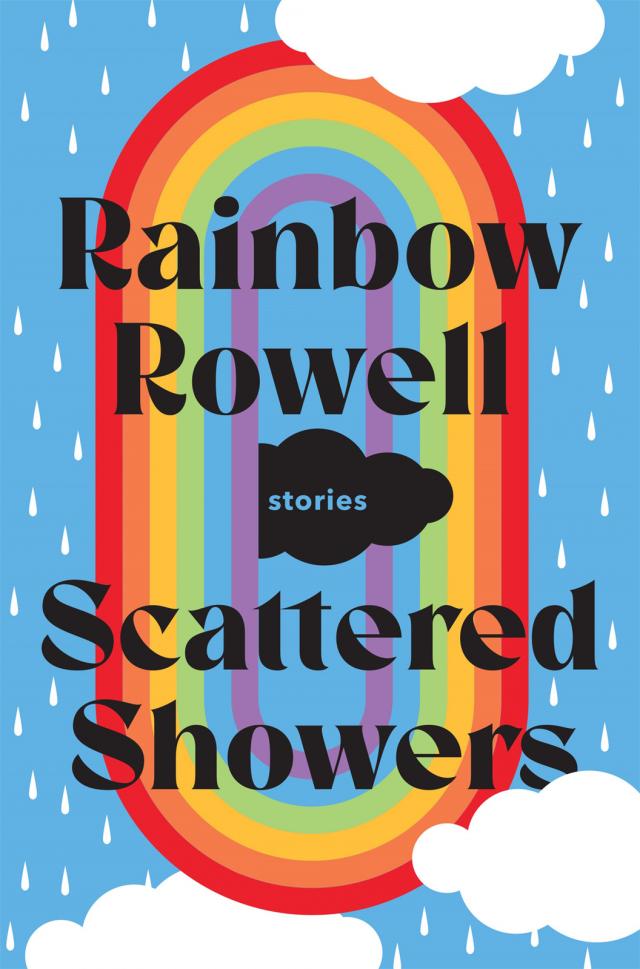
Scattered showers, p.15
Scattered Showers,
p.15


She hadn’t kissed anyone else in the last year.
It was an extraordinary dry spell, for Reagan—she was a curmudgeon, but she’d never been a monk.
The pandemic had changed her.
She’d gotten a lot pickier about who she let get this close. She’d gotten kind of fixated on repercussions.
But Reagan had kissed Mason before, and nothing bad had happened. It was a purely good moment in the middle of a very bad time. She hadn’t forgotten it. She hadn’t stopped wondering what might have happened if she could have kept her shit together.
Mason was leaning over her. He had one hand on the railing and one under her chin. She liked the way he kissed—gentle, but with purpose. She put her arms around him, to hold him steady.
They kissed for a long time. Until Mason pulled away to look at her.
“What,” Reagan whispered.
“I was making sure you weren’t crying.”
She poked his ribs. “Shut up.”
“You’re shaking,” he said.
“I’m just cold.”
“It is December.” He was standing up, taking off his jacket.
“I’m not going to wear your jacket,” she said. “I’m not a fifteen-year-old cheerleader.”
“You were a fifteen-year-old cheerleader,” he said, holding out the jacket.
She took it. “How do you remember that? I got kicked out after one semester.”
He shrugged. “Put on the jacket, so I can kiss you again without feeling guilty.”
Reagan did. It was quilted inside, and still warm from him.
Mason sat down beside her on the top step. She had to scoot over to make room. He leaned behind her to take another bite of Jell-O salad.
She craned her head to look over her shoulder. “You can take that with you,” she said. “You don’t have to finish it right now.”
Mason smiled with all of his teeth. He slid his arm around her waist. “I’ll get the dish back to you.”
Reagan looked down the steps, out into the yard, past the fence. “Yeah,” she said. “All right.”
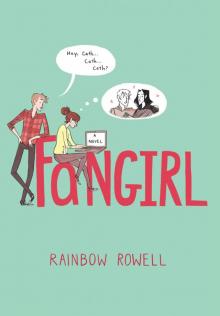
You can read more about Reagan in the novel Fangirl.
The Prince and the Troll
ONCE UPON A TIME, IN A LAND, THERE LIVED A BOY.
Well, he was a boy, but now he’s a man. Tall and strong and full of purpose. With middling blue eyes and middling brown hair, and a smile for almost everyone he meets.
He has work that makes him feel useful.
He has a house that makes him feel safe.
And he’s lucky to live right along the road—the long, wide road. He can see the smoothest part of it from his window.
He may as well be a prince.
One warm January day, the man was walking along the wide road from his safe house to his useful work when he dropped his phone over a bridge. “Damn it all to darkness!” He hadn’t even noticed the bridge.
The man leaned over the railing to see if he could spot his phone. He brought his hand up to shield his eyes from the sun.
He didn’t see the phone. But he saw two eyes looking up at him from the mud.
“Oh,” he said. “Hey.”
“Hi,” the two eyes said. Well. The mouth below the two eyes said it. Whatever it was down there pushed some muddy hair out of its face to see him better.
“I sort of dropped my phone,” he said.
“Oh.” It sounded like maybe a feminine-type thing. “That sucks.”
“Yeah . . .”
“Let me see if I can find it.” The muddy thing sloshed around a bit, turning up some pieces of concrete and an empty Dasani bottle. “Oh no . . .” It held something up. “Is this your phone?”
“I can’t tell,” the young man said. “What kind is it?”
The mudthing shook the phone in its handthing. “It’s the new kind with the three cameras.”
The man sighed. “Yeah. That’s mine.”
“Sorry.”
“No, that’s okay. It’s my fault. I was distracted.”
“You have to be careful on bridges . . .”
“Yeah, that’s what my mother always tells me.”
The mudthing rose up a bit out of the muck. “Do you want me to throw it up to you?”
“Yeah, that’d be cool. Maybe I could put it in some rice overnight . . .”
“I’ve heard they sell magic beans . . .”
“I’ve heard that, too.” He held both hands out.
The mudthing tossed his phone up—but not nearly far enough. It fell back into the gunk. “Sorry, let me try again. Webbed fingers, you know.”
The phone flew up into the air again. The man leaned farther out over the railing, his feet lifting off the smooth paving stones. The phone fell through his grasping fingers.
“Sorry!” she called up.
“No, that was me,” he said. “Try again?”
He caught it the third time, and they both laughed out loud. “Got it!” he said. “Thank you!”
“Yeah, sure, happy to help.”
He tried to wipe some of the mud from his phone, deciding he’d better not turn it on just yet.
“You’re lucky the river dried up,” the mudthing said. “You would have lost it for sure in the current.”
“Yeah, no kidding . . .” He looked down at her again. She was still mostly covered in mud. Her face disappeared when she blinked. (Though he supposed her face disappeared when he blinked, too . . . This was more thinking than the man was used to doing on his way to work.) “I guess I’ll get going,” he said. “Thanks again.”
“Anytime,” she said.
“Well, I hope not.”
“Ha ha,” she said. “Seriously.”
He was walking again. He couldn’t see her anymore. “Have a great day!” he shouted over his shoulder.
“Watch where you’re walking!” she shouted back.
The walk to work felt longer without his phone to distract him. This is good for me, he thought. I always mean to stop and smell the flowers. Or at least to notice them.
All the best flowers grew by the road.
They grew all year long, now.
The next day, the young man woke in his soft bed, in his safe house. He hurried out onto the road. (He liked the road, everyone did. He was lucky to live so close.)
This time when he got to the bridge, he tucked his phone—it still worked, thank goodness—into his back pocket. He still felt like it might fly out over the railing, isn’t that crazy? He kept touching his pocket to make sure it was there.
Thinking of it made him think of the mudthing. He wondered if she was down there today. It’s not like she just hangs out, waiting for people to drop their phones, he thought. But he stopped anyway in the middle of the bridge. He leaned out over the railing. “Hello?”
There was a slopping sound beneath him.
“Oh,” she said. “It’s you. Hello.” She lifted herself up out of the riverbed, pushing some of the mud away from her face. “Did you drop something?”
“No . . .” he said.
“Do you want to? Maybe a volleyball this time? We could play a little catch.”
He laughed. “I just thought I’d say hello.”
“Oh . . . That’s nice. Hello.”
“So, um . . .” He cleared his throat. He hadn’t really thought this through. “Do you live here? Under the bridge?”
“I guess I do,” she said. “Do you live up there?”
“Along the road,” he said.
“That’s lucky.”
“It is.” He brought his hand up to shield his eyes again. “Are you—I mean, I hope this isn’t impolite—”
“Go ahead.”
“Are you a troll?”
She laughed. “Because I live under a bridge?”
“Well, yeah,” he said. “I don’t mean to—”
“No, it’s okay. I guess I am a troll. I live under bridges and call out to innocent boys.”
“I’m not—I mean, you didn’t call out to me.”
“I will next time,” she said. “Just to say hello.”
“That would be nice,” he said. Which was the wrong thing. He should have said something jokey.
She cleared her throat. He guessed she had a throat.
“Well,” he said, “I suppose I should go to work.”
“To your job?”
“Yeah.”
“Do you like it?”
“I really do,” he said. “It makes me feel useful.”
“What is it?”
“Oh. It’s kind of hard to explain. It’s like—I monitor a section of the road. It’s maintenance. Resource management. There’s a little bit of graphic design.”
“That does sound useful,” she said. “For people who use the road.”
“It is!” he said. “Well, anyway . . . it was nice talking to you.”
“You, too.”
He walked away from the bridge, smiling, and took his phone out of his pocket.
“Hello!” The man leaned over the railing.
He waited.
“Hello?” he called again.
The womanish thing rose up out of the mud. “Oh, hello. I wasn’t expecting to see you.”
“Yeah, I wasn’t sure you’d be around this time of day.”
“I’m here pretty much all the time.”
“Oh. That’s nice. I mean . . .” He faltered. “Is it nice? It’s nice for me. To find you here.”
She smiled at that. He could see her teeth. She had teeth.
“I brought you something,” he said, “to thank you.”
“You already said thank you.”
“Well, I know, but I was stopping for coffee anyway. There’s a Starbucks just down the road.”
“You brought me Starbucks?”
“Do you not like Starbucks?”
“No, of course I do. Just, um . . .” She was looking up at him from her patch of mud.
He looked down at his hands, at the two paper cups. “Oh,” he said. “I see what you’re getting at . . . I could drop it, I guess?”
“You could,” she said. “That seems like something you would do.”
He laughed. She laughed, too.
“I wish I could just bring it down to you . . .” he said.
“Too bad this isn’t a wishing well,” she said, another joke. Then she said, “Actually this might have been a wishing well, once upon a time.”
“I can’t believe I was so stupid,” the man said. (He’s not a prince, but he may as well be.) “I’d bring it down to you if I could, if there was a path.”
“I believe you,” she said.
He believed her.
“What are you doing?” she shouted.
It was the next day, at the same time, and the man was climbing over the ornamental hedge that separated the road from everything else.
“I’m just trying to get over these shrubs.”
“Be careful, they just sprayed!”
“I’m being careful,” he said, snagging his pants on some thorns.
“You’re going to spill your Starbucks,” she said.
“It’s your Starbucks,” he said.
“Well, then you really shouldn’t spill it.”
He laughed. His foot was stuck in some branches. It didn’t hurt. The thorns didn’t hurt either. But it was embarrassing. The whole thing was embarrassing. He felt silly. “This is why no one leaves the road,” he said to himself. “Maybe I’ll just leave the coffee here for you?” he called. He couldn’t quite see her from here, from the middle of the hedge. He’d never really seen her.
“I won’t be able to reach it,” she said. “You may as well take it to work—maybe someone else will drink it.”
“Yeah, okay,” he said. “I guess it’s the thought that counts?”
“Did your mother tell you that?”
“Did you come back to visit that hedge?”
It was the next day. He was midway through the bushes. She was already laughing at him.
“I’m bringing you Starbucks!” he shouted.
“I’ve heard that before,” she said.
“Ha ha!” He kept working his way through, letting the thorns catch in his sleeve. He’d intentionally worn his cheapest sweater.
“Even when you get past the hedge, you’re going to have to slosh down through mud.”
“It’s okay. I wore my worst clothes.”
“I’m flattered.”
“Ugh, sorry. I’m just—” He felt his foot land in the mud on the other side of the hedge. “Ha!” He pulled his other foot through the shrub. “Aha!”
“Are you okay?”
“Yeah! I’m good. I’m—” He was off the road. He couldn’t see it anymore. It was just on the other side of the hedge. He could go back. Maybe he should go back?
“You didn’t spill the coffee.”
He turned toward her voice. He could see her better now. Could see her person-like shape, leaning on a rock at the edge of the old riverbed.
He walked toward her. “Hi.”
“Hi,” she said.
He was standing above her now. “I, um—”
She reached her hand-like thing toward him.
“Plain or vanilla?” he asked.
“Give me the one you’d want yourself,” she said.
He laughed and gave her the vanilla. “That’s very selfish of you.”
“Oh, please, you get Starbucks every day.”
I could bring you coffee every day, he almost said. (And the thing is, he really could. It wouldn’t take much. This hadn’t taken much.) (He didn’t say it.)
“You could sit down,” she said.
He looked down at the mud.
“Go on, you’re already wearing your worst pants.”
“That’s true.”
He sat down carefully, a few feet away from her, away from the center of the riverbed, where the mud was dark and thick. She wiped some sludge away from her lips to sip her coffee. She had lips.
He’d hoped the mud was just good, clean mud. But the smell was terrible now that he was sitting in it.
“The river smelled better,” she said. He must have been making a face.
“No,” he said, “it’s fine.” He sort of remembered the river. They’d needed it for the road. Whatever the road needed, they took.
She took another sip of the coffee. There was whipped cream on her lip. And mud on the lid. “That’s really lovely,” she said.
“I’m glad you like it,” he said.
She took another drink. “It’s seriously good.”
“I know.”
“It’s amazing that you can have it every day.”
“Some people say it’s a waste of money,” he said. “But I always feel like it’s worth it. Small, good things are worth it.”
“Totally,” she said. “Treat yourself.” She looked up at him. The mud was sliding down her shoulders, clinging to her long hair. (Hair, too.) “Thank you,” she said, looking down at her coffee, “Adam.”
His stomach pitched. His face fell. “How . . . How do you know my name?”
She smiled. “It was written on the cup.”
“I . . . That’s not . . . I wasn’t supposed to tell you my name.”
“No,” she said, “it’s fine. You’re thinking of fairies.”
“And dwarves,” he said.
“Right, dwarves.”
“And elves.”
“But not bridge trolls,” she said. “Really, Adam, I’m, like, the only creature you’re safe giving your name to.”
He laughed. He was embarrassed. And relieved. (Though not completely.) “What about you?”
“I told you, I can’t hurt you.”
“What’s your name, I mean.”
“I can’t tell you that,” she said between sips. “Everyone knows you can’t trust princes.”
“I’m not a prince.”
He may as well be.
“Those aren’t your worst pants,” she said, tilting her head to the side to examine him.
“My worst pants are in the dryer,” he replied. “Vanilla or Cinnamon Dolce?”
“Which one do you like best?”
He handed her the Cinnamon Dolce. “I can’t stay too long, I’m running late.”
“What do you do up there?” she asked.
“I already told you,” he said.
“Not really . . .”
“What do you do down here?”
She shrugged, settling back into the mud with her latte. “Nothing useful.”
“That’s not true,” he said. “Sometimes you throw phones into the air.”
She tilted her head again. “You think I’m at my most useful when I’m being useful to you?”
“No,” he said. “I don’t know what to think.”
He didn’t.
“Tell me about the road,” she said one day. It was a beautiful February day. Sunny. Every day was sunny. Though some people said it would have to rain again, eventually.
“I love the road,” he said. “Everyone does.”
“Is it very smooth?”
“So smooth.”
“And wide?”
“So wide,” he said, smiling. “And it smells wonderful.”
“That’s very rude, Adam.”
“Oh, I’m sorry.”
“No, it’s okay. I know what it smells like down here. I have a nose.” She did, in fact.
“And there are flowers by the road,” he said, “fewer than before—but still the best flowers. There are no flowers anywhere that you can’t see from the road.” He wished that she could see it.
“What’s the best part?” she asked.
“The best part?”
“The best part, besides the Starbucks.”
“I almost hate to tell you this, but there are so many Starbucks.”
She sighed and laid her head down on her rock. Sometimes, she’d sit up on the rock. He liked that. She looked more like a something then—and less like part of the mud.
Today she was lying in the mud, with her head and arms on the rock, like it took too much effort to sit up any farther. “What’s the very best part of the road?” she asked.
The man—we may as well call him Adam, he already gave up his name—stopped to really think. Finally, he said, “The road goes everywhere you’d want to go. Everywhere you’d think of going. It never ends. And you’re never alone there. And everything you’d ever want is right there on the road.”
“That’s not the one best part,” she said. “That’s too many things.” “Fine,” he said, “okay—the best part of being on the road is that when you’re on it, it’s all that you can see.”