Silence of the missing a.., p.1
Silence of the Missing: A gripping psychological crime thriller novel,
p.1
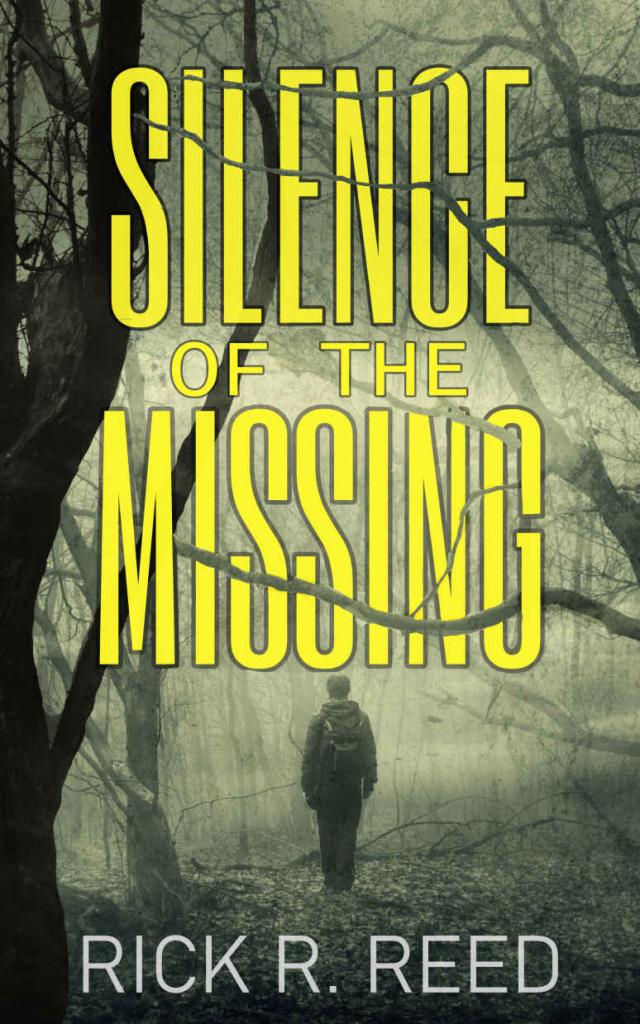


The Silence of the Missing
Rick R. Reed
Spectrum Books
Copyright © by Rick R. Reed.
Artwork: Adobe Stock – © andreiuc88, salajean, VRVIRUS.
Cover designed by Spectrum Books.
All rights reserved.
Paperback ISBN: 978-1-915905-16-1
No part of this book may be used or reproduced in any manner whatsoever without written permission of the author or Spectrum Books, except for brief quotations used for promotion or in reviews.
This book is a work of fiction. Names, characters, places and events are fictitious.
First edition, Spectrum Books, 2023
Discover more LGBTQ+ books at www.spectrum-books.com
Contents
1. Now—Sam
2. 1986—Sammy
3. Now—Sam
4. 1986—Trudy
5. Now—Marc
6. Now—Sam
7. Now—Trudy
8. Now—Sam
9. Now—Marc
10. Now—Sam
11. 1986—Jeb
12. Now—Sam
13. 1986—Hunter
14. Now—Sam
15. One Month Later—Sam
16. Now—Sam
_____________________________________
Thanks very much for choosing this book! Consider joining the Spectrum Books mailing list to get free Kindle books, some fantastic deals and updates on new releases.
Join here!
_____________________________________
For Bruce, my heart and my inspiration...always.
“The first kiss can be as terrifying as the last.”
― Daina Chaviano, The Island of Eternal Love
“Before we belonged to anyone else, we were each other’s.”
― Elizabeth Noble, The Way We Were
“The silence of the dead says, Goodbye.
“The silence of the missing says, Find me.”
― Dennis Lehane, Gone, Baby, Gone
Chapter 1
Now—Sam
The metallic bark of the door buzzer startled me out of reading Stephen King’s Fairy Tale. And I was just getting to the first good part of what I knew would be many. King had been my literary hero since I was thirteen years old and picked up a movie tie-in paperback of Carrie in a used bookstore. I hated being pulled out of his world.
“Shit. What fresh hell is this?” I mumbled. I closed the book reluctantly and stood.
It was a Saturday morning in June, the early summer sun pouring in through the four windows of my condo living room. That damn buzzer! I’d just settled in on the couch, Bluetooth speaker streaming a George Winston playlist, a steaming cup of Earl Grey on the end table beside me. Marc was out at the gym. Our rescue dog, Vito, a mix of Boston terrier and pug, snored on the floor at my feet. I couldn’t imagine a more contented home scene.
A perfect quiet weekend morning—the kind we introverts adore. God, I’d waited for this. I’d gotten King’s book from Amazon at the beginning of the week, but waited until now to settle down and savor it—my blessed and peaceful alone time.
The buzzer sounded again—had it always sounded so annoying, so intrusive? So impatient?
I sighed and set the book down. “Jesus. No rest for the wicked.” Longingly, I gazed at my tea. Vito stirred, lifting his heavy head from the rug, and gave a small grumble and snort. He, too, seemed annoyed with the interruption. He’d never been much of a watchdog and hardly ever barked.
I moved to the front door and pressed the intercom button. I swear to God if this is a Jehovah’s Witness…
“Yeah?” I immediately regretted my tone and hoped my irritation didn’t come through. Whomever was out there didn’t deserve it. Besides, it might be Marc, who’d forgotten his keys—yet again.
“Sammy Blake?” A man’s voice came through.
I paused, head cocked, finger hovering above the speak button. No one had called me Sammy since I was a kid, back in eastern Ohio. I’d thought that part of my past was dead. Life in the foothills of the Appalachians now seemed like days that had happened to someone else. Once I’d grown into a man, I found a different life, a different me. No one knew the person I was back then. Often, I thought, neither did I.
“Who is this?” Maybe it was irrational, but I felt a prickle of nerves at the back of my neck. The fine hairs there stood on end.
There was a pause. Vito sniffed at my calves and pawed at me, whining. To him, my proximity to the front door meant only one thing—we were headed out for a walk. I glanced down at him and shook my head. “No. Not right now. Do you see a leash in my hand?”
“An old friend,” came the reply. “Can you buzz me in?”
Okay, this is weird. I wasn’t expecting anybody, not even a delivery. The fact that this person called me by my childhood name was kind of surreal and creepy. In spite of my misgivings, I was curious. Who wouldn’t be?
Still, I didn’t feel comfortable buzzing him in. This was Chicago, after all, where murder was commonplace and crime was part of the city’s identity. Most people, even in s0-called safe neighborhoods, were careful about who they let into their home. Yet, this person knew my name, so this couldn’t be some random weirdo ringing condo building intercoms to get inside. Long ago, the homeowner’s association had decided we would not put names next to intercom buttons outside, for just this purpose. The unit number, especially in a crime-ridden metropolis like Chicago, was enough.
No. This is a specific weirdo. Who knows your name…
I decided in the moment that what made the most sense was to simply go downstairs and find out who this person was and what he wanted. “Gimme a sec,” I said. “I’ll be right down.”
I was in a robe and a pair of plaid flannel boxers. I hurried into the bedroom and pulled yesterday’s jeans and T-shirt off a chair that existed solely for the purpose of collecting cast-off clothing, much to my neatnik husband’s chagrin. I dressed quickly and hurried down the stairs to the lobby.
Through the glass front door, I could see him—a man about my age with dark hair, red-rimmed round glasses, and a tall, lanky build. Ichabod Crane. The Scarecrow.
No clue.
I patted my pocket, making sure my house keys were there, and headed out to join him in the courtyard.
I smiled, despite my nerves. Seeing him rung absolutely no bells. “Hello. I’m Sam.” I cocked my head. “And you are?”
He grinned back. “This is weird.”
“Uh, yeah, it certainly is.” I narrowed my eyes. “Do I know you?”
He held out his hands, palms up. His expression was neutral, yet I swore I detected a bit of hope in it. The sun caught and lightened the green of his irises and, for just a moment, there was a sense of déjà vu. “You used to.”
The day was warm, humid. Bees buzzed. The sun blazed. The air was still.
Yet an icy chill ran down my spine.
“I did? I don’t recall. I’m sorry—I’m drawing a blank.”
He leaned closer, his gaze boring into my own. I wanted to jump back.
His voice was soft, as though he hoped to confide a secret. “I’m Jeb. Kleber. You remember me, right? Summers on the banks of the Ohio? Boyhood secrets? A love that dare not speak its name?” He raised his eyebrows. A smile made the corners of his eyes crinkle.
My blood turned to ice.
Everything inside dried up, as if all the moisture had been drained out of my system. Dizziness washed over me. I reached out a hand behind me, grasping for something solid, but all that was there was sticky summer air. “No. No, you’re not. That’s not possible.”
He nodded. “It is possible. In fact, it’s true. I know it’s hard to believe.”
I shook my head, trying to gather some spit so I could swallow. “Go away. You can’t be him. He’s gone. Dead.” Suddenly, I wanted to turn and run back inside, dash up the stairs, and, once alone, sob for the missing boy I’d once loved.
“Not dead. Obviously. Disappeared is the better term.” He eyed me, imploring me, I thought, to be reasonable, to see shades of distinction.
People don’t disappear for more than thirty years with no explanation. Not commonly, anyway. People who disappear for three decades were most likely dead.
Suddenly, I was swept back. In my mind’s eye, I was a thirteen-year-old boy in love for the first time with a fellow white trash boy, living in the foothills of the Appalachians with my single mom.
“Obviously, I’m very much alive.” He shook his head, expression mournful. “It’s a long story.” He looked up at the building, a vintage white-brick courtyard that had been gutted and redone five years ago when Marc and I moved in. “Can you just let me come in, please? I’ll only take a few minutes. I can explain.”
I shook my head and turned toward the front door. I pulled my keys out. “I don’t think that’s a good idea.”
“Please. Sammy.”
I had my key in the lock.
“Wait,” he said.
I should have gone in. I should have ignored his one-word request or command and gotten myself back inside. I should have double locked the door behind me. But should-haves were the saddest form of regret there was—and I’ve never been good at them, so I turned back. My hands trembled. I wanted to pinch myself to ensure I was awake. But I knew, deep in my bones, this was no dr
He wore a pale green and brown Henley and cargo shorts. He reached up and pulled aside the opening of the shirt at his throat. A slender silver chain rested against his smooth skin and on it, a purple amethyst pendant. It caught the sunlight and flashed.
For a moment, the world shimmered and then went dark for just a second, not long enough for me to actually faint, but enough to make me slump against the heavy glass of the vestibule door. I drew in several deep breaths and tried to calm my quaking hands enough to turn the key in the lock and to open the door. I turned back to him.
“You should come in.” And I moved toward the darkness of the cooler vestibule, heading toward the stairs, knowing he’d follow.
He always did.
Chapter 2
1986—Sammy
I
“Why on earth do you want to bring him, for God’s sakes? That boy’s nothing but poor white trash.” My mom, Trudy Blake, eyed me over the breakfast table on a sun-drenched morning at the start of July. I had a bowl of Apple Jacks in front of me and she had her usual—black coffee and buttered toast. “I thought we talked about how the people you associate with reflect on you, on your choices. You can be better through them.” She bit off a piece of toast and chewed. “You’re only as good as the company you keep.”
I rolled my eyes. “Better through them, Mom? Seriously? Through what? Osmosis? Jeb is a good guy. Decent. And if he’s poor white trash, then so are we,” I said. “I can’t believe you, my mom, are saying I should choose friends based on some kind of social status. Jeez.” I didn’t dare mention that her two best friends, a woman who called herself Mikey and another called Punkin, both had had brushes with the law. Both women were cool, kind, funny, friendly, but neither was known around St. Clair for their sterling reputations.
“He lives in a trailer.” Trudy slid the plastic milk jug across the table.
I doused my cereal with more milk and took a bite. I chewed, swallowed and said, “So what?” I took a glance around our kitchen, with its cracked linoleum floor, faded faux wood paneling, its Harvest gold appliances, and the faucet that never stopped dripping. “This is hardly a palace.”
Trudy finished up her toast and shoved her plate away. She took up her coffee, blew on it, and took a sip. “Where did you get that smart mouth?” She was smiling.
“Maybe from dear old dad?”
The smile drooped at the corners, transitioning into an angry frown. “Careful,” she warned. “I won’t have my smart ass kid throwing my past up at me.”
The sad truth was that neither of us knew who my dad was. Trudy had gone through a wild, rebellious phase during her teens, mainly as a reaction to her Evangelical Christian parents. Smoking, drinking, a little experimenting with drugs, and many, many men. She’d wound up kicked out when she became pregnant at sixteen, with no idea who to turn to for any kind of support. But, even as a high school dropout with a baby, she’d managed to keep a roof over our heads, feed her baby boy, and stay afloat (barely) financially. My father was a mystery that would most likely never be solved—unless there was some miracle revolving around 23andMe and a fantastic coincidence.
“Sorry, Mom.” I dropped my spoon beside my bowl and lifted it to slurp up the last of the sweet milk. I did it for two reasons—I loved the dredges of super-sugary milk and, two, drinking from the bowl annoyed Mom.
I shouldn’t have tried to irritate her. She’d always done the best she could for the two of us. Whenever I bemoaned our sorry-ass house, our piece-of-shit car, and our general lack of prospects, she always told me, “We may not have much, but we have enough.” I retraced my conversational steps, knowing that my wise-acre approach wasn’t gaining me any points. “Sorry. We got off track here.” I hoped I’d shaped my face into the picture of contrition. “Please, could Jeb come with us to the Fourth of July fireworks or not? I’d really like to bring him.”
She stood and cleared the table, rinsing the dishes in the sink. Facing the window over the sink, she said, “I have to get myself ready to go in.” She worked across the river, at a commercial pottery in West Virginia, where she stood on her feet above a hot plate for eight hours a day, waxing as-yet-unglazed pottery for piece-work pay. She’d been at the job since she was seventeen. It was hard work and she came home exhausted after every shift. She often fell asleep on the living room sofa shortly before six. “You be sure to wash these dishes up before you go outside, okay?”
“Sure thing, Ma. But what about—”
She turned and cut me off. “And of course you can bring your friend. Thank you for asking first.” She brushed by me on the way to the bathroom.
I watched her go. Sometimes, we were mistaken for brother and sister, even though I was thirteen and she was just about to turn thirty. But she was small, barely over five feet, and weighing right around a hundred pounds sopping wet. Put her black hair in pigtails and she’d be mistaken for my younger sister.
What I didn’t say was that Jeb was more than a friend. We’d been proving that on a daily basis down on the banks of the Ohio, groping, experimenting, and exploring since late spring.
What I didn’t say was that I was in love.
II
The river sparkled in the sun—diamonds cast upon the mud-brown waters.
Jeb and I had taken the rickety wooden steps down the steep bank to the pebbled shore and now sat on an old plaid blanket he’d brought from home. He’d also snagged a couple of Iron City beers and a bag of Cool Ranch Doritos—his idea of a grown-up picnic. I agreed—and the cold beer, bitter, hoppy, and delightful, made me feel wild and rebellious.
We’d spent the day foraging on the riverbank. We’d often found cool stuff washed up on shore, along with the usual assortment of junk—old tires, small appliances, numerous cans, condoms, once even a full mannequin. That had been a shock, because at first glance I was horrified, thinking we’d stumbled across a corpse.
But the treasures made the foraging fun and worthwhile. There was contorted driftwood that, with a little work and polish on my part, could be transformed into something beautiful. There were examples of my found art all around our little house in the east end of St. Clair. Mom had one on her bedroom dresser and on it, she hung all her necklaces.
One time, we’d found a man’s watch. The links appeared to be solid gold, even though the watch itself no longer worked. The back was engraved with “Terry and Butch—HOLLAND.” I’d learned that HOLLAND stood for “Hope our love lasts and never dies.” I wondered if Terry and Butch were a same-sex couple. Had their “forever” relationship outlived the tragic fate of the lost or cast-off timepiece?
We’d also once found a vaguely dissatisfying stash of porn hidden behind the truck of a maple tree. The magazines were all Hustlers and Playboys. And, even though they featured women and we’d already known our interests were in men, there remained an illicit thrill to the cache.
One of the Hustlers, my favorite, the one that made it home with me, and the issue I still had hidden between my mattress and box springs, showed a threesome—two men and a woman—acting out a baseball locker room fantasy.
Jeb and I, once we were certain we were truly alone and no prying eyes could see us from the top of the riverbank, had spent more than an hour making out. I’d wanted to go further—I always did, but Jeb said he wasn’t ready for anything beyond kissing and touching. He’d told me that even those seemingly innocent displays of affection made him feel guilty, but I was simply “too cute to resist.”
One day, though, I was hopeful I’d get Jeb to come around to my way of thinking. And that day, I believed, would be the July Fourth fireworks, when I’d convince Mom to let me bring Jeb home afterward. I’d call it a “sleepover,” although I believed very little sleep would be accomplished. Dreams come true, maybe.
Smiling at the thought and the prospect, I jumped up, stripped down to my white briefs and jumped in the fast-moving water. It was as warm as a bath. I dog paddled a little way out, toward Harker’s Island, the tiny tree-covered strip of land in the middle of the water. I didn’t fail to heed the internal warning that many boys just like me had drowned making such a journey. The Ohio’s fast-moving currents were often hidden and could be treacherous. Actually, I was forbidden to swim in the river or even to play on its banks.