

Covert one 3 the paris.., p.46
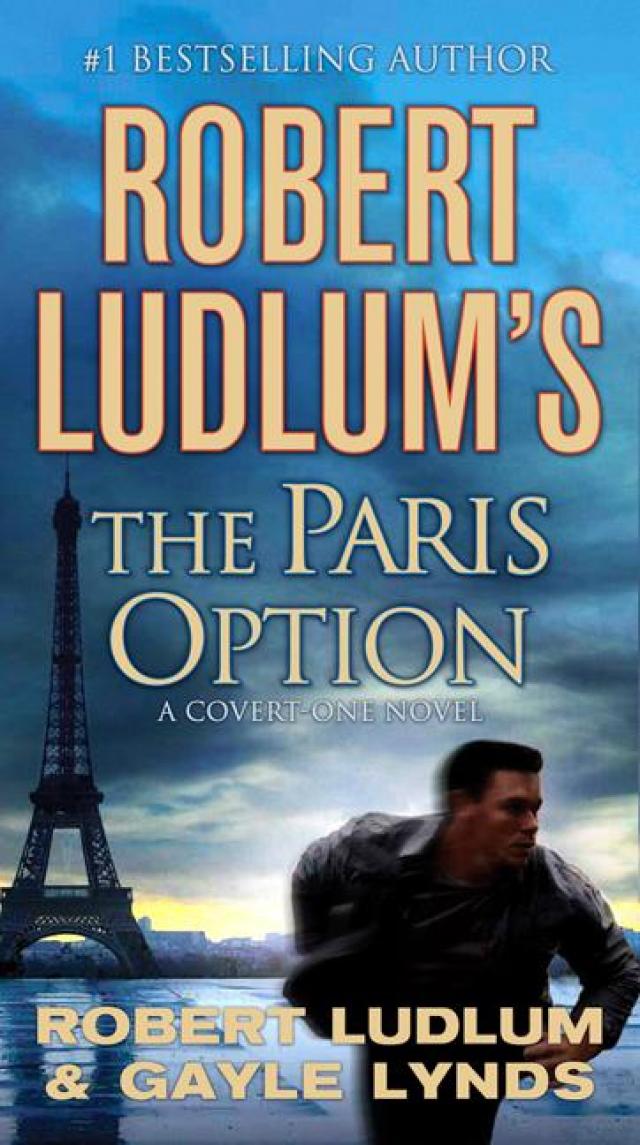
Covert One 3 - The Paris Option,
p.46


“Yes. Well, I meant to mention that,” Jon said.
“Mention what?” Randi asked instantly. “What’ve you been holding back?”
Jon shrugged. “Ammunition. Crates of ammo stored at the back of the armory.”
Peter’s voice rose. “You exploded a grenade in a room where there were ammo supplies? And you didn’t warn us?”
“Hey, so you didn’t notice the crates,” Jon said huffily. “Do I have to point everything out to you? Besides, the ammo was pretty far away.”
“Don’t feel bad, Peter,” Marty said helpfully. “I didn’t see the ammunition either.”
Theacute;regrave;se’s face had blanched white. “Neither did I, for which I’m now very grateful.”
“The whole point of this long, dangerous exercise was to stop the threat of the DNA computer.” Randi was staring at Jon, fighting a smile at the guilty look on his handsome face. “You succeeded, Jon. You blew it up with the grenade.”
“We
succeeded,” Jon agreed, “despite everything.”
Peter nodded gruffly. Then he smiled. “Are we ready to go home now?”
For another minute, they continued to study the display as the fire spread through the great old castle in the distance. Then Peter banked the chopper in a long slow circle, preparing to resume their flight southeast toward Paris. Jon and Randi pulled out their cell phones to make full reports to their bosses. Theacute;regrave;se leaned back in her seat and sighed wearily.
“See those little bright specks in the sky?” Marty asked no one in particular, peering east. “They look like lightning bugs. Can anyone tell me what they really are?”
Everyone stared as the points of light grew larger.
“NATO helicopters,” Jon said at last. “I count twenty of them.”
“They’re heading for the castle,” Randi decided.
“Guess your message got through, Jon.” Marty described how Jon had given him a code to alert his superiors to the castle at Chteau la Rouge. “I sent it just before Jon destroyed the prototype.”
Suddenly the dark night air seemed full of the aircraftlarge, troop-carrying helicopters that dwarfed their little Bell scout. The newcomers were flying in a pack, passing to the north in perfect formation. Moonlight made them glow like otherworldly beasts, and their rotors looked like spinning silver swords.
The accumulation of so many was breathtaking. The big choppers landed across the moonlit Norman farmland, still in formation. NATO soldiers jumped out, spread out, and moved at a fast trot toward the burning castle, where the flames licked higher and had spread into what appeared to be half the castle. There was a precision and decisiveness about the troops that was reassuring.
“Pleasant to see NATO in action,” Jon said in vast understatement.
Marty nodded and sighed. “Peter, we’ve seen enough. Take us back to Paris. I want to go home.”
“Right you are,” Peter said, and they resumed the journey.
Epilogue
A Month Later
Fort Collins, Colorado
It was one of those sunny June days for which Colorado was famous. Blue skies, balmy air, and the aromatic scent of pine drifting on a light breeze. Jon walked into the utilitarian building that housed the secret CDC-USAMRIID laboratories where he and other scientists were laboring to create the world’s “first” DNA computer.
He nodded and greeted the lab assistants, secretaries, and clerks by name, and they said hello back. This was the first time some had seen him since he left, and they stopped to say it was great that he was able to return. How was his grandmother?
“Gave us all quite a scare,” he said over and over. “Almost died. She’s on the mend now.”
When he had arrived two days ago at this rustic Colorado State University campus, all of the events in France, Spain, and Algeria were still fresh, although the stress was beginning to fade. Memory could be a blessing that way. Hold on to the good; let go of the bad. He had spent ten days with Fred Klein, going over everything in detail. Covert-One’s files were growing, and each new piece of information, name, location, and comprehension of those who would harm others on scales large and small was grist for future grinding. At the top of the list was the terrorist leader, the pseudonymous M. Mauritania, who had somehow escaped the devastation at the castle. He had disappeared, as vaporous as the billowing white robes he favored.
From what Jon could figure out, a few others of the Crescent Shield must have managed to get out with him. There were not as many dead terrorists as Jon, Randi, and Peter had speculated in their various reports. The corpse of Abu Auda, however, had been found with several shots to the back. No one knew who had fired those bullets, of course, since no one aliverenegade Legionnaires or terroristswas captured in the burning hulk of the castle.
Even the French general who had been ultimately behind it all, Roland la Porte, was dead. He had taken a bullet to his head that blasted off half his skull. Somehow he’d had time to dress in his uniform, his chest full of medals and ribbons, before he shot himself. The pistol was in his hand, and his impeccably pressed tunic was blood-soaked.
It was a sad ending in some ways, Jon reflected as he climbed the stairs to the meeting room. So much potential perverted. But that was what it was all about, why Covert-One existed. Fred Klein had sent a watered-down version of Jon’s report over to army intelligence, as a cover for his supposed employment there. That way, if General Carlos Henze or Randi Russell or even Theacute;regrave;se Chambord went looking, they would find that he had been legitimately hired as a freelancer.
No one liked to believe life was as fragile as it really was. So the various intelligence agencies had circled their media wagons, and the CIA, the Department of Defense, and the Oval Office had stuck to their stones about wizard hackers and brand-new viruses and the solid strength of the U.S. military and all its communications. With time, the ruckus would die completely. People moved on. Other crises happened. Already it was off the front page and soon it would be firmly, irrevocably old news.
Jon pushed his way into the conference room and took up a post in the back as his fellow researchers filed in. It was the weekly meeting for them to discuss new experimental avenues that looked promising in their quest for a molecular computer. They were a motley crew, jovial, highly intelligent, and pretty much uncontrollable. Talk about mavericks. The best scientists always had a rogue streak. Otherwise, they would not be intrigued by the unexplored. Someone was brewing coffee. The smell drifted into the room. A couple of the scientists ran out to grab cups.
By the time everyone had settled in, there were some thirty men and women packed on folding metal chairs. After business was conducted, the team’s lead scientist turned the meeting over to Jon.
He went to the front of the room. Behind him, windows looked out onto the green Colorado campus. “You’ve all probably been wondering where the hell I’ve been the last few weeks,” Jon began, his face serious. “Wellhellip;”
From the left, Larry Schulenberg called out, “Were you gone, Jon? I had no idea.”
Amid the general laughter, others took up the cryhellip;“Never noticed.“hellip;“Are you sure, Jon? I wasn’t just daydreaming?“hellip;“Were you? Really?”
“All right,” Jon said, laughing, too. “I guess I deserved that. Let me rephrase. In case anyone happened to notice, I’ve been away.” His expression turned serious again. “One of the things I’ve been doing is thinking about our work. I may have come up with some ideas. For instance, it occurred to me that we’ve been neglecting the possibility of using light-emitting molecules for our switches. With them, we could do more than have an on-off switch, we could have one with gradations, like a dimmer switch.”
Larry Schulenberg said, “You’re talking about using molecules not only to compute, but also to detect the computations.”
“That,” someone else said, excited, “would be a hell of a feat.”
“You could then pick up the light by conventional means and translate it,” a third speculated. “Maybe the light energy could be absorbed in some kind of coated metal plate that could then emit energy.”
Jon nodded as they continued to talk animatedly to one another.
At last he interrupted, “Another problem we’ve been having is with reversing the flow of information as freely as a silicon-based computer can. Maybe one solution would be to use a second interface between our DNA molecules and the switch. You know, we’ve been limiting our ideas to solid-phase constructionsthere’s no real reason we have to have the DNA attached to chips. Why not use solution chemistry? We’d have a lot more flexibility.”
“He’s right!” someone shouted. “Why not go with biomolecular gels? Roslyn, didn’t you do your Ph.D. research on biopolymers? Could we adapt that new gel pack technology?”
Dr. Roslyn James took over the discussion for a few minutes, drawing on the well-used white board and bringing the group up to speed on the latest advances in biogel research.
The meeting quickly took on a life of its own. Some were already making notes. Others tossed out opinions and more ideas. One thing led to another, and soon the whole room was talking. Jon stayed with them, and they brainstormed through the morning. Maybe nothing would come of it. After all, there had to be more than one way to create a molecular machine, and Jon did not have enough of the details of Emile Chambord’s masterpiece to be able to give them the answers that would lead to easy reproduction. But what he was able to offer was a good jumping-off point.
They broke for lunch. Some would continue the discussions during and after eating, while others would head straight for their labs, intent on their own lines of research.
Jon strolled down the hall, intending to go to the cafeteria. Then it would be right back to the lab for him. He was eager to return to his work. He was thinking about polymers when his cell phone rang.
Jon answered it.
“Hello, Colonel. This is Fred Klein.” His voice was cheerful, a far different tone from just a few weeks ago.
Jon chuckled to himself. “As if I wouldn’t recognize you.”
Someone grabbed Jon’s arm. He flinched. And caught himself. If the interruption had been a car’s backfire, he knew he would have dove for cover. It was going to take a while to get used to the safety of ordinary life, but he was ready. His mind and body were almost healed, but stillhellip;he was weary.
“Are you going to join us, Jon?” Larry Schulenberg asked, glancing at the cell phone in Jon’s hand.
“Yeah. In a few minutes. Save me some meat loaf. Got a call to take first.”
Schulenberg grinned, and the overhead light caught the diamond in his ear and reflected it with a flash of silver-blue that reminded Jon of Chambord’s gel packs.
“Girlfriend?” Schulenberg inquired politely.
“Not yet.” Jon promised, “You’ll be the first to know.”
“Right.” Schulenberg laughed heartily and went into the elevator.
“Hold on, Fred,” Jon said into the phone. “I’m going outside where we can talk.”
The noontime sun was hot, the rays through the clear mountain air like lasers as he strolled out the door and down the steps. Being in the mountains reminded him of Peter. The last time they had talked, Peter was back in his lair in the Sierras, hiding out from Whitehall. They had some new project for him, and he was reluctant. Of course, he would not reveal to Jon what it was.
Jon put on his sunglasses and said into the phone, “You have my full attention.”
“Talked to Randi lately?” Fred asked conversationally.
“Of course not. She’s off somewhere on assignment. But Marty e-mailed me this morning. He’s settled in and swears he’ll never leave home again.”
“We’ve heard that before.”
Jon smiled. “You’re checking up on me.”
“Am I? Well, I suppose I am. You had a rough time over there.”
“We all did. You, too. It’s tough to be the one behind the scenes, waiting, not knowing.” There was a loose thread that worried Jon: “What about Mauritania? Is there any information about him?”
“As a matter of fact, he was my excuse to phone. You just didn’t let me get to him fast enough. I’ve got good news. He’s been sighted in Iraq. An MI6 asset reported a man who fits his description and then other eyewitnesses came forward who make it a sure fit. We’ll get Mauritania now.”
Jon’s mind swept back through the events in his chase of Chambord and the molecular computer, to Mauritania’s cold-blooded willingness to trade others’ deaths for his dreams. “Good. Let me know when you find him. Meanwhile, I’m back in harness here. We’ve got a DNA computer to build.”
Table of Contents
Covert One 3 - The Paris Option
Chapter One
Chapter Two
Chapter Three
Chapter Four
Chapter Five
Chapter Six
Chapter Seven
Chapter Eight
Chapter Nine
Chapter Ten
Chapter Eleven
Chapter Twelve
Chapter Thirteen
Chapter Fourteen
Chapter Fifteen
Chapter Sixteen
Chapter Seventeen
Chapter Eighteen
Chapter Nineteen
Chapter Twenty
Chapter Twenty-one
Chapter Twenty-two
Chapter Twenty-three
Chapter Twenty-four
Chapter Twenty-five
Chapter Twenty-six
Chapter Twenty-seven
Chapter Twenty-eight
Chapter Twenty-nine
Chapter Thirty
Chapter Thirty-one
Chapter Thirty-two
Chapter Thirty-three
Chapter Thirty-Four
Chapter Thirty-five
Chapter Thirty-six
Chapter Thirty-seven
Chapter Thirty-eight
Chapter Thirty-nine
Chapter Forty
Chapter Forty-one
Robert, Ludlum,, Covert One 3 - The Paris Option


