The inheritance, p.34
The Inheritance,
p.34
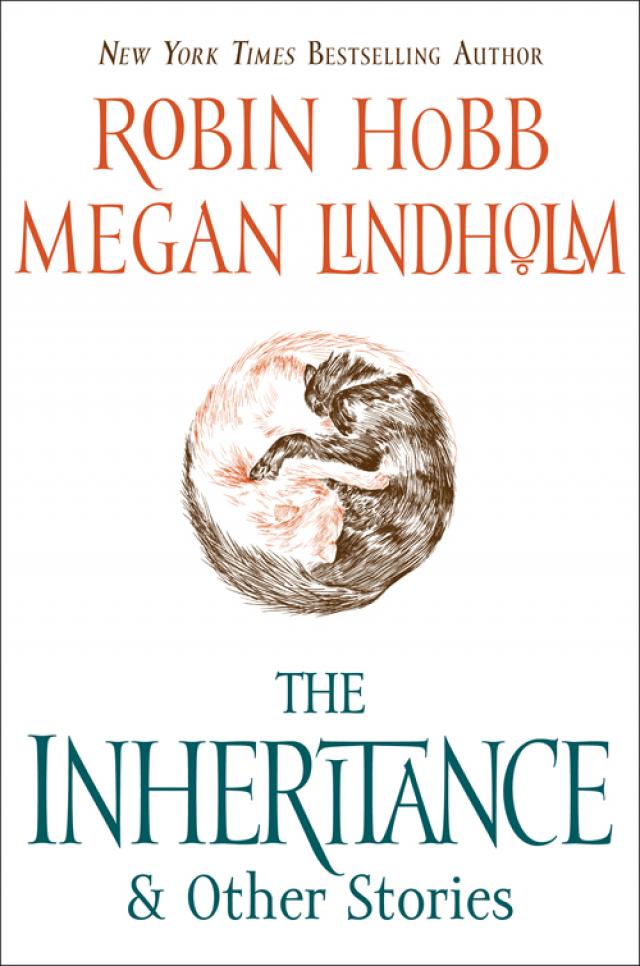


He stopped his crunching and looked up at her, his eyes boring into hers. I live here, his gaze seemed to say.
“So did I,” she said, and sudden tears choked her. “But I can’t stay here any longer. He’s going to change too many things. He’s going to kill my chickens. And make Gillam into someone named Will, someone like him. And make me into . . . something.” She didn’t have a word for what she would become. Something he ordered about, something that cleaned up after him and gave her body over for his use, and never spoke about the things that had used to belong to her, never spoke of the ways he had hurt her and wronged her. “I can’t become that. So I can’t stay here.”
Marmalade rumbled a growl.
“I can’t defend my territory like you do. Not without risking that he’d hurt me. And if he hurt me badly enough, or killed me, then who would protect Gillam from him? Even if I stay here and battle him every day, he will change Gillam in ways I don’t want him to change. I have no choice, cat. I have to run.”
“Rosie! Rosie, where are you?” Pell sounded more annoyed than concerned at her absence. She hissed at the cat, startling him so that he dashed off into the darkness. She wiped her face on her apron and walked around the end of the byre.
“I was checking the cow,” she lied. “Truly, I’d best take her to Ben’s tomorrow.”
“Yes, I know, you told me.” He was impatient. “Come back to the house. I can’t find the money.”
Her heart lurched. The money? What did he mean by that? Then she knew. Her money. When he’d left, they’d already spent the last of his on the fish and potatoes. Every copper pence in the small cloth bag behind the kindling box was hers, earned by hard work, a shard at a time. Not that there was much. But he’d take it all. She knew it. She thought of the silver bit she’d earned today. That at least was still tied in her apron pocket. He had no way to know about it. She walked slowly back to the cottage, debating with herself. He would know she had at least some money. And once she’d shown him any of it, he’d take it all. Which was worth more, the silver in her pocket or the coppers in the pot?
“Rosemary!” His shout was angry, and she suddenly heard Gillam wail.
“No, no, no! You bweak it!” She broke into a run and burst through the door.
“What? What is it?”
Gillam sprawled in the corner, sobbing. He clutched the broken pieces of his three-legged stool to his chest. The bedding was in a heap on the floor. An angry Pell spun to face her. “Where have you hidden the money? It’s not in the pot on the rafter.”
“What did you do to him?” she demanded. Gillam was gasping as if he could not get his breath.
He gave his son a disdainful glance. “Nothing. I tried to use the stool to look for the money and it collapsed under me. Then he burst into tears about it.” He shook his head. “The boy wants toughening.”
“No.” Gillam wailed indignantly. “No, you bweak it and you push me down! You pushed me down! Pushing is wude! You bweak my stool.”
“It was badly built. It’s not my fault. And you are too big to cry about every little thing. None of this would have happened if the money pot were where it is supposed to be. Rosemary, what did you do with the money?”
She was shocked at how swiftly he descended to the level of a two-year-old, trying to shift blame for his idiocy onto someone else. A cold deadly calm suddenly flowed through her, as chilling as if her blood had turned to seawater as she realized what he had been about. The pot on the rafter. He’d stood on Gillam’s little stool to reach for the rafter.
“That’s where you used to keep the money. Out of my reach. Remember? So I couldn’t be ‘foolish’ with it.” She crossed the room and picked up Gillam. He clung to her tightly, bundling the pieces of his beloved stool between them, and she found herself returning that grip. “Don’t you cry, son. We’ll build another stool.”
Gillam took a shuddering breath and emboldened by his mother’s embrace, he peered around her neck and cried out, “I don’t wike you! You bweak my stool!”
“Oh, shut up. Rosie. I’m asking you something important. Ignore that brat for a moment. Where did you move the money? I need to go to town, and I can’t go without a penny to my name.”
A sudden vivid memory flooded her. She’d stood here and with a long stick had poked the money pot out of the rafters. Heavy with pregnancy, she’d not trusted the chair she’d stacked on the table to take her weight. And when the small pot fell and shattered, it had confirmed what she’d already known. Not even a copper shard was left in it. He’d left her penniless. She’d been hungry that night.
Gillam still in her arms, she strode across the room and snatched up the small bag from behind the kindling box. She opened the neck of it and dashed the contents to the floor. The scatter of small coins rang and rolled against the stones. She tossed the emptied bag onto the bedding. “Take it,” she said. “Take every penny that you never earned. Take every bit of it. And go away and never come back.”
“Stupid bitch,” he said with great feeling. “I am taking it.” Without shame, he dropped to his knees and went grubbing after the coins. He grunted as he crawled under the table and spoke as if short of breath. “I’m going to town. I have to meet someone there, to talk business. And I may have a beer or two with old friends. But I will be back. Because this is my house. My grandfather may have willed it to the boy, but everyone in town knows it should have come to me. That’s how it should be. And that’s how it’s going to be. Accept that, and things might be easier for you. Or get out. I don’t care which.”
With a louder grunt, he heaved himself to his feet. His face was red, and his fine shirt was so wrinkled it looked crumpled. He pulled his own empty purse from his belt and funneled her small collection of coins into it. His telling her to get out suddenly changed everything. “This is Gillam’s house and land, given him by his grandfather when you would do nothing for your son. I won’t let you take them from him.”
“Don’t talk to me like that!” he warned her. He tied the purse at his belt and glared at her. She stood where she was, her foot firmly planted to cover two of the errant coins that had rolled toward her. She needed them, and so she stood her ground as he advanced on her. She met his gaze. She wasn’t quite brave enough to say anything more to the angry man, but her need to keep the money made her stand defiantly before his sudden charge.
As he lifted his hand, disbelief froze her. She turned her body, shifting Gillam away from the blow. He wouldn’t! her mind shrieked.
He will. He’ll kill you if he dares. It’s in his mind right now.
He can’t! Her argument with herself took less than a second. His hand was in motion and she still hadn’t moved, still covered the bits of money she hoped to keep for herself. Faster than his falling hand, the cat leaped down from the rafters. Claws out, he lit on Pell’s head and shoulder, raking his face and yowling. The blow Pell dealt Rosemary was a glancing one as he spun to confront the snarling, spitting cat. It still sent her to one knee as she sought to keep Gillam from hitting the floor. Pain shot through her leg, but she didn’t drop her child.
Pell seized Marmalade in both hands, and the cat sank his fangs into the soft meat between Pell’s thumb and fingers. Pell shouted wordlessly and flung the hapless cat. He struck the wall, fell to the floor, and then impossibly swift, shot out of the open door.
“MARMY!” Gillam shrieked.
Pell clutched his scored face with his bleeding hands and glared at them. “No howling,” he warned the boy. He pointed a shaking finger at Rosemary. “You clean this mess up before I get back.” A nasty smile showed his teeth as he glared at the white-faced child. “Kitty likes to fly,” he said and laughed.
Rosemary struggled to her feet, her child still in her arms. “No. My cat, my Marmy!” Gillam’s little body, she realized, was tight with anger, not fear. “You bad! Bad, bad, bad!”
“Mind your mouth, boy!” Anger flushed Pell’s face, and the cords on either side of his neck stood out. He advanced toward them, blood streaming down his clawed cheeks and fury in his eyes. “Mind your mouth or I’ll shut it for you, you little bastard!”
She stumbled back from him, and then turned and dashed out into the night, carrying Gillam with her. “Bad, bad!” the child shouted defiantly over her shoulder as she fled.
“Shush!” she warned him and covered the child’s roar with her hand. A panicky Gillam clutched and clawed at her stifling hand, but she ignored that as she ran and stumbled and ran again. Her knee wanted to fold under her. She couldn’t let it. She fled to the deep meadow grasses beyond the chicken yard and then dove to the earth and lay still. “Be quiet!” she hissed in the boy’s ear. “Be quiet. We’re hiding. We don’t want him to find us.”
She lifted her hand and a terrified Gillam hiccuped once and then clung to her silently. His breathing was harsh and loud; she feared Pell would find them. Her knee throbbed so badly that she thought she would not be able to stand again, let alone run. Pell appeared in the lamplit doorway, looking all around. He couldn’t see them.
“Rosemary!” he shouted.
She held her breath and Gillam huddled tight against her.
“Rosemary! Get in here, you stupid bitch. Clean up this damn mess. I want it all cleaned up before I come back!” He waited. She cowered silently. “Don’t think I’m going to forget this. I won’t. If you don’t come now, it will just be worse for you later!” He waited again. “You can’t stay out there forever.”
She watched him through a screen of grass stalks. He pulled his cloak up tight against the rising wind and threatened rain. He scowled helplessly at the vacant landscape around him. He wanted so badly to win this encounter. She feared he would stand there all night. But suddenly Pell strode away from the cottage, headed for the cliff-side road that went to town. She watched him as a darker figure against the evening twilight as he marched up the pathway. She suddenly felt another small warm body pressed against hers. She put her hand down and found Marmalade crouched in the grass beside her. She flinched with him when she set a hand on his ribs, and he cowered away from her touch with a rebuking growl.
“He nearly killed you, cat. I’m so sorry.” She barely breathed the words as she watched Pell hiking up the hill. She touched the cat and he rumbled again.
A thought slowly dawned on her. The cat had taken the blow to save her. “He was trying to hit me. He could have thrown me against the wall. Or Gillam.” She shook her head, trying to deny the thought. How had Gillam got into that sprawl in the corner? Had he already struck his own son? She heard again the word he’d flung, the one she sheltered Gillam from every day. Bastard. From his own father’s mouth. Their cottage was no longer a refuge, but a prison. Her defiance blew away with the wind.
“I have to run.” Rainy roads and no shelter. Unknown dangers for her and her boy. Hunger. What future could she possibly find? What would she have to do to feed them?
Marmalade stood and butted his head against her. Pell was nearly out of sight. She spoke slowly, scarcely daring to utter the thought aloud. “If I don’t run, I have to fight for my territory. Maybe to the death.” She shook her head at herself. Where had such an idea come from. “What am I thinking? I don’t know how to fight. He’s too big for me. I can’t win against him.”
The cat bumped his head against her hand and then slipped away. The grasses parted and swayed in his wake. He was headed up the hill, off on his night hunting. Pell had vanished.
She spoke aloud the thought that hung in the air. “Everything knows how to fight. Anyone with young knows how to protect them.”
Slowly she got to her feet. She reached down to touch her knee and felt the warmth. It was swelling. She picked up Gillam. He was still shaking and uncharacteristically silent. “Don’t worry. He’s gone. Let’s go back to our house.”
She tried to set him down to walk with her, but he just let his legs fold under him. He lay on his side, just as Marmalade had sprawled for that instant at the bottom of the wall. Her mind suddenly showed her a vision of her boy, flung against the wall and broken at the bottom of it. “No,” she said in a low voice. She wouldn’t wait for that to happen. She gathered him up, thinking how heavy he had grown, and tried not to think of taking him to the roads and how far she would have to carry him each day after he wearied. She didn’t try to bend her knee as she lurched along.
The cottage was a mess. Furniture and stores were the victims of Pell’s hasty search. She set Gillam down in a heap on the unswept hearth. He immediately began to wail. “Just a minute, son,” she told him as she put the bedding back on the roped bed frame. Already it stank of Pell. The whole house smelled of him, she thought to herself. She picked up her small money poke. She’d gripped the bottom of it when she shaken money out on the floor, and then tossed it onto the bed where the chink of the concealed coins would not be heard. She glanced inside. Five coppers. Not much but better than nothing.
Once the bed was back together and the blankets smooth on it, she scooped up Gillam and set him on it. He hadn’t stopped wailing, but his cries were becoming feebler. Terror and fury had exhausted him.
“I can’t tend you right now, son. Mama has to put some things together for us.”
She had the smoked fish she’d hidden from Pell, and the silver coin. She built up the fire and searched the floor with the lamp, righting the chairs and putting the cloth back on the table as she did so. Pell had missed the two coins that she’d had her foot on, and she found another copper stuck in a crack. Scarcely a fortune, but she slid it back into the poke. She put the poke in the bottom of a canvas sack, save for two coppers that she slid into her pocket. Never show all your money when you travel.
She looked into her cupboards, but Pell had eaten whatever could be immediately eaten. Habit made her tidy as she went, putting the house back in order even though she intended to leave it forever tomorrow. When she thought of that, she was tempted to wreck the place, but only for an instant. No. She had come to love the little cottage. Putting it to rights now was her apology to it for what Pell would make it: a dingy, run-down hovel with garbage strewn around it.
Gillam had stopped wailing. He was sound asleep. She left him in his clothes. She packed all their extra clothing into the bag. It didn’t even fill it. She used her quilting rags to create two straps on the canvas bag, and then packed her needles, threads, and scraps. One pan for cooking. Flint and steel. A few other odds and ends. There would just be room for the blanket from the bed. She slipped quietly from the house lest she wake Gillam and went out to the cow’s byre. She hid the bag there; if Pell came back early, she didn’t want him catching a glimpse of it and asking any questions. She patted the wakeful cow and went back to the cottage.
Her decision to run made, she could find no peace. She longed to leave immediately and knew that would be stupid. In the dark, carrying Gillam and leading the gravid cow? No. She would go at dawn. Pell would come in drunk if he came in at all, and he’d sleep late. She’d be up by dawn and gone, with her boy rested and light to see by. It was the sensible thing to do, and she was a sensible woman. If he came back tonight, she’d pretend deference to him, no matter what he demanded of her. She was strong. She’d make her preparations.
That, she told herself, was why she sat down in her battered old chair, the one that was even more battered now that Pell had tossed it aside in his search for her money, and did her crying then. She wept for how stupid she had been, and then for how much work and love she had put into the ugly little hovel between the fens and the cliffs to make it her own little cottage. And when she was finished, she found she was done with tears. The foolish connection she had felt to a place that had never truly belonged to her was gone. It would be Pell’s. Let him have it. He could have the cabin; she’d never let him have the boy.
Marmalade trotted earnestly through the dark. His ribs ached, and his ears still rang from hitting the wall. He let a small rumble of anger emerge from his throat, then silenced himself sternly. Was he a kitten to betray himself to his prey with a yowl or a lashing tail? Of course not.
The female had a point. The man was large and very strong. And quicker than the cat had allowed for. He’d thought he could slip right though his hands, but he’d gotten a good grip on him. If he’d had the sense to break the cat in his hands instead of throwing him, he’d be dead now.
Which meant that if he didn’t get rid of the man, he’d be dead very soon. Marmalade understood territory. It could not be surrendered. His fight with the man was to the death.
But how did one kill so large a beast?
The man did not know the cliff-side path. Perhaps, once, it had been familiar territory for him, but no longer. The night was dark, with clouds taunting the moon. The man stumbled more than once, swore loudly, and went on. The cliffs were bare of trees; only brush and tall grasses carpeted them. There was no shelter from the wind. And little, the cat thought to himself, between the man and the land’s end. The shore below the cliffs was broken shale. When the tide came in, it came right to the cliff’s edge.
But the man stayed to the path, hurrying and sometimes tripping in his haste to reach town. Marmalade matched his pace but stayed well back. The man bumbled along in the near dark, keeping to the path along the winding cliff tops. The spring wind blew, warm and full of rain to come. The night was alive and it would have been good hunting for the cat, if only he hadn’t needed to kill this big fool first. He was invisible in the grasses as he slunk after the man. The wind on the tall dry stalks of last year’s grass and the whisper and hush of the waves against the rocky beach below covered the slight sounds the cat made as he stalked after him. It wasn’t hard to keep up. Light that was plenty for a cat was black night for the man. He was not walking fast. He muttered and cursed as he trudged along. He halted a moment to look back and down into the dell; in the distance, light shone still from the cottage window and through the battered thatch of the roof. The man spat out a vicious word and lurched on.