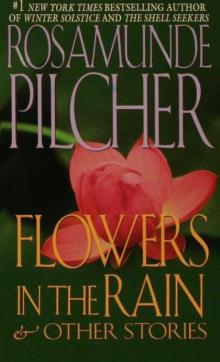
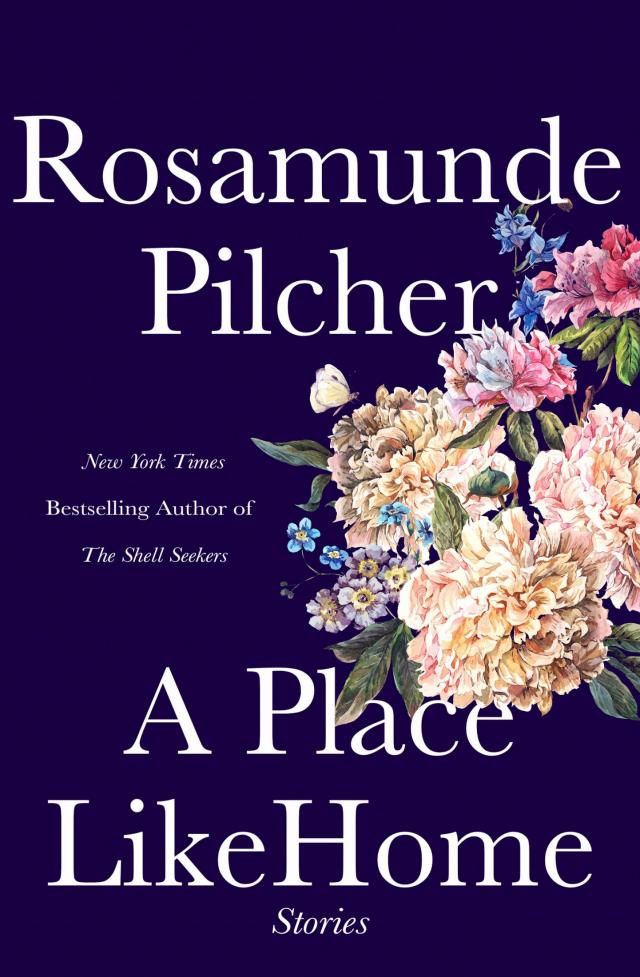
A place like home, p.2
A Place Like Home,
p.2


‘Thank heavens for that,’ said Sally.
‘Anyway, about a month ago, I began to realise that there wasn’t any future in it. Not for Randall and not for me. And I decided that if it had to finish, then it had to be me who did the finishing because he never would. So, that day I rang you, we went out for lunch. And I spent the whole of that lunchtime trying to make him understand that I’d come to the end of the road. And he didn’t understand and he still didn’t believe me. We came out of the restaurant, and he started to tell me he was flying to Copenhagen, but he’d be back next week, and he’d ring me, and I said, “Goodbye, Randall.” And he just stopped talking and stared at me as though I’d gone mad. And I said it again. And that time he didn’t say anything. And I turned round and walked away from him. And I haven’t seen him since.’
Sally said gently, ‘It’s like pulling up roots, isn’t it? You feel as if you’re going to wither up and die.’
‘Yes. Half alive. Incoherent, incapable. Waiting for a telephone call which you pray will never come. Irrational.’
* * *
A log crumbled and broke in the fireplace. Sally got up and fetched another and threw it on to the bed of glowing ashes. She said, ‘It does pass, you know. Horrible old cliché about time healing.’
‘I know. I keep telling myself.’
Sally perched once more on the edge of her chair, leaning forward, her expression eager. She said, ‘You mustn’t go back to London till you’ve got over this. You must stay here, for as long as you like. Andrew won’t be back for at least a month, and even when he is back, he’ll love having you here.’
‘But …’
‘If you don’t mind being alone, because I have to be at the shop all day. But there’s heaps you can do to help me or you can go for long restoring walks, or weed the garden. And it will soon be spring, and you’ll feel different. Everything will be quite different when the spring comes. What do you think about it? What do you think about staying?’
The relief of not having to return to London was so great that Rachael felt her eyes fill with tears. She tried to laugh in order not to cry. To say, oh, I’d love it, but the words wouldn’t come out and she cried anyway. It was the first time she had cried since the gruesome day she had left Randall forever, and once she started she couldn’t stop. But there was only Sally to see, so it didn’t matter.
* * *
It was lovely being alone. The weather was damp and calm, mild quiet days when sometimes a gleam of sunshine showed through the clouds; sometimes showers were blown in off the sea, leaving the winter earth dark and sweet-smelling. Rachael went for walks around the baffling Devonshire lanes. One day, she climbed up on to the moor and met a herd of wild ponies. She walked down to Tudleigh and did Sally’s shopping in the little village store, and the local people said ‘Good morning’ and stopped to discuss the weather.
One morning she went with Sally to Duncoombe and had her hair done in the local beauty parlour. Afterwards, she walked down the high street to Sally’s shop, in order to pick her cousin up and take her out for lunch. Sally was at her desk, doing sums, so Rachael wandered around the shop, inspecting the pottery, the pictures, the mohair shawls, the charming little accessories in gingham and print. ‘What sort of a morning have you had?’ she asked.
‘A good one,’ Sally told her. ‘Business is picking up. By Easter we’ll be going flat out. I think I should stand you lunch today.’
‘That wasn’t the arrangement.’
‘We’ll toss for it.’
But they never got around to tossing for it, because at that moment the door opened with a tinkle of the bell, and a man came into the shop. Rachael turned her back, pretending to be a browsing customer, and she heard Sally say, ‘Good morning,’ and then go on in a changed voice. ‘William! What are you doing here?’
‘Hello, Sally. I’ve come to do some shopping.’
A deep voice. A very attractive voice. Rachael picked up a rag doll in a mob cap, with an embroidered face and bright blue eyes.
‘What for?’
‘A wedding present. One of the young assistants in the office is getting married, and I thought you might have something suitable. A casserole, perhaps, or a picture.’
‘Yes, of course.’ Sally stopped. ‘You haven’t met Rachael, have you?’
‘No.’
Rachael turned to face them, still holding the doll.
‘She’s my cousin, she’s staying with me. Rachael, this is William Clifford, an old friend of Andrew’s.’
‘Hello, Rachael,’ said William Clifford. He was tanned, his thick hair silvered with early grey, his face was bony, his shadowed eyes grey. He wore a comfortable-looking tweed suit and a checked shirt. Perhaps a farmer, dressed for market day, or a country lawyer.
‘Hello,’ said Rachael.
‘Are you helping in the shop?’
‘No. Just waiting for Sally to come out to lunch with me.’
‘Then I mustn’t hold you back.’
‘We’re in no hurry.’
In the end they were all involved in his purchase and it was Rachael who found the pair of sporting prints.
‘Those would make a really good present,’ she told him.
Sally laughed. ‘You’re a real friend, Rachael, those are just about the most expensive things he could buy.’
But William Clifford agreed with Rachael, and said he didn’t mind about their being expensive, so Sally wrapped them for him while he wrote the cheque.
As he signed his name, he said, ‘How long are you staying for?’ He looked up at Rachael, and she realised he had been addressing her.
‘For a little.’
‘That’s good.’ He smiled towards her, handed over the cheque and picked up his parcel. ‘I hope you enjoy your holiday.’
When he had gone, ‘Who’s that?’ asked Rachael.
‘Oh, he’s a sweet man. We’ve known him for years. He’s an architect in Plymouth.’
‘Does he live in Plymouth?’
‘He used to, but he’s bought himself an old barn up at Farhampton on the edge of the moor, and he’s converting it into a house.’ She slammed the till shut and looked at her watch. ‘Come on,’ and she reached for her coat. ‘I’m hungry. Let’s go and buy ourselves a ploughman’s at the Dog and Duck.
* * *
Three evenings later, as Rachael climbed out of her bath, the telephone rang downstairs. She heard Sally go to answer it, and Sally’s voice. And then Sally coming upstairs.
‘Rachael.’ She opened the bathroom door. ‘That’s William Clifford on the telephone. He wants to talk to you.’
Rachael, wrapped in a towel, sat on the edge of the bath and looked dubiously at Sally.
‘What does he want?’
‘He said something about going up to Farhampton with the contractor. He wondered if you’d like to go, for the drive.’
‘When?’
‘Tomorrow morning.’
Rachael pulled the towel more closely about her. ‘I don’t want to go.’
Sally frowned. ‘Oh, Rachael. Why not?’
‘I just don’t want to.’
‘Look, you can’t sit around moping forever. It’s just a drive in the country.’
‘I don’t want to.’
‘Well he’s waiting on the end of the line. Go on.’
There was nothing for it but to go, as Sally was obviously not going to act as messenger. With her wet feet making marks on the floor, Rachael went downstairs to pick up the receiver.
‘Hello.’ I can’t come, I’m so sorry, I know you’ll understand.
‘Rachael.’ She had forgotten the warm depth of his voice. Suddenly, she saw him again. His bulk and size, the comfortable ambience of his presence. ‘I don’t know if Sally told you, but I’m going out to Farhampton tomorrow morning, and I thought if you weren’t doing anything else you might enjoy seeing a bit of the country.’
‘Well, I …’
‘If I picked you up about half past ten, would that be all right?’
The excuses melted away. She had no excuse, anyway, no good one. ‘Yes, I …’
‘Great. Wear warm clothes. It’s cold up on the moor.’
‘All right.’
‘I’ll see you then.’
He rang off, obviously not a man for small talk. Slowly Rachael replaced the receiver. Sally watched her from the open door. She was smiling. Rachael said, ‘Is he married?’
‘Of course he’s not married. He’s our local eligible bachelor.’
‘I said I’d go.’
‘I heard.’
‘I couldn’t think of a single excuse not to go.’
‘It was such a harmless suggestion that it was hardly worth bothering,’ Sally said drily. She grinned again. ‘Now you’re back in circulation.’ And with that, she went off, whistling, to the kitchen, to see about their supper.
* * *
That night a wind blew up and the next morning dawned bright and bitterly cold. There was frost on the land, and seagulls, blown inland by the storm, glided screaming over the ice-hard fields. Rachael put on corduroy trousers and an ancient sheepskin coat of Andrew’s which she found in a cupboard, and a few minutes before half past ten the big car came bumping up the lane, stopped in front of the cottage, and William got out.
She went to meet him, locking the front door behind her. He said, ‘I’m a little early.’
‘It doesn’t matter.’
He was bundled into a high-necked white pullover under a heavy coat with a wool collar, and he grinned cheerfully as he opened the door of the car for Rachael. ‘There’s a change in the weather.’
‘I didn’t think it could be so cold in Devon.’
‘Now you know why the primroses haven’t come out.’
The car was warm. They drove back down the lane, and through Tudleigh, and turned up on to the road which led to the moor. The land dropped beneath them, sparkling beneath the bright wintry sky. Soon, in the far distance, could be seen the straight, silvery line of the sea. They came through moorland, bracken-brown and dark with peat, and there were high tors of granite on the summits of the shallow hills, and sheep, and herds of wild ponies.
He talked, easily and naturally, telling her about the old barn at Farhampton, which he had found by chance, on his way back from a job north of Exeter. He said, ‘I always wanted to live in the country, but it’s hard to find a property that doesn’t have acres of farmland, and I’m too busy a man to cope with that.’
They came up a hill and crested a rise and the moor lay ahead, like a sea, undulating to the horizon. Rachael said, ‘It’s so beautiful.’
‘Where do you live?’
‘In London, mostly.’
‘I like London too.’ She thought of all the things she loved about London. The sky at night, and the river, and coming out of a restaurant into the cold; taxis and the smell of flowers on barrows when you least expected it. And, inevitably, Randall. But this was no time to think of Randall. Rachael pushed his memory out of the way, out of sight, as though she were shutting him into a box, sitting on the lid. ‘I like London a lot.’
They came at last to his property. It lay just beyond a small moor village, down a deep lane. Everything seemed to be muddy. She saw the bleak, roofless shape of the old barn. Stones and piles of brick lay around; planks of wood and concrete mixers, a battered iron wheelbarrow. A car was already parked in the midst of all this, and as they approached, the door opened and a man in a duffel coat emerged. ‘The contractor,’ said William.
They stopped beside him and got out of the car. William introduced Rachael, and then he and the contractor went off together, with plans and foot-rules, and Rachael was left to nose around by herself. She saw the view, and smelled the bitter cold of this high, upland air. She walked a little way, but the wind was icy, cutting through all her warm clothes and making her ears ache, so she went back to the gutted barn and found William saying goodbye to the contractor. Later, when he had gone, they returned to the empty shell of the building, the walls open to the sky, the floor beneath them a hopeless mess of rubble and mud.
‘If it were me,’ said Rachael, ‘this is where I would throw in the sponge and go home. It all looks so desolate.’
He smiled, understanding. ‘I’ve got over that stage. This is the worst. After this, it can only get better.’
‘You’re rebuilding.’
‘That’s right. Virtually rebuilding. You see, this will be the sitting-room. And there, the fireplace. And then a kitchen here. No upstairs, but a deep gallery, with two bedrooms and a bathroom. And then here …’
But she had stopped listening to his words, heard only his voice. She thought, there is something warm about him. He’s not all that attractive. He’s not even very young. But you know that if he said he’d do something, then he’d do it. He wouldn’t ever let a person down.
* * *
‘How did it go?’ asked Sally.
‘All right.’
‘Did you see the house?’
‘Yes.’
‘Is it pretty?’
‘It will be one day.’
‘Did William give you lunch?’
‘You’re being cagey, aren’t you?’
‘There’s nothing to be cagey about.’
‘But do you like him?’
‘Yes, I like him. That’s all. Just like him.’
‘Is he going to take you out again?’
‘I shouldn’t think so.’
She told herself, convinced herself, that the drive to Farhampton had been a one-off thing. That was the end of it. But two evenings later William, in passing, called in at the cottage for a drink, and to ask Sally and Rachael to a visiting ballet which was performing in Exeter.
It was Coppélia, and afterwards he took them out for a festive dinner. It transpired that he was a charming and easy host. As he talked to Sally, Rachael watched him covertly and wondered how he had looked as a very young man, if he had always possessed this tranquil and calm disposition. She found herself wondering why he had never married. Later, when they were home again, she asked Sally.
‘Why has William never married?’
But Sally was vague. ‘I don’t know. I suppose he never met anybody he wanted to marry. Anyway, he’s still quite young. Those grey hairs are misleading, I know, but he hasn’t got one foot in the grave yet.’
Two mornings later, when Rachael was alone in the cottage, he telephoned again. The call came when she was in the throes of cleaning Sally’s oven, and she had to go to pick up the receiver with an old towel wrapped around her dirty hand.
‘Hello.’
‘Rachael, it’s William.’
‘Good morning.’
‘What are you doing with yourself?’
‘Cleaning Sally’s oven.’
‘Would you come out for dinner tonight?’
She had been half-expecting this, and yet, now that the moment was upon her, panicked. She shied instinctively from the thought of some expensive restaurant, candlelight, and wine. She knew that she wasn’t yet ready for such intimacy. It wasn’t that she didn’t like William. He was a disarmingly easy person to like, but she was frightened of their relationship moving further. Pleasant threesome evenings with Sally were well within her depth, but beyond that …
‘I … don’t think …’ she began to say, but he interrupted her.
‘It’s some old friends of my parents. They’ve got people down from London for a race meeting at Taunton, and I’ve been invited for dinner. I said I could bring you, and was told “of course”. I thought you might like to meet the Kinnertons and see their house. It’s worth seeing.’
‘Well …’ A dinner party in another person’s house could scarcely be counted as dangerously intimate.
‘Sally wouldn’t mind, would she?’
‘No, of course not.’
‘Then you’ll come?’
‘I’d like to.’
‘Great. I’ll pick you up about seven fifteen. Till then.’
* * *
Characteristically, he rang off before she could think of any more objections to his plan. Rachael was left standing, with the buzzing receiver in her hand. She replaced it, but did not go straight back to the kitchen. Standing by the empty fireplace, she looked up and met her own eyes in the mirror over the mantelpiece. It’s all right, she told herself. He’s not like Randall. He won’t hurt you, and if you have any sense you won’t let yourself be boxed into a situation where you find yourself hurting him.
‘Would you come out for dinner tonight?’ Forthright and uncomplicated. He wouldn’t turn up, unannounced, out of the blue, only to leave her again, with no warning and no farewells. She thought of Randall, saying he would call, forgetting to call, and then sending flowers to fill the flat. She felt the pain again, the ache of longing, the trembling that was wanting him. She thought, It isn’t any better. It will never be better. But standing looking at herself could do no good, so she went back to the oven and continued, doggedly, with her mindless task.
Sally said, ‘The Kinnertons. Oh, you lucky girl. You’ll have a wonderful time. They’re aged and rather grand, and their house is filled with beautiful things.’
‘You’re giving me cold feet.’
‘What are you going to wear?’
They went upstairs to find something. Sally produced her best evening skirt, Rachael a silk shirt, very simple, which seemed suitable for the occasion. A wide gold belt would cinch the two together. She washed her hair and was doing complicated things to her eyelashes when she heard his car come up the lane, the opening and shutting of doors, and Sally’s voice as she let him in. When Rachael went downstairs, Sally was sitting by the fire, and William standing with a shoulder against the mantelpiece, his hands in his pockets, talking to her. He wore a dark velvet jacket and a bow tie and looked immensely distinguished, and as Rachael came through the door, he turned to smile at her.
‘Don’t you look good.’