Non combatants and other.., p.1
Non-Combatants and Others,
p.1
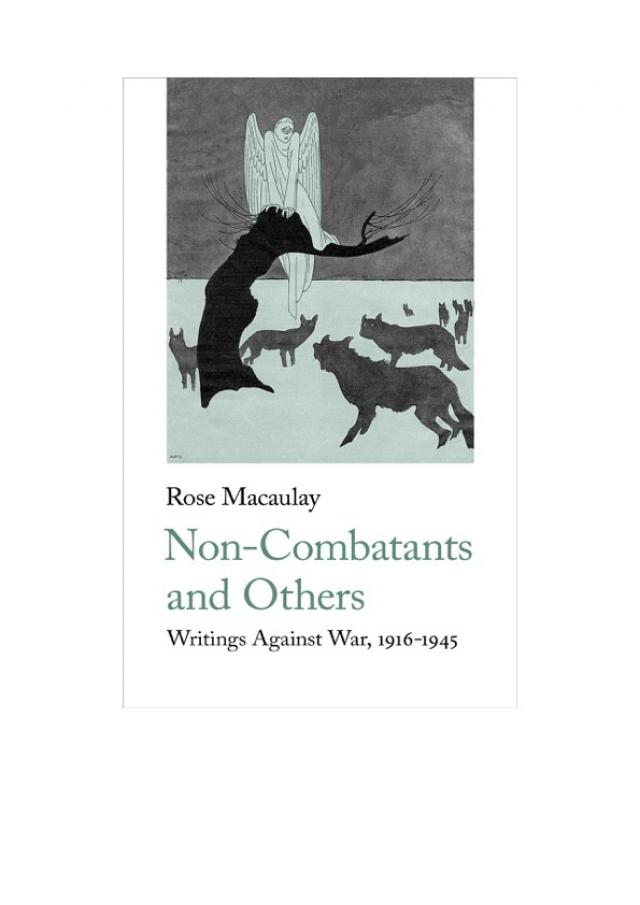


Non-Combatants and Others
Also published by Handheld Press
Handheld Classics
1 What Might Have Been. The Story of a Social War, by Ernest Bramah
2 The Runagates Club, by John Buchan
3 Desire, by Una L Silberrad
4 Vocations, by Gerald O’Donovan
5 Kingdoms of Elfin, by Sylvia Townsend Warner
6 Save Me The Waltz, by Zelda Fitzgerald
7 What Not. A Prophetic Comedy, by Rose Macaulay
8 Blitz Writing. Night Shift & It Was Different At The Time, by Inez Holden
9 Adrift in the Middle Kingdom, by J Slauerhoff, translated by David McKay
10 The Caravaners, by Elizabeth von Arnim
11 The Exile Waiting, by Vonda N McIntyre
12 Women’s Weird. Strange Stories by Women, 1890–1940, edited by Melissa Edmundson
13 Of Cats and Elfins. Short Tales and Fantasies, by Sylvia Townsend Warner
14 Business as Usual, by Jane Oliver and Ann Stafford
Handheld Research
1 The Akeing Heart: Letters between Sylvia Townsend Warner, Valentine Ackland and Elizabeth Wade White, by Peter Haring Judd
2 The Conscientious Objector’s Wife: Letters between Frank and Lucy Sunderland, 1916–1919, edited by Kate Macdonald
3 A Quaker Conscientious Objector. Wilfrid Littleboy’s Prison Letters, 1917–1919, edited by Rebecca Wynter and Pink Dandelion
Non-Combatants
and Others
Writings Against War, 1916–1945
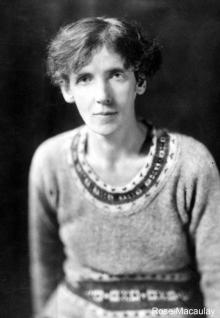
by Rose Macaulay
with an Introduction by Jessica Gildersleeve

This edition published in 2020 by Handheld Press
72 Warminster Road, Bath BA2 6RU, United Kingdom.
www.handheldpress.co.uk
Copyright of ‘The Marionettes’ © Walter de la Mare 1916
Copyright of Non-Combatants and Others © The Estate of Rose Macaulay 1916.
Copyright of the essays © The Estate of Rose Macaulay 1936–1945
Copyright of ‘Miss Anstruther’s Letters’ © The Estate of Rose Macaulay 1942
Copyright of the Introduction © Jessica Gildersleeve 2020
Copyright of the Notes © Kate Macdonald 2020
All rights reserved. No part of this publication may be reproduced, stored in or introduced into a retrieval system, or transmitted, in any form, or by any means (electronic, mechanical, photocopying, recording or otherwise) without the prior written permission of the publisher.
The moral rights of the authors have been asserted.
ISBN 978-1-912766-30-7 book
ISBN 978-1-912766-31-4 ePub
Series design by Nadja Guggi.
Contents
Introduction by Jessica Gildersleeve
Works cited
Non-Combatants and Others
Part I Wood End
Chapter 1 John comes home
Chapter 2 John talks
Chapter 3 Alix goes
Part II Violette
Chapter 4 Saturday morning at Violette
Chapter 5 Afternoon out
Chapter 6 Evening at Violette
Chapter 7 Hospital
Chapter 8 Basil at Violette
Chapter 9 Sunday in the Country
Chapter 10 Evening in Church
Chapter 11 Alix and Evie
Chapter 12 Alix and Basil
Chapter 13 Alix, Nicholas, and West
Part III Daphne
Chapter 14 Daphne at Violette
Chapter 15 Alix at a meeting
Chapter 16 On peace
Chapter 17 New Year’s Eve
Essays and journalism, 1936-1945
1 Marginal Comments The Spectator, 3 January 1936
2 Marginal Comments The Spectator, 24 January 1936
3 Marginal Comments The Spectator, 6 March 1936
4 Marginal Comments The Spectator, 27 March 1936
5 Marginal Comments The Spectator, 1 May 1936
6 Marginal Comments The Spectator, 14 May 1936
7 Marginal Comments The Spectator, 16 October 1936
8 Marginal Comments The Spectator, 30 October 1936
9 Marginal Comments The Spectator, 29 July 1937
10 Apeing the Barbarians First published in Let us Honour Peace (London: Cobden-Sanderson, 1937), 9-18.
11 Notes on the way Time and Tide, 5 October 1940
12 Consolations of the War The Listener, 16 January 1941
13 Looking in on Lisbon The Spectator, 1 July 1943
14 A Happy Neutral The Spectator, 9 July 1943
15 The BBC and War Moods: I and II The Spectator, 20 January 1944 and 27 January 1944
16 Notes on the Way Time and Tide, 8 December 1945
Miss Anstruther’s Letters
Notes on the text by Kate Macdonald
Jessica Gildersleeve is Associate Professor of English Literature at the University of Southern Queensland. Her research concerns the relationships between narrative, culture and affect, and has addressed a range of women writers of the twentieth and twenty-first centuries, including Elizabeth Bowen, Rosamond Lehmann, Katherine Mansfield, Sarah Waters, and Pat Barker. Her most recent books include Elizabeth Bowen: Theory, Thought and Things (ed., with Patricia Juliana Smith, 2019) and Don’t Look Now (2017), a study of the cinematic adaptation of Daphne du Maurier’s story.
Introduction
by Jessica Gildersleeve
‘Leave it at that’
Rose Macaulay’s short story, ‘Miss Anstruther’s Letters’ (1942), published in the middle of the Second World War, describes the aftermath of the bombing of the eponymous character’s home in London during the Blitz. The entire block of flats, and almost all contained within them, are destroyed. Miss Anstruther has only moments to save what she can: a pile of books, ‘a china cow, a tiny walnut shell with tiny Mexicans behind glass, a box with a mechanical bird that jumped out and sang, and a fountain pen’ (277). In her panic she forgets her most treasured possession: a bundle of letters written by her lover over the course of two decades. Miss Anstruther herself is safe, but without these letters she is bereft. The sheaf of notes constituted her memories of the life they – for unexplained reasons – secretly and illegitimately shared. With the letters destroyed, her private relationship and private identity are similarly consigned to the flames. She is now only the anonymous, unloved, forgotten Miss Anstruther.
‘Miss Anstruther’s Letters’ is frequently cited for its apparently autobiographical representation of Macaulay’s sense of loss following the death of her married lover, Gerald O’Donovan, in that same year, and the destruction of her home in the bombing shortly after. Her cousin and biographer Constance Babington Smith, for example, includes this story in full in her 1972 biography of Macaulay, because, she says, it is ‘a testimony of her love for Gerald … which she wrote under the conventional veil of fiction’ (Smith 1972, 161). Yet in its depiction of loss and trauma, the story also constitutes one of Macaulay’s most haunting and evocative arguments against war.
At the story’s end, Miss Anstruther stands perpetually accused of failure. In the floating ashes, she finds one remaining fragment of the bundle of letters. The scrap reads: ‘leave it at that. I know now that you don’t care twopence; if you did you would’ (281). It is a devastating final blow: Miss Anstruther had failed to remember, failed to save, failed to care. Too late she ‘remembered the thing she wanted most, the thing she had forgotten while she gathered up things she wanted less’ (278). She had failed to care in the past and failed again to care now, such that the accusation stands; ‘[y]ou don’t care twopence, he seemed to say still … the twenty years between were a drift of grey ashes that once were fire, and she a drifting ghost too. She had to leave it at that’ (282). ‘One must live how one can,’ Elizabeth Bowen wrote in various refrains throughout her writing of the Second World War (Gildersleeve 2014, 9–11). Bowen expressed a determination to repair, to heal, to survive. But Macaulay’s Miss Anstruther is, like her letters, like her home, like her life before the war, damaged beyond saving.
These mounting instances of failure form the core of Macaulay’s writings against war, for they fail to effectively resist war’s instigation and continuation. That is, it is precisely in our failure to remember, save, and care for and about love, community and connection, that we allow or approve of war. Like the useless but beautiful ‘china cow,’ ‘tiny walnut shell,’ and box with its singing bird, these are markers of civilisation which must be preserved. This is why Miss Anstruther is a ghost after the destruction of her home, merely ‘a revenant … [who] still haunted her ruins’ (275) – she is no longer human without the signifiers of civilisation.
By permitting war, by abandoning civilisation, we are savage or inhuman, Macaulay repeatedly asserts in the writings against war collected in this volume. ‘War and more war, stupid and cruel destruction, the savage dancing his tribal dance, whooping in his feathers, tomahawk and war-paint, until the jungle swallows him up and the world as we know it crashes in ruins’ (235). In ‘Apeing the Barbarians’ (1937), which uses now problematic racist and colonial terms, Macaulay compares war to ‘heretic-burning and ordeal by torture, one of the primitive, age-old barbaric pests’, noting that ‘[a]ll civilised people today admit that it is a childish and outmoded barbarity … But the snag is that large numbers of people in all countries are very little civilised’ (229). Those who are civilised and see the arguments against war can
find themselves intimidated by the ‘savages’ who are for it: ‘Faced with savages who declare continually and publicly that they are proud to be militarist and that prolonged peace is an ideal for cowards and decadents, and that there can only be peace after their own domination of the world by conquest, the civilised lose their nerve and follow a bad example, not in words but in deeds’ (231). The comparison continues in ‘Consolations of the War’ (1941): here, war is ‘a grotesquely barbarous, uncivilised, inhumane and crazy way of life to have had forced on us by a set of gangsters who are making us use their own weapons and practise their own horrid incivilities – as if we were jungle savages like themselves instead of twentieth-century men and women who had hoped war to be for ever outlawed’ (243).
In calling up and rejecting this association of civilisation with war, Macaulay is aligned with the attitudes of, for example, the Bloomsbury Group – Clive Bell wrote in 1928 that ‘[c]omplete human equality … is compatible only with complete savagery’ (quoted in Hargreaves 1997, 138). Indeed, in an expression of the popular conviction of war’s necessity, not only were the people of Europe determined to assert the barbarity of enemy nations – ‘the Germans said that we gouged out the eyes of prisoners of war; we said that they made a habit of cutting off the arms of Belgian children and of crucifying Canadians’ (222) – but, too, ‘the 1919 campaign medals bore the inscription “The Great War Fought for Civilisation”’ (Hargreaves 1997, 138). Thus, Macaulay concludes in ‘Apeing the Barbarians’, pacifism is necessary precisely because it represents the behaviour of ‘reasonable beings’. In order to achieve this, ‘all those who feel strongly on the matter should continue to protest against the present intemperate and nerve-ridden unreason which impels civilised and humane persons to ape the distasteful ferocity of the barbarians that we shall all, if we go on like this, extremely soon become’ (235).
‘Miss Anstruther’s Letters’ was written during the Second World War. This story, and the other essays collected here, written between 1936 and 1945, were the product of Macaulay’s attitudes twenty years after she wrote her great anti-war novel, Non-Combatants and Others (1916). British history is so often dominated by discourses of victory and courage, as in the ‘myth of the Blitz’. However, the history of pacifism and conscientious objection in a range of forms regularly disrupted such dominant public narratives. The works collected in this volume are part of an evolving history of pacifism and attitudes to the First World War in Britain, from the early years of the Great War until the closing years of the Second.
Pacifism and changing attitudes to the Great War in Britain
In late 1916, Siegfried Sassoon was home on convalescent leave. But by July 1917, when he was commanded to return to the front, he refused. His open letter, ‘Finished with the War: A Soldier’s Declaration,’ was published in several newspapers and read aloud in parliament.
I am making this statement as an act of wilful defiance of military authority because I believe that the war is being deliberately prolonged by those who have the power to end it. I am a soldier, convinced that I am acting on behalf of soldiers. …
On behalf of those who are suffering now, I make this protest against the deception which is being practised upon them; also I believe it may help to destroy the callous complacency with which the majority of those at home regard the continuance of agonies which they do not share and which they have not enough imagination to realise. (Sassoon 1917)
His protest would be a significant turning point in British responses to the war, since for a serving officer to make such a potentially treasonous statement had hitherto been unthinkable. He was saved from a court-martial only by the actions of his friend, fellow soldier and poet, Robert Graves, who persuaded the authorities that Sassoon was mentally ill, suffering from shell shock (what we now recognise as Post-Traumatic Stress Disorder).
Sassoon stresses the suffering of soldiers in battle in his Declaration. This theme is famously common in the poetry of most of the British ‘war poets’, and represents the turn in poetic treatment of war from the neo-Georgian writing of, for example, Rupert Brooke. His poetry describes a far more innocent and painless belief in the mother country and war’s aims than those of his successors, making clear the profound transition in attitudes to the war that took place in poetry between 1914 and 1918. His 1914 poem ‘The Soldier’ appears to suggest a unity between nation and soldier, men and women, and also implies the support of the non-combatant – my sacrifice for you means that you must ‘think only this of me’ (Brooke 2010, 139). The Brookes were family friends of the Macaulays, and Rose and Rupert were themselves great friends. Indeed, Smith asserts that Basil Doye in Non-Combatants and Others is based on Rupert and, too, that the description of Paul Sandomir’s death in that novel is a way of mourning for him (Smith 1972, 70–71). It is certain that Macaulay would have read ‘The Soldier’ – it is equally likely that its cultivated innocence is the target of much of her anti-war writing.
Brooke’s sentiments were rejected by the new wave of aggressively anti-war poetry by, among others, Isaac Rosenberg, Ivor Gurney, Wilfrid Owen and Sassoon. The cumulative effect of such works presents an ideological conflict, not only between Britain and its enemies, but between and among those on the war front and those on the home front, between combatants and non-combatants, chiefly between men and ‘non-men’ – women, and those men who cannot or will not fight. This conflict propelled for many years a widespread privileging of the combatant voices of wartime, rather than the perspectives of the non-combatants. Paul Fussell’s The Great War and Modern Memory (1975), with its focus on the shell-shocked soldier and with little attention paid to women or the home front, is a case in point (Light 1991, 8). As Carol Acton points out, ‘[t]he male combatant has seen war, when war is defined as combat, and speaks of war from a privileged position. Seeing and its attendant knowledge give him the right to speak and by definition deny the woman who has not seen a voice’ (Acton 2004, 55). This militarist discourse actively worked to oppress women and suppress their voices. Indeed, as one critic observed in 1914:
The military state is the state in which woman has no place; the military mind is the mind that sees in woman only a drudge or a toy, and gives her the one right only to existence – the possibility of bearing sons who will in time become soldiers. Women may … prove in a thousand ways their fitness to take part in public life – but it will avail them little so long as one vestige of the tradition and the point of view born of militarism remains in the world. The military point of view is that of contempt for woman, of a denial to her of any other usefulness than that of bearing children. It is this spirit of militarism, the glorification of brute force, and this alone, that has kept woman in political, legal and economic bondage throughout the ages. (Colbron, quoted in Costin 305)
Trudi Tate and Suzanne Raitt note that, even though a ‘[l]ack of knowledge was not gender-specific, nor even specific to civilians’, during the First World War ‘ignorance was often figured as feminine: a woman indifferently beautifying herself while soldiers die’ (Tate and Raitt 1997, 2). Macaulay’s novel is one of a few – such as Mary Agnes Hamilton’s Dead Yesterday (1916) or Rose Allatini’s Despised and Rejected (1918) – which depict, instead, what Acton calls ‘a specifically female gaze’ and way of ‘see[ing] and know[ing] war’. In such works, ‘the male combatant can become the object of the woman’s gaze’ (Acton 2004, 56), or, as in Non-Combatants and Others, the focus might instead be on the experience of wartime on the home front and the desire to abolish war altogether. Indeed, for all one must sympathise with the ordeal of the soldiers at the front, attitudes like Sassoon’s must also be recognised as unfair, since patriotism was sharply distinguished on gender lines: ‘a person who acts in a way consistent with her/his nationally endorsed gender script is also a patriotic person; one who does not is deliberately dividing oneself from national norms’ (Albrinck 1998, 272).
This is critical for Macaulay, who recognised the way in which combatants and non-combatants alike were subject to the monstrous invasions and expectations of the war (see Tylee 1988, 208). The difference of experience is central to much women’s writing of the period. Vera Brittain’s memoir Testament of Youth (1933) shows how the tension between men’s and women’s wartime experience ‘gives rise to a gap between the healing of the witness and the event witnessed’ (Brittain 2009, 202). However, for Macaulay, as for Storm Jameson, the ‘enemy is war itself – which robs them of their identity; and they cease to be clever, competent, intelligent, beautiful, in their own right, and become the nurses, the pretty joys, and at last the mourners of their men’ (quoted in Tylee 1988, 206). From such ‘borderline positions’, Meg Albrinck makes clear, women wartime writers like Macaulay ‘make the “uncomplaining” figure of the female volunteer speak the same horrors of war that soldiers do; in doing so, they affirm the soldier poets’ arguments on war while balancing the soldier poets’ depiction of wartime women’ (Albrinck 1998, 280). In one sense, then, Macaulay’s work suggests the importance of a sense of community and connection, not only among soldiers, or among civilians, but also between those fighting and those at home. Women’s work at home was just as critical – if just as dull – as men’s work on the front, Macaulay emphasises in her poem, ‘Spreading Manure’ (1916):