The black orphan, p.1
The Black Orphan,
p.1


For the two most powerful people in my life:
Reza Ali Mirza
Mohaddesa Zahra
Contents
Author’s Note
Prologue
1
2
3
4
5
6
7
8
9
10
11
12
13
14
15
16
17
18
19
20
21
22
23
24
25
26
27
28
29
30
31
32
Epilogue
About the Book
About the Author
Copyright
AUTHOR’S NOTE
For this book, as with most of the ones I have brought before you, I owe a debt of gratitude to the biggest source of inspiration for my fiction – fact. There are multitudes of facts all around us that go unexplored or unacknowledged, but some of these do not sit well with people like me – cursed with wanting to tell every story that is out there, but often crippled because of the lack of a right medium. When I discovered the possibility of narrating facts through fiction, I resolved to let no story remain untold anymore.
For instance, it is a fact that the Indian intelligence community collaborated with the US authorities on several operations and had a significant contribution in the hunt for Osama Bin Laden. In the midst of all the cinematic and literary tributes – all of them justified – to Seal Team Six and the Central Intelligence Agency (CIA), I felt that the role played by India needed more than a passing mention. The wiser reader might connect this sentiment with the angst the Indian spies in this book show towards the lordly CIA at the end. I can neither confirm nor deny whether these two are related.
But this instance, in truth, led to the birth of my protagonist Ajay Rajvardhan who, over the chapters, has also undergone several changes. He is my tribute to the unnamed Indian agents who were equally responsible in taking down Bin Laden.
Similarly, the mysterious deaths of eleven Indian nuclear scientists over a period of four years has not been talked about as much as I would have liked. The last available article about it – I did a quick Google News search before writing this – is from August 2023. The one before that? From October 2015.
This lack of conversation around something so crucial to our country bothers me to no end. These nuclear scientists were part of a team that makes our nation self-sufficient and indomitable. Their untimely deaths should be probed or discussed. If my ‘conspiracy theories’ cause even 1 per cent of Indians to go online, search about these deaths and talk about them on social media, I shall be happy.
The idea for this book had its genesis in some freewheeling conversations between Additional Director-General of Maharashtra Police Brijesh Singh, celebrated and awe-inspiring writer Vibha Singh and my humble self, many moons ago. Brijesh Singh, currently posted as principal secretary to the Maharashtra Chief Minister’s Office, is a walking-talking encyclopaedia of knowledge about a long list of subjects, from cybersecurity, artificial intelligence, crime investigation and detection to espionage. I owe a debt of gratitude to Brijesh Singh and Vibha, because of whom this story developed into a book. However, I have taken a few creative liberties in the book that, if found inaccurate, should not be ascribed to my learned friends. I should be held solely responsible for any incorrect representation.
Retired Delhi Police Commissioner Neeraj Kumar is another name I must mention with an equal amount of gratitude. He not only injected life into the novel in the form of his wide experience and expertise, but also lent his name to one of the characters in my book. My publishers were not so sure if he would agree to this, but Neeraj Kumar was generous to immediately shoot a mail of consent. Neeraj Sahab, thank you.
There are also some I want to thank who will remain unnamed. A certain number (I could tell you how many, but then I’d have to kill you) of officers with the National Investigation Agency who shared a lot of inputs that brought in the authenticity that is the backbone of this book. As I said earlier, fact is the foundation of my fiction, and the constant battle that I fight is to not let one win over the other.
And, last but definitely not least are my own unlikely heroes, the people I met who have gone on to become valuable to my writing process. Kashif Mashaikh, friend and budding author, played a crucial role in the initial development of the story. Shahwaz Mirza and Ammar Zaidi took a lot of pain to shoot images for the cover. For the many, many small and large processes that go into the writing of a book, they are the ones I dial without a second thought. I don’t have them on speed dial; they’re almost always at the top of my Recent Calls list.
My young and patient editor, Amrita Mukerji, was a strong pillar of support throughout the book. It has been a real pleasure to work with her as she brings out the best in a writer.
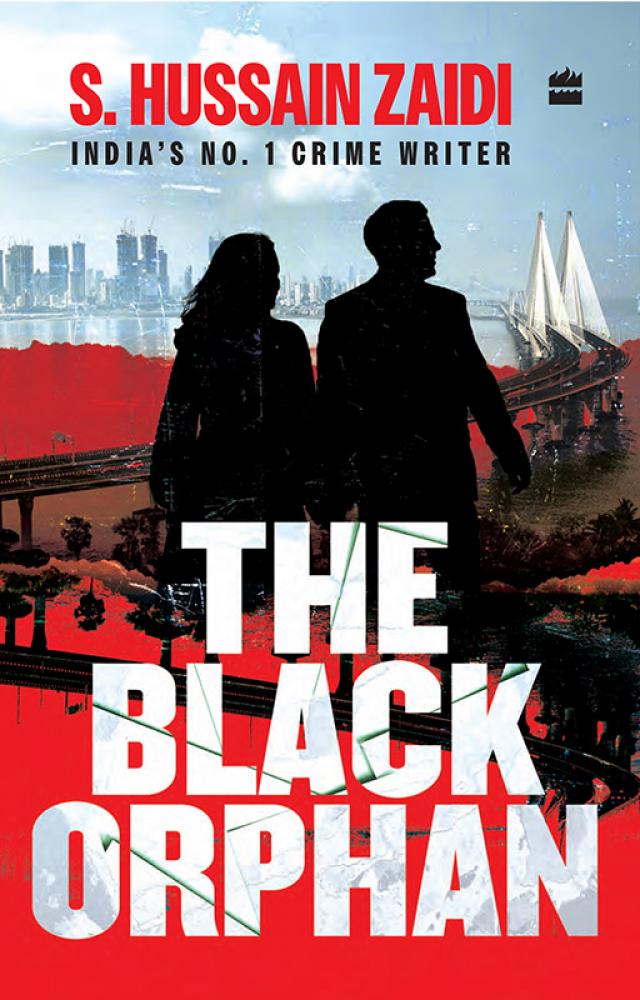
Beyond the power of the written word is the magic of an eloquent image. Aashim Raj has indeed exhibited wizardry with the cover design of the book. After working on several iterations, Aashim finally cracked a perfect cover.
My young and talented protégé Mohsin Rizvi is a versatile mastermind par excellence. I can’t think of any book or design without his innovative ideas and suggestions. Despite his gruelling schedule in London, he found time to keep sharing his valuable inputs for the book theme and design. Thanks, Mohsin!
Against the lengthiest and strongest of objections – and this man can be very eloquent when he wants to be – I am saving the best for the last, in the form of Gautam S. Mengle. The long-haired lost young man who wandered into my office at The Asian Age fifteen years ago has turned out to be the most dependable sounding board, protégé and friend – not necessarily in that order – apart from being a veritable writer in his own right (the long hair is gone and thank heavens for that). He has, over the last few months, been the bulwark that propelled me to finish the story on time. In the process, Gautam has become as possessive and protective of this story as I have, and it is this very love for fiction – which leads to him immediately adopting a story as his own – that makes him any writer’s best friend. Thanks, Gautam!
PROLOGUE
The MH-60 Black Hawk helicopter, which had been steady in the air until now, began tailspinning uncontrollably towards the ground. Disturbed by the disastrous start to the operation, the agent took cover behind the compound’s boundary wall. He watched as the chopper crashed. However, there were no casualties among any of the Americans inside the chopper because of its low altitude. Thankfully, the second chopper remained stable.
He was an undercover agent with India’s National Investigation Agency (NIA). He had on a desert camouflage mask, which covered his face from nose to chin. A Kevlar helmet shielded his head. He had held many identities in foreign lands, but his codename tonight was Ghazi, the Arabic word for warrior. No one, be it the press or the common man, would ever know of this Indian agent’s presence during the operation. In fact, the very involvement of India would only ever be known to a handful of people in the country and the US.
While the NIA had identified this safe house in Abbottabad, Pakistan, as where the world’s most wanted terrorist was supposed to be hiding, it was Ghazi who had confirmed that their subject was indeed present on the premises.
Among Ghazi’s many sources in Pakistan was a doctor who had obtained access to the Abbottabad safe house under the guise of vaccinating the children who lived there. Posing as his compounder, Ghazi had accompanied the doctor on several visits to the Waziristan haveli, as the locals called it, and stealthily collected DNA samples, which the CIA had used to conclude that Osama Bin Laden was indeed hiding there. The samples had been given to the CIA on one condition: the Indian agent would be a spectator to the raid. The Prime Minister’s Office in India wanted to ascertain that their efforts to eliminate the fountainhead of terror had finally borne fruit. For the CIA, the deal was a no-brainer. The DNA sample reduced the possibility of mistaken identity to approximately one in 11.8 quadrillion.
Through his night-vision goggles, Ghazi saw SEAL Team Six fast-roping down the second chopper. He racked the semi-automatic assault rifle in his hands and made his way towards the rendezvous point. The commander of the SEAL team emerged in front and the squad formed a security perimeter around him. The SEALs had brought along Belgian Malinois military dogs who were trained for assault missions. From their growls, Ghazi figured that these dogs had already smelled blood. They were ready for the hunt.
‘He’s still in there?’ the commander asked.
Ghazi nodded and held up his right hand in a thumbs-up sign.
‘Stay behind us,’ the commander said.
A controlled explosion of C-4 charges blew open the metal gate of the compound. A bearded man opened the house’s door and the point man took him down swiftly. Women started screaming inside the building. The Shaikh, as Bin Laden was known, was fond of his women and had married at least five times.
Upon entering the house, a SEAL operator kicked aside a wooden cabinet to make their way forward. A magazine fell out of the shelf, opening to reveal the photo of a white woman, her huge siliconed breasts barely covered. The Indian agent suppressed a chuckle.
More shots were fired. Another guard fell. The commander looked over his shoulder at the
Indian and raised an eyebrow. Ghazi raised three fingers. The third floor – that’s where their target would be be. SEAL Team Six began climbing up the stairs in single file. The Indian followed.
Inside his bedroom, Osama Bin Laden shook his head. Only a few moments ago, his right-hand man – Abu Ahmed al-Kuwaiti, the fearsome Pashtun who had protected him during the battle of Tora Bora – had picked up his Kalashnikov and rushed to fight the Americans. A brief exchange of fire occurred and Abu Ahmed’s war cries eventually fell silent. All of Laden’s wives and children, who were huddled together in the room, were weeping inconsolably.
SEAL Team Six entered, barking orders. Amal al-Fatah, the fifth wife, screamed in Arabic and charged at the Americans. She was shot in the foot. Bin Laden looked down, staring at the tiny red dot which had appeared over his chest from the beam of the laser sight mounted over an American rifle. Two bullets hit him in quick succession, the first in the chest and the second above the eye. He fell to the ground. An American shouted over the radio: ‘For God and country, Geronimo, Geronimo, Geronimo!’
Ghazi stepped forward and squatted over the body. Swiftly, he collected several DNA samples and placed them in a padded pouch that was secured around his waist. The room was stuffy and reeked of fear and blood. His job was done within minutes and he stood up with a clear thumbs up to the team leader.
‘Not outta the fuckin’ woods yet, so stop lookin’ so happy, Ghazi,’ the leader breathed, even as the first screams from outside started. People were gathering and time was running out.
The Americans spared the wailing women and children and those they deemed to be no threat, leaving them behind. They packed Bin Laden in a body bag and carried him away in their helicopter.
A little later, a back-up helicopter arrived to pick up the last of the remaining troops. Ghazi was the last to jump aboard. For the world, he was just another American who had descended on the compound in Abbottabad.
No one had noticed a pair of eyes peering from behind the false wall in Laden’s room, taking in every detail about the men who had killed the most wanted terrorist in the world.
1
The snow on the mountains of Kashmir had begun to melt. For Indian troops in the region, it meant preparing for infiltration attempts from across the border. But DIG Ajay Rajvardhan from the NIA was here to stop an enemy from crossing the border into the neighbouring country.
Ajay followed his liaison officer from the Indian army to a waiting jeep. The vehicle sped down the winding road with an amber beacon spinning on its roof. Ajay held tight as it swayed from one turn to another. The thin air carried the scent of flowering gulmohars. He inhaled and cleared his head.
Four hours later, the vehicle slowed down as it neared a nondescript building in the Gurez sector. A sentry in plainclothes allowed the vehicle into the compound. The structure stood in the middle of nowhere and bore no form of identification. No signboard. No nameplates. Anonymity was the key to survival in this beautiful land, which had turned into a hotbed of insurgency. This unmarked building was the zonal headquarters of the Special Operations Group.
Ajay briskly walked into the briefing room. A strike team of seven battle-hardened soldiers had been made available to him. The men were seated in chairs and stood up smartly before Ajay signalled them to be at ease. The lights in the room were switched off and the liaison officer turned on the projector. A disturbing image from Mumbai showed up on the screen: a narrow lane splattered with blood. Tons of dead bodies. Torn limbs.
‘Gentlemen,’ Ajay said. ‘Earlier this year, a high-intensity blast outside a popular bakery in Mumbai killed seventy innocent people.’ He paused. ‘Maharashtra ATS investigators believe that this blast was planned and executed by Javed Bukhari. Logistical support was provided from across the border.’ Another pause. ‘Next.’
A bearded young man dressed in combat fatigues showed up on the display screen. Ajay stared hard at the image and gritted his teeth. Javed Bukhari loosely held an AK-47 in his hand. A green headband pushed back his long hair. His posture did not display the discipline of an army regular. Indian agencies had managed to get their hands on many such photographs of Javed in different postures. A video of him playing cricket with his mercenaries had gone viral on WhatsApp. Of course, militants like him gave zero fucks for anonymity. Good. Ajay smirked. Javed’s thirst for fame on social media would hasten his death.
‘Days after the bakery blast, the ATS picked up Javed’s presence in Madhya Pradesh,’ Ajay said. ‘He soon disappeared, only to resurface in Delhi. Before the local agencies could get him, he vanished again. Our intelligence unit has now tracked him to a safe house in Gurez. Javed is waiting to cross the border to perpetual safety. A political career in the long run, perhaps.’
Ajay nodded at the liaison officer. Click. A two-storeyed wooden house came up on the screen, and Ajay calmly fielded questions. Yes, the windows were manned by Javed’s group. How many men were present in the house? Estimates ranged between five to nine, maybe more. The house was on a hilltop, providing the enemy with the advantage of an elevated position. Click. A map demarcating the surrounding landscape showed up on the screen. A red circle marked the house.
‘The approach from the south is too steep,’ Ajay said. ‘Heavy casualties are inevitable if we attack from that direction.’
A team member raised his hand. ‘Aerial assault, sir?’
‘The roof is covered,’ Ajay said. ‘A fast-rope insertion can go against us.’
‘Rockets?’ someone asked. ‘We can reduce the house to rubble in no time.’
Ajay shook his head. ‘The house belongs to an old woman. Word is that she is being held hostage. We don’t want civilians to die.’
‘Sir, then how—’
‘East,’ Ajay said. ‘We attack from the east.’
‘Sir?’ a trooper exclaimed. ‘Imagery shows hardly any cover in that direction. We’ll be sitting ducks out there!’
Ajay acknowledged the risk with a nod. ‘We assault at the break of light.’ Then he smiled. ‘Now, who do I have to see about getting some good modur pulao for dinner?’
The first azaan of the morning reverberated through the valley. Javed awoke from a disturbed slumber. His hands instinctively grabbed the AK-56 rifle next to his bed. He eased at the sight of his men dutifully manning their positions, chuckling inwardly at the plight of the Indian agencies. Yes, they were tailing him, but he was too smart for them, wasn’t he?
One of his comrades brought forth a cup of kahwa. Javed drank in slow gulps. Outside, the sky was still dark.
He spoke in a stern voice. ‘The boys are still on the roof?’
‘Bilkul, Amir.’
‘The En-dians,’ Javed said, ‘must be crying their hearts out. We hurt them bad, didn’t we?’
‘Beshaq.’
Javed poked his index finger in his colleague’s chest. ‘Mumbai! Financial capital of India, huh?’ He laughed. ‘Their media is breathing fire at me. In newspapers. On television. Perhaps I still appear in their nightmares. Hahaha!’
The fighters in the room laughed along. Javed’s laughter grew hysterical. He gulped down the last sip of kahwa and handed the empty cup back to his comrade. At that moment, the guard at the window called out in a rushed tone.
‘Jenab,’ the guard said. ‘I see movement!’
Javed bolted towards the window and snatched the binoculars from the guard’s hands. He scanned the area in a grid, moving the lens across, then up and down. When he adjusted the dioptre with his finger, Javed’s face turned white. Some kind of abomination – half-man and half-animal – was moving towards them. Javed adjusted the dioptre again and guffawed as the figure became clear to him: a shepherd carrying a goat on his shoulders, with a flock of desi hens tied by their legs in a basket. He was also pulling along another goat.
Javed exhaled a sigh of relief. ‘It’s only a shepherd.’
The guard aimed his gun. ‘Should I blow his head off, jenab?’
‘No.’ Javed raised his hand in the air. ‘We don’t fire on our own. The man is only looking to sell his flock. Let him come our way.’ He laughed. ‘And don’t forget – India’s most famous agencies have failed to trace me. What harm can one man bring to a great mujahid like me?’