SAMUEL BECKETT SERIES:

Echo's Bones

Echo's Bones

Samuel Beckett

Literature & Fiction / Theatre / Poetry

'Echo's Bones' was intended by Samuel Beckett to form the 'recessional' or end-piece of his early collection of interrelated stories, More Pricks Than Kicks, published in 1934. The story was written at the request of the publisher, but was held back from inclusion in the published volume. 'Echo's Bones' has remained unpublished to this day, and the present edition will situate the work in terms of its biographical context, its Joycean influences, and as a vital link in the evolution of Beckett's early work. The editor, Mark Nixon, is director of the Beckett International Foundation at the University of Reading.
Read online
  • 868
Texts for Nothing and Other Shorter Prose 1950-1976

Texts for Nothing and Other Shorter Prose 1950-1976

Samuel Beckett

Literature & Fiction / Theatre / Poetry

This is the last of three volumes of collected shorter prose to be published in the Faber edition of the works of Samuel Beckett which already includes a volume of early stories (The Expelled/The Calmative/The End/First Love) and of late stories (Company/Ill Seen Ill Said/Worstward Ho/Stirrings Still). The present volume contains all of the short fictions some of them no longer than a page written and published by Beckett between 1950 and the early 1970s. Most were written in French, and they mostly belong within three loose sequences: Texts for Nothing, Fizzles and Residua. The edition also includes two remarkable independent narratives: From an Abandoned Work and As The Story Was Told. All of these texts, whose unsleeping subject is themselves, demonstrate that the short story is one of the recurrent modes of Becketts imagination, and occasions some of his greatest works. ...he would like it to be my fault that words fail him, of course words fail him. He tells his story every five minuts, saying it is not his, there's cleverness for you. He would like it to be my fault that he has no story, of course he has no story, that's no reason for trying to foist one on me...
Read online
  • 866
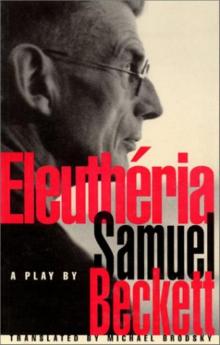
Eleuthéria

Eleuthéria

Samuel Beckett

Literature & Fiction / Theatre / Poetry

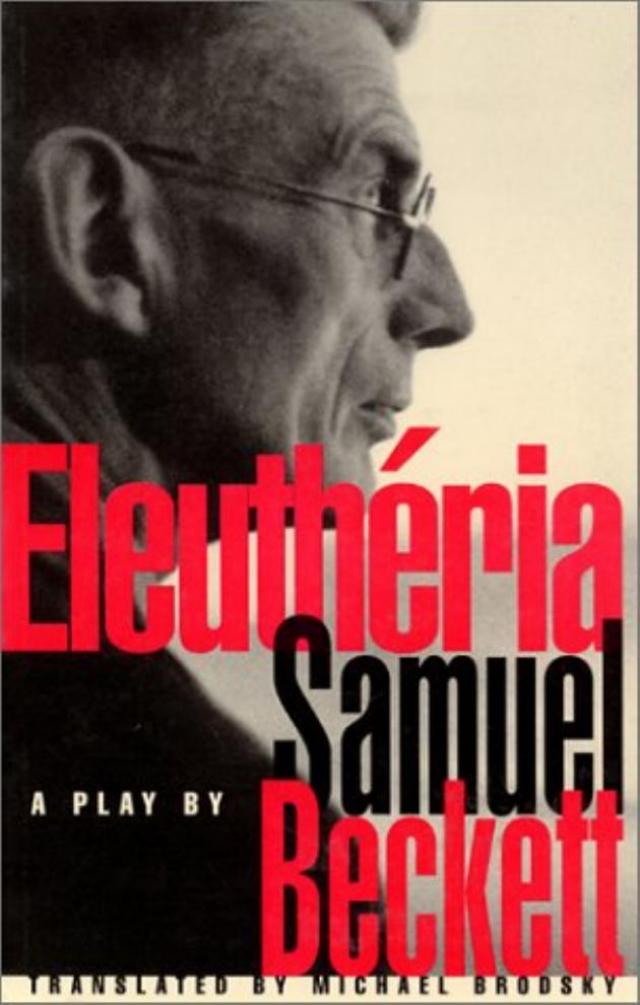
Beckett reúne en esta obra en tres actos todos los ingredientes de la dramaturgia burguesa : trama, personajes, conflictos, situaciones, diálogos y convenciones, para someterlos a una sarcástica operación de desguace. El joven Victor Krap ha abandonado, sin motivo aparente, su hogar, su familia, su trabajo, su novia... y se ha recluido en un miserable cuartucho de pensión para alcanzar una imposible libertad (en griego, Eleutheria). Allí acudirá una insólita galería de personajes -incluidos un espectador y un torturador chino-, que intentarán que Victor se explique para que la obra tenga sentido. Eleutheria apareció de improviso en Francia en febrero de 1995, rodeada de cierto recelo. Y es que, estando vivo, Samuel Beckett jamás la quiso publicar, y dejó encargado a su albacea literario, el editor Jérôme Lindon, fundador y director de Les Editions de Minuit, que nunca sacara a la luz. Beckett jamás renegó de su primer trabajo en lengua francesa, escrito en 1947, pero sí creía que se trataba de una obra imperfecta que no debía ser presentada al público. Sin embargo, hoy, Jean-Pierre Thibaudat escribe en Libération : «En los años cincuenta, aun cuando no fuera una obra maestra, la lectura de Eleutheria habría podido ser -y lo es ahora- absolutamente excitante-. Lindon, «descubridor» de Beckett, su editor fiel, amigo y confidente, conservó, pues, respetuosamente el manuscrito original durante cuarenta años, ignorando, u olvidadando tal vez, que otro editor, que había publicado su obra en Estados Unidos, disponía de una copia que le había entregado el propio Beckett en un momento de dificultad del editor y, por lo visto, de generosa debilidad del autor. Durante dos años Lindon intentó evitar que su colega norteamericano publicara la versión inglesa de Eleutheria, pero, finalmente, al fracasar en el intento, consideró más justo que saliera primero en la lengua original.
Read online
  • 774
Dream of Fair to Middling Women

Dream of Fair to Middling Women

Samuel Beckett

Literature & Fiction / Theatre / Poetry

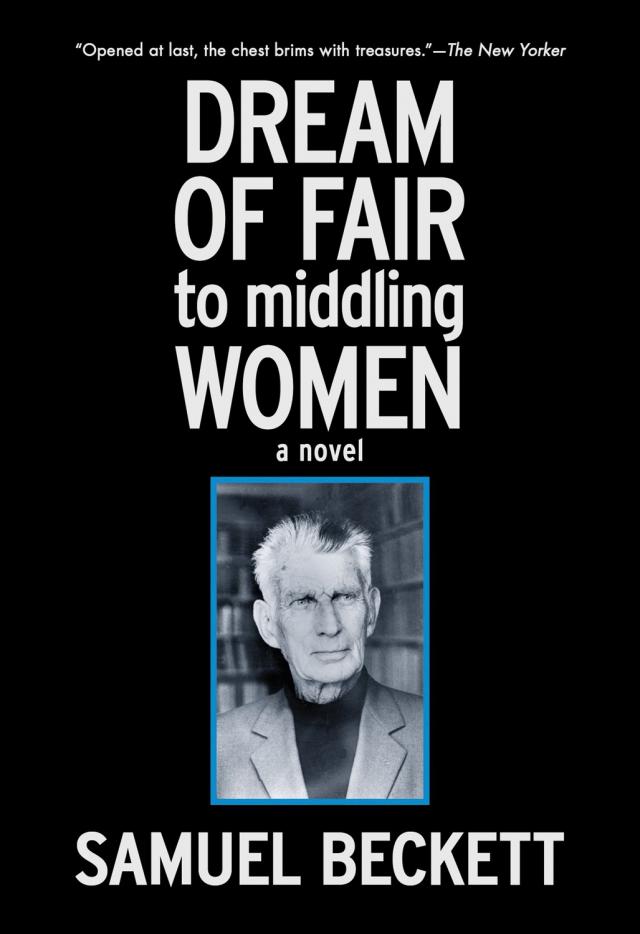
Now published for the first time--Samuel Beckett's first novel, written in the Hotel Trianon in Paris in the summer of 1932 when the author was 26. Recognized as one of the great writers of the 20th-century, Beckett's Waiting for Godot revolutionized contemporary theater and his fiction is ranked by many with that of Joyce and Proust.
Read online
  • 718
Watt

Watt

Samuel Beckett

Literature & Fiction / Theatre / Poetry

Fiction. WATT was the beginning of Samuel Becket's post-war literary career, the fruition of the years in hiding in the Vaucluse mountains from the Gestapo, which also largely inspired WAITING FOR GODOT. But it remains, unlike the work that followed it, extremely Irish, a philosophical novel full of the grim humour that was already his trade-mark in such earlier fictions as MORE PRICKS THAN KICKS and MURPHY. The perambulations of WATT, especially in the home of the eccentric Mr. Knott, and the sketching of logic to elicit meaning, must be among the most comic inventions of modern literature. First published by the libertine Olympia Press in 1953 it has established itself as one of the most quoted and best-loved of Becket's novels. The typographical oddities and omissions are as Beckett left the text.
Read online
  • 701
Molloy

Molloy

Samuel Beckett

Literature & Fiction / Theatre / Poetry

Molloy is Samuel Beckett’s most celebrated novel, and his first published work to be written in French, ushering in a period of concentrated creativity in the late 1940s and early 1950s which included the companion novels Malone Dies and The Unnamable . The tale of Molloy, old and ill, remembering and forgetting, scarcely human, begets a double plot involving the spinsterish Moran, a private detective sent to search him out, whose own deterioration during the quest shadows that of the hero. Above all, the eponymous narrator of Molloy calls into being a world and its tribulations at the end of a pencil, with finicking and irresistible certainty, while trading larger uncertainties with the reader.
Read online
  • 674
Malone Dies

Malone Dies

Samuel Beckett

Literature & Fiction / Theatre / Poetry

Written and published in French in 1951, and in Samuel Beckett’s English translation in 1956, Malone Dies is the second of his immediate post-war novels, written during what Beckett later referred to as ‘the siege in the room’. ‘Malone’, writes Malone, ‘is what I am called now.’ On his deathbed, whittling away the time with stories and revisions of stories, the octogenarian Malone's account of his condition is contradictory and intermittent, shifting with the vagaries of the passing days: without mellowness, without elegiacs; wittier, jauntier, and capable of darker rages than his precursor Molloy. Malone promises silence, but as a storyteller he delivers irresistibly more.
Read online
  • 657


Ill Seen Ill Said

Ill Seen Ill Said

Samuel Beckett

Literature & Fiction / Theatre / Poetry

This late work from Samuel Beckett is the haunting picture of an old woman alone in a cabin, who watches the evening and the morning star and ventures out chiefly to visit a grave. In prose of great poetic beauty, which the author translated from his original French text Mal vu mal dit in 1982, Beckett returns to the imagery of the Old and New Testaments to speculate on the great questions of human existence. One of the great writers of the 20th century, Beckett won the Nobel Prize in 1969. He is remembered primarily as a novelist and playwright, producing Waiting for Godot and the trilogy Molloy, Malone Dies, and The Unnameable, though he was also a poet and, when he chose to be, a discerning critic of great originality. Beckett continues to exert a powerful influence on other writers and interest in his work has grown since his death in 1989.
Read online
  • 649
Worstward Ho

Worstward Ho

Samuel Beckett

Literature & Fiction / Theatre / Poetry

Beckett's second last prose text, Worstward Ho, is a novella written in 1983, shortly after the largely autobiographical Company and an ironic theological speculation, both previously published as the first two parts of a late trilogy of short novels. The concentration of language and precision of description in the current work is revolutionary, even for Beckett, the great reshaper of literary expression, and its theme is the creation of life, as if by a malignant God or Demiurge. Life, against all possibility, finally exists, and man becomes a painful presence. It is one of the supreme poetic texts of the 20th century.
Read online
  • 587
Selected Poems 1930-1988

Selected Poems 1930-1988

Samuel Beckett

Literature & Fiction / Theatre / Poetry

It was as a poet that Samuel Beckett launched himself in the little reviews of 1930s Paris, and as a poet that he ended his career. This new selection, from Whoroscope (1930) to 'what is the word' (1988), describes a lifetime's arc of writing. It was as a poet moreover that Beckett made his first breakthrough into writing in French, and the Selected Poems represents work in both languages, including the sequence of brief but highly crafted mirlitonnades, which did so much to usher in the style of his late prose, and come as close as anything he wrote to honouring the ambition to 'bore one hole after another in language, until what lurks behind it - be it something or nothing - begins to seep through.' Also included are several of Beckett's translations from contemporaries - Apollinaire, Eluard, Michaux, Montale - in versions which count among his own poetic achievements. **** Edited by David Wheatley
Read online
  • 563
The Complete Dramatic Works of Samuel Beckett

The Complete Dramatic Works of Samuel Beckett

Samuel Beckett

Literature & Fiction / Theatre / Poetry

The present volume gathers all of Beckett's texts for theatre, from 1955 to 1984. It includes both the major dramatic works and the short and more compressed texts for the stage and for radio. 'He believes in the cadence, the comma, the bite of word on reality, whatever else he believes; and his devotion to them, he makes clear, is a sufficient focus for the reader's attention. In the modern history of literature he is a unique moral figure, not a dreamer of rose-gardens but a cultivator of what will grow in the waste land, who can make us see the exhilarating design that thorns and yucca share with whatever will grow anywhere.' - Hugh Kenner Contents: Waiting for Godot, Endgame, Happy Days, All That Fall, Acts Without Words, Krapp's Last Tape, Roughs for the Theatre, Embers, Roughs for the Radio, Words and Music, Cascando, Play, Film, The Old Tune, Come and Go, Eh Joe, Breath, Not I, That Time, Footfalls, Ghost Trio,...but the clouds..., A Piece of Monologue, Rockaby, Ohio Impromptu, Quad, Catastrophe, Nacht und Traume, What Where.
Read online
  • 494
Krapp's Last Tape and Other Dramatic Pieces

Krapp's Last Tape and Other Dramatic Pieces

Samuel Beckett

Literature & Fiction / Theatre / Poetry

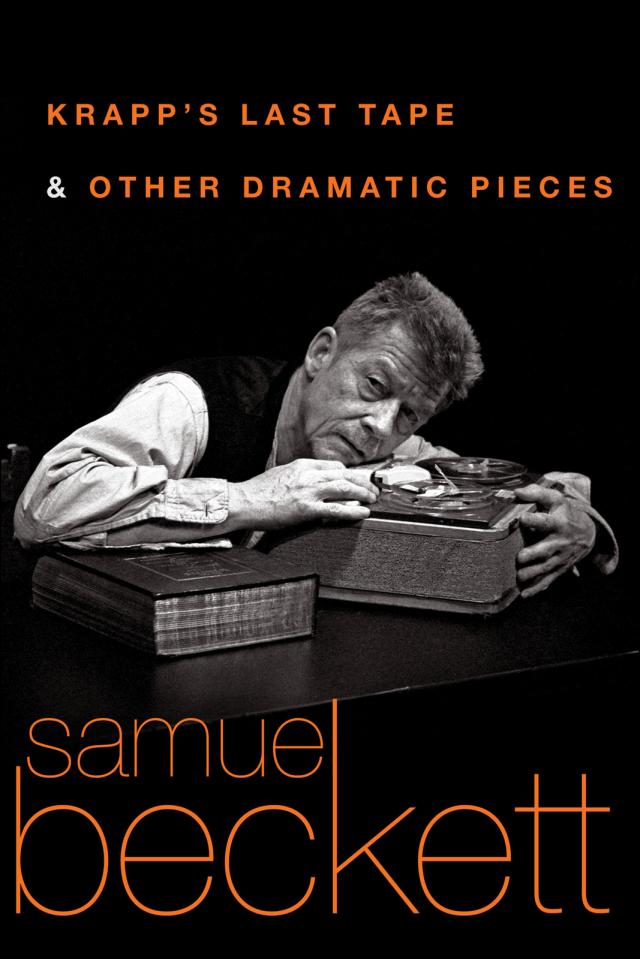
s/t: All That Fall; Embers; Acts Without Words, I and II; Mimes This collection of Nobel Prize winner Samuel Beckett’s dramatic pieces includes a short stage play, two radio plays, and two pantomimes. The stage play Krapp’s Last Tape evolves a shattering drama out of a monologue of a man who, at age sixty-nine, plays back the autobiographical tape he recorded on his thirty-ninth birthday. The two radio plays were commissioned by the BBC; All That Fall “plumbs the same pessimistic depths [as Waiting for Godot] in what seems a no less despairing search for human dignity” (London Times), and Embers is equally unforgettable theater, born of the ramblings of an old man and his wife. Finally, in the two pantomimes, Beckett takes drama to the point of pure abstraction with his portrayals of, in Act Without Words I, frustrated desired, and in Act Without Words I, corresponding motions of living juxtaposed in the slow despair of one man and the senselessly busy motion of another.
Read online
  • 453
Company / Ill Seen Ill Said / Worstward Ho / Stirrings Still

Company / Ill Seen Ill Said / Worstward Ho / Stirrings Still

Samuel Beckett

Literature & Fiction / Theatre / Poetry

These four last prose fictions by Samuel Beckett were originally published individually, and their composition spanned the final decade of his life. In Company a solitary hearer lying in blackness calls up images from the far-off past. Ill Seen Ill Said meditates upon an old woman living out her last days alone in an isolated snow-bound cottage, watched over by twelve mysterious sentinels. In Worstward Ho, a breathless speaker unravels the sense of things, acting out the unending injunction to ‘Try again. Fail again. Fail better.’ And Stirrings Still, published in the Guardian a few months before Beckett’s death in 1989, is the last prose work and testament of ‘this great soothsayer of the age, and of the aged’ (Christopher Ricks). The present edition includes several short prose texts (Heard in the Dark I & II, One Evening, The Way, Ceiling) which represent work in progress or works ancillary to the composition of these late masterpieces. Edited by Dirk Van Hulle.
Read online
  • 387
Molloy, Malone Dies, the Unnamable

Molloy, Malone Dies, the Unnamable

Samuel Beckett

Literature & Fiction / Theatre / Poetry

The first novel of Samuel Beckett's mordant and exhilirating midcentury trilogy intoduces us to Molloy, who has been mysteriously incarcerated, and who subsequently escapes to go discover the whereabouts of his mother. In the latter part of this curious masterwork, a certain Jacques Moran is deputized by anonymous authorities to search for the aforementioned Molloy. In the trilogy's second novel, Malone, who might or might not be Molloy himself, addresses us with his ruminations while in the act of dying. The third novel consists of the fragmented monologue - delivered, like the monologues of the previous novels, in a mournful rhetoric that possesses the utmost splendor and beauty - of what might or might not an armless and legless creature living in an urn outside an eating house. Taken together, these three novels represent the high-water mark of the literary movement we call Modernism. Within their linguistic terrain, where stories are taken up, broken off, and taken up again, where voices rise and crumble and are resurrected, we can discern the essential lineaments of our modern condition, and encounter an awesome vision, tragic yet always compelling and always mysteriously invigorating, of consciousness trapped and struggling inside the boundaries of nature.
Read online
  • 350
Nohow On

Nohow On

Samuel Beckett

Literature & Fiction / Theatre / Poetry

Collected here in one volume, Samuel Beckett’s three novels, which are among the most beautiful and disquieting of his later prose works, come together with the powerful resonance of his famous Three Novels: Molloy, Malone Dies, The Unnamable. In Company, a voice comes to “one on his back in the dark” and speaks to him, describing significant moments in life, and yet we are told it is all a fable, memories or figments devised or imagined for the sake of company. Ill Seen Ill Said focuses attention on an old woman in a cabin who is part of the objects, landscape, rhythms, and movements of an incomprehensible universe. And in Worstward Ho, Beckett explores a tentative, uncertain existence in a world devoid of rational meaning and purpose. Here is language pared down to its most expressive, confirming Beckett’s position as one of the great writers of our time.
Read online
  • 346