The military megapack, p.44
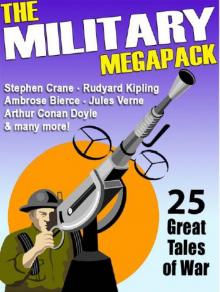
The Military Megapack,
p.44


I did secure my picket that might, not by authority but by diplomacy. I got Bowers to go by agreeing to exchange ranks with him for the time being and go along and stand the watch with him as his subordinate. We stayed out there a couple of dreary hours in the pitchy darkness and the rain, with nothing to modify the dreariness but Bower’s monotonous growling at the war and the weather, then we began to nod and presently found it next to impossible to stay in the saddle, so we gave up the tedious job and went back to the camp without interruption or objection from anybody and the enemy could have done the same, for there were no sentries. Everybody was asleep, at midnight there was nobody to send out another picket so none was sent. We never tried to establish a watch at night again, as far as I remember, but we generally kept a picket out in the daytime.
In that camp the whole command slept on the corn in the big corn crib and there was usually a general row before morning, for the place was full of rats and they would scramble over the boys’ bodies and faces, annoying and irritating everybody, and now and then they would bite someone’s toe, and the person who owned the toe would start up and magnify his english and begin to throw corn in the dark. The ears were half as heavy as bricks and when they struck they hurt. The persons struck would respond and inside of five minutes everyman would be locked in a death grip with his neighbour. There was a grievous deal of blood shed in the corn crib but this was all that was spilt while I was in the war. No, that is not quite true. But for one circumstance it would have been all.
Our scares were frequent. Every few days rumours would come that the enemy were approaching. In these cases we always fell back on some other camp of ours; we never stayed where we were. But the rumours always turned out to be false, so at last we even began to grow indifferent to them. One night a negro was sent to our corn crib with the same old warning, the enemy was hovering in our neighbourhood. We all said let him hover. We resolved to stay still and be comfortable. It was a fine warlike resolution, and no doubt we all felt the stir of it in our veins—for a moment. We had been having a very jolly time, that was full of horseplay and schoolboy hilarity, but that cooled down and presently the fast waning fire of forced jokes and forced laughs died out altogether and the company became silent. Silent and nervous. And soon uneasy—worried and apprehensive. We had said we would stay and we were committed. We could have been persuaded to go but there was nobody brave enough to suggest it. An almost noiseless movement began in the dark by a general but unvoiced impulse. When the movement was completed, each man knew that he was not the only person who had crept to the front wall and had his eye at a crack between the logs. No, we were all there, all there with our hearts in our throats and staring out towards the sugar-troughs where the forest footpath came through. It was late and there was a deep woodsy stillness everywhere. There was a veiled moonlight which was only just strong enough to enable us to mark the general shapes of objects. Presently a muffled sound caught our ears and we recognized the hoof-beats of a horse or horses. And right away, a figure appeared in the forest path; it could have been made of smoke, its mass had such little sharpness of outline. It was a man on horseback, and it seemed to me that there were others behind him. I got a hold of a gun in the dark, and pushed it through a crack between the logs, hardly knowing what I was doing, I was so dazed with fright. Somebody said “Fire!” I pulled the trigger, I seemed to see a hundred flashes and a hundred reports, then I saw the man fall down out of the saddle. My first feeling was of surprised gratification; my first impulse was an apprentice-sportsman’s impulse to run and pick up his game. Somebody said, hardly audibly, “Good, we’ve got him. Wait for the rest!” But the rest did not come. There was not a sound, not the whisper of a leaf; just the perfect stillness, an uncanny kind of stillness which was all the more uncanny on account of the damp, earthy, late night smells now rising and pervading it. Then, wondering, we crept out stealthily and approached the man. When we got to him, the moon revealed him distinctly. He was laying on his back with his arms abroad, his mouth was open and his chest was heaving with long gasps, and his white shirt front was splashed with blood. The thought shot through me that I was a murderer, that I had killed a man, a man who had never done me any harm. That was the coldest sensation that ever went through my marrow. I was down by him in a moment, helplessly stroking his forehead, and I would have given anything then, my own life freely, to make him again what he had been five minutes before. And all the boys seemed to be feeling the same way; they hung over him, full of pitying interest, and tried all they could to help him, and said all sorts of regretful things. They had forgotten all about the enemy, they thought only of this one forlorn unit of the foe. Once my imagination persuaded me that the dying man gave me a reproachful look out of the shadow of his eyes, and it seemed to me that I could rather that he had stabbed me than he had done that. He muttered and mumbled like a dreamer in his sleep about his wife and his child, and, I thought with a new despair, “This thing that I have done does not end with him; it falls upon them too, and they never did me any harm, any more than he.”
In a little while the man was dead. He was killed in war, killed in fair and legitimate war, killed in battles as you may say, and yet he was as sincerely mourned by the opposing force as if he had been their brother. The boys stood there a half-hour sorrowing over him and recalling the details of the tragedy, and wondering who he might be and if he was a spy, and saying if they had it to do over again, they would not hurt him unless he attacked them first. It soon turned out that mine was not the only shot fired; there were five others, a division of the guilt which was a great relief to me since it in some degree lightened and diminished the burden I was carrying. There were six shots fired at once but I was not in my right mind at the time, and my heated imagination had magnified my one shot into a volley.
The mans was not in uniform and was not armed. He was a stranger in the country, that was all we ever found out about him. The thought of hi got to preying on me every night, I could not get rid of it. I could not drive it away, the taking of that unoffending life seemed such a wanton thing. And it seemed an epitome of war, that all war must just be the killing of strangers against whom you feel no personal animosity, strangers who in other circumstances you would help if you found them in trouble, and who would help you if you needed it. My campaign was spoiled. It seemed to me that I was not rightly equipped for this awful business, that war was intended for men and I for a child’s nurse. I resolved to retire from this avocation of sham soldier-ship while I could retain some remanent of my self-respect. These morbid thoughts clung to me against reason, for at the bottom I did not believe I had touched this man. The law of probabilities decreed me guiltless of his blood for in all my small experiences with guns, I had not hit anything I had tried to hit, and I knew I had done my best to hit him. Yet there was no solace in the thought. Against a diseased imagination, demonstration goes for nothing.
The rest of my war experience was of a piece with what I have already told of it. We kept monotonously falling back upon one camp or another and eating up the farmers and their families. They ought to have shot us; on the contrary they were as hospitably kind and courteous to us as if we had deserved it. In one of these camps we found Ab Grimes, an upper Mississippi pilot who afterwards became famous as a daredevil rebel spy, whose career bristled with desperate adventures. The loom and style of his comrades suggested that they had not come into the war to play and their deeds made good the conjecture later. They were fine horsemen and good revolver shots, but their favourite arm was the lasso. Each had one at his pommel, and could snatch a man out of his saddle with it ovariotomy, on a full gallop, at any reasonable distance.
In another camp, the chief was a fierce and profane old black-smith of sixty and he had furnished his twenty recruits with gigantic, home-made bowie-knives, to be swung with two hands like the machetes of the Isthmus. It was a grisly spectacle to see that earnest band practising their murderous cuts and slashes under the eye of that remorseless old fanatic.
The last camp which we fell back on was in a hollow near the village of Florida where I was born, in Monroe County. Here we were warned one day that a Union Colonel was sweeping down on us with a whole regiment at his heels. This looked decidedly serious. Our boys went apart and consulted; then we went back and told the other companies present that the war was a disappointment to us and we were going to disband. They were getting ready themselves to fall back on some place or another, and we were only waiting for General Tom Harris, who was expected to arrive at any moment, so they tried to persuade us to wait a little while but the majority of us said no, we were accustomed to falling back and didn’t need any of Harris’s help, we could get along perfectly without him and save time too. So, about half of our fifteen men, including myself, mounted, and left on the instant; the others yielded to persuasion, and stayed—stayed through the war.
An hour later we met General Harris on the road, with two or three people in his company, his staff probably, but we could not tell; none of them were in uniform; uniforms had not come into vogue among us yet. Harris ordered us back, but we told him there was a Union colonel coming with a whole regiment in his wake and it looked as if there was going to be a disturbance, so we had concluded to go home. He raged a little bit, but it was of no use, our minds were made up. We had done our share, killed one man, exterminated one army, such as it was; let him go and kill the rest and that would end the war. I did not see that brisk young general again until last year; he was wearing white hair and whiskers.
In time I came to learn that the Union colonel whose coming frightened me out of the war and crippled the Southern cause to that extent; General Grant. I came within a few hours of seeing him when he was as unknown as I was myself; at a time when anybody could have said, “Grant—Ulysses S Grant? I do not remember hearing the name before.” It seems difficult to realize there was once a time when such a remark could be rationally made, but there was, I was within a few miles of the place and the occasion too, though proceeding in the other direction.
The thoughtful will not throw this war paper of mine lightly aside as being valueless. It has this value; it is not an unfair picture of what went on in may a militia camp in the first months of the rebellion, when the green recruits were without discipline, without the steadying and heartening influence of trained leaders, when all their circumstances were new and strange and charged with exaggerated terrors, and before the invaluable experience of actual collision in the field had turned them from rabbits into soldiers. If this side of the picture of that early day has not before been put into history, then history has been, to that degree incomplete, for it had and has its rightful place there. There was more Bull Run material scattered through the early camps of this country than exhibited itself at Bull Run. And yet, it learned it’s trade presently and helped to fight the great battles later. I could have become a soldier myself if I had waited. I had got part of it learned, I knew more about retreating than the man that invented retreating.
WITHOUT THE BLUE, by Johnston McCulley
I.
Down on the street again, Jimmie Brooks stood for a few minutes at the curb and strove to control his emotions. Being a secret service operative, and a good one, he knew that anger netted a man nothing in the way of success; and just now Jimmie Brooks was angry.
He couldn’t blame the chief, he told himself. Washington was burning up the wires telling the chief just what it thought of him and the men who looked to him for orders. This branch of the secret service that had its headquarters in an unpretentious little office in an old office building in “a Pacific port” was failing to make the good record it should. More than that, it was fast gaining with the department heads a reputation that was far from enviable. A short distance from the city was a huge cantonment where the young men of America learned to be soldiers; and as their training was finished they were moved toward the Atlantic—and France. It was necessary, of course, to keep all troop movements secret. There lurked, here and there, alien fiends who resorted to dynamite and torn and twisted bridges and demolished tracks to prevent regiments being transported safely and with speed. That strong men died among twisted steel and splintered wood instead of dying from bullet wounds with their faces toward the enemy made small difference to the plotters. Three times within as many weeks troop trains had been wrecked within a few hours after leaving the cantonment. Information regarding the movements of the trains was being conveyed to the enemy. In the offices of the great railroad company that had charge of troop transportation every man was being watched. Men suspected of being enemy spies—and women, too—were shadowed constantly. Yet the knowledge got out with disastrous results.
Jimmie Brooks had just come from the dingy office where the division chief had his desk. He had been the recipient of a tirade. It was not the usual tirade of a disgusted man. The chief had a way of speaking in a low, even voice that could be scathingly sarcastic. His words seemed to burn into a man’s brain. And Jimmie Brooks, for once had lost control of himself, had become angry. Now he stood at the curb and fought for self-control. The chief had been no more than just, he knew. A dozen good men worked out of that office, specializing on the case, in addition to ordinary operatives who shadowed those under suspicion. And yet they had not found the slightest clue to the guilty persons.
“You’ve got to stop it!” the chief had said to Jimmie Brooks and some of the others. “Each of you work independently for a time. It’s up to you men. Your failure is causing good boys to go down to death in railroad wrecks, and it is delaying the government’s plans. Get out of here—and get results!”
Jimmie Brooks shrugged his shoulders and turned up the street. The factory whistles were screeching out the midday hour. Brooks turned into a side street and walked rapidly in the direction of a small café where he took his meals.
“Get results! Get results!” rang in his brain. He admitted to himself that he didn’t know which way to turn to get results. Every man who could know the orders for troop movements was being watched. The railroad men, even officers at the army post, were under suspicion. And there was not the slightest clue.
At the curb before the little café Brooks paused a moment to let the throng pass before he cut across the walk and entered. A small piece of cardboard fluttered lazily from a window above struck the brim of Brooks’s hat and dropped to his shoulder. Brooks caught it and favored it with a glance. It was a peculiar sort of thing—some advertising dodge, he supposed.
c.c.c.c.c.c.c.c.c.c.c.c.c.c.c
RED AND WHITE
c.c.c.c.c.c.c.c.c.c.c.c.c.c.c
Brooks tossed the bit of cardboard aside and went on into the little café. He nodded to the cashier, a young woman he admired in a way, and sat down at a table near the window. Having given his order he glanced out at the walk and the passing throng.
From the main entrance of the building adjoining the café there darted a hatless, breathless man, who looked to be about forty-five. He was short, heavily built, and gave a suggestion of great strength. He stood just in front of the café window and glanced about the walk; then suddenly darted forward, disregarding the rights of pedestrians, stooped and picked up the bit of cardboard Brooks had read and dropped. There was a look of keen satisfaction on the man’s face as he turned and hurried into the entrance again.
“Who is the excited gent?” Brooks asked the cashier carelessly, turning his head and looking up at her.
“Freak!” she explained, reaching for a fresh stick of chewing gum. “Name’s Professor Kenderdine. Eats here now and then. And he’s fussy about his grub. What he’s professor of I don’t know. Lives in a suite of rooms up-stairs. Looks like a clairvoyant, or some sort of crook. Professor of gettin’ the dough without workin’, I suppose. Funny what grafts get by in this burg!”
“It is at that,” Brooks assented, and gave his attention to his meal.
But he couldn’t forget the bit of cardboard and the fact that the “professor” had hurried out bareheaded to regain it.
“Red and white; eh?” he mused. “Tain’t right. Red and white without the blue isn’t exactly proper in this day and age. Like a man showing only half his colors! Huh!”
He didn’t enjoy that luncheon. The sarcastic words of the chief had disturbed him greatly, and he still was a bit angry. He paid his check, joked a moment with the pretty cashier, and went out upon the street.
He walked rapidly, his head bent slightly, intending to go to the offices of the railroad company and search for the elusive clue. At the first corner he collided with a young woman.
Brooks generally was a cool and calm man, but now he was the victim of confusion. Going carelessly around the city streets and bumping into young women—especially pretty young women—wasn’t exactly the proper thing. He felt sure it wasn’t being done this season.
He stammered his embarrassed apologies, and saw that the young woman was smiling.
“I—er—I was thinking,” he mentioned.
“I’m glad some men take time to think,” she replied, dimpling. “It is all right, I assure you.”
“But you must think me—confound it!— you must think I’m a sort of—er—”
“Roughneck?” she suggested.
“Er—yes!”
Brooks had regained his composure, only to have it shaken again. On the left lapel of her coat the young woman wore two carnations— one red and one white. Red and white again— without the blue!
“Er—you’ve lost one of your colors,” Brooks said, trying to be pleasant.