The first novels pay off.., p.26
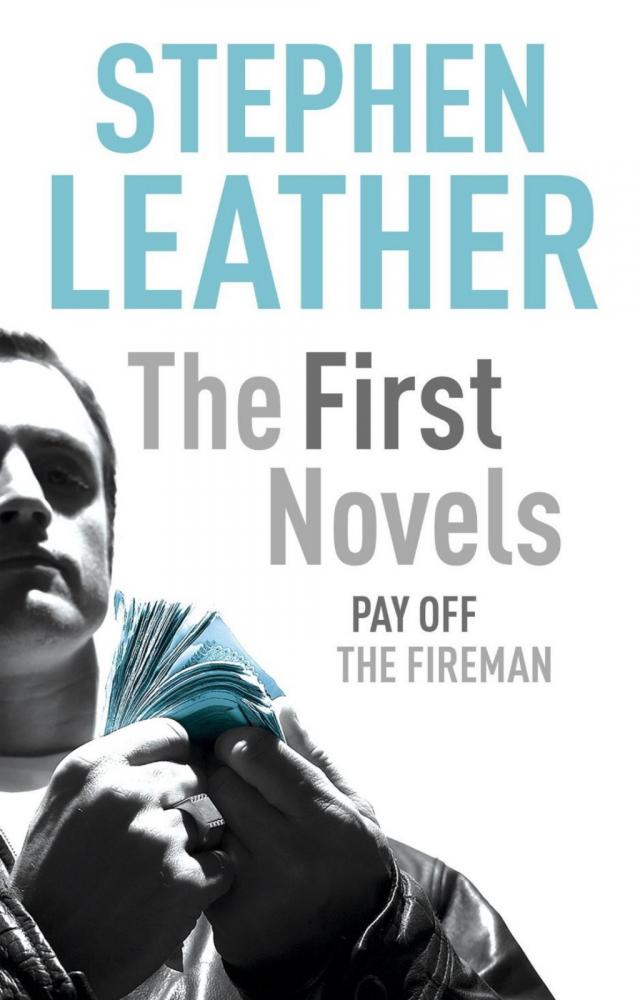
The First Novels: Pay Off, the Fireman,
p.26


The taxi stopped in front of a line of wreaths on the pavement. Before I could reach for the door handle it was opened by a swarthy youth wearing a red T-shirt and dark blue shorts. His hair was damp with sweat and in his hand he held a battered black clipboard. He spoke to me in rapid Cantonese and I shook my head. Howard was still sitting in the taxi, sorting green notes out of his wallet. The man pushed the clipboard in front of my face – it held a chart full of different designs of wreaths, circular, oval, square, plain and fancy. He poked at one of the varieties with his forefinger and spoke to me again. I shrugged, but by then Howard was by my side.
‘What does he want?’ I asked.
‘He wants to know if you will buy any flowers.’ He could see my confusion, so waved his hand, taking in the tower blocks around us. ‘These are all funeral parlours. He just assumed that you are here to make funeral arrangements and he hopes you will buy one of his wreaths.
‘Tell him to fuck off, Howard,’ I said. Two more taxis had pulled up behind ours and more of the vultures descended, grabbing for the door handles before the wheels had stopped turning.
‘Where do we go?’ I asked Howard, and he led me down a small side road towards a high wall. There was a sign there which said Kowloon Public Mortuary with a row of Chinese characters below it. Across a tarmac car park was a building the colour of creme caramel. We walked to two glass doors at the entrance but they were locked and Howard had to press the bell by the side of the doorway until a young Chinese girl in a white coat came to open it. We walked into a cool hall tiled like an East End butcher’s shop. There was a big steel freezer door to the left but we walked past it, Howard talking to the girl in English, slowly, pronouncing each word clearly and precisely.
‘She’s on the ground floor, this way,’ he said to me. We followed the girl to another freezer door, which she pulled open with a grunt. Plumes of cold air billowed out and the temperature dropped a couple of degrees. I don’t know what I expected, but this wasn’t it. I’d visited mortuaries in Britain but they were as sanitized as a supermarket, bodies neatly stored away in oversize filing cabinets. This place was obscene. The fridge was filled with metal racks, like steel bunk beds, three high. Each was occupied by a corpse. Not one was covered, they were just lying there in the clothes they’d been delivered in. There was an old man in a pair of green and white pyjamas, his face twisted into a sneering grimace, a child with her throat cut, her head practically severed from her body, a young man in a safari suit who’d obviously gone through a car windscreen. All of them just lying there like broken robots.
‘Why aren’t they covered with cloths or something?’ I asked the girl, but I’d spoken too fast and she just gave me a puzzled look. ‘This is macabre, Howard. It’s like something out of a cheap horror movie.’
At the far end two corpses, stiff with rigor mortis, had been stacked against the wall like planks of wood. They were both men, and both had been placed with their foreheads against the side of the fridge, arms frozen by their sides.
All the bodies had labels tied to their big toes, name, date and identification number.
The girl walked towards the two standing bodies, and then turned left and pointed at one of the racks.
‘Oh God, I don’t believe this,’ I said. The corpses were all dressed in the clothes they’d died in, and Sally had been wearing nothing when she’d fallen from the hotel. Now she was lying on a sheet of metal as naked as the day she was born, her flesh as cold and white as a boiled chicken, frost collecting on the black triangular thatch of hair between her legs. Close up I could see she was covered in grey bruises and contusions and then I realized I was looking at the good side, the side that hadn’t hit the ground first. Howard put his hand on my shoulder and tried to pull me back but I shook him off and stepped forward, my arms stretched out towards her. Her left side was crushed and mangled, the face, down the arm and hip and her leg, the blood congealed and hard, the flesh ripped and shredded from the impact, fragments of bone protruding through the punctured skin. I looked at Howard and his face said: ‘What did you expect after falling fifteen floors?’ and though the words were never phrased I said: ‘I thought she’d at least have been covered. At least they could have covered her up.’ I pointed at the girl in the white coat, my finger wavering before her startled face.
‘Get a cloth, something to cover her with.’ She didn’t move, her mouth open like one of the frozen corpses. ‘Now,’ I shouted at her. ‘I want her covered, now.’ She ran from the cold room, coat flapping around her legs. I took Sally’s hand in mine and it felt like wax. Her breasts wobbled grotesquely as I raised her arm and pressed her palm against my cheek. The ring wasn’t there.
‘I’m sorry I wasn’t here,’ I said to her quietly, then as an afterthought I added, ‘Sleep well, love.’ I put her arm back alongside her body and walked away without looking back. Howard followed me out of the fridge and closed the door behind us. I didn’t even notice the heat as we stepped into the outside air, though within seconds I could feel the beads of sweat collecting on my brow. Condensation was starting to collect on the inside of the polythene bag. I’d forgotten I was still holding it.
‘We’re going back to the Excelsior?’ said Howard, as he pushed me into the back of a cab.
‘No,’ I said. ‘I want to see where it happened.’ He didn’t argue, just gave the name of the hotel to the driver and then settled back into the plastic seat, eyes closed like a Buddha in repose.
It was a modern glass and steel structure, flanked by shops filled with cameras and Gucci bags, places where tourists could be fleeced by professionals. The pavements were packed with people, moving slowly, knocking and banging gently into each other in the afternoon heat. Young Chinese couples walking arm in arm, sweating tourists in brightly coloured holiday outfits, schoolchildren in white uniforms with book-filled rucksacks on their backs, and a seemingly endless supply of old ladies in virtually identical flowery cotton shirts and trousers. There were old men in shorts and plastic sandals, fit young men in dark suits with slim briefcases, middle-aged men carrying birds in small cages, and women with babies strapped to their backs with strips of cloth, a tidal flow of humanity that coursed through the arteries of Kowloon.
The taxi door was opened by a youth in a scarlet outfit that looked like it belonged in the Charge of the Light Brigade. I left Howard to pay the fare and walked into the lobby through two huge frosted glass doors, each held open by a young boy. They seemed to go for door opening in a big way in Hong Kong, probably a combination of cheap labour and expensive automatic doors. The atrium seemed to stretch up forever, it was square with ranks of internal balconies crawling with ivy. Four cylindrical see-through lifts glided silently up and down while below them a bustling coffee shop was entertained by a gorgeous Chinese girl in a white dress playing a grand piano. I craned my neck back to watch one of the passenger-filled lifts soar up as Howard arrived at my side.
‘Impressive,’ I said.
‘Aye, it’s one of the best. Not up to the standard of the Mandarin or the Regent yet, but they’re getting there. They’ve got the prettiest girls in Hong Kong in reception. Just look at the bonny wee lassies.’ He was practically salivating as he ogled the rank of young girls behind the marble counter.
‘You’re a dirty old bastard, Howard,’ I said.
‘Aye, maybe you’re right. But don’t tell me you’re immune to yellow fever. It gets us all in the end. They’re soft and gentle, it’s like making love to butterflies. Have you ever had a Chinese girl?’
‘I once went out with a girl who had jaundice,’ I said. ‘Come on, leave it out.’ The last thing I wanted right now was a session swapping sexual memories with a lecherous old hack. But maybe Howard was being kind, trying to take my mind off the hell-hole of a mortuary and the fall that had killed Sally. Christ, I needed a drink. We walked to the lift and went up to the top floor, the fifteenth. The label by the button said ‘Health club and swimming pool’. I watched the girl in the white dress get smaller and smaller as we rose up. When the lift doors opened we were so high up that the sound of the piano was lost in the dull throb of faraway conversation. Howard pushed through heavy wooden swing doors into the health club’s reception area where a girl in a bright blue leotard and navy leg warmers bounced up to ask for our membership cards.
Howard explained that we were thinking of joining and just wanted to take a look around to see what facilities were on offer. She nodded her head eagerly, long black hair jerking backward and forward across her shoulders. She was tiny, with flawless skin and a boy’s figure, no make-up or nail polish, just fresh and new and young. I felt a hundred years old. Howard put his wrinkled and liver-spotted hand on her arm like an over attentive Father Christmas and gave her a look that would have alarmed her parents, even if it had come from a fat man in a red suit with a white beard. Like a lamb to the slaughter she offered to show us around.
‘That’s all right, dear. We’ll just wander around on our own.’ He seemed reluctant to let go of her arm and eventually she pulled away, eyeing him like a frightened fawn.
‘Show me the pool,’ I said, and he took me through the exercise room where young girls and overweight middle-aged men were torturing themselves on chrome and black leather machinery that wouldn’t have looked out of place on a space station. A man wearing stars and stripes shorts puffed and sweated away on a jogging machine as he listened to a Sony Walkman while an attendant watched the dial that showed how fast he was running. I thought of getting one for Bill Hardwicke’s office but it would have been an expensive joke.
The pool was a good size, about twenty metres by eight, I guess, with a diving board at the deep end. It was surrounded by bright green artificial grass and white plastic chairs which glinted in the sunlight streaming in through the glass overhead. It had the look of a greenhouse, as the walls too were transparent. The view was nothing special, just the tops of the nearby blocks of flats and shops, but it was bright and sunny and a good place to swim.
Without my having to ask, Howard walked over to the far end of the pool, empty save for a matron in a plastic hat swimming a stoic breaststroke. He stood by one of the big glass panes behind the diving board.
‘Here?’ I said, and he nodded.
I rapped it with my knuckles and it felt solid, more like wood than glass. There was no indication that it was a replacement.
‘You’d need some force to go through that,’ I said, stating the obvious. I pressed my nose against the glass and looked down.
‘She fell into the road?’ I asked and Howard said yes.
‘She didn’t jump,’ I said.
‘I know, laddie, I know.’ It sounded as if he was humouring me.
‘Did she use this pool a lot?’
‘She was a keen swimmer. If she wasn’t swimming here she’d use the pool at the KCC.’
‘KCC?’
‘Kowloon Cricket Club. It’s a few miles from here. They’ve an open air pool.’
‘Sally’s a member?’ The word ‘was’ still didn’t feel right on my lips.
Howard laughed ruefully. ‘Sally wasn’t a joiner, but she could always find someone to sign her in. She had a lot of friends.’ He was having no trouble using the past tense and I could have hit him for that, driven my fist into his face and twisted it so that his lips would split and bleed because I didn’t want her to be dead.
‘What about enemies?’
He shrugged. ‘I don’t know of anybody who’d want to kill her,’ he said quietly.
We walked back along the pool side and the woman in the pool was Sally, her wet hair plastered to her head as she turned to float on her back and waved. I smiled and raised my hand but then the smile turned into a grimace and Sally turned into an old lady with a white plastic hat. My hand was half outstretched towards her. To cover my embarrassment I ran my fingers through my hair. ‘Christ, I need a drink.’
*
The flight and the whistle-stop tour of police station, mortuary and hotel had taken more out of me than I realized, and though my eyes opened at nine o’clock I spent over two hours drifting in and out of sleep until Howard banged on the door. I wrapped myself in a large white towel and let him in.
He was wearing a similar safari suit to yesterday, but in cream. He was carrying a plastic bag and he emptied the contents onto the dressing table: three cotton shirts, a couple of pairs of socks and underwear. There was also an aerosol of deodorant. With a jolt I thought of the bag full of Sally’s belongings, lying on the window seat, the silent proof that she was dead and this wasn’t a dream.
‘I thought this might come in handy,’ he said, holding out the deodorant.
‘Yeah, I was sweating a bit,’ I said. ‘I’ll just take a shower.’
The water jetted out hard and fast, almost scouring the skin from my back as I washed and then I turned it on full cold and gasped as the icy water hit me.
‘How far away is Sally’s flat?’ I asked Howard as I towelled myself dry.
‘Fifteen minutes in a cab. Mid-levels, a block in Robinson Road.’
‘Good one?’
‘It’s not the Peak, but it’s a place for expats rather than locals.’
‘Where do you live?’
‘A place called Shek-O, there’re a lot of journalists living there, mostly Aussies. It’s on the south side of the island.’
‘Flat?’
‘No, two-bedroomed house by the beach. It’s quiet, so quiet that it’s easy to forget you’re living in Hong Kong.’
I ripped the Cellophane off one of the new shirts and tried it on. ‘Perfect fit,’ I said. ‘Thanks.’
As soon as I had finished dressing, Howard asked me if I wanted to eat. I walked over to the polythene bag and took out the keys.
‘Never touch solids this early in the morning,’ I told him. The air was suddenly split with the crump of an explosion, a dull boom that I felt as much as heard.
‘What the hell was that?’
Howard looked at his watch. ‘The noon gun,’ he said. ‘Jardines fire it at this time every day.’ He took me over to the window and pointed down to a shining naval gun at the water’s edge. ‘The story goes that they fired it once to welcome a guest and the navy got pissed off so they were told they had to fire it every day as a punishment. Now it’s a tourist attraction, a gimmick. And don’t worry, they’re firing blanks.’
‘Aren’t we all, Howard. Aren’t we all.’
The heat caught me by surprise again as we walked out of the foyer. Shit, I’d forgotten to use Howard’s deodorant. Already the sweat was collecting in my armpits.
A taxi pulled up in front of the hotel and we both climbed into the back. Howard spoke to the driver in Cantonese and the old man turned the air-conditioning down. For an expat who professed to be totally ignorant of the local language Howard seemed to be able to get his message across without too much trouble. He was a cunning old sod. A couple of times in the lift or when we waited in the police station I’d caught him eavesdropping on the Chinese as they chatted away in sing-song voices, and while I could quite believe he wasn’t fluent I was certain he could understand a lot more than he let on.
‘It’s cold enough in here to freeze a polar bear’s balls,’ he said and rubbed his hands together. I was sweltering.
‘You’ve been out here too long,’ I said.
‘Aye maybe you’re right. Maybe you’re right,’ he replied. Crap. He was out here for good.
The taxi made its way up a hill, twisting in and out of the bends like a drunken rally driver. Out of the right hand window the Hong Kong and Shanghai Bank building danced in and out of view.
‘Helicopter pad,’ said Howard, and pointed to the top of the ultra-modern edifice. ‘They’re not allowed to use it, but it’s there, just in case.’
‘I don’t follow you,’ I said.
‘1997, laddie, 1997. When the Chinese hordes come sweeping over the border the bank’s executives will be picked up off the roof and flown to safety. That’s the story anyway.’
‘Are you serious?’
‘That’s just one of the rumours about Sandberg’s Folly. They say there’s an underground tunnel, big enough to drive an armoured car through, linking the building to the harbour so that when the shit hits the fan they’ll be able to drive all the money out. And they say that the typhoon shields around the bottom of the building aren’t there to keep out the wind but are there to be dropped if the bank is ever attacked.’
‘True or false?’
‘Act your age. These days money is shunted around the world at the touch of a button, you don’t have physically to pick it up. And most of the bank’s business is overseas now, anyway. If ever Beijing did decide to screw up Hong Kong the money would haemorrhage out in minutes, to Bermuda, Canada, America, the UK. All the banks have their own contingency plans drawn up and they don’t involve armoured cars racing through tunnels.’
Dramatic though it was, the Hong Kong Bank building was dwarfed by a tall tower pointing to the sky like an accusing finger. It was of an order of magnitude bigger than the rest, towering over the Central office blocks like a schoolmaster surrounded by his pupils.
‘And that one?’ I said.
‘Ah, the heir apparent,’ he said. ‘The Bank of China. They’re already the real power in Hong Kong. The Hong Kong Bank and Standard Chartered might print the notes and make a lot of noise, but it’s the little men in that building that will be running this place as soon as it’s given back to China. That’s the sixth tallest building in the world, and it put a few noses out of joint at the Bank when it was first announced. The Bank had gone and ordered the most expensive building in the world as a sign of their long-term faith in Hong Kong and then the Chinese went and built a taller building right next door. Massive loss of face.’
The road twisted again and Central was hidden from sight as we drove through Mid-levels, a mixture of new residential blocks and old low-rise buildings, lots of trees and greenery. As Howard had said, it was a place for expats, not locals.


_preview.jpg)
_preview.jpg)

_preview.jpg)


_preview.jpg)
_preview.jpg)