Halfway unwrapped, p.2
Halfway Unwrapped,
p.2


“You said the grave smelled like death?” she asked, nodding slightly in the way of teachers.
“Not exactly. Now that I’ve had time to think about it, more like decay. An organic kind of presence, rather than the decay of a ghoul or some other magical creature. There was no hint of corruption, just. . . the earth. Soil, and dampness, maybe even a little bit of wood. Like the old nest of carpenter bees, but without a sense of purpose. It wasn’t old, either. That much I could tell, and Wulfric agreed. Whatever happened was fast, recent, and localized.”
“Which rules out any process intended by the land,” Gran concluded. Her sigh was a mix of acceptance and irritation, a rarity for her since she was the most patient person I know.
“So it’s a violation, then.” I used the official term for when our land is compromised without permission, a kind of crime that bridges the worlds of living, dead, and magic. That’s where the McEwan women come into play, as it’s our exclusive responsibility to see to it that Halfway and the lands around it are kept safe and free of corruption. I mimicked Gran’s gesture and pulled at a lock of my own hair, now returning to its natural black color after it had gone silver from the power of a spell. I looked a little bit like a skunk, but shorter, and I was certainly not a patient person because I just wanted to look like myself again.
“I like it,” Gran said, patting her own hair. Where hers had gone the dignified, elegant route, mine had a metallic sheen that you couldn’t find anywhere else except for someone touched by death. It had been a close thing, but I felt strong, even if a little bruised by the giant hooning mushroom critter.
“I like yours,” I said. “I’m returning to center a little at a time, but it’s taking longer than I want.”
“Always hurrying. It’s okay, dear; I know you see as far over the horizon as you can, given your youth. I’m proud of you, Carlie.”
“Thanks, Gran. I don’t know if I’m proud of myself all the time, but I have help keeping me on our path,” I said, looking out over her table towards Wulfric’s shop. He’d be in there making sawdust and art, working with a sense of purpose that used his hands for reasons of good. For someone who was capable of such violence, his air was one of quiet joy, and I loved it.
Gran closed her eyes for a moment, smiling. “He’s adding lacquer to the seats in a medium canoe, the one with walnut inlay.”
“You need to teach me that spell. I can’t project at all,” I complained, but it was mild. Gran would reveal more skills to me in time, as I was ready.
“It’s waiting in your grimoire, dear. You’ll see.” Gran smiled in the way that meant I was asking the right questions at the right times, and I felt the familiar itch to go into my cellar and let the magic flow through me, where it belonged.
“Thanks, Gran. I’m still not sure how the mushroom survived a shot of summer lightning, even if it did fizzle out.”
Gran’s head angled slightly, hand lifting to point at the last of fall’s leaves tumbling past her kitchen window. “Every spell has a season, if not a specific phase of the moon, as well. Summer magic is best suited to when the sun is highest.”
I thought about that for a minute as the tumblers clicked in my mind. “Does the same kind of limitation apply to us? You’ve always said I was a summer child, but so much of our magic is used in the winter,” I wondered.
“Your nature is Halfway, not a single season, but yes, it would make sense to play to our strengths. Do you know, in all my years, the time of new growth is an elusive magical point? I find spring to be most difficult when it comes to focusing spells to a narrow purpose,” Gran said.
“You do?” I was stunned. Gran didn’t have trouble with any magic, let alone spells cast during the few weeks where winter’s grasp faded into mud, and rain, and then blooms.
“Indeed I do, but not often. I’ve learned that a quiet approach if best when negotiating with any difficulties between me and a purity of purpose.”
“Slow down to go faster?” I asked.
“Just so. There’s a great deal to be said for finding a pace that meets the needs of your spirit, dear, but you’ll come to it on your own. You’ve grown past my ministrations this year, and all I can do is help you shape your power. I cannot deny it any longer. Nor can you.” She arched a silver brow, ever the teacher. “How do you feel about that, knowing that there is no safety net?”
“I. . .I’m not sure. I never thought that I would have to”—
“Think about a time of magic when I’m not here?” Gran finished. Her eyes were soft but bright. My gasp was audible. She put words to the one thing I feared above all else, though I had carefully avoided it until that moment.
“Yes.” My voice was small, my fear, limitless.
Gran took my hands, and her hands were warm. “That day is far off, Carlie, but that doesn’t mean it isn’t on the horizon. Your magic will outlive me, just as Halfway will outlive us both. A good witch understands that her power is merely on loan for a higher purpose, and it’s best to plan accordingly.”
My stomach flipped at the thought of such things, but I nodded, partially stunned and sickened at the intrusion of reality. Every now and then, the stars align to remind me that it can really suck to be an adult. “I’ll try, Gran.”
“Good. Now, about this hooning mushroom person,” she began, but stopped at my expression. “What?”
“How did you know it made that noise?” I asked.
“They always sound like that,” Gran replied serenely. She looked a bit sly, which meant another life lesson was coming my way.
“They—wait, you’ve seen giant gross mushroom people before?”
“Of course. They’re a,” she waved vaguely, gathering her thoughts, “sort of by-product of one creature, something we don’t see here very often given our winters. And summers, for that matter.”
I drummed my nails on the table, then stopped. She watched me to see if I had the discipline to wait her out. I did not. “Okay, tell me. I’m out of my depths here.”
“Mushrooms, when animated, are a sign that necromancy is in play, and yet, only one kind of spell can cause them to rise up out of the earth. I’d be lying if I said it doesn’t concern me, especially here, in the mountains. We’re far from their natural range, but still, your encounter is all the evidence I need.”
“Evidence of what, Gran?”
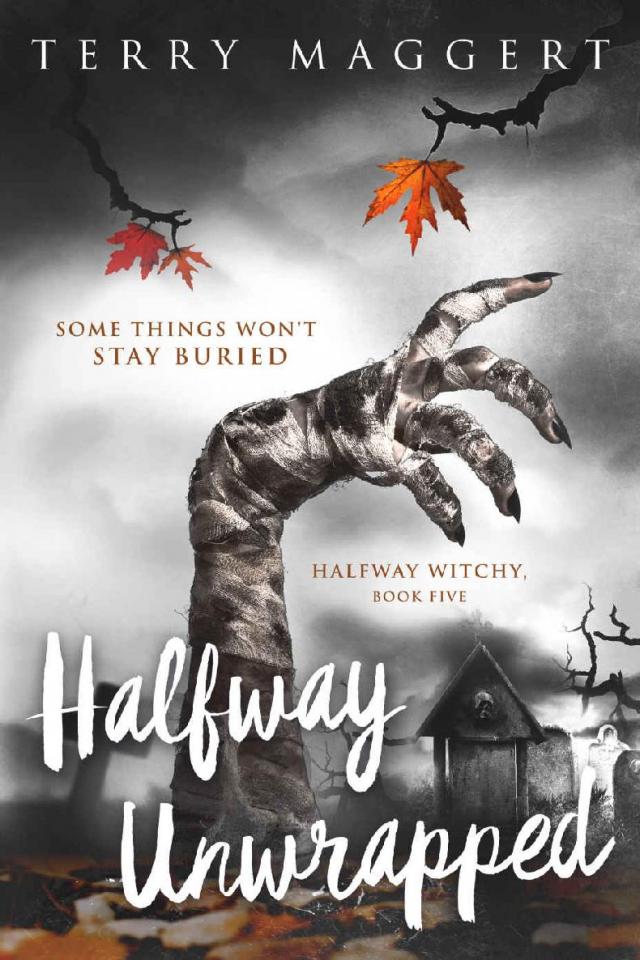
She pierced me with her blue eyes, and said, “A mummy.”
Chapter Three: The Deb Situation
“Honey, she’s the kind of woman to do something like,” Tammy paused, searching for the words, then snapped her fingers, lacquered red nails flashing from the lights above the diner counter. “Something like I would do.” She nodded gravely, every hair in order and dangerously blonde. Like the men in Tammy Cincotti’s life, her hair knew its place. Glancing at her makeup, I added that to the list of things that obeyed Tammy Cincotti at all times. It was pageant ready. Of course.
“Like. . . you? Hmph. This is a bit more serious than I thought,” I admitted. Deb ran the dry cleaners in town, and it was only open during the day, so that left any drop-offs and pickups to Wulfric.
That was just fine with Deb.
Tammy leaned forward, voice a conspiratorial shout in the bustle of the diner. She didn’t whisper, so it was the closest she would ever approach subtlety. “I can stop by and have a chat, so you don’t have to dirty your hands, kid.”
“What? Are we in the mafia, now? No way. Wulfric told me she raises rabbits in her kitchen and makes them little hats. Or vests. Maybe both.”
“That’s kind of adorable,” Tammy said.
“I know, right? I thought the same thing. She’s harmless, and he’s beautiful. Let her look. It might make her day. You certainly allow the world to, ah, share in your bounty.” I raised a brow at her cleavage, which was in full glory and doubtless improving the morale of people all over the county.
She lifted her chest and smiled. “True. I’m a giver. Well, the offer stands. Gotta go, kid.” She clicked her tongue and gave me finger guns before sliding away from the counter. Half the diner watched her go; the other half were with their partners, so they studiously looked at the floor. Or the ceiling. When she was safely out of the building, conversations began anew as if a lion had walked past, then kept going. In a sense, that was true.
Pat was plating bug toast, and by the number of raisins in it, I knew Louis had baked it just for her. She loved our raisin bread—known in the Hawthorn Diner as bug toast—and Pat was a certified fiend. She placed her plate to one side with unrequited hunger, moving off to refill coffees and check her tables. The crowd was happy, with a smattering of late season tourists among our locals. I stepped back to the grill and looked at three flapping tickets, making a note to start the fried eggs first and bacon second.
“Carlie? Wulfric's out front. He has a pal,” Pat said over her shoulder. She was smiling, so it wasn’t a dragon or some other creature designed to ruin my day, and that meant it was a friend.
“Eli!” I said, waving in a way that always feels a little bit dumb. I’ve never quite mastered the method for greeting a friend and not looking awkward. Sometimes I wave with both hands, or one, but I let it flap around, or I might even—and we don’t speak of this—hop once or twice in place. I have life goals, and one is to be cool when I see old friends, but such grace eludes me, sort of like reaching the pedals in a car or seeing a parade.
Dr. Eli Delacourt bustled up to the glass, face cracked with a massive smile. He shared my enthusiastic disregard for personal calm, so we got along great. He’s also weirdly intelligent without being incapable of having a conversation, so when he pointed to Wulfric and mimicked eating pizza, I knew they would be at The Pines when I got off shift. The sun was high, it was well into lunch, and I would get to join the good doctor and watch him compete with Wulfric to see who could consume ten thousand calories the fastest. I gave them thumbs up to accept the lunch offer, then considered my work when they ambled off, Eli speaking to Wulfric in his usual rapid-fire manner. Whatever they spoke of, it was at typical Delacourt velocity, but Wulfric took it in his usual laconic manner.
I bent to my work, letting my eyes flicker up to see their retreating backs, and that’s when I noticed that Eli, noted pacifist and lover of knowledge, was carrying a gun.
“Louis, take the grill. I’m out,” I said, not looking back. He grunted, took my place, and began spinning the ticket wheel before I’d cleared the diner door.
“Wulfric,” I called into the space between us on the street, loud enough that he could hear me. They were no more than fifty feet away, standing in a light stream of people who were moving about in the glorious sunshine. I walked to them as fast as I could, eyes narrowed in suspicion.
He looked over my shoulder, then back to me. “Can you leave?”
“Mm-hmm.” I said nothing to Eli, who let his smile fall just enough to tell me something was wrong. “Why the gun?”
He rubbed his head, then took his glasses off to buy more time. While he wiped them on his blue shirt, he regarded me with a childish lack of cunning. Eli was smart, funny, awkward, and oddly tough, but he was no liar. He didn’t have it in him to be dishonest, and his brown oval face was spotted with sweat at the effort of answering my question.
“Protection, but only because I was in the field having a quiet look for the OCA. I came over here from a place called Belvidere Center, Vermont. You know it?” Eli asked.
“No, but it sounds cozy. Should I?” I asked.
“Just curious. There’s something a bit unusual in the river, and it needed my particular experience, so I went alone to investigate,” Eli explained. He was the primary force in the Office of Cultural Antiquities, and that meant he had first crack at all things old, weird, or both.
“Define unusual,” I said. That was a broad term in my world.
“Okay, well, it’s not what’s there, it’s what isn’t. There’s a small stretch of riverbank where snow melts, and a nearby resident reported a whirlpool,” Eli said.
“Whirlpools are really common. Happen all the time,” I told him.
“This one happened in the winter. With ice,” Eli said.
“Hmph. That is a bit off. How big?” I asked.
“Thirty feet across. It turned slowly, never moving up or downriver, always separate from the heavy ice, even in the wild spring thaw, when all of the huge chunks stack up and tumble around. I went because some divers were convinced it was sunken treasure, of a sort.”
“Treasure? What kind?” Nothing surprised me, but even this was a bit too pirate booty for my tastes. I always thought of buried gold as being an oceanic thing, even though my own people, the Celts, were notorious for squirreling away shiny things everywhere they lived.
“A log.”
I held up a hand and uttered a word I use only in extreme emergencies. “Dude.”
“I know. A giant log that sank, from some old growth tree that was cut down two hundred years ago. Apparently, people pay huge amounts of money for them, because you can’t find lumber like that anymore. At least, not legally. So these diver guys—kind of underwater hippies, in a way—well, they prowl the rivers and ask fisherman about sunken logs, read old mill records, that kind of thing. They’re convinced it’s several big trees, all high dollar stuff, and they’re pressuring me to dive the area to put floats on the wood and send it to the surface.”
“But there’s a problem, right?” I knew Eli. He was working up to the point.
“You might say. A diver went missing. Immediately. He’s gone, as in no body, no sign, nothing. The river is good sized, but that makes me think something else is at play. That and the melting snow,” he added.
“Tell me about the bank. Are there trees on it? Where the snow melts?”
“No, it’s bare,” Wulfric said. Eli must have informed him of the details while they were walking.
“You can lose the gun, then. It won’t help you there,” I told him. A missing tree, old logs, ice whirlpools, and melting snow could only mean one thing. “It’s a fire dryad, and you’d be smart to leave her be.”
“Her?” Wulfric asked. “You know her?”
I shook my head. “No, but they’re all female, and generally mean. They cling to a single tree or copse of trees, and they never leave. They’re demi-folk, sort of in between the world of magic and animal, smart enough to be trouble, but also not above petty revenge. If she’s mad, I’d stay away until a witch can get there to talk her down from her anger. It’s justified, and she’ll need something to replace her home.”
“Could I plant a tree?” Eli asked. It was a good question, if a bit naïve.
“Maybe, but she’ll want something specific. You’ll need charcoal, too, and some kind of circle. Like I said, more witchy than woodsy.”
“We’ll move out immediately and let her be. I’ll inform the divers they can wait until next spring, and only under my own supervision. If you could, ah, coach me on what to do between now and then, that would be great.” Eli smiled, and reminded me of how young he was despite his responsibilities.
“No problem. It’s pretty simple, as long as you give her some space until we can deliver a message. Once she knows someone is going to help, things will be more reasonable on that stretch of the river, but I’m not sure anything can bring the diver back,” I told him with regret.
“I’ll deal with it, and see to it that his family isn’t bogged down in red tape if there are any insurance benefits,” Eli said.
“Eli, I mean no disrespect,” I began, watching his brows go up as he braced for the kind of thing people say when they start a sentence that way. Usually what follows is anything but respectful.
“Yes?” He asked, cautious. Wulfric merely watched us both, his gaze neutral.
“Do you think the fire dryad is going to attack you here, on the street where my family magic is on tap, or are you just carrying the gun because you forgot and drove more than a hundred miles with it on your hip?”
He gave us both a nervous smile, plucking at the buttons of his shirt. “I got out of the car on the other side of Inlet, just where that spring flows by the side of the road?”
“Mm-hmm. I know it. Someone put a pipe there so people can fill canteens and jugs with cold mountain water. Been there for a century. Did you feel threatened by nature in general, or was it something specific?”
“The area is lovely, but there are no beasts to speak of,” Wulfric added.
“There weren’t, but that may have changed,” Eli said. “Something tore the pipe out of the hillside and wrapped it around a car. Twice.”
“Oh.” That was unusual; I had to admit. “How did you find out?”
“Because the car belonged to someone I know, and I figured I would take a look before things got. . . complicated.” He sighed, looking wistfully in the direction of The Pines. “We’re never going to eat, are we?”
I laughed, Wulfric nodded in agreement, and as one, we began moving toward the source of pizza just as Eli’s stomach roared with muffled anger. “Let’s talk on the way. Watching you two eat is a spectator sport, and I need to hear this story before we get there.”
“Ok.” He grinned and gave Wulfric one of the most awkward high-fives I’ve ever seen. “The car belonged—I say belonged because it’s totaled--- to my sister, Alice, and once she calmed down enough, she told me that a, ah, thing clawed its way out of the ground and went a bit mad, wrecking her car and making quite a racket before it was hit by a truck. I’ll jump to the good part, if there can be one—the truck turned whatever it was into so much goo.”
“Did Alice say what this creature looked like?” I asked.