Biomass alive, p.1
BIOMASS: Alive,
p.1
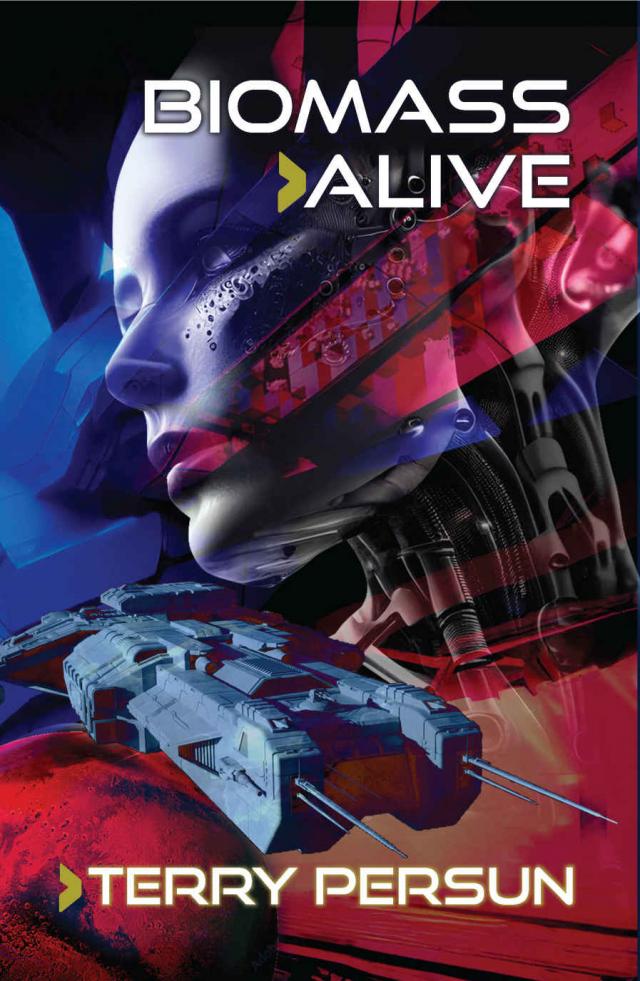


BIOMASS: Alive
Terry Persun
Copyright © 2023 by Terry Persun
All rights reserved.
No portion of this book may be reproduced in any form without ritten permission from the publisher or author, except as permitted by U.S. copyright law.
Cover Design by SelfPublishingAuthors.com
Praise for Terry Persun
Revision 7: DNA
“Time travel and conspiracies combine with sensational robotics in this science fiction thriller. Furiously fun. Terry Persun will keep you guessing and wanting more.” —Kay Kenyon, author of THE ENTIRE AND THE ROSE
BIOMASS: Rewind
“Terry Persun’s BIOMASS REWIND has everything I love in a novel: fully fleshed characters, thought-provoking science, and a story that grips you by the throat until the last page…while still leaving you wanting more. If Orson Scott Card and Isaac Asimov had had collaborated on a novel, it might look something like this book. Highly recommended!” —James Rollins, #1 NY Times bestseller of KINGDOM OF BONES
I love a book that makes me think about what makes us human. From the opening, bone-rattling descent to a new world, Terry Persun takes us on a twisting journey of discovery that reminds us that friends can be enemies, enemies can be friends, and “intelligent” isn’t the same as “most intelligent.” —Eric Witchey, author of LITTLE DEATH, winner of the International Book Award for Visionary Fiction
Gripping and highly original. A courageous premise made vivid and frighteningly believable. —Kay Kenyon, science fiction and fantasy author of MAXIMUM ICE and THE GIRL WHO FELL INTO MYTH
Doublesight
“Lately fantasy rarely surprises and seldom delights, but Terry Persun’s novel DOUBLESIGHT does both and more. Richly textural, complicated in character, and presenting a world unlike any other, this debut imbues new blood into the genre. It is a stunning fantasy for the new millennium.” —James Rollins, NY Times bestselling author of THE STARLESS CROWN
“Persun’s captivating new fantasy raises the art of shape shifting to a new level. Enter the world of Doublesight where man and animal are one. A fresh adventure awaits!” —Janet Lee Carey, author of DRAGONSWOOD
This book is for Howard, Jeri, and Randy
“If only I had a body like they have.”
—Argentina, from “BIOMASS: Star People”
“Small adjustments might appear negligible, but they aren’t.”
—Amanda, from “BIOMASS: Alive!”
Contents
PART ONE: QUESTIONS
Chapter 1
Chapter 2
Chapter 3
Chapter 4
Chapter 5
Chapter 6
Chapter 7
Chapter 8
Chapter 9
Chapter 10
PART II: Alive
Chapter 11
Chapter 12
Chapter 13
Chapter 14
Chapter 15
Chapter 16
Chapter 17
Chapter 18
Chapter 19
Chapter 20
Chapter 21
Chapter 22
Part III: Splintered
Chapter 23
Chapter 24
Chapter 25
Chapter 26
Chapter 27
Chapter 28
Chapter 29
Chapter 30
Chapter 31
Chapter 32
Chapter 33
Chapter 34
Chapter 35
Chapter 36
Chapter 37
Chapter 38
Chapter 39
Part IV: Answers
Chapter 40
Chapter 41
Chapter 42
Chapter 43
Chapter 44
Chapter 45
Chapter 46
Chapter 47
Dear Reader
About the Author
Also By Terry Persun
PART ONE: QUESTIONS
Chapter 1
Amanda 721 removed a work towel from her bag, sprayed the antiseptic along the smooth metal, and vigorously wiped down the side of the 3D printer, wondering how many live cells she’d destroyed in the process. She had squeezed between two machines. She understood that the half-grown bodies would be discarded and the machine beds cleaned prior to powering back up the printers, but she liked her work area to be spotless. She flicked the hinge and opened her tool case with her foot, reached down for a screwdriver, then removed the side control panel from the 3D printer. All this while trying to ignore the bed of the machine she needed to repair. Amanda wasn’t normally queasy, but after seeing open carcasses often enough, she began to associate the bodies with her own. Empathy perhaps.
The 3D printers she worked on deposited live cells into human bodies. Later, the printed bodies were transferred into the lab where cloned brains were installed and baseline memories of Earth installed along with specialty knowledge such as biology, chemistry, physics, or her own download for electronic engineering.
While touching key points on the printed circuit board using her meter leads, Amanda focused on the images that appeared above her holo-tablet, which she had placed atop the military gray controller enclosure. She powered the motion system and pushed a few keys, extending out torque and speed curves, along with accuracy based on her cumulative readings, graphing and charting the servo motor specifications and materials, and mentally calculating her observations. She didn’t believe the results at first, but it wouldn’t be the first time a machine had to be upgraded to make up for some other electromechanical weaknesses that another engineer might have caused with his or her own repair. Amanda considered her options: increase the number of windings, change out the magnets, or bump up the case size altogether. She decided to increase the number of windings.
Other machines in the factory continued to operate in other work cells, and before long, she heard the swishing of a washdown sequence performed on one of the banks of four machines farther down the floor. The stark odor coming from the washdown cycle exhibited the same highly antiseptic and sharp smell as her cleaner. She covered her nose for a moment.
The body on the machine bed she worked on collapsed in the center with a squish sound. Again, the body. What made her so hyper-sensitive all of a sudden, noticing every detail. The end of the day, perhaps. She was tired.
It wasn’t unusual that the partially grown body would collapse. The scaffolding used to hold certain body parts in place during subsequent build processes were designed to disintegrate in the acidic air in the manufacturing location once supported by other body parts. As the scaffolds collapsed without that support, the body folded in on itself. She hated the sound, squishy, gross, inhuman yet human. She glanced over and crinkled up her face at the sight of the collapsed half-grown body.
Amanda punched in the work order, then closed her holo-tablet and used her work towel to wipe off more cells dripping over the side of the bed. She didn’t want it getting into her hair when she bent over to close up her tool kit. She buttoned up the control enclosure and dropped the towel over the top of her kit before bending over to latch it closed.
From a nearby speaker, Argentina’s voice came loud and rather harsh. “Is your work complete?”
Amanda jumped, sucking in a gulp of air. She bumped into the printer and some cell material dripped onto her shoulder. So much for staying clean.
“Did I startle you?” came the ship’s voice.
She had seldom been addressed directly from Argentina unless requesting something specific from her like a time she might arrive for a work order or whether she needed her clothes cleaned. Simple things.
“Yes. I’m finished for now.” She also meant that she was startled but didn’t say that.
A pleasant monotoned voice said, “May I ask you a question?”
Amanda looked at the com unit speaker, one attached to every unit, every wall, everywhere. She understood that Argentina could see her, but the ship was nothing but a voice to crewmembers, so that they didn’t start thinking of the ship as a real person to interact with. Yes, now they were interacting, but Argentina wasn’t real, just a voice. “Of course. I doubt that I can help answer anything you’d want to ask but go ahead.”
“How does creativity work?”
Her question felt more startling, more intrusive than the break in silence had been. It felt. . . wrong. How could Amanda answer such a question? Didn’t the ship know the answer? Couldn’t she find it? The question felt like a trap, although Amanda didn’t know why she thought that. “I don’t know. Not really.”
Amanda bent to pick up her kit, hoping Argentina was satisfied.
More squishing sounds and a strange odor came from the corpse on the platform. A biological smell. The insides of a person fully exposed. She wrinkled her nose and scrunched her face while turning sideways. She needed to get out from between the units. Away from Argentina’s question. On her way, she halted long enough to first wipe down each unit on either side of her as material oozed over the edges. Each manufacturing cell of four printers shut down together when there was a problem. She glanced back. The other two units dripped organic cell material down their sides as well. Everything would be cleaned thoroughly in due time. She just wanted out. But she didn’t make it.
“You just made a creative decision." Argentina’s voice sounded unusually scratchy through the com unit. “Any number of solutions would have worked, yet you chose a particular one. How did you make that choi
ce? Was it about this particular machine?”
Amanda’s hand shook, and she hoped the ship didn’t see it. She kneeled into a position she thought was out of view of cameras located along the ceiling on the manufacturing floor. She hadn’t thought about how she made the decision. Why did it matter? She wanted to answer in a way that satisfied Argentina. Get her to stop asking. So Amanda made something up. “I know this machine. I’ve made other repairs in the past and also know that some of the other engineers have made adjustments to it. That reminded me of past situations where one fix would lead to the next. Small adjustments might appear negligible, but they aren’t.” Amanda could have, at that moment, looked up the name of the mechanical engineer who last worked on the unit and given Argentina the name, but she didn’t. She knew that minor adjustments had repeatedly been made, and she’d had to adjust other machines because of it. She figured whoever made the changes was just keeping things interesting for himself or herself—something she’d done in the past as well. These days, she was just interested in getting the job done. None of it was fun anymore. She couldn’t tell Argentina any of that. “I guess that’s it. All standard technologies. I just made a random choice.”
“You are not the only one.”
She knitted her brow. “The only electrical engineer?”
“The only biomass unit who has completed a task in a new way. I have data back to my beginnings, archived data, and still creative things continue to happen.”
“It was your alarm system that alerted me to the situation.” She hoped that threw the conversation back toward Argentina. She had never engaged in a conversation with the ship, and she worried that there might be a right and wrong answer. The situation was highly unusual and made her nervous.
“And your decision on how to fix it?”
Was she accusing Amanda of something? What could she say? She did nothing wrong. “Don’t all biomass units do the same thing?” Amanda asked, even though she hated using biomass unit instead of person or human or some other nomenclature that was more personal.
“Often, which is why I inquired.”
Why ask me? Still kneeling near her tool kit, she said, “You should check with software or psychology. I may be wrong. This is not my specialty. Please.” She wiped a bead of sweat from her brow with the back of her hand, although the manufacturing area was kept cool to maintain body rigidity during the build process. Her job was to keep the machines running, not answer hypothetical questions from the ship. She shook her head, wondering why she’d answered at all. She shouldn’t have. It wasn’t a question that was within her scope of understanding, and she may have led Argentina wrong. What would that mean? Where did the question come from? But Argentina indicated that Amanda wasn’t the only one. What might that have really meant? Was the ship gathering data for some reason? “That’s all I know. May I go now?”
“Thank you for your answer and for your suggestion.” The scratchy com unit speaker snapped and went silent. The click sounded as though the ship, as if a person, had suddenly clammed up and rushed away.
Amanda lifted her head in relief, the half-grown body at eye level. She grabbed the handle of the tool kit and stood. The body had collapsed in various areas, hollows of flesh, organs flattened. The biological scent became more pungent. Her eyes began to burn. When she had first gotten there, the plane along the top of the body was fairly flat as one layer was placed over another. Once the machines were turned off, everything started to change dependent on the materials used in the scaffolding. It wasn’t like the body had been ravaged or torn apart, not mangled at all, just half-made. Like a body cut-away. The body only, never the brain, which was cloned and inserted and connected at a later stage of processing.
Away from what felt like an interrogation of her reasoning, Amanda shifted her focus. She wondered what name the body would have had. Was the name something it got once the brain was inserted and the memory downloads introduced? Or was it given a name the second it was scheduled for growth? She scurried from between the machines and exited manufacturing, which made up most of deck six, and returned to deck eight where her quarters waited for her. She ran the conversation through her mind over and over again while walking down the hall toward her room.
In her quarters, she let the door slide closed and leaned her back against it. She wiped sweat from her brow. She sighed. Her hands shook. She dropped her tool case and it popped open, scattering tools across the floor.
Chapter 2
Quarters onboard were small but accommodating. Portable wall segments separated bedroom from bathroom and living area from kitchen. Each person was able to adjust the layout slightly, within limits. Only two decks above manufacturing, Amanda often thought she could hear and feel the machines operating from her quarters on deck eight. On this day, her ears were ringing too loudly to notice. Once her hands stopped shaking, she gathered her spilled tools and trudged to her tool closet, stuffed into the far-right corner of her bedroom, and put her tools away. She threw the towel into the cleaning chute off to the side of her shower. Her face still felt hot, so she sat on the side of her bed and waited for her blood pressure to lower. She kicked her shoes off and stripped down, throwing her clothes in a bundle on her bed, dropping her socks to the floor, and made her way toward the shower. She shivered when she first stepped inside, the eeriness of her recent experience running through her nerves like fingernails on a metal surface.
She considered her work, her specialty being motion control: positioning systems, transfer stations, that sort of thing. Other engineers handled other components such as cell dispensing units, cleaning devices. Thank goodness she didn’t have to get involved in any more of the biological components than she had to. She didn’t have the stomach for it. Members of the engineering team seldom saw one another except at meetings or in passing. Predictive maintenance, repair, replacement, all requiring a lot of time but seldom taking overlapping time slots. Everything organized precisely by the ship.
After her shower, Amanda sat naked on her bed, her back against the wall, a pillow positioned upright to lean against. She opened the wall unit to the side and punched the record button on her private line. Every ship-bound person had a segmented data channel Argentina had no access to. That area was hardwired separately from other systems. It was meant to give residents privacy.
That’s where Amanda recorded what she considered as her legacy—not that anyone would ever listen to it. She knew it was a consolation for taking choice from her life, perhaps, or another way to look at it was an exchange for sentencing her to the ship while others got to explore.
She glanced around the room, its sterile walls and floor. It felt barren. And for as safe as it was supposed to be, it didn’t feel safe to her. She felt trapped.
Of course, there were greater dangers to those colonizing a planet. People died all the time. Not so on-board.
Amanda knew she had a set lifespan and would live it to the end. But her life wasn’t interesting, exciting, and she had tired of trying to make it so.
She spent more time recording private sessions lately than she had for years, often pondering bigger questions. “Why are humans on a ship like this?” she spoke aloud. “I’ve often thought about it even though I know the reasons we’ve been told: humans are self-powered. A little food and we can manage. Food is grown onboard, deck eleven, where planet-side training takes place. It’s all part of a bigger plan. People need to know about growing their own food if they’re going to colonize. What can’t be grown is simulated on board, according to the approved documents. Furthermore, robots cost a lot of energy and raw materials that are much more difficult to duplicate and maintain.” She slid from the bed and paced along its length, stepping over her discarded shoes and socks. Amanda stopped talking. Why was she even explaining something that everyone was taught before getting their job assignments? History, maybe. She felt compelled, as though one day there may be no one alive, a dead ship found and explored, only her explanation existing. A fantasy. An adventure.