The killer within, p.23
The Killer Within,
p.23
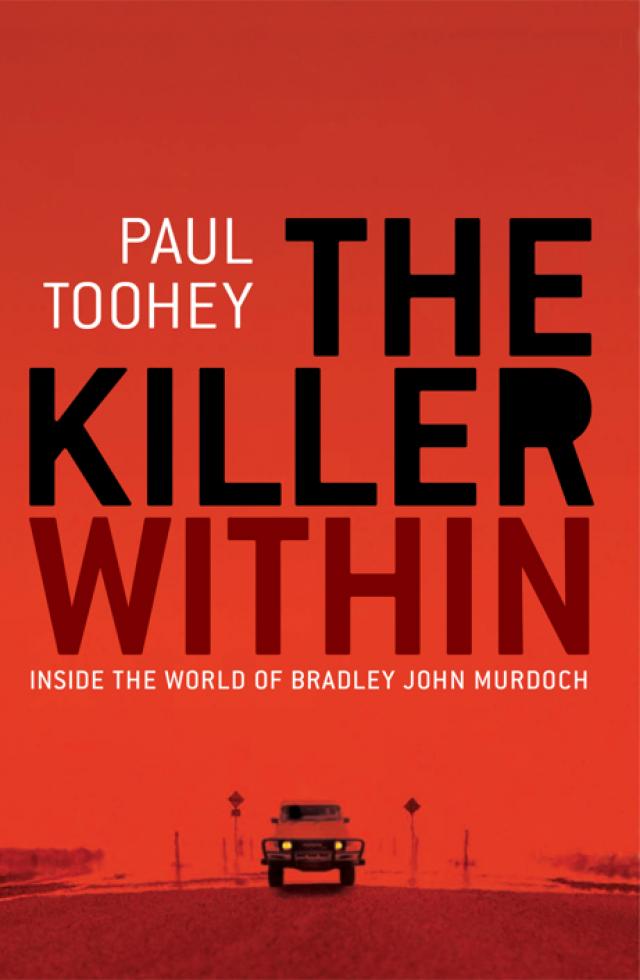


In a pre-trial hearing, the prosecution attempted to seek permission to introduce the detectives’ notes into court. At the time they weren’t interested in chicken allergies, and in fact did not learn about Murdoch’s aversion until after the trial had concluded. But they were interested in these new claims that he’d visited Red Rooster. These notes represented the only time Murdoch had ever talked to those building a case against him. The judge disallowed them into evidence because it had been an off-the-record discussion. Had the prosecution known of Murdoch’s medical problem, they could have asked one question: ‘Mr Murdoch, do you eat chicken?’ It could well have sunk him. The whole thing could have been called off and everyone could have gone home. Or maybe not. Murdoch, so accomplished at fashioning lies, could have said it was a recently acquired allergy. I’d asked Hepi, without briefing him on the reason for the question, whether he could ever recall Murdoch eating chicken. ‘Chicken? Chicken? I don’t know. I can’t remember. All I know is that we had so much money all we ever ate was scotch fillet.’
Even though he was a drug courier who always moved fast, stopping nowhere long except to refuel, Murdoch insisted he’d spent a leisurely day in Alice Springs. He said he went to the Toyota dealership to use a high-powered hose to clean the undercarriage of his vehicle of the white limestone dust of the Sedan–Swan Reach region. He said he didn’t want to turn up in Western Australia with his car covered in white dust, because that would have been suspicious. Even though, by the time he got to Broome, the vehicle’s undercarriage would be covered in the red mud of the Kimberleys. He did some shopping at Repco, stuck his head in at Barbeques Galore, fuelled up at BP, did a bit of shopping at Bi-Lo – ‘I bought iced coffee, yoghurt, Yakult, some general dry goods, dry biscuits, bit of bread, small goods, meats, tomatoes, bits and pieces.’ And then, he said, he left Alice Springs. He said he turned left onto the Tanami Track, 20 kilometres north of Alice, at about 3.30 pm, and slowly headed northwest. He said he did not drive directly north to Barrow Creek – ‘No, I did not’ – nor did he have anything to do with what Algie called ‘the alleged disappearance’ of Falconio: ‘No, I did not.’
Murdoch said he nursed his combat-ready vehicle towards Western Australia at a docile ‘50, 60 kilometres an hour. I’m a big one for letting my tyres down,’ he said easily, explaining how it gave a softer ride and things in the back didn’t get broken. Jurors stirred. Lunch break was called. The court doors flew open and people made for the foyer, brushing the heavysettling bullshit from their shoulders.
Murdoch couldn’t explain how his blood got on Lees’ t-shirt. ‘I don’t know whether I crossed their paths or not.’
Murdoch’s decision to take the stand, to charm the jury with his knockabout Aussie loner drivel, was damaging. Rex Wild did not waste time when he rose to tackle Murdoch. ‘Where did you bury Peter Falconio?’ he demanded. Murdoch looked wounded and indignant. Shocked. Hurt. He leaned back in horror. The question was distasteful, vulgar even. It was as if the very notion that this whole trial about him cold-whacking a bullet into Falconio’s brain was a new one on him. Algie had to do something. His client was upset. He rose with a lame, ‘I object.’
Wild asked Murdoch whether he bled easily. ‘I do bleed easily, yeah,’ said Murdoch, explaining that he had a non-specific medical condition.
Wild: ‘Were you bleeding on 14 July 2001?’
Murdoch: ‘I don’t know.’
Wild: ‘Do you remember any particular injury at that time?’
Murdoch: ‘Don’t know.’
Wild: ‘Do you have nose bleeds?’
Murdoch: ‘No.’
Wild: ‘How did the blood, your blood, which matches the DNA found on the back of Joanne Lees’ t-shirt, get there?’
Murdoch: ‘I don’t know.’
Wild: ‘You do, don’t you?’
Murdoch: ‘No, I don’t.’
Wild had Murdoch and would not let him go. He took him through everything, over and over, to the point where Murdoch was rolling his eyes in frustration, looking pathetically to the jury for sympathy they did not have, trying to get them to see what a waste of time this all was. But the jury was absorbed, totally. They knew they were listening to a killer trying to save himself.
Wild hammered on about the witnesses who had said his mesh sides were missing in the period including 14 July. Murdoch said he would have never have gotten rid of them because he wanted them for Jack, the dog, so he could ride safely in the cage at the back. ‘I give my dog Jack more respect than all of those people,’ said Murdoch of his former friends.
Wild: ‘I suggest you pulled over the Kombi and met the driver at the back of the vehicle?’
Murdoch: ‘No.’
Wild: ‘And shot him dead?’
Murdoch: ‘No.’
Wild: ‘You had to, on the night, move the Kombi from the place it was?’
Murdoch: ‘No.’
Wild: ‘And as a result of that you left your DNA on the gearstick of the Kombi?’
Murdoch: ‘No.’
Wild: ‘You had to dispose of Peter Falconio?’
Murdoch: ‘No.’
Wild: ‘You’re a fastidious man, aren’t you Mr Murdoch?’
Murdoch: ‘I am a bit meticulous.’
Wild: ‘You didn’t want any blood in your vehicle, did you?’
Murdoch: ‘I never had Mr Falconio in my vehicle and I did not commit this, so.’
Wild: ‘You used the denim jacket to wrap his head in?’
Murdoch: ‘No.’
Wild: ‘You ended up with a hair tie as a souvenir?’
Murdoch: ‘No.’
Algie then called, on Murdoch’s behalf, a DNA forensic science expert, the elderly Dr Katrin Both, to cast doubt on the validity of the newfangled DNA extraction technique known as low copy number. Using this new technology, police were able to pull the black-tape-wrapped zip-tie handcuffs and find miniscule amounts of Murdoch’s DNA. Dr Both said she had ‘a large number of concerns’ about the reliability of the procedure.
It would have been dull court time except that Tony Elliott got stuck into her. Elliott focused on her inconsistencies and managed to turn her from a comfortable DNA elder into a snappy and defensive person who may not have been au fait with the new techniques. She stormed out of court and was heard vowing she would never again give expert evidence.
Algie called another elderly expert, biological anthropologist Maceij Hennenberg, who was there to testify that the man in the truck stop was, in no way, Murdoch. His reasoning involved a study he had done comparing koala hands to human hands, and he discoursed at length on how central Europeans had ‘round heads like a soccer ball’ by comparison to Aborigines, who had elongated ‘rugby ball’ heads. It wouldn’t have mattered if there was a breed of humans with light-bulb heads. The jury knew the man at the truck stop was Murdoch.
On Monday 5 December, Algie began summing up to the jury. ‘Well, ladies and gentlemen, here we all are again,’ he said, weary. He was only there to assist them with certain matters. The first matter he wanted to help them with related to a spot 10 kilometres north of Barrow Creek. But he couldn’t actually help them with that – the location where Murdoch was supposed to have killed Peter Falconio and attempted to abduct his girlfriend, ‘Joanna’ Lees – because ‘Brad Murdoch wasn’t there’. The whole prosecution case was strange, said Algie. There was no blood on the Kombi van Falconio and Lees were driving. No brain or bone fragment found in the patch of roadside blood. No projectile – or bullet – was ever found. Why?
Algie admitted that the prosecution had made a case that the projectile might have lodged in Falconio’s skull and never left it, which would explain why they never found the bullet. But it bothered him. Algie talked of the ‘unknown, unrelated bad guy’ who had done all these things. He couldn’t understand the logic of someone shooting someone and then picking up the body and putting it in his car. Not a meticulous man like Murdoch, who fussed about and loved his vehicles and would not have abided any blood spill. He told the jury the absence of Falconio’s body was ‘cause for serious concern when you’re asked to return a verdict of murder’.
‘From time to time, some people disappear themselves for reasons that are best known to them,’ said Algie as the Falconio family and Lees stared straight ahead in disbelief. The man seen at the truck stop ‘could’ve come from anywhere’, said Algie. ‘It’s just a guy at a truck stop with a moustache.’ He said the most powerful, non-circumstantial piece of evidence in the case – the spot of blood on the back of Lees’ t-shirt – proved nothing. There was no dispute that Lees, Falconio and Murdoch were all in Alice Springs on 14 July. There was not even any dispute that this particular DNA sample belonged to his client. But Algie said Murdoch could have ‘got a cut or something’ and left a small amount of blood ‘on a seat, on a door, doorframe, something like that. She comes along and a secondary transfer takes place.’ Jury members weren’t looking at each other. Their eyes were downcast. It was borderline embarrassing.
Algie attacked the evidence of Professor Jonathon Whittaker, who had pioneered the method of low copy number DNA extraction and testified that he had found Murdoch’s DNA from within the handcuffs from a sample sent to his English laboratory. But playing the man rather than the science, Algie went for Whittaker, who had possibly come across as a little pompous when he proclaimed himself the world’s leading expert in his field. ‘It may be, members of the jury, that you take the view that, you know, experts telling us colonials that that’s the way it is because they say it is not satisfactory. I mean, many of you, ladies and gentlemen, would be acutely aware that some twenty-odd years ago up here in the Supreme Court in Darwin, experts gave evidence that it was fetal haemoglobin, fetal blood, on the inside of the car that led to another conviction for murder. No doubt because they were experts you should believe them. But they were wrong.’ And there it was, full circle back to Lindy. What Algie was saying was, in its own way, a threat: a Darwin jury had got Lindy wrong – don’t get this one wrong. They may not have liked that, but Algie had to do something. He was going down and he knew it. He now knew he should never have been a gentleman with Lees. He should have torn her throat out. But it was all too late.
Algie turned on the Northern Territory police force, painting a picture of a group of conspiratorial, dirty cops who were not interested in finding the Barrow Creek assailant, just fitting up Murdoch for the deed. There were two main strands to this argument: the first was that when police searched the spot off the Stuart Highway where ‘Joanna’ had hidden after the attack, they initially found only the lid of the lip balm. But months later, on a second search in October 2001, they found the lip balm container and bits of black tape she had spat out after trying to bite her hands free. How had they missed it the first time? Had they planted it in order to shore up Lees’ improbable story? He wondered out loud if ‘some kangaroo came along and took away the lip balm container for a few months and then brought it back’. No one in the jury laughed.
The other strand was that police had planted DNA in the handcuffs sent to Britain for Whittaker to examine. Although Algie did not accept that Whittaker’s pioneering low copy number DNA extraction methods were valid, what if they were? ‘There’s another possibility, I suppose, members of the jury, isn’t there? Could they have been contaminated intentionally, members of the jury? Could it be, to adopt the vernacular, a set-up, a fit? Would police do that, members of the jury? Do you think that’s possible?’
Look at the royal commissions into police corruption in Australian states, said Algie. They do it all the time. If police were sure Brad Murdoch had done it, would they ‘bend the rules, fabricate a little bit, lie a little bit, particularly if there’s no harm done?’ Somebody played around with the evidence, said Algie. ‘Perhaps it was a dingo. Who knows?’ Algie had misjudged the jury’s willingness to do the task that it had been set. He presented an argument about history and politics and corruption, not about a specific murder. It was a bad move.
Algie told the jury to give Brad Murdoch ‘some credit’ for choosing to take the stand and testify on his own behalf. After all, Brad didn’t have to. Murdoch was a ‘knockabout sort of bloke, a man’s man perhaps’, said Algie, talking fondly about ‘the Brad Murdoch we’ve come to know’ during the course of the trial. He was admittedly a big-time drug runner who took speed and had armed himself on his travels, but was just in the wrong place at the wrong time. He just got caught up in this terrible mess.
‘He was not at the Shell Truck Stop,’ said Algie. ‘He wasn’t at Barrow Creek. He didn’t go there. It wasn’t him.’ And so it went. ‘Joanna’ Lees had got so many things wrong. She’d said she’d made a lunge for the man’s testicles as he was attempting to truss her up. Unlikely. What about her statement that her attacker’s car had front-to-rear access, through which the ‘bad guy’ shoved her? Murdoch had no such car. Would a person such as Lees really have hidden in the bushes for so many hours before seeking help? Why not run straight out and flag down help?
Algie also made a brief remark – but did not expand on it – that Lees could have driven the Kombi van with her wrists manacled. The inference was clear: she was part of a conspiracy to kill her boyfriend, or to help him disappear. She could have been the one who shifted the Kombi off the highway and hid it in the scrub. Peter Falconio dead? Where was the proof? ‘Thank you, members of the jury, for listening. On behalf of Brad Murdoch, thank you.’
‘Corruption, conspiracies, this innuendo running through the case,’ Wild told the jury. ‘There is not one tittle of evidence to support it. Not one.’ The cops could so easily have fitted Murdoch up good and proper, if they wished. But they didn’t. They just went with the evidence they had. As for Algie raising the spectre of a notorious case from decades earlier, Wild advised the jury to be cautious: ‘You’re not interested in what happened in the Azaria Chamberlain case. You’re interested in this case.’ He counselled against those who would turn what happened on 14 July into a ‘mystery’. ‘I’ve heard it said at various times that this is “the Peter Falconio mystery”. It’s no mystery. Peter Falconio died on 14 July 2001.’ Brad Murdoch killed him.
Joanne Lees might have got certain details wrong about the attack that night. Why not? ‘This young woman was in a state of emergency – she was in fact fighting for her life,’ said Wild. ‘She was not there taking notes. She was having the most terrifying experience of her life or any person in this room could have.’
Wild noted that two of the three ‘expert’ scientific witnesses the Murdoch team had called were ‘older’ – they were in semi-retirement. They disputed the evidence provided by the Crown’s younger scientific experts. Wild wondered if perhaps they weren’t up with the latest methods, or were reluctant to acknowledge the skills of younger people coming up in their field. Murdoch looked at Jan Pitman and clearly mouthed the words: ‘What a fucking wanker.’ Pitman looked embarrassed and tried to shush him.
Here was a man, said Wild, with no loyalty to his friends. Even those who cared about him, like Bev Allan. Murdoch had said Bev Allan was nothing more than a woman who wanted to score drugs from him. Wild said Murdoch cared only for himself. ‘This was a person who was obviously fond of him. He didn’t care about her.’ Wild said Murdoch had more regard for his dog than his friends. ‘Very dismissive of other human beings. That’s the nature of Brad Murdoch.’ Pitman let go a major eye-roll.
What about the sunken-cheeked, sunken-eyed, mustachioed, thongwearing bloke seen in the truck stop? ‘Who,’ asked Wild, ‘does that sound like? It sounds like Brad Murdoch.’ So it did.
Anyone who had sat through the trial had to wonder and worry whether the jury would be able to look past all the prejudice that had formed around Joanne Lees and see the black heart of Brad Murdoch. And it was a worry. He was a gun menace, a rapist and a killer. He was a man who thought, very wrongly, that being a road-warrior, tough-guy, KKK-tattooed outback kind of bloke marked him as a real man.
If Dave Fielder, Murdoch’s old mate from Fitzroy Crossing, was right, Murdoch killed Falconio because Falconio had upset Murdoch. An argument over drugs, or perhaps the Falconio upstart had not shown the outback diehard due respect, maybe giving Murdoch the middle finger during one of those life-or-death roadtrain-coming moments so commonplace on the Northern Territory’s inadequate two-lane Stuart Highway.
To take Fielder’s line further, Joanne Lees was therefore merely a dividend, a war prize, someone to drag off and rape, a bonus he picked up while punishing Falconio for some infinitesimal offence he’d given. Police never thought any such thing. To them, it seemed most likely that the predator had seen Lees at the wheel of the Kombi van as she and her boyfriend drove out of Alice Springs on 14 July. Falconio was, at the time, lying in the back of the Kombi, reading and sleeping. Murdoch saw the attractive, juttingbreasted, long-haired Lees, apparently with no companion. He was out of his mind on speed and looking for release. It was Lees he was after. Of course, Murdoch would have known that she wouldn’t have been by herself. Young women don’t make those long road trips alone. He knew there’d be some bloke in the back, some weak Pommy or German. He could deal with him.
The jury took less than five hours to make up its unanimous mind. Guilty. On all counts.
Joanne Lees did not spare the media when she gave her victim-impact statement that Wild read to the court on her behalf before the judge passed sentence. She talked of the grotesque intrusions, having to move house eight times in order to escape the press. She said she had been watched and followed. Her hairdresser had been approached for an interview.