Shockwave, p.13
Shockwave,
p.13


‘I made him some tea yesterday afternoon, but he only drank half of it.’
‘Has he taken anything to bring the fever down?’
‘I looked everywhere for ibuprofen or paracetamol but couldn’t find Kotler’s medical kit.’
‘I brought some,’ Amelia said, and went to retrieve the pills.
‘Here, help me sit him up,’ I said to Xander. Between us we levered Caleb up against the pine headboard of his bunk. Despite the weight he’d lost since our trip to the Congo, he was surprisingly heavy. As we leaned him back against the bedframe his eyes flicked open. Hope surged through me, but his eyes immediately drifted shut again.
‘Come on, Caleb,’ I said. ‘You’ll feel better soon, I’m telling you.’ I was trying to reassure myself as much as him. Amelia arrived back with a full water bottle and a pack of painkillers and we tried to get them into Caleb, but he wouldn’t swallow the pills and most of the water leaked straight down his chest. That made his eyes flick open again, if only for a second, and he groaned weakly. These frugal signs of life were better than nothing.
‘What do you think is wrong with him?’ Xander asked.
I didn’t think he expected an answer, but Amelia had one. ‘I’m guessing it’s Capnocytophaga.’
‘What?’
‘From the bite.’
‘Capno-what, though?’
‘It’s rare, but Capnocytophaga is an infection caused by a dog – or cat – bite. Not everyone is susceptible, but if you are, and you’re bitten, and the dog or cat – or wolf, I’m assuming – in question carries the bug, the symptoms can develop rapidly.’ Matter-of-fact as ever, she went on, ‘The bad news is, it can be fatal. The good news is, unlike rabies, it can be treated with antibiotics. We need to get him to a hospital – now.’ As much to herself as to us, she muttered, ‘It can’t be rabies, anyway, because that takes weeks to develop.’
I was already plugging in my phone and scrolling through my contacts for Armfield’s number. He picked up after one ring.
‘Jack?’
As succinctly as possible, I filled him in.
‘You say you have the W3W code for where you think Kotler went through the ice?’
I gave him the verbal coordinates.
‘OK. You did well to mark the location. Leave that with me,’ he said. ‘Now, I’m currently on the Polar Flow in the Norwegian Sea. We’re heading for port in Hammerfest, but it’s five or six hours away. Tikaani’s no closer to you by sled, and it will take Lukas at least four hours to reach you if he sets off now by road. Emergency services won’t be any faster. But if you head cross-country on snowmobiles, you’ll reach Route 92. It runs to the Norwegian border. Meet Lukas on that road, and you’ll halve the time it will take you to get to me. There’s a good hospital in Hammerfest.’ He rattled off this plan with military precision. ‘You’re obviously familiar with W3W. I’ll check the map, pick a sensible rendezvous point, and text you the words. OK?’
‘Yes,’ I said. ‘But what about Caleb? He’s too sick to drive a snowmobile, or ride on the back of one.’
‘Kotler will have transportation sleds. Find one and hook it to the back of a snowmobile. Wrap Caleb up warm and make for the meeting point. It’s not a long journey – take it slow and super-carefully.’
‘Of course.’
‘I’ll hang up now and get Lukas on the case. Let me know when you receive my text. Keep trying to hydrate Caleb. We’ll get him the help he needs, don’t worry.’
‘OK,’ I said, and he ended the call.
It had taken Armfield less than five minutes to assess the situation, come up with a plan and explain it. Even though that plan meant we’d have to head straight back out into the snowy wilderness, I felt encouraged by his certainty. His sense of can-do was infectious. Yet, as I quickly told the others what he’d said, something niggled at me. I realised that, for all his practical, logistical help, Armfield hadn’t shown any sympathy. Though I tried to ignore that, I couldn’t shake it. A kind word wouldn’t have cost him anything.
Xander had already packed up the bulk of his and Caleb’s kit. Having ensured that all our phones were charging, he turned to complete the packing. Amelia sorted her stuff and gathered provisions for the trip. Meanwhile I set off to find one of the transportation sleds Armfield had mentioned. I didn’t have to search for long: three such sleds leaned upright against the wall in the nearest of Kotler’s equipment sheds. The biggest was a couple of metres long and a metre wide, easily big enough for us to lie Caleb down in. But it had a lid, a bit like a roof box, making it look more like a coffin than a stretcher. We couldn’t shut Caleb in it. I’d have to take the lid off somehow.
There was a workbench at the other end of the shed, with a tool rack above it. Kotler seemed to be the organised sort: all his tools were slotted between nails and he’d drawn felt-tip outlines around everything so he knew where to return them. Looking at the display and thinking of him drawing the outlines sent a shiver through me: I barely knew the guy, didn’t much like him, but I hated the thought of him dead. I wanted to unscrew the hinges holding the lid to the roof box/sled, but on closer inspection they were riveted into the plastic, so in the end I had to use a hacksaw to cut the hinges free.
As I was dragging the stretcher sled out onto the forecourt, I caught sight of something orange tucked behind the door. It was the metal box I’d seen Kotler move out of sight the previous morning. Curious, I opened it. The box was empty. I nudged it with my toe. The thing moved easily enough. Whatever heavy stuff the box had contained when I’d seen Kotler shifting it had clearly been removed. The furtive look he’d given me came to mind. What had been in the box?
The sled had a fixed drawbar that slotted neatly into a receiving cup on the back of the snowmobile and locked in place with a sprung pin. The drawbar being solid meant the sled wouldn’t run into the back of the snowmobile when it slowed down. Amelia, who had thought to refuel the two snowmobiles with petrol she’d found in the other barn, had also gathered some blankets from the house. We lined the sled with them, adding a pillow she’d brought from the bunk room to cushion Caleb’s head.
Armfield’s coordinates had come through: Publish.Unexplained.Birdman. I let Armfield know that we’d received them, and we turned to the task of getting Caleb into the sled. Him being cocooned in his sleeping bag helped a bit: between the three of us we carried him in it out to the waiting sled. Perhaps the cold air woke him: he started to wriggle as we laid him on the makeshift bed, then mumbled something that sounded like ‘I don’t want a bath anyway.’ In the context this was pretty funny, and that, combined with my relief that he’d said anything at all, made me grin at Xander.
‘You’re all right, Caleb,’ I said. ‘Just a short ride, and we’ll get you sorted.’
He tried to sit up, then rolled onto his side.
‘Easy,’ I said, turning him gently onto his back. ‘Just lie still, rest up, and we’ll be there in no time.’
Xander had unzipped an extra sleeping bag and tucked it around Caleb, who had stopped moving. Amelia said, ‘Do you think we should strap him in somehow?’
‘Seems harsh, tying him down,’ I said. ‘But maybe you’re right. Better to be safe than sorry. I’ll fetch some webbing from the shed.’
We wedged a couple of our bags on either side of Caleb’s legs. He didn’t stir. The last thing I did, before shutting up the house, was to collect our phones and chargers. Lukas had messaged me: En route to Publish.Unexplained.Birdman. ETA 16.45.
That gave us just over an hour to make it there ourselves. I plugged the coordinates into the app and worked out that we’d need to sustain roughly nine kilometres an hour to be there on time, travelling as the crow flies. That would be easy enough over smooth terrain, but I had no idea what the ground we had to cover looked like. I tried to be positive: Armfield would have scoped our likely route and judged it navigable.
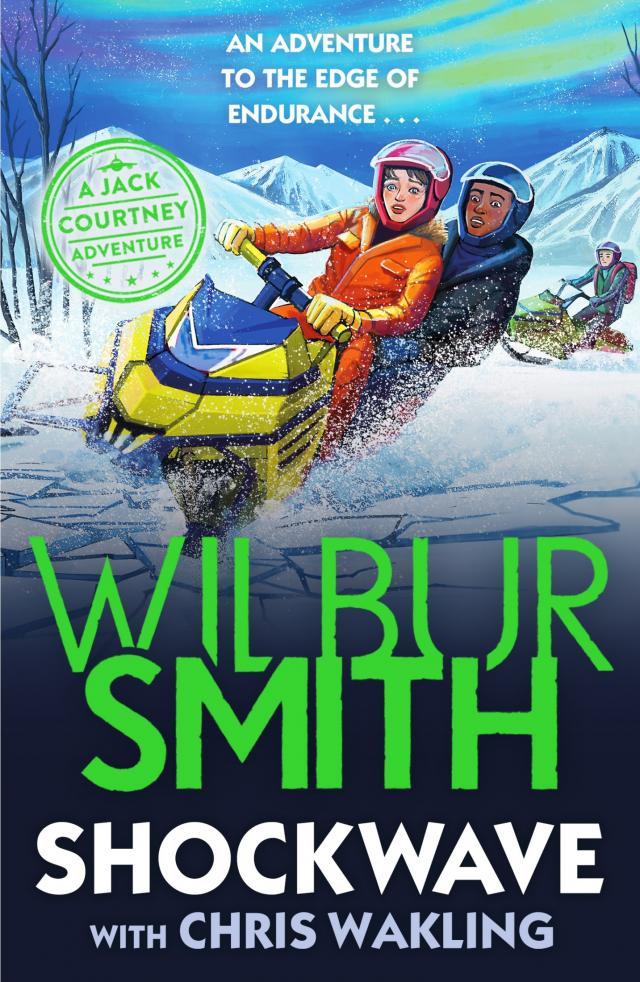
We got ready to set off. I was driving the snowmobile pulling Caleb’s sled, and Xander would ride with Amelia. The mid-afternoon sky was white and cloudless and there was a stillness in the air which the snowmobiles tore up, roaring to life. We crawled south out of the yard. I led the way so that Amelia and Xander could keep an eye on Caleb, wrapped tight in the sled. I knew which bearing to take, but could only hope that a clear path lay ahead.
37.
The going was good at first. We cut across undulating hills iced in pillowy snow. It was tempting to open up the throttle but I held back, giving myself ample time to check and recheck the ground ahead of us. We couldn’t afford an accident. Fifteen minutes in, we came upon a stand of scrubby trees, but they weren’t densely packed. I threaded a way through them easily enough, staying more or less on course. We didn’t run into trouble until we’d got past the trees. When we did, I was pleased I’d opted to go so slowly.
We were running up a gentle incline towards a ridge where the pale sky and slope of snow met. I brought the snowmobile to a halt before we reached it, and stood up in the saddle to take a better look.
The ridge was only a couple of metres high but it was sheer, with a bit of an overhang in places, making it way too steep for the snowmobile to run down. I looked left and right. The ridge stretched out as far as I could see in both directions. There was no way of knowing how far it extended; we’d have to investigate. Amelia had pulled up alongside me and cut her engine.
‘Great,’ she said.
‘This wouldn’t have shown up from above,’ I said. ‘If Armfield scoped out the terrain using satellite imagery online, he might not have seen it.’
‘There’ll be a way around,’ said Xander.
‘Which way should we look first?’ I replied.
‘Pointless question,’ said Amelia bluntly. ‘It’s a fifty-fifty toss-up.’
‘I vote north,’ said Xander.
‘Why?’ she replied.
Xander shrugged. ‘The more pointless the question, the better it is to answer it quickly and move on. We don’t have time for a debate.’
With a glance back at Caleb, still swaddled in his makeshift stretcher, I did as Xander suggested and led the way north, tracking the ridge, hopeful that it would fall away or at least dip low enough for us to cross. But it didn’t. Five minutes running along the top of the ridge turned into ten, fifteen, twenty. If anything, the sheer wall beneath the lip was bigger here than it had been where we stopped. Amelia pulled up next to me and we stopped again.
‘We should try to the south,’ she yelled over the idling engines.
I hate backtracking. Even if we shot back at twice the speed we’d come, we’d have wasted half an hour simply getting back to where we’d started. A gust of wind lifted a puff of powder from the ridge as we sat there dithering. I realised I was grinding my teeth.
‘Hold on,’ I said. ‘We’re missing a trick here.’
‘What are you thinking?’ Xander asked. Amelia crossed her arms, waiting for my answer.
Instead of explaining, I dismounted and unhitched Caleb’s sled from the back of my snowmobile. Amazingly, he was awake, and even smiled weakly at me as I stood over him. I was elated. It seemed a good omen. If I had any doubts about my plan, they evaporated in that moment. I gave him a thumbs-up. ‘I’ve got this, guys,’ I said, and jumped back on the machine. ‘Wait here.’
I steered away from the ridge and cut a wide arc across the snow plain. Turning back towards my friends, I set a course just to the left of them and increased my speed, gradually at first, but with fifty or so metres to go I let rip.
Jumping a mountain bike is all about committing. I guessed that jumping a snowmobile was the same. If you go slowly over a drop, you’ll nosedive. From experience, I know that hurts. With a bike, you can make up for a slow approach by lifting the front wheel. But snowmobiles are too heavy for that. So: speed. I hit the ridge flat out, standing light on the skids and holding the handlebars loosely. Land rigid and with a death-grip on the bars and you’re likely to bounce off a bike. Suck up the impact with bent joints and soft hands and you’ll stay on. I was scared, of course I was, but just like with any sketchy sport, the fear is part of the fun. At the moment of lift-off, when the skids left the snow and the snowmobile shot into the air, I swear I was grinning.
And it worked! I knew the landing sloped downwards, and the snowmobile hit it at exactly the right angle. Unlike hard earth, the snow cushioned the impact. The skis sank deep. I still had the throttle open hard: the track bit and the snowmobile, having sloughed into the pillowed snowbank, surged out of it in a triumphant explosion of powder. I slowed down and cut a sharp turn back to the ridge. Amelia and Xander were standing above me. He looked comically impressed, but she had her hands on her hips.
‘How do we get Caleb down?’ she said.
‘The sled’s not that heavy. Between the three of us, we’ll manage. Xander, jump down and stand on the snowmobile with me. We’ll just about reach. And you guide the sled towards us, Amelia.’
Xander did better than a straight jump. He turned round on the ridge and backflipped the drop; a neat trick, though it sank him knee-deep. By the time he’d pulled himself free, Amelia had slid Caleb’s sled to the edge. On tiptoe, standing on my snowmobile’s saddle, Xander and I took hold of the skis. The weight bit into my gloves, bore down on my arms, spread heat into my chest, but the success of jumping the ridge made me strong, and I could tell the same was true for Xander: why else would he have pulled such a daft stunt? Between us we manhandled Caleb, in his sled, into the powder. His mouth was a compressed line of discomfort, but his eyes were still open. Catching sight of me, he forced a nod.
‘Want me to climb up and jump your snowmobile down too?’ I called up to Amelia.
‘Yeah, right,’ she said, and began throwing our bags down to me.
Once she’d dropped the lot to us, she retreated from sight. Her snowmobile’s engine ripped into the silence, then faded, then roared again. It sounded as if she was heading straight towards us; I almost dived for cover under the ledge. But she flew off it well clear of us and made the jump look easy, landing in an explosion of white. She circled back to us and raised her goggles. Grinning, she said, ‘I can’t believe I didn’t think of doing that myself.’
Xander was already coupling Caleb’s sled to the back of my machine. ‘We need to crack on, make up the lost time,’ he said.
I rechecked the heading we needed to follow before we set off again, praying that we wouldn’t hit another obstacle. And we didn’t. In fact, before long we joined a straight track that took us in the direction of the road. A fence ran along the side of this track, though only the top third or so of the fence posts was visible, sticking out of the snow.
Had Armfield suggested this meeting point knowing that the track would make the last part of our journey easier? I suspected so.
The next time I paused to check my phone, we had less than a kilometre to go, and we made it to the rendezvous point a mere ten minutes late. Here, the road had been snowploughed. A drift stood in the desolate junction where we were supposed to meet Lukas. Had he parked behind the drift? I crawled the last few metres in the snowmobile, hoping against hope that he’d be there, but my heart sank as we rounded the final bend. His truck was nowhere to be seen.
38.
‘He can’t have come and gone already, can he?’ Xander said.
‘Of course not,’ I replied, unconvinced. I’d dismounted from the snowmobile and knelt over Caleb. Steam rose in time with his slow breathing. His skin looked so pale against the darkness of his sleeping-bag hood.
‘You’re sure this is the right spot?’ Amelia asked.
The question was irritating; I’d just looked. Still, it didn’t hurt to check again, and in the nanosecond before the app opened, hope built that I had in fact made a mistake, since at least that would explain things. Perhaps Lukas was parked in the right spot – elsewhere. But no. I hadn’t slipped up. We were where we should be, more or less on time, and Lukas wasn’t.
‘I could search up and down the road, see if he’s nearby?’ Amelia suggested.
This wasn’t a bad idea, but instinctively I felt that we shouldn’t split up.
‘Let me call Armfield first, see if he knows what’s going on.’ I looked to the western horizon of low-lying, tree-strewn hills as I waited for him to pick up. The sky was already edged in purple: we didn’t have much daylight left. To be stranded on a frozen hard shoulder with no idea when Lukas might eventually arrive, was not an appealing prospect. No traffic passed. The wind had got up: the cold would cut us to bits before long. I realised I was expecting Armfield to answer his phone more or less immediately, because that’s what he’d done every time I’d called him up to now, but the phone went straight to his answerphone message. ‘To leave a message for Jonny Armfield, speak.’
I briefly explained our predicament and asked him to call me back as soon as he could. I was kicking myself for not having made sure I had Lukas’s number. Why hadn’t Armfield given it to us? Although I knew it was a long shot, I couldn’t stop myself asking Amelia if she happened to have seen it written down, which was shorthand for asking if she’d mentally photographed it.
‘If I had, I’d have said,’ was her reply.
‘Well, in that case I reckon you’re right and we should have a quick scout up and down the road, just in case he’s nearby but somehow in the wrong spot. Xander, you stay here with Caleb. Try to keep him warm and out of the wind as best you can. You look that way, Amelia’ – I pointed down the road – ‘and I’ll head up there.’ I nodded in the other direction. ‘No more than five minutes out, five minutes back, OK?’
By way of answer Amelia pulled on her helmet again. I quickly disconnected Caleb’s sled from my snowmobile and we set off in unison, headed away from one another. The going wasn’t particularly easy; I had to pick my way along the slushy hard shoulder of the road and every now and then it became a gritty tarmac. I dreaded to think of the state of the skids and belt, but what else could I do? I ran through alternative scenarios as I went: if Lukas failed to show up, we’d have to try to get back to Kotler’s place. But how would we get up that ridge? We’d been able to jump down it, but we’d have to go round it on the way back. How far out of our way would that take us? Would we have enough fuel? If we got stranded overnight, we’d freeze to death. Sure, Kotler had taught us how to build an igloo, but we needed the tools to do it. Why hadn’t we brought them? Even if we had, though, it was one thing to build an igloo in broad daylight, under instruction and taking our time, but quite another to do it in the dark. No, it would be better not to risk the return journey, but instead flag down a –