Testament, p.45
Testament,
p.45


‘Everything that is truly worth having comes at a price. You have accomplished something that will benefit your people for centuries to come. In so doing, you have lost the woman you loved. That is the price that you and she have paid. But there will be other women whom you love as much as you loved Myssa.’
‘I can’t imagine that.’
‘And yet it is so . . .’
The leader paused as he saw Piay casting his eyes around him, as if searching his surroundings for something he had lost.
‘What are you looking for?’ he asked
‘I don’t know, really . . .’ Piay frowned. ‘Just . . . something different . . . some sign that the spells are working.’ He gave a wry laugh. ‘And treasure . . . All the treasure that we were hoping to find.’
‘The spells will work – but slowly. And there will treasure, but not as you, or the others, have imagined. My lord Imhotep wanted a better land for his people. If he had left storehouses filled with gold and jewels, that would merely start men fighting again. And what good would that do? But peace, and good harvests, and a land free from invaders . . . Are those things not better than gold?’
Piay thought of the greed in Harrar’s and Zahur’s eyes when he had told them that he was digging for treasure, and the terrible effects of poverty and hunger on the people of Memphis.
‘Yes, they are . . . much better,’ he said.
‘Very well, then, your work and mine are both done. You must go to Thebes to carry news of what you have accomplished to Lord Taita. Our last duty will be to guard the Hall of Spells until you and he return. Now, go to your master, and be thankful, for you have a long life and many adventures yet to come. And—’
‘Wait,’ Piay said, and the leader could see a new sense of animation within him: an idea coming to his mind and a plan beginning to form.
‘As you wish . . . We are at your command.’
‘Then I am going to give you an order. Make it possible for me to get back into the temple, where Myssa is lying. If I cannot save her . . . If she is . . .’ The leader watched as Piay forced himself to say the word dead, and went on, ‘Then, it makes no difference if I go to her. I am still the only survivor.’
‘That is true,’ the leader said. ‘But you are the Chosen One. If you die before the spells can be cast, then they die with you. Akkan is still there. He was not poisoned. He is still Death in Life.’
For the first time, the leader saw the warrior spirit in Piay’s eyes.
‘Can he be killed?’
‘Yes . . . but not easily. You know for yourself how much he has already survived. Still, it is possible to finish him.’
‘Good,’ Piay said. ‘Then that is what I will do. So, I have given my order – now you must obey it.’
‘Indeed,’ the leader agreed. And then, for the first time in an age, he felt something close to a sense of mischief as he added, ‘But first I must ask a favour of you, Chosen One. The knife you are holding is sacred. It cannot be sullied by blood, and certainly not by the body of Akkan. If you go back to the temple, you will have to go without it.’
P
iay could not believe what he had just heard. Even now, the leader of the Sons of Apis was trying to frustrate him. And to make it worse, there was a smile on his tattooed face.
‘I insist! I absolutely must . . .’ Piay began, but then he saw the hand extended towards him, and a knife lay on its open palm.
‘Your friend,’ the leader said. ‘A far sharper, more piercing weapon, being bronze. And . . .’ He shrugged. ‘More apt, perhaps, since it was given to you by your master, who sent you on this quest, and named by your woman. May your love for her give you strength. Now . . . go.’
Piay nodded. He took the knife; another of the Sons of Apis handed him a burning torch, and then he made his way back to Imhotep’s burial chamber. He paused for just a second to look around at the spells upon the walls. In them lay the hope of peace, justice and a better life for all the people of Egypt. If he failed now, he would be failing them, too. But if he did not go back into the temple, he would be failing Myssa.
Piay walked towards the square of deep, black shadow that marked the short tunnel to the temple. When he reached it, and looked in, he saw nothing but blackness. It was still blocked at the far end. But the Sons of Apis were not tricksters. If the leader had let him return, then he would also clear his way.
Just as he was about to climb into the tunnel, holding his torch out in front of him, Piay realised that the Lake of Fire would surely not have burned itself out. In that case, the temple would be illuminated, so he would not need the torch. Surely, he would be better off with both hands free. But what if the flames had vanished as quickly as they had appeared and he was about to blunder into total darkness? Was this yet another test?
Piay did not stop to debate the matter. He put the torch on the granite floor, ready for him to pick up on the way out. Then he got down on his knees and crawled into the tunnel. And as he made his way through it, his mind was filled with the same words, repeated again and again, so that he did not give in to temptation.
Don’t look at Myssa. Kill Akkan first.
Piay crawled on. The end must surely be near. He held out a hand in front of him and kept going forward, just a little way, until his fingers touched the cold granite slab that blocked the way. An instant later, the slab slid back up into the wall.
Piay emerged into the temple and was confronted with a vision of the Land of the Dead. But this was no place of peace, more a land of eternal torment. The Lake of Fire was still burning, but only just, and its last flames emitted a half-light that cast the clouds of smoke, the walls and the statues of the gods in demonic shades of red, grey and black.
Immediately beside Piay, as he emerged into this hideous world, the body of Tallus hung from the hand that was trapped in the topmost hole. The Cobra’s head sagged to one side on a shattered neck. His stomach had been sliced open and the tattered, glistening remnants of his guts trailed down his naked torso and across the flagstones.
Then, as he got to his feet, Piay saw the remains of the man who had been Akkan. The gaping maw of his mouth was covered in blood.
He had feasted on Tallus’ innards, and now he was stalking towards Myssa on stiff legs, hands reaching for her body.
She was curled across the stone floor, her head resting on her bent right arm. Her face looked so peaceful that it was as if she had fallen asleep and might wake up at any moment. Even though he knew it was impossible, still Piay’s heart leaped at the hope that somehow, even now, she might have survived.
Akkan stood directly over Myssa, looking down at her as if deciding where to strike first. Then he reached down, grabbed her hand and began to pull her body up off the floor.
Her body did not respond. Her eyes did not open. That last cruel flicker of hope was extinguished.
‘No!’ screamed Piay.
He dashed towards the monstrous figure, the dagger clenched in his fist.
Akkan turned his head at the sound and let go of Myssa’s arm. Her body dropped to the floor like a little girl’s discarded doll, as Piay plunged his blade into the Child-Killer’s chest, right up to the hilt, then pulled it out, ready to strike again.
But Akkan did not even flinch. Instead, he lunged, wrapping his huge arms around Piay and hauling him off his feet. Their two heads were face to face and Piay gagged at the nauseating stench of Akkan’s rotting flesh, coughing the air from his lungs as his chest was constricted. He could not breathe.
Piay flew into a frenzy, driving the dagger again and again into the Child-Killer’s neck. Still, Akkan seemed to feel no pain.
Piay’s vision was closing in, his strength was fading, his whole body was screaming for air. He summoned all his remaining energy and struck again, three times.
They were the last blows he could muster. His grip loosened. His knife fell to the floor.
And then, quite suddenly, Akkan’s neck gave way; his head sagged to one side.
Piay was on the brink of total oblivion. His senses were numbed, his mind dulled, and it took him a moment to realise that he could breathe again. He sucked the smoky air deep into his chest and coughed so violently that he did not see Akkan fall. But when his breathing calmed and he wiped the tears from his eyes, the massive body was lying beside Myssa on the temple floor.
The sight of the two of them side by side was more than Piay could bear. He stepped over Akkan’s lifeless form, then bent down, lifted Myssa and carried her away from the remains of the men who had ruined her life. Then he lowered her, very gently, to the floor.
Myssa’s face was as lovely as ever, but the spark had gone from her eyes and the warmth from her body. New tears blurred Piay’s vision, gentle at first, until a dam burst inside him and he was racked by desperate sobs at the loss of such a glorious life. He tried to control himself with the thought that Myssa deserved better than this unmanly display, and slowly the storm inside him blew itself out.
Piay calmed himself. He wiped his eyes and his nose with his forearm. Then he gave a half-laugh and said, ‘Look, my love . . . your goddess has come to see you.’
Bast walked up to Myssa’s body, licked her shoulder three times, then sat back, wrapped her tail around herself and examined Piay expectantly.
‘You want me to say something, don’t you?’ he murmured, as he looked into eyes that somehow still looked green, even in the red haze of smoke. ‘All right . . .’
Piay paused as he tried to compose himself, then a very clear, coherent thought entered his mind. He looked at the cat, almost seeking its approval, then said, ‘I’m going to make two vows to you, Myssa, my true love. The first is that I am going to take you back to your own land, so that you can be with your people for all eternity. And my second vow is . . .’
Piay had to stop as he felt the tears rising once again. He fought them back as he repeated, ‘My second vow is that from now on, till the day I die, I will do everything I can to honour your legacy and make sure that your death was not in vain. I will be a better man, the kind you always deserved. I will try to do good. I will fight as hard as I can to stop other women suffering as you did. I swear by all the gods that I will be worthy of your love . . . and of your sacrifice.’
Piay looked at Bast. The all-knowing cat looked back and then, apparently satisfied with what she had heard, she unwrapped her tail, got to her feet and started trotting off towards the tunnel. Piay took the hint. He picked up Myssa’s body, cradled her in his arms and said, ‘Come on, my darling, it’s time I took you home.’
AVAILABLE NOW
AVAILABLE NOW
AVAILABLE NOW
AVAILABLE NOW
AVAILABLE NOW
THE JACK COURTNEY SERIES IS OUT NOW
About the Author
Wilbur Smith was born in Central Africa in 1933. He became a full-time writer in 1964 following the success of When the Lion Feeds, and has since published over fifty global bestsellers, including the Courtney Series, the Ballantyne Series, the Egyptian Series, the Hector Cross Series and many successful standalone novels, all meticulously researched on his numerous expeditions worldwide. An international phenomenon, his readership built up over fifty-five years of writing, establishing him as one of the most successful and impressive brand authors in the world.
The establishment of the Wilbur & Niso Smith Foundation in 2015 cemented Wilbur’s passion for empowering writers, promoting literacy and advancing adventure writing as a genre. The foundation’s flagship programme is the Wilbur Smith Adventure Writing Prize.
Wilbur Smith died peacefully at home in 2021 with his wife, Niso, by his side, leaving behind him a rich treasure trove of novels and stories that will delight readers for years to come.
For all the latest information on Wilbur Smith’s writing visit www.wilbursmithbooks.com or facebook.com/WilburSmith.
Mark Chadbourn is a Sunday Times bestselling author of historical fiction novels about the Anglo-Saxon warrior Hereward, published under his pseudonym James Wilde. His Age of Misrule books, under his own name, have been translated into many languages. As a screenwriter, he’s written for the BBC and is currently developing a series for Lionsgate and several of the streaming networks. He began his career as a journalist reporting from the world’s hotspots.
Also by Wilbur Smith
Non-Fiction
On Leopard Rock: A Life of Adventures
The Courtney Series
When the Lion Feeds
The Sound of Thunder
A Sparrow Falls
The Burning Shore
Power of the Sword
Rage
A Time to Die
Golden Fox
Birds of Prey
Monsoon
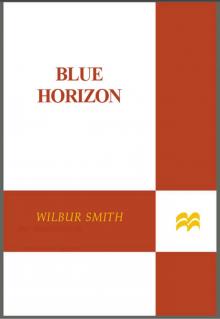
Blue Horizon
The Triumph of the Sun
Assegai
Golden Lion
War Cry
The Tiger’s Prey
Courtney’s War
King of Kings
Ghost Fire
Legacy of War
Storm Tide
Nemesis
The Ballantyne Series
A Falcon Flies
Men of Men
The Angels Weep
The Leopard Hunts in Darkness
The Triumph of the Sun
King of Kings
Call of the Raven
The Egyptian Series
River God
The Seventh Scroll
Warlock
The Quest
Desert God
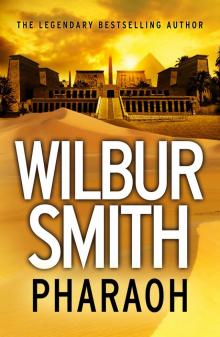
Pharaoh
The New Kingdom
Titans of War
Hector Cross
Those in Peril
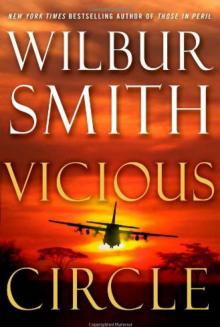
Vicious Circle
Predator
Standalones
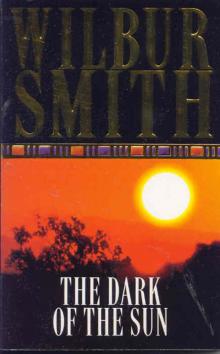
The Dark of the Sun
Shout at the Devil
Gold Mine
The Diamond Hunters
The Sunbird
Eagle in the Sky
The Eye of the Tiger
Cry Wolf
Hungry as the Sea
Wild Justice
Elephant Song
This is a work of fiction. Names, places, events and incidents are either the products of the authors’ imaginations or used fictitiously. Any resemblance to actual persons, living or dead, or actual events is purely coincidental.
Copyright © Orion Mintaka (UK) Ltd. 2022
Author photo © Hendre Louw
All rights reserved, including the right of reproduction in whole or in part in any form.
First published in the United States of America in 2023 by Zaffre, an imprint of Bonnier Books UK
Typeset by IDSUK (Data Connection) Ltd
Digital ISBN: 978–1–8387–7961-0
Hardcover ISBN: 978–1–8387–7959-7
For information, contact
251 Park Avenue South, Floor 12, New York, New York 10010
www.bonnierbooks.co.uk
Wilbur Smith, Testament