Titus andronicus, p.1
Titus Andronicus,
p.1
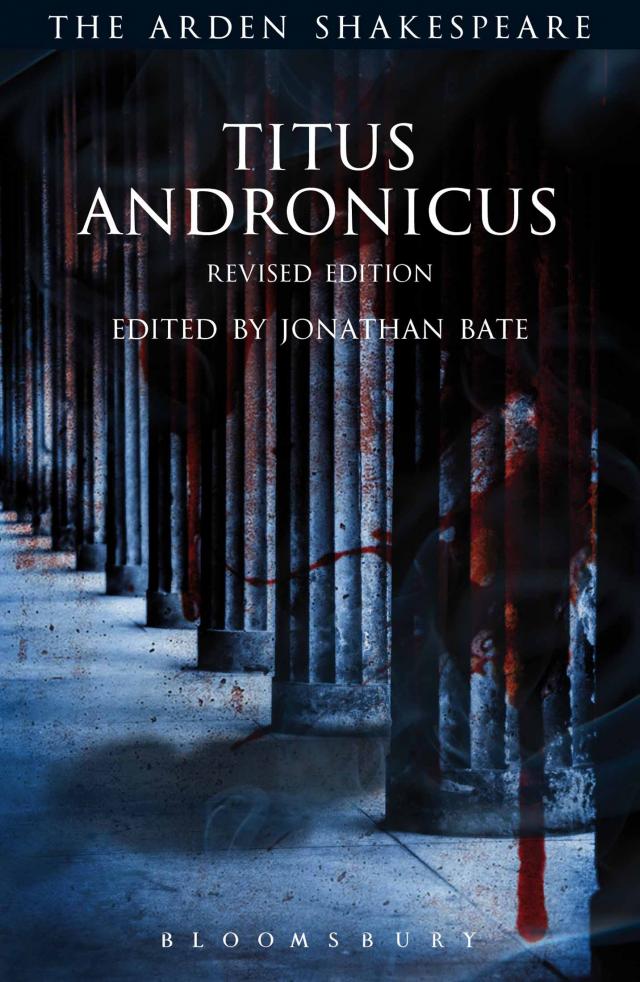


T H E A R D E N S H A K E S P E A R E
* * *
ALL’S WELL THAT ENDS WELL edited by G.K. Hunter*
ANTONY AND CLEOPATRA edited by John Wilders
AS YOU LIKE IT edited by Juliet Dusinberre
THE COMEDY OF ERRORS edited by Kent Cartwright
CORIOLANUS edited by Peter Holland
CYMBELINE edited by Valerie Wayne
DOUBLE FALSEHOOD edited by Brean Hammond
HAMLET, Revised edited by Ann Thompson and Neil Taylor
JULIUS CAESAR edited by David Daniell
KING EDWARD III edited by Richard Proudfoot and Nicola Bennett
KING HENRY IV PART 1 edited by David Scott Kastan
KING HENRY IV PART 2 edited by James C. Bulman
KING HENRY V edited by T.W. Craik
KING HENRY VI PART 1 edited by Edward Burns
KING HENRY VI PART 2 edited by Ronald Knowles
KING HENRY VI PART 3 edited by John D. Cox and Eric Rasmussen
KING HENRY VIII edited by Gordon McMullan
KING JOHN edited by E.A.J. Honigmann*
KING LEAR edited by R.A. Foakes
KING RICHARD II edited by Charles Forker
KING RICHARD III edited by James R. Siemon
LOVE’S LABOUR’S LOST edited by H.R. Woudhuysen
MACBETH edited by Sandra Clark and Pamela Mason
MEASURE FOR MEASURE edited by J.W. Lever*
THE MERCHANT OF VENICE edited by John Drakakis
THE MERRY WIVES OF WINDSOR edited by Giorgio Melchiori
A MIDSUMMER NIGHT’S DREAM edited by Sukanta Chaudhuri
MUCH ADO ABOUT NOTHING, Revised edited by Claire McEachern
OTHELLO, Revised edited by E.A.J. Honigmann
with an Introduction by Ayanna Thompson
PERICLES edited by Suzanne Gossett
SHAKESPEARE’S POEMS edited by Katherine Duncan-Jones and H.R. Woudhuysen
ROMEO AND JULIET edited by René Weis
SHAKESPEARE’S SONNETS edited by Katherine Duncan-Jones
THE TAMING OF THE SHREW edited by Barbara Hodgdon
THE TEMPEST, Revised edited by Virginia Mason Vaughan and Alden T. Vaughan
TIMON OF ATHENS edited by Anthony B. Dawson and Gretchen E. Minton
TITUS ANDRONICUS, Revised edited by Jonathan Bate
TROILUS AND CRESSIDA, Revised edited by David Bevington
TWELFTH NIGHT edited by Keir Elam
THE TWO GENTLEMEN OF VERONA edited by William C. Carroll
THE TWO NOBLE KINSMEN, Revised edited by Lois Potter
THE WINTER’S TALE edited by John Pitcher
* Second series
The Editor
Jonathan Bate is Provost of Worcester College and Professor of English Literature in the University of Oxford. He is a Fellow of the British Academy, a Governor of the Royal Shakespeare Company, broadcasts regularly for the BBC, and has held visiting posts at Yale and UCLA. He has been awarded a CBE for his services to higher education and a knighthood for services to literary scholarship.
His many publications include Shakespeare and Ovid, The Genius of Shakespeare, Soul of the Age: A Biography of the Mind of William Shakespeare, and award-winning biographies of the poets John Clare and Ted Hughes. With Eric Rasmussen, he edited The RSC Shakespeare: Complete Works. He was consultant curator for Staging the World, the British Museum’s major Shakespeare exhibition for the London 2012 Cultural Olympiad; Being Shakespeare, his one-man play for Simon Callow, toured nationally and played at the Edinburgh Festival Fringe prior to three runs in London’s West End and a transfer to New York and Chicago.
CONTENTS
List of illustrations
General editors’ preface
Acknowledgements
Introduction
The dramatic achievement
The theatrical life
Origins
Establishing the text
Reconsiderations and reinventions
Reconsiderations: the hand of George Peele
Collaboration or revision?
Company history
Classicism and spectacle in Peele
Further revisions
Reinventions on the world stage
Titus: a film by Julie Taymor
TITUS ANDRONICUS
Appendix: Patterns and precedents
Abbreviations and references
Typographic conventions used in text
Abbreviations used in notes
Shakespeare’s works
Modern productions cited
Editions of Shakespeare collated
Other works
Select bibliography 1995–2017
Index
LIST OF
ILLUSTRATIONS
1 Reconstruction of the Rose Theatre as extended in 1592 (originally built in 1587: painting by C. Walter Hodges)
2 ‘The woods are ruthless, dreadful …’: emblem from Henry Peacham’s Minerva Britanna (1612)
3 ‘I’ll play the cook’: Deborah Warner production (Sarah Ainslie)
4 ‘The poor remainder of Andronici’: Peter Brook production (Angus McBean)
5 The earliest illustration of Shakespeare: Henry Peacham’s drawing (The Marquess of Bath, Longleat House, Warminster, Wiltshire)
6 A nineteenth-century Aaron: Ira Aldridge (Harvard Theatre Collection)
7 A twentieth-century Aaron: Anthony Quayle (Angus McBean)
8 The raped Lavinia in Peter Brook’s stylized production (Angus McBean)
9 The raped Lavinia in Deborah Warner’s realistic production (The Shakespeare Centre, photo by Joe Cocks)
10 An exotic Tamora: Maxine Audley (Angus McBean)
11 An earthy Tamora: Estelle Kohler (The Shakespeare Centre, photo by Joe Cocks)
12 Father and daughter: Laurence Olivier and Vivien Leigh (Angus McBean)
13 Father and daughter: Brian Cox and Sonia Ritter (Sarah Ainslie)67
14 The earliest printed Shakespearean play: title-page of the 1594 First Quarto (Folger Shakespeare Library)
15 The killing of Mutius in Q1 (Folger Shakespeare Library) and in edited text
16 The killing of the fly in F (Folger Shakespeare Library)
GENERAL EDITORS’
PREFACE
The earliest volume in the first Arden series, Edward Dowden’s Hamlet, was published in 1899. Since then the Arden Shakespeare has been widely acknowledged as the pre-eminent Shakespeare edition, valued by scholars, students, actors and ‘the great variety of readers’ alike for its clearly presented and reliable texts, its full annotation and its richly informative introductions.
In the third Arden series we seek to maintain these well-established qualities and general characteristics, preserving our predecessors’ commitment to presenting the play as it has been shaped in history. Each volume necessarily has its own particular emphasis which reflects the unique possibilities and problems posed by the work in question, and the series as a whole seeks to maintain the highest standards of scholarship, combined with attractive and accessible presentation.
Newly edited from the original documents, texts are presented in fully modernized form, with a textual apparatus that records all substantial divergences from those early printings. The notes and introductions focus on the conditions and possibilities of meaning that editors, critics and performers (on stage and screen) have discovered in the play. While building upon the rich history of scholarly activity that has long shaped our understanding of Shakespeare’s works, this third series of the Arden Shakespeare is enlivened by a new generation’s encounter with Shakespeare.
THE TEXT
On each page of the play itself, readers will find a passage of text supported by commentary and textual notes. Act and scene divisions (seldom present in the early editions and often the product of eighteenth-century or later scholarship) have been retained for ease of reference, but have been given less prominence than in previous series. Editorial indications of location of the action have been removed to the textual notes or commentary.
In the text itself, elided forms in the early texts are spelt out in full in verse lines wherever they indicate a usual late twentieth-century pronunciation that requires no special indication and wherever they occur in prose (except where they indicate non-standard pronunciation). In verse speeches, marks of elision are retained where they are necessary guides to the scansion and pronunciation of the line. Final -ed in past tense and participial forms of verbs is always printed as -ed, without accent, never as -’d, but wherever the required pronunciation diverges from modern usage a note in the commentary draws attention to the fact. Where the final -ed should be given syllabic value contrary to modern usage, e.g.
Doth Silvia know that I am banished?
(TGV 3.1.214)
the note will take the form
214 banished banishèd
Conventional lineation of divided verse lines shared by two or more speakers has been reconsidered and sometimes rearranged. Except for the familiar Exit and Exeunt, Latin forms in stage directions and speech prefixes have been translated into English and the original Latin forms recorded in the textual notes.
COMMENTARY AND TEXTUAL NOTES
Notes in the commentary, for which a major source will be the Oxford English Dictionary, offer glossarial and other explication of verbal difficulties; they may also include discussion of points of interpretation and, in relevant cases, substantial extracts from Shakespeare’s source material. Editors will not usually offer glossarial notes for word
s adequately defined in the latest edition of The Concise Oxford Dictionary or Merriam-Webster’s Collegiate Dictionary, but in cases of doubt they will include notes. Attention, however, will be drawn to places where more than one likely interpretation can be proposed and to significant verbal and syntactic complexity. Notes preceded by *discuss editorial emendations or variant readings.
Headnotes to acts or scenes discuss, where appropriate, questions of scene location, the play’s treatment of source materials, and major difficulties of staging. The list of roles (so headed to emphasize the play’s status as a text for performance) is also considered in the commentary notes. These may include comment on plausible patterns of casting with the resources of an Elizabethan or Jacobean acting company and also on any variation in the description of roles in their speech prefixes in the early editions.
The textual notes are designed to let readers know when the edited text diverges from the early edition(s) or manuscript sources on which it is based. Wherever this happens the note will record the rejected reading of the early edition(s) or manuscript, in original spelling, and the source of the reading adopted in this edition. Other forms from the early edition(s) or manuscript recorded in these notes will include some spellings of particular interest or significance and original forms of translated stage directions. Where two or more early editions are involved, for instance with Othello, the notes also record all important differences between them. The textual notes take a form that has been in use since the nineteenth century. This comprises, first: line reference, reading adopted in the text and closing square bracket; then: abbreviated reference, in italic, to the earliest edition to adopt the accepted reading, italic semicolon and noteworthy alternative reading(s), each with abbreviated italic reference to its source.
Conventions used in these textual notes include the following. The solidus / is used, in notes quoting verse or discussing verse lining, to indicate line endings. Distinctive spellings of the base text follow the square bracket without indication of source and are enclosed in italic brackets. Names enclosed in italic brackets indicate originators of conjectural emendations when these did not originate in an edition of the text, or when the named edition records a conjecture not accepted into its text. Stage directions (SDs) are referred to by the number of the line within or immediately after which they are placed. Line numbers with a decimal point relate to centred entry SDs not falling within a verse line and to SDs more than one line long, with the number after the point indicating the line within the SD: e.g. 78.4 refers to the fourth line of the SD following line 78. Lines of SDs at the start of a scene are numbered 0.1, 0.2, etc. Where only a line number precedes a square bracket, e.g. 128], the note relates to the whole line; where SD is added to the number, it relates to the whole of a SD within or immediately following the line. Speech prefixes (SPs) follow similar conventions, 203 SP] referring to the speaker’s name for line 203. Where a SP reference takes the form, e.g. 38+ SP, it relates to all subsequent speeches assigned to that speaker in the scene in question.
Where, as with King Henry V, one of the early editions is a so-called ‘bad quarto’ (that is, a text either heavily adapted, or reconstructed from memory, or both), the divergences from the present edition are too great to be recorded in full in the notes. In these cases, with the exception of Hamlet, which prints an edited text of the Quarto of 1603, the editions will include a reduced photographic facsimile of the ‘bad quarto’ in an appendix.
INTRODUCTION
Both the introduction and the commentary are designed to present the plays as texts for performance, and make appropriate reference to stage, film and television versions, as well as introducing the reader to the range of critical approaches to the plays. They discuss the history of the reception of the texts within the theatre and scholarship and beyond, investigating the interdependency of the literary text and the surrounding ‘cultural text’ both at the time of the original production of Shakespeare’s works and during their long and rich afterlife.
ACKNOWLEDGEMENTS
For their kind permission to reproduce copyright material, I am very grateful to those indicated in the list of illustrations. I would also like to thank Mary White of the Shakespeare Centre Library in Stratford-upon-Avon for her assistance in obtaining photographs of the Peter Brook and Deborah Warner productions. Thanks also to: Stephen Siddall for inviting me to act as dramaturg for his 1991 production of the play at the Arts Theatre, Cambridge; Heather James (one of the play’s best living critics) for the stimulation of valuable conversations and for enabling me, through the good offices of Brian Payne, to see a video of Mark Rucker’s 1988 Santa Cruz production; students in my Renaissance Drama Workshop at the University of Liverpool for helping me to work out the staging of the first act; Edward Burns for reading the introduction; Anne Barton, Al Braunmuller, Tom Craik, Andy Gurr, Peter Holland, George Hunter, John Kerrigan, Laurie Maguire, Jeremy Maule, Benjamin Thompson and Stanley Wells for local advice; my research assistant, Sonia Massai; my general editors, Richard Proudfoot and Ann Thompson; Jane Armstrong at Routledge; Kate Harris, librarian to the Marquess of Bath at Longleat House; staff at the Beinecke, Cambridge University, Folger and Huntington Libraries (especially Laetitia Yeandle at the Folger, for examining the unique copy of the first quarto with me). My time at the Beinecke was made possible by my being awarded the James M. Osborn Fellowship, for which I am most grateful.
Some of the material in the introduction was first presented in more detailed form in papers delivered at conferences in Montpellier, Ferrara and Liverpool, and published as follows: ‘The performance of revenge in The Spanish Tragedy and Titus Andronicus’, in The Show Within: Dramatic Insets in English Renaissance Drama, ed. F. Laroque, 2 vols (Montpellier, 1992); ‘Staging the unspeakable: four versions of Titus Andronicus’, in Shakespeare from Text to Stage, ed. P. Kennan and M. Tempera (Bologna, 1992); ‘Adaptation as edition’ in The Margins of the Text, ed. David Greetham (Ann Arbor, 1997). I am particularly grateful to François Laroque and Mariangela Tempera for their invitations.
I very much regret that it was only after completing work on the edition that I saw a video of Silviu Purcărete’s remarkable production for the Romanian National Theatre (Paris, Vienna, Tokyo, Melbourne, Montreal, 1993); I hope that it may be possible to refer to it in a future revision.
2017 update: the Purcărete production is discussed on pp. 147–53. This revised edition was completed before the opening of Blanche McIntyre’s acclaimed production for the RSC, with David Troughton as Titus. Staged in modern dress, it had many echoes of the contemporary political world of austerity, machismo posturing, and ‘the war on terror’.
INTRODUCTION
When the notices of Titus Andronicus came out, giving us full marks for saving your dreadful play, I could not help feeling a twinge of guilt. For to tell the truth it had not occurred to any of us in rehearsal that the play was so bad.1
Shakespeare’s earliest and bloodiest tragedy has had a curious history. It was hugely successful in its own time – indeed, it perhaps did more than any other play to establish its author’s reputation as a dramatist – but it has been reviled by critics and revived infrequently. Yet on the few occasions when it has reappeared in the repertory it has repeated its original success: Peter Brook’s production with Laurence Olivier as Titus was one of the great theatrical experiences of the 1950s and Deborah Warner’s with Brian Cox was the most highly acclaimed Shakespearean production of the 1980s.
The play began getting a negative press among literary critics in the eighteenth century because it was thought to be in bad taste. Not only is a hand chopped off on stage: worse, dreadful puns are made about it (‘O handle not the theme, to talk of hands, / Lest we remember still that we have none’). But fashions in taste go around and come around, and in its willingness to confront violence, often in ways that are simultaneously shocking and playful, our culture resembles that of the Elizabethans more than that of Dr Johnson. Audiences may still be disturbed by the play’s representations of bloody revenge, dismemberment, miscegenation, rape and cannibalism, but theatregoers who are also moviegoers will be very familiar with this kind of material.