Encyclopedia of the unde.., p.4
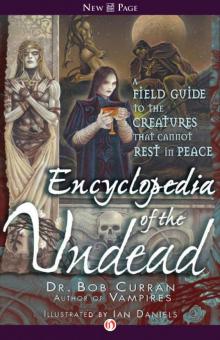
Encyclopedia of the Undead,
p.4


Arnold Paole
There were a number of cases for Calmet to consider—particularly two rather famous stories that had been widely circulated. The first was the affair of one Arnold Paole, an ex-soldier from the district of Medvegia, in Serbia which was at that time part of the Austrian Empire. Paole had been a likeable, good-natured character who had gone off to serve in the Emperor’s army in Turkish Serbia, returning home in 1727. He settled down as a farmer and became engaged to a local girl. However, his neighbours noticed that, since his return from the Army, his character had subtly changed. Although still extremely pleasant, he had become almost brooding and fearful, ready to jump at any shadow. He privately told his fiancée a strange story as an explanation. When stationed in Turkish Serbia, his regiment had been subject to the nightly attentions of a vampire. A group of men including Paole himself had been sent out to find the creature and destroy it. It was Paole who had located the creature’s grave and who had dug it up, killing it after a brief struggle. However, in its death throes, the thing covered the young soldier in blood and grave earth. He had washed it away but ever after he still felt contaminated. He felt as though some unclean shadow was hanging over him and that something was watching him as he went about his work. His fiancée told him not to be foolish, but Paole’s gloomy attitude continued. A week after the confession, he was killed in a fall from a cart and was quickly buried in the local cemetery.
Three weeks later, a number of people complained of seeing Arnold Paole about the town and several said that he had come into their bedrooms at night for some unspecified purpose. Shortly after, four of these complainants died from an unknown disease. The ghost of Arnold Paole was blamed for these deaths and the word “vampire” began to circulate in the district—people now heard of the curious story that he had told his fiancée. Even so, nothing was done immediately. Arnold Paole’s grave was opened forty days after his death. To the alarm of everyone present, his body was found to be undecayed—and it got worse. Fresh blood had oozed from his eyes, nose, and ears and the front of his shirt, all across his chest, was found to be soaked in it. His fingernails had fallen off but had been replaced by new growths and his hair appeared to have grown considerably. For the locals, this was a sure sign that Arnold Paole had become a vampire, so a wooden whitethorn stake was driven into the corpse’s heart in accordance with local custom. In response, the dead man gave a loud groan, which was heard by everyone present. The body was left in the open and surgeons were brought from Belgrade in order to examine it. They announced that Paole had been a vampire, and the four people who had died after reputedly seeing his ghost, were also exhumed and staked. However, the danger had not passed.
Four years afterwards, in 1731, seventeen people reputedly died, due to some sort of vampiric activity, evoking memories of Arnold Paole. A twenty year-old woman by the name of Stana had suddenly and inexplicably died after an illness which had lasted three days and which came directly after her confinement. On her deathbed, she confessed that she had secretly anointed herself with the blood of an alleged vampire in order to protect herself from its attentions whilst pregnant. (This, apparently, was a common belief in that part of Serbia.) Nevertheless, both she and her baby died. Both were rather carelessly buried and the body of the infant was subsequently dug up and devoured by a wolf pack. The body of the woman, however, was left untouched by the wolves and seemed to be in an undecayed state. When her grave was opened, it was found that her chest cavity was full of fresh blood and that she looked as fresh as when she had been alive. Both her finger and toenails were loose and came away when touched, revealing new ones growing underneath. The body was adjudged to be in “the vampire condition” and was burned. Another body, that of a sixteen year-old boy that had been buried for ninety days, was also exhumed and found to be as perfectly fresh as it had been when he was alive. The body of his companion was also unearthed and found to be in a similar condition. Another young girl was dug up some time after being interred, and her body was also found to be fresh and supple and when a stake was thrust into her, she disgorged a large amount of blood. These, and a number of others, provoked yet another vampire scare. Soon the name of Arnold Paole was circulating far and wide, adding to the debate on vampires.
Peter Plogojowitz
Another case that had excited some interest in the local area was that of a farmer from the village of Kisilova in the Rhum Province of Serbia named Peter Plogojowitz. The case had been investigated by an Army enquiry sitting at Belgrade. There was nothing unusual about Plogojowitz, he was a simple, sixty-two year old farmer who owned some land around Kisilova. He seemed extremely hale and hearty. Despite his apparent good health, Peter Plogojowitz suddenly sickened and died. Three nights after his interment, there were sounds from the kitchen of his house, and upon entering, his son, found the likeness of Plogojowitz standing there. The apparition asked him for food. When a meal was set down before him, he ate it, then rose and left the room, presumably going back to the grave. The next day, the son (who was very alarmed at his experience), told neighbours what had happened. He waited up the following night but the apparition of his father didn’t appear. Yet the next night, he was back and asking for more food. This time, the son refused and Plogojowitz gave him a malevolent and threatening look before leaving. The next day Plogojowitz’s son suddenly died. His death was only the first of six in the village, all of whom seemed to die within hours of each other. The cause of their deaths seemed to be due to exhaustion and excessive blood loss. Before dying, each of them had complained that they had seen the shape of Peter Plogojowitz either in their bedrooms or in a dream. In these dreams, he seemed to glide toward them and catch them by the throat, then lowered his head to bite and draw their blood from the wound. He was believed to have killed nine persons in this way within the space of a week. Despite the best efforts of the local apothecary, all those who had seen or dreamed of Plogojowitz died extremely quickly.
The local magistrates were determined to put an end to what was happening before a full-scale vampire hysteria broke out. They contacted a local Army commander who happened to be staying nearby, asking him to investigate. The commander arrived in Kislova, bringing with him two other officers, and proceeded to order the immediate exhumation of the body of Peter Plogojowitz. They actually opened all the graves of those who had died subsequent to the farmer’s death, but paid close attention to the corpse that had been Plogojowitz. They found it almost undecayed and lying as if in a trance. In fact, it even appeared to be breathing almost imperceptibly. To the absolute terror of the examiners, the eyes were wide open, and several of those who observed them swore that they moved a little, following the movements of those around the body. His hair and nails had grown, a number of old wounds were now encased in freshly grown skin, and the joints remained supple and moved easily. The farmer’s mouth was smeared with fresh blood, and his complexion was extremely florid, as though gorged with the substance. The commander and his assistants concluded that this was indeed the vampire who had been terrorizing the district and they should put an end to it. In accordance with local custom, a sharp wooden stake was driven into the cadaver’s heart, resulting in great quantities of fresh blood pouring forth from every part of the body. Wood was subsequently gathered and formed into a pyre upon which the corpse was then burned. No evidence of vampirism was found upon any of the other bodies that were exhumed along with Plogojowitz. Their copses were replaced in caskets and reburied. After this the dreams and apparitions ceased, as did the deaths in the village.
Returning to Belgrade, the commander and his officers formally convened again and made a report, concluding that Peter Plogojowitz had indeed been a vampire. Because of the military involvement, this was one of the best attested cases of its time, and placed Central and Eastern Europe firmly at the centre of vampire lore.
Grando
Whilst the cases of Arnold Paole and Peter Plogojowitz were undoubtedly extremely famous and widely discussed, there were nevertheless other reasonably famous vampire cases as well. Erasmus Franciscus in his commentary on the Baron Valvasor’s work Die Ehre des Herzogthums Krain (1698), mentions an interesting and famous instance from the district of Kranj in Carniola in Slovenia. A relatively wealthy landowner named Grando had always been a hard worker and was well-liked around the various villages and in the neighbouring city. However, around his 60th year, he was suddenly taken with a strange disease and subsequently died. About two weeks or so after his death, people were wakened from a sound sleep by a heavy weight landing on their chest and by pricking and pinching pains around their throats. There was no doubt in their minds that these had been caused by Grando, as several of them had dreamed about the landowner at the same time. The ecclesiastical authorities were approached and decreed that his grave should be opened, even though he’d been buried for several months. When this was done, it was found that the body was extremely fresh and flaccid and with a ruddy complexion. In fact, he looked as though he was simply sleeping. And as they gazed at the body, it appeared that the dead man’s lips quivered and he smiled or bared his teeth. He even parted his lips as if to breathe. And to add to their horror, the eyes of the corpse suddenly opened, whereupon all those present fell to their knees and began to recite sacred litanies against evil. A priest then raised a crucifix above his face and intoned “Raise thine eyes and look upon Jesus Christ who hath redeemed us from the pains of hell by His most Holy Passion and His precious Death upon the Rood.” At first, the dead man looked confused, then an expression of intense sadness crossed his face and tears began to flow down his cheeks. After a solemn commendation of his soul and at a sign from the priest, the head of the vampire was struck from the body with a spade. The headless body jerked and convulsed as if it had been alive. After that, his former neighbours were no longer troubled in their sleep.
The Bad Lord Soulis and Robin Redcap
Although the majority of recorded cases which excited the scholarly minds of the 16th and 17th centuries occured in Central and Eastern Europe, other countries seemed to have certain instances of vampirism as well. Along the Scottish Borders, Hermitage Castle in Roxboroughshire enjoys a particularly sinister reputation as the home of an evil man who was believed to exhibit vampiric tendencies. This was “the bad Lord Soulis,” a member of the de Soulis family who occupied the land from the mid-13th to the mid-14th century. Which Lord Soulis is being referred to is unclear, but it is certain that he was a tyrant and that he trafficked with dark powers. Together with a blood-drinking familiar or imp, whom he called “Robin Redcap,” the Lord Souls kidnapped many people, including children who were tortured and murdered in lonely Hermitage Castle. Tradition also states that both he and the imp used their blood in diabolical rites and may have drunk it as well. Realizing what was happening, local people stormed the castle and overpowered the Lord, boiling him in lead—in some versions they wrapped the body in a sheet of lead to prevent his master, the Devil, from getting him, and to stop the corpse from rising and terrorizing the countryside once more.
Alexander Stewart, the Wolf of Badenoch
In the Scottish Highlands, the infamous Alexander Stewart, the 14th century Wolf of Badenoch, brother to King Robert III of Scotland, was supposed to drink blood amongst his Highland ceterans (outlaw soldiers) in his fortress at Lochindorb above Kingussie in the Spey Valley. Alexander was supposed to have sold his soul to the devil and to have a copy in his possession of the notorious Book of Black Earth, a terrible volume of reputedly prehistoric magic that he had partly copied down from the lips of Highland chailleachs (witches). This would form the basis of the equally infamous Red Book of Appin (called the Wicked Bible by the Covenanters), which was supposedly used by Stewart sorcerers right up until 1745 when it disappeared. Some of the spells contained therein were said to involve the shedding and drinking of human blood. The Wolf, of course, held his court in a massive stone circle (now gone) near present-day Kingussie, so that he could commune with evil spirits. In this stone circle and under the influence of Druidic forces, he was said to drink the blood of stillborn babies in the midst of unholy rituals. Of course, many of these tales (especially those about drinking the blood of infants) may well have been put about by his implacable enemy, Alexander Burr, Bishop of Moray, but they served to create the impression of a vampiric Highland warlord which still lingers to this day.
Tadhg O’Carroll
In Ireland, members of the ruling clans were sometimes portrayed as having a lust for blood. In the bloody years of unrest around the mid-16th and early 17th centuries, a number of tales circulated throughout the country concerning the vampiric tendencies of certain ferocious and cruel warlords. Many of these may well have been put about by their enemies, but they left an indelible impression on the general mind, that echoed down across the centuries. Tadhg (or Teige) O’Carroll, for example, one of the so-called “Dark Princes of Ely” was credited with drinking the blood of his prisoners. The ancient kingdom of Ely lay in the Irish Midlands and comprised most of Counties Offaly and North Tipperary. It served as a “buffer zone” between two great power blocs in the area—one headed by the Fitzgeralds, (the Earls of Desmond and Kildare), the other headed by the Butlers (the Dukes of Ormond and North Tipperary). The O’Carrolls were a particularly fierce and war-like clan who had probably been driven south from North Monaghan by an expansion of the more powerful O’Neills in neighbouring Tyrone. Politically skillful and devious, they were able to play the main regional power blocs off against each other whilst ruling their own lands with an iron fist. The most bloodthirsty of them all, however, was Tadhg Caoch (One-eyed Tadhg) who came to prominence in between 1540s and early 1550s. His stronghold of Leap Castle (between Birr and Kinnity in Offaly) had an extremely sinister reputation that it enjoys even today (it is believed to be the most haunted castle in Western Europe). An old legend says the mortar used to build the fortress had been mixed with the blood of the defeated O’Bannions, from whom the O’Carrolls had seized the land, leading to the ancient curse that is said to still hang over the place—“Raised in blood; blood be its portion.” Tadhg encouraged this reputation and added to his own notoriety by cutting the throat of his elder brother Thaddeus, who was a priest, whilst he was at prayer in the chapel at Leap. This was an act of blasphemy, which condemned the chieftain to remain as a vampiric ghost within the gloomy corridors of Leap. Tadhg was killed by his own kinsmen during internecine disputes in 1553, but not before he had killed large numbers of the neighbouring O’Mahons and allegedly drank their blood, and before he had bricked up many prisoners in the extensive rock-hewn dungeons that extend for miles beneath the castle. Many of these remain sealed to this day, concealing the atrocities of Tadhg and many of the other O’Carroll chieftains. In 1617, following the chaos of the Rebellion of Hugh O’Neill and the Plantation of Ulster, the era of the O’Carroll chieftains eventually came to an end as Sir Charles O’Carroll accepted lands in the New World and his descendants went on to found the state of Maryland. One of them was a signatory to the Declaration of Independence. The sinister fortress of Leap Castle however, still stands, guarding a trail that runs through the Slieve Bloom Mountains, between the plain of Leix and the coast. It is said to be haunted by Tadhg’s vampiric spirit and at midnight, an eerie light has been seen shining across the valley in which it is situated, from the window of the chapel where the evil warlord slew his brother. Few locals will venture there after dark.
Cormac Tadhg McCarthy
Another vampire warlord was reputedly Cormac Tadhg McCarthy of Carrickphouka Castle, west of Macroom in County Cork. In 1601, he was made High Sheriff of Cork by the English with the instructions to hunt down all Irish rebels. In this he was diligent, anxious to please his English masters. His main opponent was the chieftain James Fitzgerald, who was regarded as a traitor by the authorities in Dublin, and in order to capture him, Cormac invited him to a feast in Carrickphouka on the pretence of making peace. During the course of the banquet, he had Fitzgerald killed, but in order to assure the English of his loyalty and to impress them, he went slightly further. It is said that he lapped up the spilled blood and ate the raw flesh of the fallen chieftain, much to the horror and disgust of the English who were present. In defence of these horrific actions, the McCarthy clan claimed that Cormac had in fact been possessed by a spirit that had risen out of the rock upon which his castle was built. (Carrickphouka means “the rock of the phouka”—phouka or pooka being a malevolent and dark spirit or demon). Even so, this was not enough to prevent Cormac from going down in history as a “vampire Sheriff.” Even today, tales still exist of alleged sightings of him in and around the castle, long after his death. Today Carrickphouka Castle is simply a ruin—it was destroyed during the Williamite Wars of 1690-91, but local people still stay away from it after dark and elderly people will cross the road when passing by it and will genuflect in protection, even in broad daylight.
Relish Cakes and Blood Pudding
The horrors of the Great Famine (1845–52) added another element to the vampire legends of Ireland. As the Irish potato crop, upon which much of the populace depended, began to fail, hunger and destitution began to set in all across the country. In desperation, people turned to other means of sustenance, one of which was blood. One of the most famous alternative dishes of the Famine period was “relish cakes” that in many ways resembled the English black pudding. These were made from dried blood, (usually that of pigs or cows), mixed with whatever greens were available—cabbage tops and so on—and heated in the fires of the cottages. In other localities, cattle were driven to certain areas, where a small incision was made in their necks and a small amount of blood drawn off. This was then used to make the relish cakes or, more than likely, drunk raw, similar to milk. Blood was believed to be a good source of iron and nutrients and was supposed to guard against the fevers and sicknesses that followed the Famine.