Ryan and avery, p.16
Ryan and Avery,
p.16


“And you call her The Garden Lady?”
“Yeah. I have no idea what her real name is.”
Avery holds up his paddle and points to another yard. “Who lives there?”
“I have no idea. This isn’t my neighborhood.”
“Well, I know who lives there.”
“Do you?”
“Yeah, that has to be the home of Wheelbarrow Dude.”
Sure enough, there are at least five wheelbarrows in various states of disrepair in the neglected grass.
“Of course, Wheelbarrow Dude,” Ryan says.
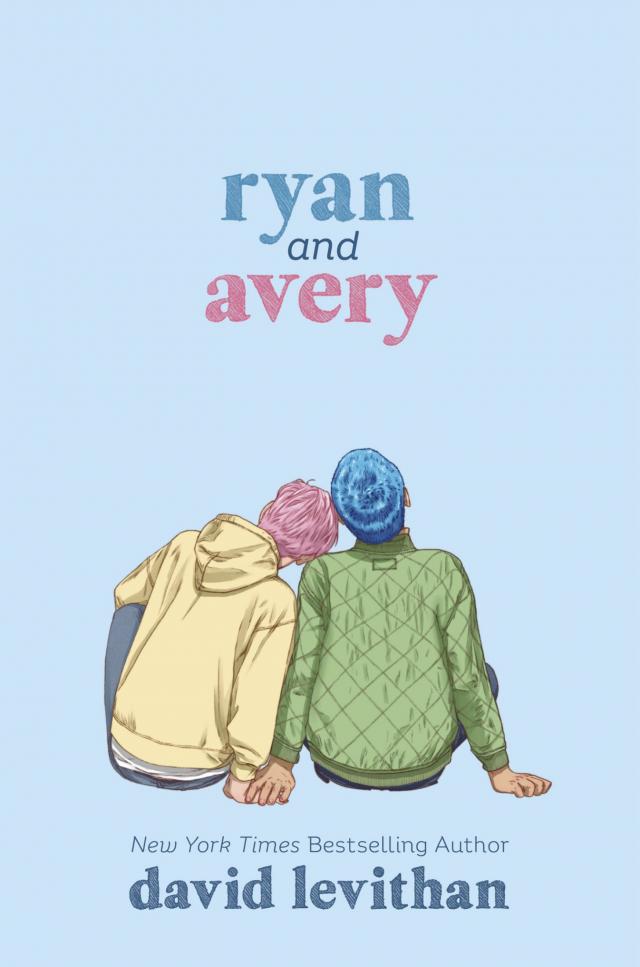
This is how it starts. Soon they’re looking into the lives of The Clothesline Fanatic, Gnome Addict, The Bicycle Thief, Hump Grump, The Fire-Pit God, and The Indifferent Ruler of Disowned Toys. When the houses grow less interesting, Avery lifts his head and sees The Bird Castle floating white and semipuffy in the sky above them. Ryan isn’t sure—he thinks it might be the home to The Angular Boatman.
It’s an enjoyable stroll through words, but it’s not, Ryan feels, conversation. He’s grateful when the river steps into the woods, broadening to a shallow inlet.
“Stop padding for a second,” he tells Avery. He steers them to a place where the water settles into a murmur so they can settle, too.
“Here,” Ryan says. “A drifting spot.”
Ryan puts his paddle in the bottom of the boat, and Avery turns and follows suit. Now they’re facing each other. Avery feels very sweaty and very satisfied. He smiles at the blue-haired boy looking at him so openly.
“Hi,” Ryan says.
“Hi,” Avery says back.
“I would’ve brought fishing gear, but it’s just so mean to the fish.”
Avery leans over a little, spreads his fingers in the water. It feels good to create a current, however small. The air is light and the water is quiet, the trees bending from the shore to listen to the tiny waves. The boat rocks gently.
“So what’s your story?” Ryan asks.
Avery looks up at him, hand still in the water. “My story?”
“Yeah. Everybody has at least one.”
For a few uncomfortable seconds, Avery worries that Ryan thinks he’s a mutant, thinks he’s a faker and wants him to come clean. But then Avery realizes from Ryan’s expression that, no, it isn’t about that. Ryan is trying to craft a conversation, and wants it to be a meaningful one. Because what’s more meaningful than listening to a person’s story?
“I can start if you want me to,” Ryan volunteers.
“Sure,” Avery says. “You start.” Because it’s a little safer that way. Avery doesn’t know how he can tell a story without telling the story, and he wants to be sure Ryan was really looking for something that big when he asked his question.
“Okay,” Ryan says. “Here goes.” He takes in an endearingly nervous breath, then dives in.
“I guess it all starts here in Kindling—although God knows I hope it doesn’t end here. All my family is from here, and with the big exception of my biological father, none of them have ever left.”
Now Ryan stops. Is this really the story he wants to tell? Does he really want to show so much of himself so soon?
He looks at Avery, who isn’t going to rush him, who is okay just floating along.
He keeps going.
“I don’t talk about this stuff a lot, because there aren’t many people to talk about it with. Most of my friends grew up here, too, so it’s not a story I have to tell them, because they were around. And because I don’t really think about it a lot, they don’t, either. Does that make sense?”
“Totally,” Avery says.
“Okay. So…Dad 1.0 left when I was three, so I don’t really remember much about him. I just know he was a jerk to pretty much everyone. When I got old enough, Aunt Caitlin told me I was the best thing that ever happened to my mom, Dad 1.0 leaving was the second-best thing that ever happened to my mom, and Dad 2.0 coming into the picture was the third-best thing that ever happened to my mom. Dad 2.0 is Don, who sort of swept in and made things better, by all accounts. I honestly don’t think of him as Don, or even Dad 2.0. He’s just Dad. And like with all parents, I didn’t really get to choose him. He’s not bad, but he and my mom are both pretty rigid. They sync up that way. So I’m kinda the odd guy out. Pun not intended, but there it is. Is this at all interesting to you?”
“Of course it is.”
Ryan realizes he’s been picking at his cuticles as he’s been talking, and tries to stop. “So yeah. That’s the background. I grew up here, and I get into fights sometimes with my parents. Caitlin saves my life on a daily basis. Okay, that’s an exaggeration. She saves my life on a weekly basis. She totally called it on me being gay. My mother was too lost in herself to notice, and Dad didn’t want to see it, so he ignored it. Caitlin waited for me to catch up to her. I had other things to think about at first—mostly just trying to fit in, you know. Little League, that kind of thing. But eventually I noticed who I was staring at, and it wasn’t the girls. I’ll be honest—it freaked me out. I tried to like girls instead. I really did.”
“How’d that work for you?” Avery asks, letting his voice joke a little.
Ryan mocks up a sigh. “Well…I went out with Tammy Goodwin for almost all of fourth grade. Really serious. I mean, we bought each other stuffed animals on Valentine’s Day. That’s practically marriage, right? By high school, I knew who I was. And by the time I told Caitlin, I wasn’t even surprised by how unsurprised she was. She took me out on this river, in this canoe, and we’d talk about things. She’s not that old—she’s about to turn thirty-three—and she’s had about as much luck with guys as I have. She’s the one who convinced me I shouldn’t try to hide. She said hiding never worked. She told me Dad 1.0 spent so much time hiding that it was impossible for him to be happy here. He isn’t gay—I guess that makes it sound like he’s gay. He isn’t. But he didn’t want to stay here. He never wanted to stay here. He just wasn’t strong enough to tell my mom until it was way too late.”
“Do you have much of a relationship with him now?” Avery asks.
“Nah. Maybe because I was so young when he left, there can be long stretches when I forget he even exists. He’s just not a part of the equation, you know? Sometimes he’ll call on my birthday. And when I started high school, he added me onto this group email where he sends jokes to his friends, and I was like, this is too weird, so I asked him to take me off. He never responded…but he did take me off. I visited him once in California, and it was a disaster. This was a year or two before the joke email—I was twelve, but he planned it out like I was seven. Like, he genuinely thought I’d be excited to meet Mickey and Donald and Pluto, not ride the ‘adult’ rides. I mean, I could tell he was trying hard, but in the wrong ways. He thought Disneyland could make everything better. Like, I’d be able to overlook his basic absence in my life and run back to my mom and tell her what an amazing job he did. We ran out of things to say pretty quick. I emailed him when I was coming out to everyone, and his reaction was actually one of the best ones I got. He told me to do what I wanted to do. But part of me felt like it was easy for him to be okay with it because he’d given up on me a while ago. He wasn’t as invested as everyone else.”
Ryan realizes he hasn’t been looking at Avery, or anything, really. He’s been staring off, his eyes shut to the scenery as his head goes back to Disneyland, goes back to sitting at the computer, reading his father’s email.
“Gosh,” he says, “I’m talking a lot.” He almost adds, What have you done to me? I never talk like this. Because the look Avery’s giving him—the only other person who looks at him with such regular encouragement is Caitlin. And damned if it isn’t encouraging.
“No,” Avery says. “Go on. How did everyone else react?”
This time Ryan almost asks, To what? Then he remembers what he was talking about.
“Oh, you know. Mom cried. A lot. Dad was angry. Not at me, exactly. But at the manufacturer for giving him a defective son. Most of my friends were fine, though. I mean, a couple of them flailed a little in their first reactions—some of the guys were wondering if I was secretly in love with them. Which was only right in one case…but that went nowhere. The girls were cool, even the churchy ones. Well, with one exception there, too. The inevitable rumors started, and I decided the only thing to do was confirm them, so I dyed my hair and started putting Steven Universe buttons on my bag. I didn’t resist when the Rainbow Alliance pretty much recruited me for their club. The advisor, Mr. Coolidge, is super cool, and has gotten a lot of things done, including the dance last night. That was his idea. The gay prom. He contacted every other alliance in the area. Is that how you heard about it?”
“A friend saw a post about it,” Avery says. “We don’t have a Rainbow Alliance, but we do have a school play. A bunch of us in the play decided to go.”
“Well, whatever got you there, I’m glad you made it. I guess that’s the latest plot twist in my story, isn’t it?”
Avery takes it as a responsibility, to be a part of someone else’s story. He knows Ryan is saying it playfully, not heavily. He knows Ryan is saying it to show that he’s done with his own storytelling, which means it’s time for Avery to start. Avery isn’t sure that Ryan is a part of his own story yet, but that could be because he doesn’t feel anyone can be a true part of his story until they hear it and accept it.
They’re drifting on the water—not much, just a gradual pull. Avery finds himself drifting to a small part of Ryan’s story, an image that’s stayed buoyed in his thoughts. He knows Ryan is watching him, waiting to see what he’ll say next. He goes to the buoy and starts there.
“I was just thinking about you and your aunt in this canoe,” Avery says. “How nice that must have been, to talk here. For me, it was like a kitchen-table war council. Us against the world. Coming up with a plan.”
“That sounds stressful.”
“Yeah, but at least everyone in my house is on the same side. I know how lucky I am about that. And unlucky in other ways.”
“Unlucky how?”
And this is it. This is where Avery must decide how much to tell, how much to let Ryan in. Like everyone else, Avery considers his inner world to be a scary, convoluted, inscrutable place. It is one thing to show someone your best, cleanest version. It’s quite another to make him aware of your deeper, jumbled self.
Here in the daylight, does Ryan already notice? Does he already know? If he does, it doesn’t seem like he cares. Or maybe that’s just more hoping on Avery’s part.
Enough, Avery tells himself. Just talk to him.
“I was born a boy in a body a lot of other people saw as a girl’s,” Avery begins. Then he stops, takes in Ryan’s reaction.
Ryan is surprised. Not by the information Avery is conveying—while there are particulars that are still a mystery to him, the fact that Avery is trans is not. The thing that’s surprised Ryan is that Avery is going there so quickly, that he trusts him so immediately to explain something that no one else needs to know. Ryan is surprised that Avery already feels he’s deserving of this story. And in this way, he, too, feels a responsibility.
Avery notes Ryan’s pause, notes Ryan looking at him, and he feels like a body on display. It’s an extra level of self-consciousness—the difference between the other person having normal vision and an X-ray.
“Go on,” Ryan says. His tone is encouraging.
“I think it was obvious to everyone from the start. And my parents are very…liberal, I guess. Practically hippies. So they actually tried to make it seem like I wasn’t going through anything out of the ordinary. Now I can see the strain, and how much easier it would’ve been for all of us if I hadn’t been born misgendered. But they never made me freak out. It was everyone else. Well, not everyone. There were some people who were great. But there were a lot of people who weren’t as great. I was homeschooled a lot. We lived in a few places, trying to find the right doctors. Eventually we found them, and I found other members of my tribe. Mostly online. But my parents and I go to conferences as well. They put me on hormones early, to sort of stop me from going through the wrong kind of puberty. Is this TMI? I’m sure you don’t want all the details.”
Ryan leans toward Avery, the boat rocking back and forth as he does. Avery grips the side, and Ryan puts his hand on top of Avery’s.
“Tell me whatever you want to tell me,” he says. “It’s cool.”
Avery shudders, and can feel the shudder travel through the boat, through the water, until the water becomes smooth again, until he feels his nerves become smooth enough to continue. It’s too much, too soon, but now that he’s talking, he can’t stop. He’s talking about the treatments that have happened and the treatments that are going to happen, and all along pretty much the only thing that’s filling his head is the question of whether Ryan is seeing him as a girl or a boy. Now that Ryan knows, is Avery still a boy in his eyes?
Ryan is measuring his next words carefully—in fact, he’s been weighing them, trying them out in his head, even as Avery’s been talking.
Finally, he says, “I like whatever it is that makes you the person you are. And although I’m sure it was really hard, I’m really glad you found a way to be true to the person you are.” It’s like something Aunt Caitlin would have told him, back when he was figuring things out. “Meanwhile…what else? Any siblings?”
“No,” Avery says. “It’s just me.” He appreciates what Ryan’s just done; instead of changing the subject, Ryan’s broadened it. It’s not dismissive at all of what Avery’s just told him, but instead acknowledges there’s more to knowing Avery than knowing his gender history.
They talk about being only children, including how weird it is to have their parents to themselves. Both Avery and Ryan have wished for siblings, if only to share the spotlight, fraction the focus.
As their conversation drifts, so, too, does the boat. Avery expresses a brief concern about this, but Ryan assures him it’s fine; there aren’t any dangerous waters to cross into, no threat that awaits if they drift too far. So Avery settles into the drift, maybe not as naturally as Ryan, but close. The sun makes his skin feel a little glow. The breeze and the water seem to be following the same languid metronome. It’s so much easier to not have a care in the world when the world doesn’t seem to have much of a care, either.
“Take it all in,” Ryan suggests. He closes his eyes and indulges his senses. It’s not a perfect peace—someone is mowing or plowing in the distance, a thrum of machinery that revs and falls, and the sun can’t stay away from the clouds, performing a shadow play that turns the temperature indecisive. He wishes Avery was on his side of the boat, his back against Ryan’s chest, Ryan’s arms around him.
Avery watches the light play in Ryan’s hair, sees the blue shift from day sky to night sky, glimpses the roots as the ground beneath those skies.
When Ryan opens his eyes, he catches Avery looking.
“Your hair,” Avery says, knowing he’s been caught. “I was checking out your hair.”
“I was checking out yours earlier. It’s fun in the light. Why so pink?”
How many times has Avery gotten this question?
So many times.
And most of the times, it’s asked with an ax behind it, or at least with an edge. That’s not how Ryan is asking, but the usual response instincts kick in.
“I know, strange color choice, right?” Avery says. “For a boy once seen as a girl who wants to be seen as a boy. But think about it—it just shows how arbitrary gender is. Pink is female—but why? Are girls any more pink than boys? Are boys any more blue than girls? It’s something that has been sold to us, mostly so other things can be sold to us. My hair can be pink because I’m a boy. Yours can be blue because you’re a girl. If you free yourself from all the stupid arbitrary shit that society controls us with, you feel more free, and if you feel more free, you can be happier.”
“My hair’s blue because I like blue,” Ryan says.
“And mine is pink because I like pink. And I totally didn’t mean to lecture you. It just makes me mad. All the stupid arbitrary shit.”
“It makes you want to overthrow the world.”
“On a daily basis,” Avery says. Then he looks at the river, looks at Ryan on the other side of the boat, really takes him in as the water gently rocks them both. “The world from here isn’t that bad, though. This right now is a world I can live in.”
“Shall we explore some more?” Ryan asks.
“Yes,” Avery replies. “Let’s.”
Ryan picks Avery’s paddle up from the bottom of the boat and hands it to him, then takes up his own. He’s sorry when Avery has to turn around to get things moving again, but not sorry when the movement really kicks in, when they are gliding at something that feels like true speed. There’s no talking now, just the tandem of their arms, the common delight of their effort. What better race than one with no competitors, no spectators but the trees and the houses and the memories forming? Time loosens from its spool. Thought gives way to sensation. Avery, who rarely lets himself feel strong, feels Olympian as his paddle wrestles the water. Ryan, who rarely lets himself feel in control, watches the point of the bow and course-corrects when needed. When he senses it’s time to turn around, he calls on Avery to slow, then veers them so they align with the current. They begin their way home, with the same fervor they used for the way out.
By the time they return to the makeshift dock, the sun is well beyond the halfway mark in the sky. It’s only when they stop paddling that they can truly feel the exertion of their effort.
When they get back to Caitlyn’s yard, they both have to wipe the sweat from their foreheads. Ryan jumps out first and holds out his hand to Avery. Even though he’s an overheated mess, Avery takes it. Ryan pulls him onto land and keeps hold. They stand there, face to face, toe to toe.