The deep silence, p.9
The Deep Silence,
p.9
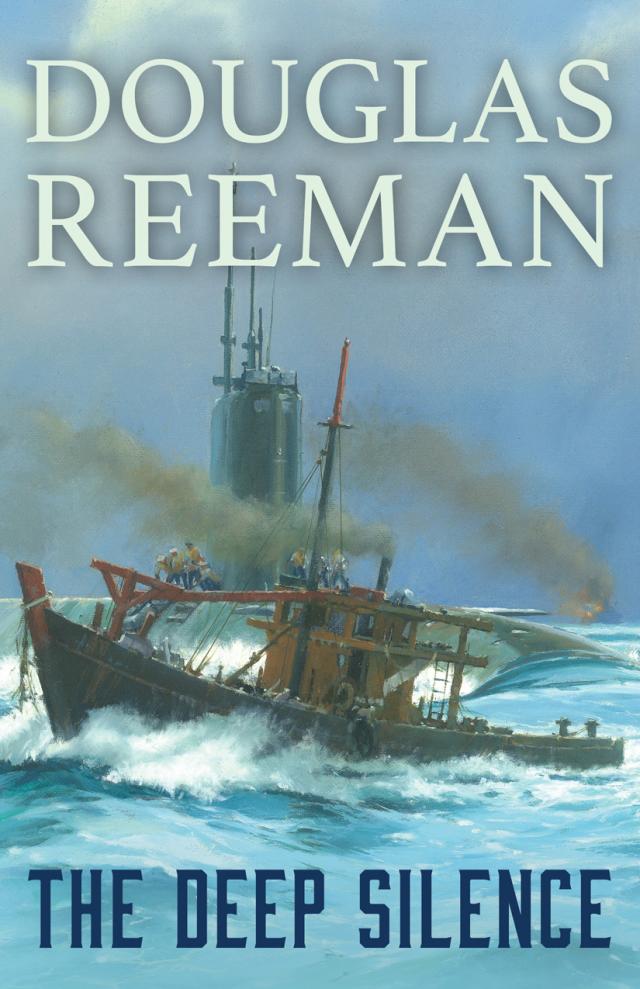


The admiral cleared his throat. ‘It’s from London, Jermain. Your orders are to sail tomorrow for an exercise with the Americans.’ He skimmed quickly over the preliminaries. ‘Temeraire will proceed to U.S. Fleet area Romeo Tango Five for Exercise Flashpoint.’ He gave a small smile. ‘I hope you put on a good show!’
Jermain took the single copy of the signal and read it slowly. ‘Did you confirm this with London, sir? Are they aware of my report?’
The admiral snapped, ‘Of course I did. You are supposed to be fully operational for this sort of thing. Anyway, it’s confirmed under my responsibility!’
‘I see.’ Jermain felt the anger boiling inside him like fire. The words, the careful deceit, made him reckless. ‘My own responsibility is to my command, sir. There may be flaws in the hull, as I know you are aware.’
‘I am more interested in possible flaws in the crew, Jermain. In any case you’ll be better off at sea. The Singapore government is worried about your being here in the harbour. Rumours about contamination and all that rot. That fool Conway wouldn’t like any trouble with the local government at this stage of his work. He said as much earlier.’
‘Very well, sir. But my decision must be upheld should I have to break off the exercise.’
‘I don’t think that will be necessary, Jermain.’ The admiral’s tone was final. ‘The sooner you get this job done, the quicker I can arrange your passage home.’
Jermain walked through the laughing guests and leaned against the cool balustrade. The anchorage was quite dark now, but against the floodlit hull of the depot ship he could clearly see the Temeraire’s black whaleback and the number on her fin.
Only aboard her did he feel in control of things. Here nothing was certain, and little seemed to go below face value.
But the orders were definite enough. The area referred to was three days’ sailing to the north east off Hainan Island and close to the coast of North Viet Nam. The Americans were used to this sort of exercise, and as the admiral had remarked, the sooner it was completed, the earlier they could leave.
But Jermain knew from past experience that nothing was ever that simple.
5
Romeo Tango Five
Jermain rolled over in his bunk and groped wearily for the telephone. He had been in a deep sleep so that he was not even sure if the insistent buzz had been part of some disordered dream. ‘Captain speaking.’ He peered at the luminous face of his watch and tried again to clear his brain.
From the control room he heard Oxley’s calm voice. ‘Five-thirty, sir. We’ll be coming up to the rendezvous in fifteen minutes.’
Jermain switched on the bunkside light and stared emptily at his small cabin. The charts and open logbooks were still as he had left them only four hours earlier. One hundred and fifty feet above his bunk the early sun would be feeling its way across the water. There might still be the vicious little squall which had blown up when they had left Singapore nearly three days ago, and which had greeted the probing periscope each time they had planed upwards to take a look at the outside world.
He realised that Oxley was still waiting at the other end of the line. ‘Very good. Were the hands called early?’
‘Yes, sir.’ Oxley sounded a bit peeved. ‘Shall I have some breakfast sent along to you, too?’
‘No.’ Jermain dropped the handset and swung his long legs over the side of the bunk. The canned air of his cabin felt cold to his skin, and he shivered slightly as he pulled on his shirt. He had been sweating in his exhausted sleep, and as he groped for the rest of his clothing his mind reluctantly returned to the nagging problems which waited for every awakening like playful tormentors.
To go to sea immediately after the enforced voyage from Scotland had been bad enough. There were faults to rectify, spare fittings to be installed, and the thousand and one other items which always dogged the captain of a new vessel.
But Vice-Admiral Colquhoun’s bombshell had been almost too much to bear. Fleet manœuvres were a nightmare at the best of times, with every senior officer breathing down the neck of his next subordinate. For the admiral to throw the Temeraire into some pressurised Anglo-American exercise with neither preparation nor discussion was asking for trouble of the worst kind.
The admiral had saved his worst act until the very moment of departure. As the submarine had tugged at her moorings and men had scampered along the casing in readiness for letting go, he had presented himself at the brow with the calm statement that he intended to accompany Temeraire to the exercise area.
Jermain took two of the little tablets which Griffin had given him to help him keep going. He washed them down with a glass of water and grimaced at himself in the bulkhead mirror.
Sir John Colquhoun had been like a child with a new toy. As the boat had moved free from her moorings and the tense business of conning the great black hull safely through the harbour traffic had begun, he had wandered happily through the boat, stopping every so often to peer into a compartment at a startled rating or to watch an officer at his controls, usually with a ‘Don’t mind me, boy! Just act as if I wasn’t here!’ As if the sight of a flag officer wasn’t bad enough, he had changed into a roll-necked sweater, commenting, ‘Can’t get used to all this clinical stuff! When I was in submarines we had to dress the part!’
He seemed to be enjoying himself well enough, Jermain thought. He had refused to accept or even share one of the cabins, but insisted on using one of the wardroom spare bunks which were kept for excess passengers of more lowly state.
Consequently, it was impossible to enter the wardroom, even during the night watches, without Sir John’s face popping out from between the bunk curtains with some comment or jocular criticism.
It was getting on everyone’s nerves. Jermain knew that the admiral’s son hardly ever entered the wardroom and had been seen snatching a quick meal during his watch. Ross too avoided the admiral, but for different reasons. Whenever the admiral was able to corner the chief engineer he would ask some question about the complex machinery or some detail concerning the reactor, and after the chief’s lengthy explanations Sir John would wave his hand and say cheerfully, ‘I’m afraid it’s all new to me! Completely new!’
Jermain had even heard Lieutenant Drew taking advantage of the admiral’s impossible questions. The T.A.S. officer had answered two questions in Jermain’s presence with such sincerity and eloquence that the admiral had been deeply impressed. Only Jermain knew that the Australian’s answers had been so much gibberish. After the last occasion he had reprimanded Drew, and the latter had said gloomily, ‘It’s just that he gets on my wick, sir!’
And then of course there were the two security officers. Usually seated in the ship’s office or at the wardroom table, they never seemed to separate. They had checked the men’s service records and questioned the heads of departments. They had even insisted that Lieutenant Kitson should show them the actual place where the wiring had been tampered with. Naturally they had not found the culprit. Like the admiral, they had only succeeded in getting on everybody’s nerves.
The previous afternoon Jermain had approached the admiral about the matter. The latter had been standing in the small chart-room making his own calculations of the course and speed.
After a while he had said playfully, ‘I’m just a passenger, Jermain. You mustn’t ask me things like that!’
Jermain had replied coldly, ‘The security officers are aboard at your insistence, sir. I only wanted them to make a check when we entered Singapore.’
The admiral had stared at him for several seconds. ‘They know their job, Jermain. While this boat is under my control I want it free of trouble, see?’ There the matter had ended.
Jermain picked up his cap and walked through the passageway to the control room. It would soon be time to go to periscope depth and the control-room lighting was dimmed to a warm orange glow to ease the strain on the eyes of the watch-keeping officers.
Oxley said formally, ‘Course zero one zero, sir. Speed twenty knots.’
Jermain nodded and walked slowly through the control room. The men looked clean and fresh-faced, but their expressions were tense and strained, and he knew that they were all thinking about the exercise and about showing their paces in front of the Americans.
In the chart-room he found Wolfe and Mayo leaning over the table. He felt them watching him as he checked the course and the Temeraire’s position, as he had done every day since her keel had first felt salt water.
It was still hard to realise that the world outside the hull had changed yet again. He stared at the pencilled lines, the neat crosses which marked each interval of their most recent journey. Out of Singapore, and in silence across the South China Sea. Northward up the coast of unhappy Viet Nam, and then eastwards towards the mass of the Chinese mainland, where Hainan Island hung like an ulcer from the parent body.
On the exercise chart this area was marked as Romeo Tango Five. In such areas the Americans searched and probed continuously, like wrestlers circling for openings in their opponents’ guard. Along three thousand miles of little-known coastline their nuclear submarines patrolled and watched, tested their weapons and waited for that one dreaded day when their terrible power would be flung against China and any other potential enemy.
Temeraire’s part in Exercise Flashpoint was small but vital. She had been ordered to shadow one such Polaris submarine to a proposed firing position one hundred miles south of Hainan Island. While the bigger and more cumbersome American submarine manœuvred into her pinpointed firing zone, Temeraire would cover her with a protective sonar screen so that she could do her deadly work undisturbed.
A day after leaving Singapore Jermain had made his first rendezvous with a small task force of the U.S. Seventh Fleet. At the prescribed time he had surfaced between two parallel lines of sleek warships while helicopters hovered like giant locusts overhead and on the deck of a nearby cruiser a naval band played ‘Rule Britannia’. It was a bizarre and slightly unnerving experience.’
The admiral in charge of the force had been dropped neatly on the swaying fin from one of the helicopters, and after a brief but searching inspection had given Jermain his instructions. He had been more than surprised to meet Sir John Colquhoun. To Jermain he had said quietly, ‘Don’t they trust you alone, Captain?’ Then with a grin he had added, ‘I’ll be happy to take him off your hands if he’s willing to leave!’
But Sir John had not been willing. He had queried several points in the American plan, not least the selection of the exercise area.
The American admiral had studied him gravely. ‘It’s like this, Sir John. By 1970 there will be one hundred and seventy-two nuclear submarines in the world. In thirty years maybe double that figure. And now, this very day, the Red Chinese are the fourth largest submarine power! We have to be ready for anything. We have to learn to use what we have at our disposal right now!’ He had let his eyes move across the chart as if to see more clearly the sleeping mass of China. ‘You never know what the Reds’ll try next. But the only thing they respect is power, and plenty of it! So just to keep ’em in line we must lean on them once in a while!’
After he had been hoisted back to his helicopter Jermain had thought about his last words. But Sir John had said stiffly, ‘Bloody Americans! You’d think they owned the world!’
Jermain sighed and picked up the intercom handset. ‘This is the captain speaking.’ He heard his voice echoing through the compartments of the hull and could imagine his men watching and listening. ‘In a few moments we will make contact with the American Polaris boat which some of you saw two days ago.’
The big, rocket-firing submarine had been at the rear of the fast-moving formation, and repeatedly Jermain had found his eyes drawn to her with cold fascination. Larger than the Temeraire she showed little outward sign of her devastating power. Jermain knew from past experience that beneath her rounded hull were two erect fines of Polaris missiles. Sixteen rockets, each with a range of over two and a half thousand miles. Such a craft could reach inland and destroy anything and everything. Yet in the harsh sunlight she looked dangerously normal, with her high-mounted planes shining on either side of her fin like two scythes.
He continued, ‘We will patrol an area to the north of her and south of Hainan Island. A conventional submarine will carry out an attack through our screen. It will be up to us to find and destroy the attacker before it makes a successful contact with the Polaris boat.’ He glanced at his watch. ‘You will now go to action stations. I will keep you informed at each stage of the operation.’ He wanted to wish them luck, to tell them he was relying on them. But they were all experts at their own jobs. It would seem superfluous, even apprehensive of trouble.
He nodded towards Wolfe, who pressed the emergency buzzer.
Chief Petty Officer Harris, the radio supervisor, stood up from his control panel and wiped his hands on his thighs. ‘All checked, sir.’ He stared suspiciously at a small loudspeaker at his side, the ear of the acoustic radio through which they could talk with Or listen to the other submerged boat.
‘Boat at action stations, sir.’
‘Very good.’ Jermain glanced at Wolfe. ‘It’s a damned eerie feeling, isn’t it? Two great submarines making a rendezvous in the middle of nowhere!’
The acoustic radio crackled and Jermain stared at it as the voice said slowly, ‘NEMESIS calling BLUEBOY. Do you read me? Over.’
Harris cleared his throat, ‘BLUEBOY to NEMESIS. Read you loud and clear. Over.’
Mayo called from the chart-room, ‘Right on course, sir!’
From the sonar compartment Oxley’s voice came calmly through the intercom. ‘We have the Polaris boat, sir. Range ten thousand yards. Course zero nine zero. Speed twenty plus.’
Harris repeated the information and Jermain heard the American say, ‘Right on the button! Nice to have you around, pal!’
Then a new voice, clipped and precise. Even the weird distortion caused by five miles of water could not hide the tension in his speech. ‘Hallo, blueboy. This is the captain. We will carry oat phase one ar two zero zero feet. Over and out.’
Jermain stood beside the sheathed periscopes, his eyes watchful. ‘Take her down, Number One. Two hundred feet. Steer zero four five and reduce to twelve knots.’ The dials flickered and the deck tilted very slightly.
The admiral’s voice broke into his thoughts. ‘What’s happening, Jermain?’
‘We’re cutting across the American’s stem. Then I will turn on a parallel course between him and the mainland.’
The admiral sounded excited. ‘How close inshore will you go?’
Jermain had to force his mind away from the tactical problems to concentrate on the admiral’s question. ‘Seventy-five miles at the nearest, sir. We’re right over the start of the Continental Shelf hereabouts.’ He gestured towards the depth recorder. ‘We’ve got a thousand fathoms under the keel. Just five miles further inshore and the shelf rises to less than fifty fathoms.’ He watched the admiral’s pale eyes, but in his thoughts he could see the great undersea cliff rising in a green wall, against which a submarine would be like so much tin.
Oxley’s voice again. ‘Starting the sweep, sir. No contact.’
The admiral remarked, ‘Bloody tame after all this waiting! When you think back to the war, Jermain, what a difference!-The stalking and listening. The days of misery while the depth-charges rattled the teeth in your head!’ He rubbed his hands. ‘But at the end of it all, the ship in your cross-wires! That was the moment.’
Mayo called, ‘Altering course, sir. Zero nine zero.’
Twine at his wheel intoned, ‘Course zero nine zero, sir.’
Jermain peered at his watch. ‘Any contact yet?’ He bit his lip. The admiral’s constant muttering was getting him rattled. Oxley would rightly resent any unnecessary questioning. He snapped, ‘Belay that!’
The intercom came to life. ‘Nemesis has changed course for second run, sir,’ Oxley sounded tired. ‘Bearing two two five, twelve thousand yards.’
Jermain glanced at the petty officer by the plot. ‘Got that?’
‘Yes, sir.’ He ran his rule carefully across the glass-topped table. ‘She’ll be exercising her missile crews now, sir,’
Jermain tried not to look at the clock. Minutes dragged past and still nothing happened. Six miles away the Polaris submarine was going about her business, her crew of over a hundred men no doubt absorbed in the intricate drill of preparing the missiles for a mock launching. But where was the attacker?
He checked the chart and tried to think it out step by step. The enemy was a conventionally-powered killer submarine with a maximum speed of perhaps eighteen knots. Her skipper would be well aware of the practice area and could guess to within a few miles their approximate position. Whereas his position was a complete mystery. He had a dozen choices, and he only needed one break in the screen to make a quick attack.
Jermain bit his lip. Where would I go?
He made a decision. ‘Take her up to one hundred feet, Number One.’ He heard the slight hiss of pressurised air and saw the slender needles begin to swing back.
The admiral said, ‘Aren’t we expected to stay at two hundred feet?’
‘This is supposed to be the real thing, sir. The enemy won’t stick to the rules.’
Jermain forgot the admiral as Wolfe reported, ‘One hundred feet, sir!’
Jermain crossed to his side and said quietly, ‘The crafty bastard will probably keep close to the surface as he makes his run in.’
Wolfe nodded. ‘More than likely. He’ll take his time so that his screws and motors make as little sound as possible.’
‘Suppose he closes from Hainan Island?’ Jermain was thinking aloud. ‘He would stand a much better chance. He’ll know that we’re unlikely to cross the Continental Shelf into shallow water. But he could do it very easily.’
Wolfe’s eyes glowed. ‘It’s a thought. Sonar echoes would be distorted anyway by the shelving bottom. He’d be up to us with his own detection gear and we’d be on equal footing!’