Mass effect, p.31
Mass Effect,
p.31
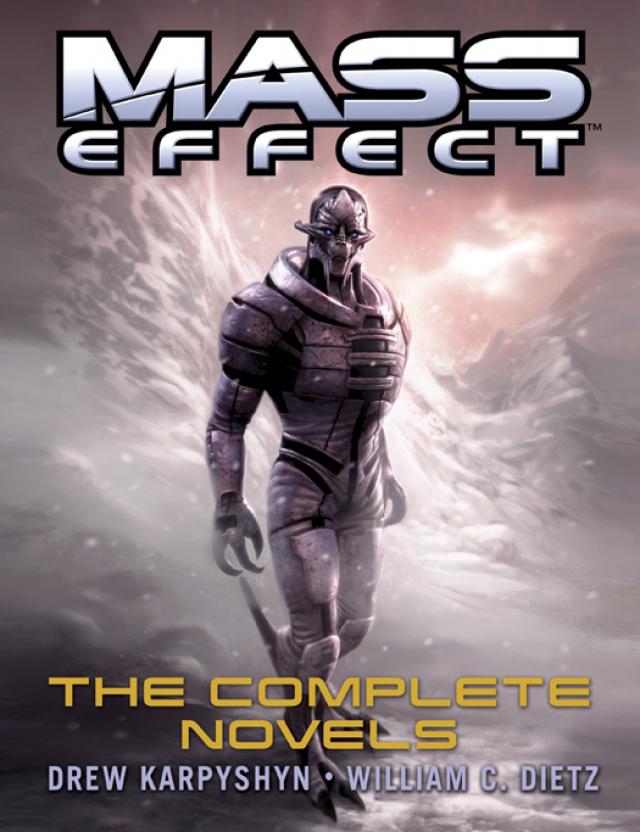


The Illusive Man, however, was able to see past their motley garb and jury-rigged ships. Technologically, they were easily the equivalent of any other species. The quarians had created the geth, who had become a scourge upon the galaxy. And they had managed to sustain a civilization numbering nearly seventeen million individuals over hundreds of years without the benefit of any planetary resources. Who knew what else they were capable of?
The Migrant Fleet was also the largest single armada in the known galaxy: tens of thousands of ships, ranging from tiny shuttles to cruisers to the three enormous Liveships—marvels of aerospace and agricultural engineering that provided the primary source of food for the entire flotilla. It was accepted fact that a significant portion of the ships in the fleet were armed, though how many and to what extent was unknown. In fact, very little was known about the quarian flotilla at all. They were a completely insular society; no outsider had ever set foot on one of their vessels since their exodus three centuries ago.
The Illusive Man didn’t trust aliens with so many ships and secrets. Getting the quarian codes and transmission frequencies would allow Cerberus to monitor communications among the vessels of the Migrant Fleet … provided they could somehow get one of their own ships close enough to tap into tight-beam messages without being seen. Pel wasn’t sure how the Illusive Man planned to pull off that part of the plan, but it wasn’t his concern. He was just here to acquire the codes and frequencies.
“I can’t actually give you the transmission codes,” Golo informed him. “They’ve changed since I was last part of the flotilla.”
Pel bit his lip to keep from swearing out loud. He should have known better than to trust Golo. He was an exile from the Migrant Fleet. The quarians didn’t have the space or resources on their ships to house a prison population, and therefore criminals were dealt with by expelling them from quarian society, abandoning them on the nearest inhabited planet or space station. In Golo’s case, Omega.
What kind of sick, twisted deviant do you have to be to get exiled by an entire race of beggars and thieves? he asked himself, wondering if Golo was a murderer, rapist, or just a complete sociopath.
“However, I do have something to offer you,” Golo continued, seemingly oblivious to Pel’s barely contained rage. “I will lead you to someone who can provide you with the information you want. For a price.”
Dirty, double-dealing son-of-a-bitch.
“That wasn’t our deal.”
“You need to learn to be flexible,” he said with a shrug. “Improvise. Adapt. That is the way of my people. It was how I survived when I first found myself on this station.”
You mean when they dumped you off here. Just another piece of garbage for someone else to clean up.
Despite his unspoken disdain, Pel had a grudging respect for Golo. Quarians were as unwelcome on Omega as anywhere else in the galaxy; the fact that he had managed to survive on the station was a testament to his cunning and resourcefulness. And a warning that he couldn’t be trusted. Pel wasn’t willing to report back to the Illusive Man empty-handed, but he also wasn’t quite ready to trust the quarian yet. Not without knowing a little more about him.
“Tell me why you were exiled.”
Golo hesitated. A sound that might have been a sigh of regret came from behind his mask, and for a second Pel thought the quarian wasn’t going to respond. “About ten years ago, I tried to make a deal with the Collectors.”
Pel had heard of the Collectors, though he’d never actually seen one. In fact, many people, including Pel, weren’t sure they really existed. From the stories, they sounded more like the interstellar equivalent of an urban legend than a real species.
By most accounts they had first appeared on the galactic scene roughly five hundred years ago, allegedly emerging from an uncharted region of space somewhere beyond the otherwise inaccessible Omega-4 relay. And while, if the stories were true, they had been around for five centuries, almost nothing was known about the enigmatic species or their mysterious homeworld. Isolationist to the extreme, the Collectors were rarely seen anywhere but Omega and a few of the nearby inhabited worlds. Even then, decades could pass with no reported sightings at the station, only to give way to a few years marked by several dozen sporadic visits from envoys looking to barter and trade with other species.
On those rare occasions when Collectors did venture into the Terminus Systems, they reportedly made it clear that similar visits by other species into their territory would not be tolerated. Despite this, countless vessels had dared to attempt the passage through the Omega-4 relay over the centuries in search of their home planet. None of them had ever returned. The staggering number of ships, expeditions, and exploratory fleets that had disappeared without explanation into the Omega-4 relay had led to wild speculation about what lay hidden beyond the portal. Some believed it opened into a black hole or the heart of a sun, though this didn’t explain how the Collectors could use the relay themselves. Others claimed it led to the futuristic equivalent of paradise: those who passed through were now living lives of decadent luxury on an idyllic planet, with no desire to return to the violent struggles of the lawless Terminus Systems. The most widely accepted explanation was that the Collectors had some manner of defensive technology, unique and highly advanced, that utterly destroyed any foreign vessel passing through the relay.
But Pel wasn’t sure he believed any of the stories.
“I thought the Collectors were just a myth.”
“A common misperception, particularly in Council Space. However, I can assure you from personal experience that they are very real.”
“What kind of deal did you make with them?” Pel asked, his curiosity piqued.
“They wanted two dozen ‘pure’ quarians: men and women who had spent their entire lives on the fleet, uncontaminated by visits to other worlds.”
“I thought every quarian had to leave the fleet during their Pilgrimage,” Pel remarked, referring to the quarian right of passage into adulthood.
“Not all quarians make the Pilgrimage,” Golo explained. “Exceptions are made for those too sick or infirm to survive outside the colony. And in rare cases an individual with a valuable skill or talent can receive a dispensation from the Admiralty.
“I knew from the start I’d probably get caught,” he added, almost regretful, “but the terms of their offer were too good to pass up.”
Pel nodded: this fit with the stories he’d heard. When the Collectors came to barter, they typically sought to exchange merchandise or technology for living beings. They were, however, far more than simple slavers. The tales of their requests were always unusual or bizarre: two dozen left-handed salarians; sixteen sets of batarian twins; a krogan born of parents from feuding clans. In return, the Collectors would offer incredible technology or knowledge, such as a ship with a new mass drive configuration that increased engine efficiency, or a cache of advanced targeting VI mods to radically improve weapon accuracy. Eventually this technology would be adapted by galactic society as a whole, but for several years it would provide a significant edge for anyone smart enough to take the deal. Or so the tales told.
In the absence of any true name for the species, their willingness to pay so extravagantly to have their odd but highly specific requests satisfied had earned them the generic title of Collectors. Similar to the conjecture spawned by the mystery of what lay beyond the Omega-4 relay, numerous theories had evolved attempting to explain the motivation behind their illogical demands. Some believed there was a religious significance to the requests, others saw it as evidence of deviant sexual predilections or gruesome culinary appetites.
If the Collectors actually did exist, as Golo claimed, then Pel tended to support the most generally accepted belief that they were conducting genetic experiments on other species, though he couldn’t even begin to guess at their exact nature or purpose. Certainly it was enough to make any reasonable person suspicious.
“If the Collectors are real, why hasn’t more been done to try and stop their activities?” he wondered aloud.
“As long as you can profit from the deal, who cares?” Golo replied, his rhetorical question encapsulating the general attitude of the entire Terminus Systems in a single breath. “They show up and offer something worth a few million credits, and all you have to do is give them a couple dozen prisoners in exchange. They’re no worse than the slavers, but they pay a lot better.”
Slavery was illegal in Council Space, but here in the Terminus Systems it was an accepted—even a common—practice. However, it wasn’t the morality of what the Collectors were doing that concerned Pel.
“Isn’t anyone worried about what they’re doing behind that relay? They could be making powerful new genetic weapons. What if they’re studying species to learn our weaknesses and vulnerabilities so they can invade?”
Golo laughed, the sound reverberating off his mask with a distant, hollow timbre.
“I have no doubt they are up to something unpleasant,” he admitted. “But they’ve been doing this for five hundred years. If they were planning an invasion, it would have happened by now.”
“But aren’t you even curious?”
“The curious try to go through the Omega-4 relay,” he reminded his human companion. “And they don’t come back. The rest of us here on Omega are more worried about getting killed by our neighbor than what’s happening on the far side of the galaxy. You need to stay focused to survive out here.”
Good advice, Pel thought. The Collectors were definitely intriguing, and he wouldn’t be surprised to learn that the Illusive Man already had agents looking into them somewhere. But that wasn’t his mission.
“You said you could lead me to people who can give me those transmission codes.”
Golo nodded eagerly, glad the subject had turned back to their current business.
“I can set up a meeting with a crew from one of the scout ships from the Migrant Fleet,” he promised. “Just make sure you take one of them alive.”
FIVE
The flight attendant greeted him with a cheerful smile, her voice warm and inviting. “Welcome aboard, Mr. Grayson. My name is Ellin.”
He didn’t recognize her, but she could have been a recent hire; he didn’t use the corporate shuttle very often. Ellin had striking green eyes—probably tinted—and long, lustrous golden hair—probably dyed. She looked to be in her early twenties, though of course there was no guarantee she was anywhere close to that young.
“Pleased to meet you, Ellin,” he replied with a nod. He realized he was smiling at her with a goofy grin. Always was a sucker for blondes.
“We won’t be leaving for a few minutes yet,” she informed him, reaching out to take the briefcase from his hand, “but your room is ready. Please follow me and we can get you settled while the pilot makes his final preflight checks.”
He studied her figure appreciatively from behind as she led him down the narrow corridor toward the private VIP chamber in the aft of the vessel.
“I hope everything is to your liking,” she commented on reaching their destination, stepping forward and holding the door open so he could enter.
The room bore almost no resemblance to the simple, often crowded bunks found on military vessels or the common sleeping rooms of long-distance mass-transit shuttles. Equipped with a luxurious bed, state-of-the-art vid screen, private shower and hot tub, full wet bar, and just about every other conceivable amenity, it compared favorably to any suite in all but the most expensive planet-side hotels.
“We’ll be arriving at the Grissom Academy in about eight hours, Mr. Grayson,” Ellin continued, setting his briefcase in the corner. “Can I get you anything before lift-off?”
“I think I just want to rest,” he said. Every joint in his body ached, and his head was pounding—classic signs of red sand withdrawal. “Wake me an hour before we arrive.”
“Of course, Mr. Grayson,” she replied, then turned and left him alone, closing the door behind her.
He stripped off his clothes, suddenly aware of how much he was sweating. There was a faint tremor in his left hand as he unbuttoned his shirt. But the idea of dusting up never crossed his mind; he wouldn’t let Gillian see him stoned. Naked, he collapsed on the bed, too hot to bother crawling under the soft, silk sheets.
He heard the deep rumble as the pilot fired up the engines. Grayson could have flown himself, of course … he still knew how to handle a vessel like this. But Cerberus needed him to play a different role now. His cover was that of a high-level executive with Cord-Hislop Aeorospace, a midsized starship manufacturer based on Elysium. This allowed him to travel across the galaxy in private vessels without drawing undo attention, and offered a reasonable way to explain the large donation he’d given to the board of the Grissom Academy in order to get Gillian accepted into the Ascension Project.
The days of pretending to be a private pilot for up-and-coming politicians were long gone; now he was the one enjoying the luxurious room and service from a personal flight attendant. The Illusive Man looked after those who pleased him.
I bet Menneau thought that, too. Right before Pel killed him.
Grayson sat up in bed, his mind going back to Pel’s recent visit. Maybe his old friend had told the Illusive Man about the red sand after all. Cerberus wouldn’t just sit by if they felt his addiction jeopardized the mission.
Was Ellin really just a flight attendant? Thousands of everyday people worked ordinary jobs for Cord-Hislop without ever suspecting it was a corporation controlled by a shadowy paramilitary group. Hardly anyone at the company—or anywhere else, for that matter—even knew an organization like Cerberus existed. But hidden within the rank and file of employees, scattered across all rungs of the corporate ladder, were dozens of the Illusive Man’s agents. Maybe Ellin was one of them. Maybe she was waiting outside the door to stick an ice pick in his neck, just like he’d done to Keo.
He rolled out of bed and pulled on the terry-cloth bathrobe hanging on the wall, then pushed the call button. A few seconds later there was a gentle rap on the door. Grayson hesitated, then waved his hand in front of the access panel. He resisted the urge to jump back as the door slid open.
Ellin was standing there, armed only with her relentlessly cheery smile and perky attitude.
“Is there something you need, Mr. Grayson?”
“My clothes … can you have them cleaned and pressed for me?”
“Of course, sir.”
She stepped into the room and collected his discarded garments, picking them up with a cool, practiced efficiency. There was a confidence about her; a professionalism that could be a sign of specialized military training … or it could have simply been part of her job. He tried to watch her without being seen, hoping to catch her surreptitiously watching him. If she was working for Cerberus, she’d have been instructed to keep close tabs on her passenger.
Ellin stood up and turned to face him, the bundle of clothes in her arms. The well-practiced smile fell away from her face, and Grayson realized he was still staring at her intently.
He shook his head to clear away the dark thoughts. “Sorry. My mind was somewhere else.”
Her smile reappeared, though her eyes looked nervous. “Is there anything else, Mr. Grayson?”
He picked up the slightest waver in her voice. Either she’s just a scared little stewardess, or she’s very, very good at pretending to be one. The thought was quickly followed by another: The red sand’s making you paranoid.
“Thank you, Ellin. That will be all.”
The relief on her face as he stepped aside to let her exit was obvious. Once she was safely outside the door, she hesitated, then turned back.
“Do … do you still want me to wake you an hour before we land?”
“That will be fine,” he said abruptly, closing the door before she could see the flush of embarrassment creeping up his neck and into his face.
Get it together, he chided himself, removing the robe and falling back onto the bed. Quit jumping at shadows. This mission’s too important to screw up.
The sound of the engines had changed. Staring up at the ceiling, he could feel a slight pressure on his chest pushing him down into the soft mattress. The ship was taking to the sky, battling gravity and atmosphere as it headed for the stars. The room that had seemed so hot before was suddenly cold; he shivered and crawled in under the blankets.
The artificial mass effect fields generated inside the ship’s hull dampened the turbulence and g-forces of their lift-off, but his pilot’s instincts could still feel the motion. It was familiar, reassuring. Within minutes it had rocked him to sleep.
“We have a new assignment for you,” the Illusive Man said, and Grayson realized he was dreaming once again.
They were alone in Grayson’s apartment, just the two of them … and the infant sleeping quietly in the Illusive Man’s arms.
“I was impressed with your work on the Eldfell-Ashland job. I know it was a difficult mission.”
“It was for the greater good,” he replied.
Even if he wanted to, there was nothing else he could say. He had believed it back then, with every fiber of his being. He still believed it, though the part of his mind that knew he was dreaming realized things weren’t as simple as they used to be.
“I have a special assignment for you,” the Illusive Man said, handing over the child. “She’s biotic.”
Grayson took the little girl in his arms. She was warm and soft, and lighter than he’d expected. Disturbed by the transfer, her eyes popped open and she began to fuss. Grayson shushed her gently, rocking her in his arms. Her eyelids drooped, she blew a small bubble, and then she was asleep again.
Based on her age he had no doubt as to how she had been exposed to element zero.
“You’re going to be working for Cord-Hislop as part of your cover,” the Illusive Man informed him. “Sales for now, but you’ll climb to the executive ranks over the next few years. We want you to raise the girl as your own.”