Were alone, p.1
We're Alone,
p.1


WE’RE ALONE
ALSO BY EDWIDGE DANTICAT
Fiction
Everything Inside
Claire of the Sea Light
The Dew Breaker
The Farming of Bones Krik? Krak!
Breath, Eyes, Memory
Nonfiction
The Art of Death: Writing the Final Story
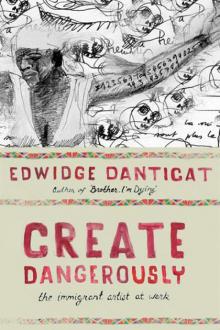
Create Dangerously: The Immigrant Artist at Work
Brother, I’m Dying
After the Dance: A Walk through Carnival in Jacmel, Haiti
Children and Young Adult
My Mommy Medicine
Mama’s Nightingale: A Story of Immigration and Separation
Untwine
The Last Mapou
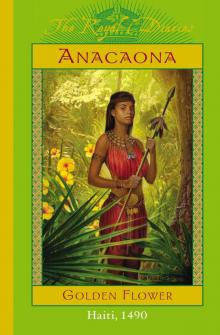
Anacaona, Golden Flower
Eight Days: A Story of Haiti
Behind the Mountains
As Editor
Haiti Noir
Haiti Noir 2: The Classics
Best American Essays 2011
The Butterfly’s Way: Voices from the Haitian Dyaspora in the United States
The Beacon Best of 2000: Great Writing by Women and
Men of All Colors and Cultures
WE’RE ALONE
ESSAYS
Edwidge Danticat
Graywolf Press
Copyright © 2024 by Edwidge Danticat
The author and Graywolf Press have provided this e-book to you for your personal use only. You may not make this e-book publicly available in any way. Copyright infringement is against the law. If you believe the copy of this e-book you are reading infringes on the author’s copyright, please notify Graywolf Press at: us.macmillanusa.com/piracy.
Published by Graywolf Press
212 Third Avenue North, Suite 485
Minneapolis, Minnesota 55401
All rights reserved.
www.graywolfpress.org
Published in the United States of America
Printed in Canada
ISBN 978-1-64445-302-5 (cloth)
ISBN 978-1-64445-303-2 (ebook)
2 4 6 8 9 7 5 3 1
First Graywolf Printing, 2024
Library of Congress Cataloging-in-Publication Data
Names: Danticat, Edwidge, 1969– author.
Title: We’re alone: essays / Edwidge Danticat.
Other titles: We are alone
Description: Minneapolis, Minnesota: Graywolf Press, 2024. | Includes bibliographical references.
Identifiers: LCCN 2024004162 (print) | LCCN 2024004163 (ebook) | ISBN 9781644453025 (hardcover) | ISBN 9781644453032 (epub)
Subjects: LCGFT: Essays.
Classification: LCC PS3554.A5815 W47 2024 (print) | LCC PS3554.A5815 (ebook) | DDC 814/.54—dc23/eng/20240126
LC record available at https://lccn.loc.gov/2024004162
LC ebook record available at https://lccn.loc.gov/2024004163
Jacket design: Jeenee Lee
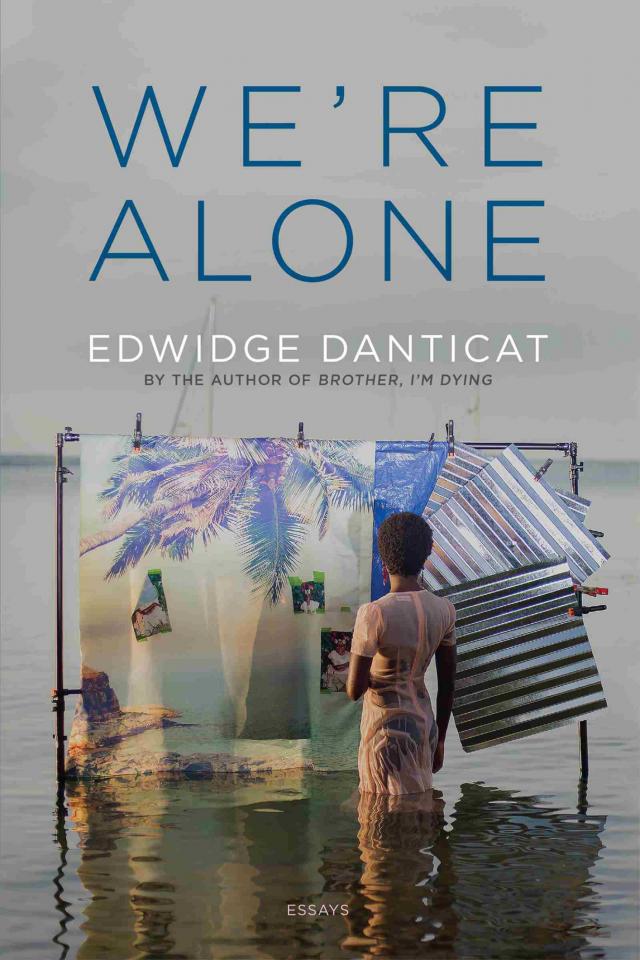
Jacket photo: Widline Cadet, Seremoni Disparisyon #1 (Ritual [Dis]Appearance #1), 2019
Pou Patricia
Contents
We’re Alone: A Preface
PART 1
Children of the Sea
A Rainbow in the Sky
They Are Waiting in the Hills
This Is My Body
PART 2
By the Time You Read This …
Chronicles of a Death Foretold
Wozo, Not Mawozo
Writing the Self and Others
Appendix
Bibliography
Acknowledgments
We’re Alone: A Preface
Your hands—give them to me,
Let me speak, and simply
Words you can not forget.…
We’re alone—
And the sea .…
And the cradling palms are thick.
Roland Chassagne, “Shore”
I spent many years trying to find the original French poem “Plage,” from which these lines were translated. I came across the English translation in a 1934 book given to me in the 1990s by a friend. The book is The Poets of Haiti: 1782–1934, and the translator is an American writer named Edna Worthley Underwood. Underwood was born in Maine in 1873. I don’t know how she ended up in Haiti during the latter end of the 1915–1934 US occupation, but she had friends in high places, including Haitian president Sténio Vincent, who wrote her book’s introduction.
Readers will find in The Poets of Haiti “the echo of all great human emotions,” Vincent declared.
Some of the poems in the collection felt intimate, particularly those by the Jérémie-born poet Roland Chassagne, whose words read like secrets. We’re alone is the persistent chorus of the deserted, as in no one is coming to save us. Yet, we’re alone can also be a promise writers make to their readers, a reminder of this singular intimacy between us. At least we’re alone together. Or as A. S. Byatt wrote in her 1990 novel Possession, “The writer wrote alone, and the reader read alone, and they were alone with each other.”
Writing for me, particularly writing essays, is a quest for that kind of aloneness/togetherness, as well as something akin to what the Haitian American anthropologist and artist Gina Athena Ulysse has labeled Rasanblaj, which she defines as “assembly, compilation, enlisting, regrouping (of people, spirits, things, ideas).”
After trying to locate the original Chassagne poem on my own, it finally occurred to me to reach out to Régine Chassagne, a Haitian Canadian musician and one of the lead singers of the indie rock group Arcade Fire. Roland Chassagne was her grandfather. Régine’s father, Stanley, sent her a screenshot of the poem, which she shared with me. (See the appendix.) “Plage” was published in a 1933 collection by Roland Chassagne called Le tambourin voilé (The Veiled Tambourine). I might have translated the verse differently, if perhaps less lyrically.
Laisse-moi prendre tes mains
Et te dire des choses simples
Et inoubliables . .
Parce que nous étions seuls,
Près du rivage, sous ce dais
des palmes, et qu’on s’aimait,
Le bonheur était intense et
Inexprimable.
Allow me to take you by the hand
And tell you some simple
And unforgettable things …
Because we were alone,
Near the shore, under this canopy
Of palms, and we loved each other,
The pleasure was intense and
Indescribable.
In April 1963, during the Duvalier dictatorship, Roland Chassagne was arrested at Port-au-Prince’s Deschamps printing house, where he worked as a proofreader. He was accused of being in possession of “contraband literature.” Roland Chassagne was taken to François “Papa Doc” Duvalier’s prison dungeon, Fort Dimanche, and was never heard from again. His son Stanley, Régine’s father, was studying in Chicago at the time and did not hear of the arrest until an aunt traveled there to tell him and other family members. Roland Chassagne was working on an unfinished novel, a copy of which his son Stanley still has. Roland Chassagne’s name eventually appeared on a 1978 Inter-American Commission on Human Rights list of political prisoners who had died from malnutrition and disease or had been executed at Fort Dimanche. Still, Roland Chassagne’s words remain, both in the original and in somewhat interpretive translations. Writers die, but not their canopy of language. Just as Roland Chassagne still sometimes whispers to me, Dear Reader, Please allow me to reach for your hand. We’re alone.
WE’RE ALONE
PART 1
Children of the Sea
1
Early in the summer of 2018, I was at the opening of a library in a southern Haitian town called Fond-des-Blancs. Fond-des-Blancs, which means Fountain of Whites, is home to a large number of people of Polish lineage, the descendants of soldiers from a regiment that switched alliances from the French armies they were fighting alongside in early nineteenth-century Haiti to join the Haitians in their battle for independence from France. The mutinous Polish soldiers who settled in Fond-des-Blancs were the only whites and foreigners granted Haitian citizenship after Haiti became the world’s first Black republic in 1804.
The library we were there to celebrate had been started by a nonprofit organization called Haiti Projects, which was run by an acquaintance of mine. The opening-week program included writing workshops and conversations with writers. I participated in a conversation and writing workshop with the Haitian novelist and short story writer Kettly Mars. Our moderator, the Haitian educator Jean-Marie Théodat, asked us to read both the beginning and the end of one of our short stories, Kettly in the original French and me in a Haitian Creole translation. We were then asked to explain to the group of twenty-five or so eager teenagers why we’d begun and ended that story the way we had.
It is much easier to explain or elaborate on endings than on beginnings. For endings, you can always say that it ended this way because it had begun that way. Or it ended that way because something popped up in the middle that led there. Beginnings have more amorphous origins.
I thought of the opening line in an essay by the short story writer and novelist Ann Beattie: “A guilty truth about writing: if you know your subject well, you will never feel assured about where to begin; only boring subjects offer an inevitable starting point.”
One of my earliest childhood memories is being torn away from my mother at four. At the airport in Port-au-Prince, on the day my mother left Haiti for the United States, I wrapped my arms around her legs before she headed for the plane. She leaned down and tearfully unballed my fists so my
uncle could peel me off her. As my two-year-old brother, André, dropped to the floor, bawling, my mother hurried away, her tear-soaked face buried in her hands. She couldn’t bear to look back.
If my life were the short story whose beginning I was asked to explain in that Fond-des-Blancs writing workshop, this might have been my chosen beginning, the most dramatic one I can remember, and which I have spoken of and written about often, including in my memoir Brother, I’m Dying. In Haitian Creole, when someone is said to be lòt bò dlo on the other side of the water, it can mean either they’ve traveled abroad or they have died. Even before I knew what it meant, my parents were already lòt bò dlo, my father having left for New York two years before my mother. My desire to make sense of this separation, this lòt bò dlo-ness, helped me understand that words could bridge distances.
One way I used to communicate with my parents was through letters. Every month my father would send us a brief letter that would begin with “J’écris, espérant que cette missive vous trouve en bonne santé. Moi aussi, je vais bien. Grâce à Dieu.” I write, hoping this letter finds you in good health. I, too, am fine. Thanks be to God.
Each time my parents’ letters arrived at my uncle’s house in Port-au-Prince, I was reminded that my parents could tell me stories from afar. I imagined them telling me cautionary tales, which my uncle often repeated, of my undocumented parents’ long, arduous days toiling in sweatshops or about how the immigration police might raid their workplace at any time and take them to a detention center to await deportation. At the workshop in Fond-des-Blancs, the young writers, like so many other young writers elsewhere, kept asking, “How do you begin? Who taught you to write? What do you read? Who do you keep reading?”
My best writing teachers were the storytellers of my childhood, I told them. Most never went to school and never learned to read and write, but they carried stories like treasures inside of them. In my mother’s absence, my aunts and grandmothers told me stories in the evenings when the lights went out during blackouts, while they were doing my hair, or while I was doing their hair. This is another possible beginning: stories told to me by women like the ones the late Paule Marshall called “kitchen poets.”
2
I moved to New York in 1981 at age twelve to join my parents soon after cases of acquired immunodeficiency syndrome (AIDS) were first discovered in the United States. The Centers for Disease Control named four groups at “high risk” for the disease: intravenous drug users, homosexuals, hemophiliacs, and Haitians. Haitians were the only ones solely identified by nationality, in part because of twenty or so Haitian patients who’d shown up at Jackson Memorial Hospital in Miami. Suddenly, every Haitian was suspected of having AIDS. At the public junior high school where my parents enrolled me, some of the non-Haitian students would regularly shove and hit me and the other Haitian kids, telling us that we had dirty blood. My English as a second language class was excluded from a school trip to the Statue of Liberty out of fear that our sharing a school bus with the other kids might prove dangerous to them.
I had a wonderful teacher at this junior high school, a Haitian exile named Raymond Dusseck. Mr. Dusseck’s science, math, and English as a second language lessons relied on games and songs to help us begin speaking in our new tongue. He taught us English songs that were full of stories, starting with the African American national anthem. I remember being enchanted by James Weldon Johnson’s beautiful lyrics:
Lift every voice and sing,
’Til earth and heaven ring,
Ring with the harmonies of Liberty.
Eight months later, I was “mainstreamed” from English as a second language to a regular class, where my teacher asked me to write an essay about my first Thanksgiving. I wrote that I was looking forward to eating the “golden” turkey, which I thought was original. Later I would be horrified by my cliché, but she told me I had a great writing voice. Lift every voice, indeed. Though not that of the massacred Native Americans.
When I was in the eleventh grade, Mr. Casey, my history teacher at Brooklyn’s Clara Barton High School, asked me how I wanted to leave my mark on the world. I told him I wanted to be a writer. The next day, he loaned me his copy of Mari Evans’s anthology Black Women Writers (1950–1980): A Critical Evaluation. The book included scholarly writings on the works of Paule Marshall, Toni Morrison, Lucille Clifton, Alice Walker, Toni Cade Bambara, Audre Lorde, Gayl Jones, Gwendolyn Brooks, Sonia Sanchez, Nikki Giovanni, Maya Angelou, Gloria Naylor, and many other writers, who would become some of the literary loves of my life. They, along with the Haitian writers I began reading in New York, writers like Marie Vieux-Chauvet, Jacques Roumain, Jacques Stephen Alexis, J. J. Dominique, Ida Faubert, and Dany Laferrière, became my companions on my nascent journey as a writer. (I write about some of these writers elsewhere, including in my 2010 essay collection Create Dangerously, which was inspired by Albert Camus and adapted from my lecture in Princeton University’s Toni Morrison Lecture Series in March 2008.)
“Can writing change anything?” was another question I was asked at the youth workshop in Fond-des-Blancs. “How does the artist move the world?”
I’m not sure I did, but I wanted to say by bearing witness.
In a 1984 New York Times interview, the writer Julius Lester asked the novelist, essayist, and activist James Baldwin: “Witness is a word I’ve heard you use often to describe yourself.… What are you witness to?”
Baldwin replied, “Witness to whence I came, where I am. Witness to what I’ve seen and the possibilities that I think I see.”
Though I might not always succeed, this is the kind of writer I would like to be, a witnessing writer.
A friend who was with us in Fond-des-Blancs that day told me that I should write more about love. I considered all I could possibly have to say about love. I told my friend that every word I put down on paper is an act of both witness and love. I thought about what James Baldwin has written about love: Love does not begin and end the way we seem to think it does. Love is a battle, love is a war; love is a growing up.
3
In Dust Tracks on a Road, the writer and anthropologist Zora Neale Hurston writes that after her mother, Lucy, died, and she left home to travel to places previously unknown to her, she was forced into “the morning of the day of the beginning of things” and that “all that geography was within me. It only needed time to reveal it.”
I love this last line so much that sometimes I misquote or paraphrase it as All geography is within me. It only needs to reveal itself.
When, after graduating from high school in Brooklyn, I became a student at Zora Neale Hurston’s alma mater, Barnard College, I felt as though Zora’s ghost was shadowing me. Zora had gone to Haiti to study zombies, Vodou, and folktales. She wrote her most famous novel, Their Eyes Were Watching God, there. While Zora’s overemphasis on Haitians’ “unconscious cruelty,” in contrast to her casual dismissal of the brutality of the 1915–1934 US occupation of Haiti and the 1937 massacre of Haitians and Black Dominicans ordered by the Dominican dictator Rafael Trujillo, is agonizing to read in Tell My Horse, her chronicles from Haiti still offer the astute perspective of a Black woman anthropologist and creative writer exploring the country’s primary religion, Vodou, which continues to be stigmatized and caricatured in the United States.
According to Haitian folklore, eating salt can liberate zombies from their living death. People who suddenly receive terrible news are also given salt, in coffee, for example, to help ward off the sezisman, the shock, so that we can pick ourselves up and keep moving. I told the young writers I am a writer because, somehow, I was given the salt. For some of us, that salt is stories and words. For others, it is music, movement, and dance. For others, it is images, shapes, sculpture.
When I first moved to the United States, I remember being shocked that salt was white. In markets in Haiti, we often bought rock sea salt that looked like little crystals or small pebbles, which were unevenly shaped, and had dark streaks either on the surface or inside. You always had to wash the salt pebbles before putting them in food, and even after you washed them, they looked more gray than white.