Slice and dice, p.1
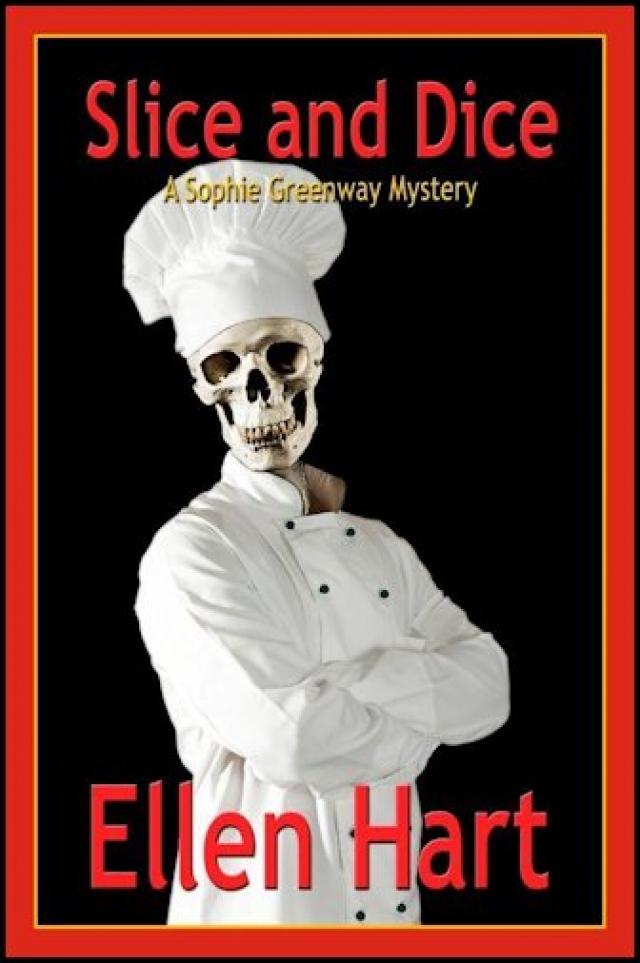
Slice and Dice,
p.1


Praise for Ellen Hart and her Sophie Greenway mysteries
THIS LITTLE PIGGY WENT TO MURDER
“Strong characters and a rich Lake Superior setting make this solidly constructed mystery hard to put down. Another winner for Ellen Hart!”
— M. D. Lake
“There are some good, nail-bitingly-tense scenes and lots of red herrings.”
— Publishers Weekly
FOR EVERY EVIL
“A dilly… A fair-play plot and contemporary characters that leap off the page… Stir in Martha Grimes with P. D. James and add a dash of Christie and Amanda Cross and you begin to get the idea: a cozy with a brain.”
— Alfred Hitchcock Mystery Magazine
“Another splendid specimen of the classical mystery story, nicely updated and full of interesting and believable characters.”
— The Purloined Letter
Praise for Ellen Hart and her Jane Lawless series
HALLOWED MURDER
“Hart’s crisp, elegant writing and atmosphere [are] reminiscent of the British detective style, but she has a nicer sense of character, confrontation, and sparsely utilized violence. Hallowed Murder is as valuable for its mainstream influences as for its sexual politics.”
— Mystery Scene
VITAL LIES
“This compelling whodunit has the psychological maze of a Barbara Vine mystery and the feel of Agatha Christie…. Hart keeps even the most seasoned mystery buff baffled until the end.”
— Publishers Weekly
STAGE FRIGHT
“Hart deftly turns the spotlight on the dusty secrets and shadowy souls of a prominent theater family. The resulting mystery is worthy of a standing ovation.”
— Alfred Hitchcock Mystery Magazine
A KILLING CURE
“A real treat… Secret passageways, a coded ledger, a mysterious group known only as the Chamber, experimental drugs, blackmail, sexual assault, betrayal: all the ingredients of a good whodunit.”
— Lambda Book Report
SLICE AND DICE
Ellen Hart
Copyright © 2000 by Ellen Hart
This book is a work of fiction. Names, characters, places and incidents are either products of the author’s imagination or used fictitiously. Any resemblance to actual events, locales, or persons, living or dead, is entirely coincidental. All rights reserved. No part of this publication can be reproduced or transmitted in any form or by any means, electronic or mechanical, without permission in writing from the author or publisher.
Edition: November 2010
For Joe Blades, editor, mentor, dear friend — with gratitude and much affection
Every great man nowadays has his disciples, and it is always Judas who writes the biography.
— Oscar Wilde
The Critic as Artist
Acknowledgments
Many thanks to Rick Nelson, food staff writer at the Minneapolis Star Tribune, for his insight into the inner workings of restaurant reviews and reviewers. Also, thanks to Dr. Tom Rumreich for his always fascinating forensic expertise. And finally, thanks beyond measure to Kathy Kruger and R.D. Zimmerman for reading the book in manuscript form and offering not only patient encouragement, but sound advice.
Contents
Cast of Characters
Prologue
Journal Note
Chapter 1
Chapter 2
Journal Note
Chapter 3
Chapter 4
Journal Note
Chapter 5
Chapter 6
Chapter 7
Journal Note and Interview
Journal Note
Chapter 8
Chapter 9
Chapter 10
Journal Note
Chapter 11
Chapter 12
Journal Note and Interview
Chapter 13
Chapter 14
Journal Note and Interview
Chapter 15
Chapter 16
Journal Note and Interview
Chapter 17
Chapter 18
Journal Note
Chapter 19
Chapter 20
Chapter 21
Chapter 22
Chapter 23
Journal Note and Interview
Chapter 24
Chapter 25
Journal Note and Interview
Chapter 26
Chapter 27
Chapter 28
Journal Note and Interview
Chapter 29
Chapter 30
Chapter 31
Chapter 32
Chapter 33
Chapter 34
Chapter 35
Recipes
About the Author
A Conversation Between Ellen Hart and Sophie Greenway
Also by Ellen Hart
Cast of Characters
Sophie Greenway: Owner-manager of the Maxfield Plaza hotel in St. Paul. Restaurant critic. Wife of Bram Baldric. Mother of Rudy.
Bram Baldric: Radio talk-show host for WTWN in the Twin Cities. Sophie’s husband.
Constance Buckridge: Cookbook author. Founder of the Buckridge Culinary Academy in New Haven, Connecticut. Mother of Nathan and Emily. Stepmother of Paul. Wife of Wayne.
Nathan Buckridge: Chef. Director of the Buckridge restaurant chain. Son of Constance. Sophie’s old boyfriend.
Paul Buckridge: Chancellor of the Buckridge Culinary Academy. Chef. Brother of Emily. Stepbrother of Nathan.
Marie Damontraville: Writer-biographer. Lela Dexter: Guest at the Maxfield Plaza.
Emily Buckrjdge-Merlin: Photographer. Wife of Kenneth. Daughter of Constance. Half-sister of Nathan and Paul.
Kenneth (Kenny) Merlin: Constance Buckridge’s attorney. Husband of Emily.
David Polchow: Chef at the Belmont.
Harry Hongisto: Owner of the Belmont. Old friend of Sophie’s father.
George Gildemeister: Restaurant critic at the Times Register in Minneapolis.
Arthur Jadek: Author. Professor. Clinical psychologist. Constance’s brother.
Wayne Buckridge: Paul and Emily’s father. Owner of Buckridge Construction. Husband of Pepper. Later, husband of Constance.
Pepper Buckridge: Mother of Paul. Wayne’s first wife.
Prologue
Late October, 1963
It wasn’t fair. Pepper had waited for years to have a child, and now that she had a beautiful little four-year-old boy, she was too sick even to play with him. She sat in a wooden lounge chair at the edge of the water, watching her son, Paul, dig in the sand next to the dock. He was such a sweet child. Wispy blond curls and a sunny smile. He had her husband’s aqua-blue eyes and his intense scowl, but in every other way he was a miniature reflection of her. He even had her love of the outdoors. It didn’t matter that the air was chilly and a dreary fog hugged the shoreline. Every afternoon after his nap, come rain or shine, little Paul had to have his time down by the dock.
When her husband, Wayne, had first started construction on their Lake Minnetonka house six years earlier, the forty-eight steps leading from the back porch down to the lake had seemed like nothing. Now it was a daily struggle. If her health didn’t improve, it wouldn’t be long before she couldn’t make it at all.
Pepper had spent the last five months visiting one doctor after another, trying to find answers. She’d seen at least a dozen specialists, taken more than three dozen tests, and been prescribed a mountain of pills. And yet, except for the dizziness, the tiredness, the stomach pains, the eye problems, and her growing anxiety, nobody could agree on what was wrong with her. Her husband had tried to remain supportive and loving, but she could feel him losing patience.
“Mrs. Buckridge?” came a soothing voice.
“Yes?” she said, removing her eyes from her son and fixing them on the young, attractive, blonde-haired woman who was leaning over her chair. “Oh, Connie. It’s you.”
Connie Jadek had been a maid at the Buckridge home for almost two years. Last spring she’d taken over as the cook. Although she seemed competent enough, Pepper didn’t like her. Her constant cheerfulness was enough to drive anyone to drink.
“I brought you another blanket,” said Connie. “I thought you might be cold.” She spread it over Pepper’s legs.
“What about my rum and Coke?”
“It’s on the table right next to you.”
Pepper glanced to the side.
“Are you sure you wouldn’t like something to eat?”
“No, nothing.” Even the idea of food made her sick to her stomach.
“Can I get you anything else?”
Before she could respond, she heard Paul calling, “Nonnie! Nonnie!” He tossed his tin shovel in the sand and ran to show Connie what he’d found.
She bent down to look at the small feather in his hand. “Oh, that’s beautiful, Paul. We’ll have to put it with all the others.”
Pepper was instantly furious. Why hadn’t Paul shown her the feather first? He’d spent so much time with Connie lately that she’d almost replaced Pepper as a mother figure. She fed him all his meals. Played with him on and off during the day. Read him stories and then tucked him in bed at night. It was insidious, but because she was too weak to do anything else, Pepper had to sit by and watch it happen. She’d mentioned the situation to Wayne just last night, said it was becoming intolerable. But he wouldn’t hear of any more staff changes. They’d already gone through three nannies. Nobody did anything well enough for Pepper’s high standards. What the h
ell did she want, anyway?
She’d screamed at him that she wanted her life back. She wanted to be healthy, to take care of Paul herself, the way she had when he was a baby. She ached for the feel of him, for the smell of his hair. She was his mother, for God’s sake — not these strangers! Couldn’t Wayne understand how hard it was for her to watch her son transferring his affections to others?
“What’s the solution?” Wayne demanded. “You’re too sick to take care of him yourself. What am I supposed to do? Let him fend for himself while I’m away at work? Do you want him crawling around the house eating bug killer and stuffing marbles in his ears?”
She knew there was no good answer. Connie would stay, of course, as would the rest of the staff. Until Pepper felt better, she’d simply have to live with the consequences of her illness. But she’d be damned if she’d let anyone take her son away from her.
“Paul,” she said softly, reaching out her hand. “Come sit with Mommy.”
The little boy handed the feather to Connie, looking uncertain.
“Aren’t you cold?” asked Pepper. “Come get under the covers with me and we’ll watch the waves together. I’ll tell you a story about when I was a little girl.”
Hesitantly, the boy got up and stood next to the chair.
“That’s all, Connie,” said Pepper dismissively, taking several swallows of her rum and Coke — her third of the afternoon. “Come back in half an hour. We’ll be ready to go in by then.”
Connie nodded, looking hesitant herself. Finally, giving a tiny wave to Paul, she turned and walked back up die steps to the house.
Once Paul was bundled up next to her, Pepper stroked his hair and said, “You know Mommy loves you more than anything else in the whole wide world.”
He made a movement that was part nod, part yawn.
Pepper had lived her whole life on Lake Minnetonka. As a child, she’d discovered a secret: The lake had a heartbeat. Sometimes it was wild and roaring, sometimes it was buried under layers of ice and snow, but it was always there, full of spirit, strong, and insistent. Now the sound of it gave her courage. “Mommy’s been sick for a long time,” she said, kissing the top of her son’s head, “but she’s going to get better.”
“Can we play in the park tomorrow?”
“No, not tomorrow.” She sighed, realizing she’d disappointed him once again. “But soon. Very soon. I promise.”
He buried his face in her sweater. “Okay.” His tiny arms hugged her tight. “I love you, Mommy.”
Her heart nearly broke. “Don’t ever forget this moment,” she whispered, her arms wrapped around him. “And please, Paul, whatever happens, don’t ever forget me.”
PRESENT DAY
Journal Note
Friday, 3 P.M.
No sign of her yet. I’ve registered at the hotel under an assumed name. I’ll go with my standard game plan this time and reserve using my real name until later. I shouldn’t have any trouble passing as just an ordinary tourist.
Tomorrow I start planning the preliminary interviews. I’ve spent months reading everything I could get my hands on about Constance Buckridge, America s culinary sweetheart. Books, articles, old television programs — getting the facts and figures straight. But this is where it all began. Ground zero.
My own personal “Deep Throat” inside the Buckridge camp insists that the bodies are moldering beneath the floorboards, just waiting for me to dig them up. He hasn’t been specific, but he’s promised me that my time will be well spent. I have a good feeling about this project. The hero with clay feet — my specialty. More later.
M.
1
Sophie had hoped that after a couple of martinis and a plate of the Belmont’s famous tiger shrimp on a bed of spicy couscous, Bram would be in a good enough mood for her to drop the bomb. She’d been preparing her speech all afternoon — ever since she’d talked to her son, Rudy. Rudy was currently biking and backpacking his way across Europe with his partner, John Jacoby. On the phone, they’d made an important decision, one she needed to tell Bram about right away. However, not only were the tiger shrimp no longer on the menu, but the usually prompt and friendly service at the restaurant was tonight a study in indifference. Any good mood the drinks might have engendered had been destroyed by the annoying boy-waiters buzzing about the dark, intimate dining room.
Neither Sophie nor Bram had eaten at the Belmont since last fall. Almost all the old wait staff was gone, replaced by a more youthful crew, lads who seemed to think having fun was the essence of their job description. They clumped together at the wait stations, chuckling at little in-jokes, and occasionally, when the mood struck, wandered off toward one of the gilt-edged mirrors to check their look. They were exceedingly adept at pouring water, but that was about the extent of their skills. Initially, Sophie and Bram were so amazed by the staff’s bustling inactivity that they hardly noticed that their waiter had hardly noticed them.
Twenty minutes after their arrival, having received nothing more than two glasses of water and a couple of menus, Bram reached his limit. At first he tried some polite arm-waving, but when that was ignored, he stood, placed two fingers between his teeth, and gave a piercing whistle. Not only did that catch their waiter’s attention, but every other eye in the place as well. Most of the other diners nodded their approval. Some even clapped.
According to local restaurant scuttlebutt, the Belmont, an institution in downtown Minneapolis, was currently having problems. This was clear not only from the lax service but also from the wilted rose on the table, as well as the pile of dry toast and a slice of bland paté the waiter brought them when he finally sauntered over to take their order.
“What the hell’s happened here?” muttered Bram as the young man strolled off toward the kitchen.
Sophie just shook her head.
Harry Hongisto, the owner of the Belmont since the early Fifties, was an old poker-playing buddy of her father’s. They were both Finlanders from the Iron Range, both born and raised in Hibbing. During the past winter, Sophie had been sad to see a restaurant review in the Times Register trash the food at the Belmont. She couldn’t believe the place had sunk that low, especially since she knew the bias of the reviewer, a man with whom she rarely agreed. And yet, perhaps in this one instance, the review had foundation. For the first time, Sophie felt as if she was sitting in the faded glory of what had once been a premier restaurant in the Twin Cities.
That wasn’t to say that Harry hadn’t done his best in the last few months to stem the tide of decline. First, he’d hired David Polchow as the new head chef. Arriving with the highest of recommendations, David was a graduate of the New Orleans Cooking Institute and had studied under some of the best chefs in Europe. He’d worked at Sur la Mer in Boston before coming to Minnesota. His attempts to improve the food service at the Belmont, however, didn’t seem to be working. Sophie couldn’t understand how a chef of his caliber could have produced such an insipid pate, though perhaps it was an off night. Or, more likely, die rest of die kitchen staff wasn’t working at his level. He could do his best to educate and make demands, but he couldn’t do all the work himself.
Harry had also begun to modernize the interior, though interior decorating seemed to be the least of the restaurant’s problems. It was true, of course, that the wine-colored leather booths, once the height of elegance, had begun to look a bit tired. So had the pool-table-green walls and the heavy-handed gold accents. In an earnest attempt at modernity, Harry had replaced the carpeting, a bold playing-card design of clubs, hearts, diamonds, and spades, with a dreary putty color, all wrong for the more aggressive Las Vegas-style ambience. And plants, totally unnecessary greenery, seemed to be starving for light in every corner of the room. The Belmont had history and tradition going for it. It had a flavor, a style. All it needed was some retouching — not a whole new look. Ferns and minimal furnishings belonged in a more self-conscious Uptown bistro. A less self-conscious, more overt Fifties take on opulence was the name of the game here. Why not appreciate it for what it was?