The case of the phantom.., p.10
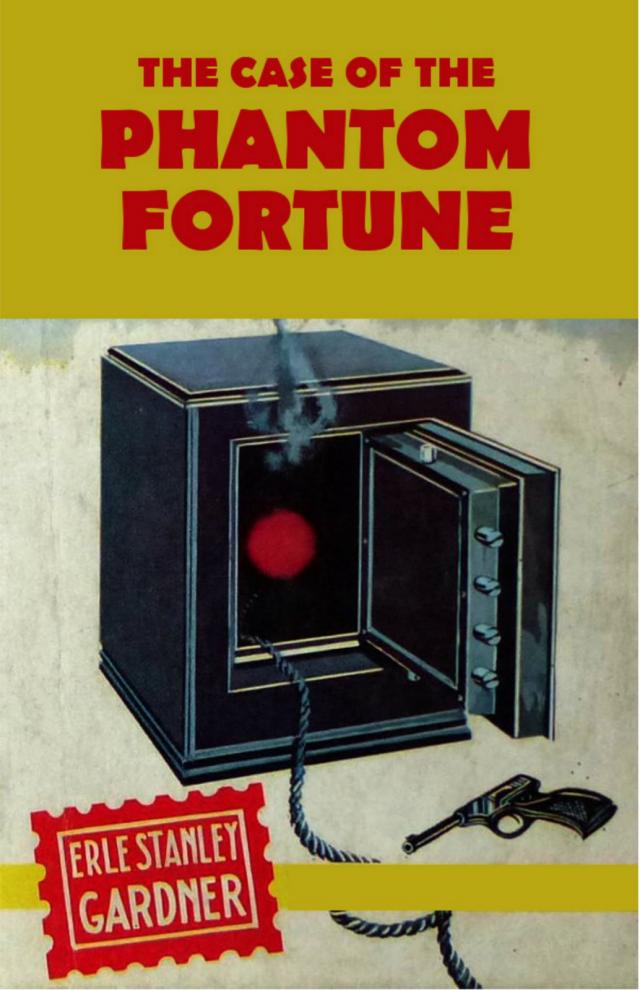
The Case of the Phantom Fortune,
p.10


“The guy is smart. Knowing what would happen to him when he gets on the witness stand and his past record comes out, he’s going to take it on the lam. We won’t hear any more from him.”
“You don’t know the half of it,” Drake said.
“All right, what’s the half of it?”
“You know Farley Fulton, my operative?”
“I’ve met him, yes. Seems like a pretty level-headed sort of a chap.”
“All right,” Drake said. “The Pacific Northern Supermarket was robbed last night. They got away with about seven thousand dollars. There was a night watchman on duty, and evidently he surprised the burglar.”
“More than one?” Mason asked.
“Apparently a lone wolf.”
“All right, what happened?”
“He gunned the watchman and then escaped through the front door.”
“How bad is it?” Mason asked. “The watchman, I mean.”
“The watchman is going to live. Fellow by the name of Steven Hooks. The bullet was aimed right for the heart, but it was deflected by his shield. Gave him a nasty shoulder wound and knocked him off his feet, but he’s okay.”
“All right,” Mason said, “what are you getting at?”
“Well, I followed your instructions. Had Fulton take this sketch of Gideon to the watchman and the other eyewitness, a fellow by the name of Drew Kearny.
“Now, Kearny was a fellow who had been at a late motion picture show and happened to be walking down the street just as this hold-up man burst out the front door. He drew a gun on Kearny, told him to stick up his hands. Kearny thought it was a holdup but the fellow just used the gun to terrorize Kearny, then sprinted across the street and into an alley.
“Kearny started trying to find a phone where he could call police, but as it happened someone had already heard the gunshot and telephoned the police. A police cruiser came along so Kearny flagged them down and gave them his story and a description of the guy. It was a pretty good description. He claims he got a good look at him.”
“Look anything like Gideon?” Mason asked.
“Two eyes, a nose and a mouth, and that’s all the resemblance.”
“But that doesn’t keep us from showing him the sketch,” Mason said, “and we can plant a story in the paper that the police artist has made a composite sketch–”
“Wait a minute, you haven’t heard anything,” Drake said. “We showed Kearny the sketch and he just laughed at us, said it had no resemblance whatever to the fellow, that the stick-up was an older man, more heavy-set, that the eyes were different, and so forth. So then Farley Fulton got into the hospital and showed the sketch to Steven Hooks.
“Now, Fulton claims that he didn’t use any suggestion, that he just told Hooks he’d like to have him look over this sketch and see if there was any resemblance and all that.”
“All right,” Mason said, “what are you getting at?”
“Hooks says it looks like the guy.”
“What!” Mason exclaimed.
“Well, he can’t exactly identify him, but he said the sketch looked very much like the man, although he had only the one fleeting glimpse of him before the shooting started. There was a night light on. Hooks first saw the fellow’s back. He made the mistake of yelling before he had his gun out. He was drawing his gun and yelling at the same time. The hold-up man had his gun out. He whirled and fired and the shot hit Hooks a glancing blow on the shield and down he went. He wasn’t in a position to get a very good look at the man.
“On the other hand, this fellow Kearny, who was walking along the street when the fellow burst out of the door, was within eight or ten feet of the guy and had a good chance to see his face.
“So now we’re in the devil of a fix. The police have learned from Hooks that a private detective agency had a sketch that looked something like the hold-up man and they want the sketch and want to know what it’s all about. I’m keeping Fulton under cover. I told the police he’s out on a job. They want to see him as soon as he comes in. I’m afraid there’s hell to pay.”
“That,” Mason said, “is an unexpected complication. What about this fellow, Drew Kearny?”
“That’s why I’ve called you,” Drake said. “He’s in the office. He wants to take another look at the sketch. He says he doesn’t think it’s the same guy, but the watchman told him he thought the sketch looked like the guy, so Kearny wants to take another look.”
“He’s in your office now?”
“Yes.”
“Where’s the sketch?”
“I have a photostatic copy.”
“Bring it down,” Mason said, “and bring Kearny along with it. Let me talk with him.”
“I was hoping you’d do that,” Drake said. “I was hoping you’d take over on this, but we’ve got to turn that sketch over to the police sooner or later, Perry.”
Mason said, “We’ll cross that bridge when we come to it. My own inclination is to turn it over to them. Let’s talk with Kearny and see if we can’t make something out of that.”
“Be right down,” Drake said.
Mason hung up the telephone and turned to Della, who had been monitoring the conversation.
“Now we’re in a jam,” he said. “That damned watchman … Of course, that’s one of the things that happens with eyewitness identification. That’s why it’s the most unreliable type of evidence we have. Suggestion, self hypnosis, tricky recollection, poor observation; everything enters into it and a good percentage of the time someone, acting in the highest good faith, comes along with a cockeyed identification.”
Drake’s code knock sounded on the door. Mason let him in.
Drake turned to the man with him and said, “This is Drew Kearny, Mr Mason.”
“How are you, Mr Kearny?” Mason said, shaking hands.
Kearny, a man in his early forties, with steady grey eyes, a strong, determined mouth, broad shoulders, and something of a paunch, said, “How do you do, sir? I’ve heard a great deal about you and it’s a real pleasure to meet you.”
“Sit down, sit down,” Mason said. “Make yourselves comfortable. Now, what is all this about, Paul?”
Drake said, “Drew Kearny had been at a late movie and was coming past the Pacific Northern Supermarket on his way home a little after midnight. The door burst open and a man ran out. Kearny found himself looking into the business end of a gun. He automatically stuck his hands up, and because he was carrying a fairly large sum of money, figured he was going to be held up. But the fellow simply kept the gun pointed at him and said, ‘Keep your hands up,’ then backed away until he was halfway across the street, turned and ran through an alley.
“Kearny felt, of course, something was wrong and tried the door of the supermarket but it had a spring lock on it and it had swung shut and latched. So Kearny started running down the street, looking for the nearest telephone he could use. He’s – Well, you tell it, Kearny.”
Kearny patted his stomach. “I’m not as much of a sprinter as I used to be. I slowed down after about a couple of blocks and was walking along, trying to remember where the nearest phone was.”
“You’re familiar with the neighbourhood?” Mason asked.
“Fairly familiar. My place of business is not too far away.”
“What’s your business?”
“Electrical repairing.”
“All right,” Mason said, “what happened?”
“Well, as luck would have it, I saw a flashing red light and a police car came along fast. I ran out in the middle of the street and flagged them down. I told them what had happened and they put out a general alarm and threw a cordon around the district, but I guess they didn’t get the guy. And of course they went on into the supermarket and found the watchman, who was pretty badly knocked out but in a short time they had him out and hospitalized.
“Now, what’s bothering me is this sketch that this detective showed me. Of course it’s awfully hard to remember people when you get just a quick glance at them, particularly during a time of excitement, but I’m pretty good that way. I seldom forget a face, and I had a good look at this guy.”
“And you saw the sketch?” Mason asked.
“I saw the sketch.”
“Any chance it’s the same man?”
Kearny said, “I didn’t think so, but I don’t want to give any crook the breaks. I talked with the watchman, and I decided I’d better study that sketch.”
“Oh, well,” Mason said, “these things happen every once in a while. Something goes wrong with an identification and–”
“That’s not the point,” Kearny said. “I’m a law-abiding citizen and I hate crooks and I hate stick-ups. I’ve been held up once, lost more money than I could afford to lose.”
“Now, when this detective first identified himself and asked me to take a look at that sketch, I took a quick look at him and told him hell no, that wasn’t the man at all, and I didn’t think much more of it, but I did take the precaution of getting the guy’s card so I could get in touch with him later if anything happened.”
“The police had been asking you for a detailed description?” Mason asked.
“Sure they had. I was with the police for more than two hours and they had an artist working on the description I gave them.”
“Well then, that’s all there is to it,” Mason said.
“No, it isn’t,” Kearny said, “because I understand now the watchman said that sketch looked a lot like the fellow, so I want to take another look at it and check. I’d sure hate to let a crook get away.”
Mason said, “You have that sketch, Paul?”
Drake hesitated perceptibly, then said, “Yes, I have a copy.”
“Let’s take a look,” Mason said.
Mason spread a copy of the sketch of Collister Gideon out on the desk. “Take a look,” he said.
Kearny studied it carefully, then said, “Well, it’s hard to say. What the watchman says has given me a jolt. I got sort of uncertain, but now I know this isn’t the guy. The fellow I saw was older, he was heavier, he was … well, sort of menacing. This fellow looks more the intellectual type. This guy that came busting out of there was a thug.”
“Of course,” Mason said, “experience shows that in times of emotional disturbance of that sort, particularly where a man has a gun, the witnesses are inclined to think the man is bigger than he actually is, heavier than he actually is, and quite frequently, older than he actually is.”
“Well, I couldn’t make that much of a mistake,” Kearny said. “It’s all right. I just wanted to satisfy myself and I don’t know what all the blinking fuss is about. Hell’s bells, I just came up to this detective’s office to check to see if I’d made a mistake, after I heard the watchman say the sketch was one that looked to him like the fellow.”
“No chance you could be mistaken?” Mason asked.
“I saw the fellow real close. Had a good look at him. This sketch – No, this isn’t the guy.”
“Is there perhaps some slight resemblance here which confused the watchman?” Mason asked.
Kearny said, “Of course there is. Otherwise he wouldn’t have thought it was the guy.” He looked at the sketch again and covered up the lower part.
“The mouth is the thing that doesn’t click,” he said. “The eyes aren’t so bad, but this fellow had a mouth that was – I don’t know what was wrong with it. Maybe he was holding something in his mouth, but the upper part of this sketch could be – Well, it’s something like the guy … That’s what keeps bothering me. I have a feeling I’ve seen this bird somewhere before but …” He broke off and shook his head. “Anyhow, I can’t identify this sketch as being that of the man.”
“All right,” Mason told him. “That’s as far as we can go. Thanks a lot for coming in.”
“Who is this fellow? Where did you get the picture?” Kearny asked.
Mason said, “We’re interested in certain aspects of crime. That is, of course, the Drake Detective Agency is. And in the course of its investigations it – Well, of course, they run into lots of peculiar things.”
Mason smiled and extended his hand. “Nice to have met you, Mr Kearny.”
Kearny grinned and said, “Okay, don’t tell me if you don’t want to. That’s the best piece of double-talk I’ve heard in a long while. Thanks a lot, Mr Drake. You have my address. Goodbye, everyone.”
Kearny went out.
Drake mopped his forehead. “What a hell of a mess we’re in. The watchman told the police we had a sketch of the burglar.”
“Can’t you get to that watchman and throw cold water on his identification?”
“It wasn’t an identification,” Drake said. “He said there was a strong resemblance and let it go at that.”
“Well, can’t you get him to back up a little bit in view of what Kearny says?”
“I probably could,” Drake said, “but it’s too hot right now. The police are wondering what in hell we’re trying to do.”
“Well, let the police worry about their end of the business,” Mason said, “and we’ll worry about ours.”
“Suppose they call on me and want to see the sketch?”
“Show it to them.”
“Then they’ll ask where I got it.”
“Tell them an artist drew it.”
“They’ll want to know the artist.”
“Refer them to me.”
“That darned watchman,” Drake said moodily. “He’s really got us in a spot.”
Mason said, “Don’t overlook the fact that this plays right into our hands. It gives us a beautiful club. We’ll let the police take this sketch, and if the watchman does keep insisting it looks like the man, the police will publish it, Gideon will take one agonized look at the newspaper and be on his way out of the country just as fast as he can go.”
“What’ll he use for funds?” Drake asked.
“Whatever he can scrape up,” Mason said thoughtfully. “And that raises a point I’d better think about.”
Chapter Eleven
It had started to cloud up that morning and by noon a cold, sullen rain was falling. At one o’clock Drake called to report Mrs Warren had gone out in her car, and his men had lost her.
“Was she trying to shake loose from them?” Mason asked.
“I don’t think so, Perry. My men don’t think she even knew she was wearing a tail. She just made a sudden left turn from a right-hand lane, and my men were boxed in where they couldn’t get over in time to follow. They tried the next intersection, but they didn’t pick her up again.
“Those things sometimes happen to even the best shadows in the business. She’ll be back and the men at the house will pick her up again.”
“I know,” Mason said, “but what mischief will she get into in the meantime?”
“Oh, she’s just gone shopping,” Drake said.
“Let’s hope so,” Mason told him. “Keep me posted, Paul.”
The lawyer hung up.
At two o’clock Mason’s phone rang again.
Della Street answered the phone, frowned, put her hand over the transmitter and said to Perry Mason, “This is Gideon.”
Mason’s face broke into a grin. “The shoe is beginning to pinch,” he said. “Put him on.”
Mason picked up the telephone. “Yes, what is it, Gideon?”
Gideon’s voice was as smooth as the purring of a contented cat. “Mr Mason,” he said, “I hadn’t intended to bother you again, but a matter has come up which leaves me no alternative.”
“Go ahead,” Mason said.
“I am taking the precaution of using a telephone booth,” Gideon said, “although I hardly think that is necessary. I’m quite certain that I have ditched not only the rough shadows and the smooth shadows of the government, but the two men that your detective agency had on me.”
“Go ahead,” Mason said. “What do you want?”
“To be perfectly crude, and come to the point rather quickly, which I am forced to do because I don’t want you to try to trace this call, I want ten thousand dollars.”
“I thought perhaps it would come to this,” Mason said.
“I’m sorry,” Gideon said, “but I have an opportunity to leave the country and engage in business on foreign soil. I need some operating capital to get there. Now, of course, Mr Mason, I don’t expect you to furnish this capital, but you have a client I am quite certain would be only too glad to have me completely out of the United States.”
“All right,” Mason said, “where are you?”
“Not where I am,” Gideon said, “but where I am going to be. What time do you have?”
“A little after two o’clock,” Mason said, “I–”
“Never mind that ‘little after’ business. I want the exact time. What time do you have?”
“Six minutes past two.”
“Congratulations on your watch. You are within thirty seconds of complete accuracy.
“Here is what you do,” Gideon said. “You get ten thousand dollars in bills, none of which are more than fifty dollars in denomination. Mostly I want twenties.”
“You can save your breath,” Mason said. “I don’t do business with blackmailers and I’m not going to any bank.”
Gideon kept on as though there had been no interruption. “Put these bills in a bag, preferably a rather small bag – one that will just hold them. You had better take a pencil to jot down this address because I’m going to make this phone call very short and I’m not going to repeat. At the corner of Clovina and Hendersell there’s a vacant store building with a warehouse in back. It has signs For Lease in the front. The front door is closed. The alley turns off of Hendersell and the back door leading to the alley is open. The building has been vacant for some time. It’s involved in litigation. It’s rather a disreputable neighbourhood and you’ll probably hesitate about turning into the alley. You had better come armed, since you are carrying a large sum of money, and you may be traced from the bank.”