The case of the phantom.., p.12
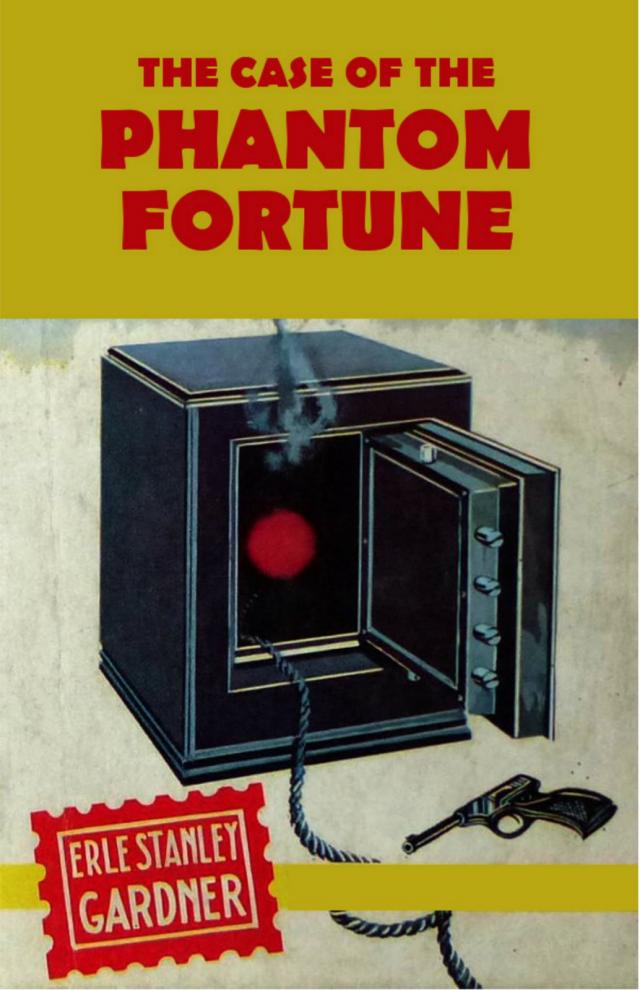
The Case of the Phantom Fortune,
p.12


“No, Mr Mason, I didn’t. I decided to take the second choice. I decided to tell him that if he made any other demand I was going to go to the police, tell them the whole story, accuse him of blackmailing and put him back in prison.”
“And what did he say when you put that up to him?” Mason asked.
“He never had a chance. He was dead when I got there.”
Mason raised his eyebrows.
“I know it sounds strange,” Warren said, “but he was dead. Someone had killed him.”
“Do you know how?”
“I assume with a revolver. There was a revolver there on the table.”
“The police found it?” Mason asked.
Warren lowered his eyes.
“Well?” Mason asked.
“I lost my head, Mason.”
“What the devil!” Mason said. “Come clean. What happened?”
“The man was lying there dead. He had evidently been living there for some time. It was a secret hideout. There were cases of canned goods and a little alcohol stove, a table, a box filled with empty tin cans, and, as I say, there was this gun on the table.”
“Don’t tell me you touched that gun,” Mason said.
“I did worse than that,” Warren said. “When I arrived at the warehouse I found a door open. I walked in. At first I didn’t see anyone. I saw this gun on the table and I picked it up. I hadn’t armed myself before going there, but I felt that it would be a good plan to disarm my adversary. So I put the gun in my pocket.”
“Then what?”
“Then I walked around behind a box of canned goods and saw Gideon lying there on the floor and at that moment sirens seemed to explode all over the place. Naturally I thought it was the police. Actually it was the fire department. I lost my head, turned and ran, and tried to conceal myself in the warehouse. They found me.”
Mason said, “Damn it, Warren, quit lying to me! You’re not that simple.”
“I’m telling you the facts.”
“No, you’re not,” Mason said. “You’re telling me the story. You thought Lorna had killed him, didn’t you?”
“I … I’ve told you what happened.”
“No, you haven’t. There was something there that made you think Lorna had killed him. What was it?”
Warren hesitated, then said, “I saw Lorna’s car as I turned down Clovina Avenue.”
“Did she see you?”
“No.’’
“How far was that from the scene of the crime?”
“Five or six blocks.”
“Anything else?” Mason asked.
“One of Lorna’s gloves was on the floor, right by the table.”
“Which one, left or right?”
“I don’t know.”
“How do you know it was Lorna’s?”
“It was a very unusual shade for suede.”
“And what did you do with it?” Mason asked.
“I picked it up, picked up the gun, shoved the gun in my pocket and flushed the glove down the toilet. It was then I heard the sirens. I was cut off. There was no escape. My car was parked in the alley. He had told me to come to the side door of the alley and go in the back part of the storeroom.”
“You going to tell your story and disclose Gideon’s connection with your wife?” Mason asked.
“I am not. I am going to keep tight-lipped.”
“What did you do with the gun?”
“I’m a big clumsy boob, Mr Mason. I had it in my pocket.”
“You mean you kept it to protect your wife. You wanted to take the rap for her. Is it your gun?”
“Yes. I bought it. It’s registered in my name.”
Mason said, “All right. Don’t tell anybody anything. Tell them that you are innocent of the murder, that you will tell the whole story when you are on the witness stand and not before. Don’t give anyone so much as the time of day.”
“What about Lorna? What will she say?”
“You leave Lorna to me,” Mason said. “This is one hell of a murder case. They’ve got you boxed in. If they can find out anything about Lorna, they’ll use that for motivation. What about Judson Olney, can you count on him to keep quiet?”
“I don’t know, I hope so.”
“I sure as hell hope so,” Mason said. “But if the police start sweating him he’ll crack and the fat will be in the fire.”
Chapter Fifteen
Mason didn’t spare the time to get his car out of the parking lot. He hailed a taxicab, jumped in and said, “Get me to 2420 Bridamoore just as fast as you can make it.”
“Hang on,” the driver said. “I’ll get you there fast.”
“All right,” Mason told him. “It’s an emergency. There’s a twenty-dollar tip for scaring me half to death.”
The driver grinned, concentrated on traffic, whipping his car through every opening, racing for the signals.
As they turned into Bridamoore, Mason heaved a sigh of relief as he saw Della Street’s car parked in front of the building but no police cars.
The lawyer tossed the taxi driver a twenty and a ten, said, “Keep the change. It was worth it. Thanks,” and dashed for the house.
“Want me to wait?” the driver asked.
Mason waved his hand in a gesture of dismissal, tried the front door. It was open. The lawyer walked in.
“Hello, Della!” he called.
“This way, Chief,” he heard Della’s voice saying.
Mason ran through the reception hall, across the living-room into a den.
Della Street was seated, with a tearful Lorna Warren regarding her hopelessly.
“Look,” Mason said. “Look and listen. We haven’t much time. Now, get this straight. Your husband has been arrested for the murder of Collister Gideon. They may not be able to make a case if he doesn’t say anything and you don’t say anything. They’re going to have to prove motivation. Now, you’re going to have to tell a fib. You’re going to have to tell the officers that your husband asked you not to talk about anything, that it was absurd to think that he would be charged with murder, and that your best course was that of dignified silence.
“If the officers can ever prove that you knew Gideon, or ever worked with him, they’ll have a motivation and–”
“Don’t I have to answer questions?”
“You can’t testify against your husband,” Mason said. “Tell them, that after they turn your husband loose you’ll talk, but that while your husband is in custody you’re not going to tell them one word.”
“To think,” she said tearfully, “that I thought this Gideon was such a gentleman … Mr Mason, the man turned out to be a monster … At one time he had me completely hypnotized. I thought he was one of the most wonderful men in the world, one of the most wonderful thinkers, a shrewd businessman, a gentleman, an idealist, a–”
“Save it,” Mason said, as the doorbell rang. “That’ll be Lieutenant Tragg. Remember now, if they ever get any suspicion of the truth, they’ll prove motivation. I don’t want that to happen. If they ask to take your fingerprints, tell them you’ll do it with my consent. Now, tell me, was he dead when you were there, or alive?”
“He was alive and terribly obnoxious.”
“Did you take him forty-seven thousand dollars?”
“I took him five thousand dollars, which was all I could raise at the time.”
“Did you take custody of the forty-seven thousand or – Hold it, hold it!” Mason said. “Here’s Tragg now.”
Tragg said, “The front door was unlocked so I came on in. Well hello, everybody. How are you, Mason? I rather expected to find you here. Rather fast work. I take it this is Mrs Warren?”
“That’s right,” Mason said. “This is Mrs Horace Warren. And for your information, Lieutenant, as long as her husband is in custody she doesn’t have a word to say to officers.”
“Why not?”
“Because,” Mason said, “you wouldn’t be interested in anything that was in favour of the defendant and under the law she can’t testify to anything against him.”
“Tut-tut-tut,” Tragg said. “That’s quite a technicality. You know as well as I do, Mason, that we’re just investigating the crime at this stage of the proceedings. If she can tell us anything in her husband’s favour, we’ll not only believe it but we’ll act on it.”
“She doesn’t know a thing,” Mason said.
“Well,” Tragg said, “we could question her here and excuse you and Della Street, or we can take her to the district attorney’s office.”
“You can’t take her anywhere without a warrant,” Mason said, “and you can’t force me to leave.”
Tragg’s eyes narrowed. “One would almost think that she knows something,” he said.
“She knows how foolish you are to be trying to work up a case against her husband,” Mason said. “I have just told her that her husband was arrested and charged with murder.”
“Oh, leave it to you,” Tragg said. “You’d tell her all right. You must have broken all speed laws getting here. We moved right along. I just had to have a few words with Horace Warren after you left him, to see if he was going to make any statements, and I had some chores to do at the scene of the crime.
“It would be a lot better for both Mr and Mrs Warren if they’d make a frank statement. I’m free to tell you, Mason, that as a veteran homicide investigator, they don’t impress me as being the type that would be mixed up with murder … Tell me, Mrs Warren, have you been in the vicinity of Clovina and Hendersell Streets today?”
“She’s making no comment,” Mason said. “Mrs Warren, I instruct you to say ‘no comment’ to any question that Lieutenant Tragg may ask you.”
“Well now,” Tragg said, “that looks very much as though she had been down there. That complicates the situation somewhat.”
“No comment,” Mrs Warren said.
Tragg looked at her. “You’re an apt pupil.”
“No comment.”
“Aren’t you interested in saving your husband the publicity and the humiliation of being a defendant in a murder case?”
“No comment.”
Mason grinned.
Tragg frowned and got to his feet. “All right, Mason,” he said. “You win this round. This is only the opening part of the fight. We’re feeling each other out. Later on I think you’ll be on the ropes, fighting to keep on your feet. I think you’re mixed in this pretty much yourself.”
“No comment,” Mason said.
Chapter Sixteen
Paul Drake was waiting in Mason’s office when the lawyer and Della returned.
Mason said, “For your information, Paul, Collister Gideon was murdered. Horace Warren has been charged with the crime. Neither Warren nor his wife is making any statement.”
“I know, I know,” Drake said. “That’s your news. Wait until you hear mine.”
“What’s yours?” Mason asked.
“The artist that I had make the phoney composite picture of Collister Gideon was up at headquarters. He showed the picture we had him make to someone on the homicide squad to see if it checked with anything they had.
“They were just fresh from investigating the Gideon murder and recognized the picture right away as a sketch of Gideon, so they wanted to know what had happened and who the artist had made it for, and why, and he referred them to me and I mean the police came down on me hard.”
“You didn’t do anything illegal,” Mason said.
“The hell I didn’t,” Drake said. “There’s a law about tampering with witnesses.”
“What witnesses did you tamper with?” Mason asked.
“You know damned well how I tampered with them,” Drake said. “I took the sketch along and tried to get the witnesses to describe the man in the sketch as having the same general appearance as that of the man they had seen running out of the place. The artist said he was under instructions to duplicate a picture of Gideon.
“This is too big for me to take by myself, Perry. They suspected what had happened anyway, so I finally told them I was acting under orders and that you had given the orders.”
“So what do they intend to do?” Mason asked.
“They intend to raise hell with you for lousing up a robbery case.
“They think that you were trying to protect a client, that you’re representing the man who held up the supermarket and shot the watchman and that he hasn’t been apprehended as yet, but that you’re getting in and trying to confuse the witnesses. Hamilton Burger, the district attorney, is going to send for you and put you on the carpet. And he’s going to release to the press exactly what happened.”
“Let him release,” Mason said. “I acted within my rights as a citizen. I wanted to know who held up that supermarket.”
“Why?” Drake asked.
“That’s none of their damned business,” Mason said. “I don’t have to account to them for my actions. I’m a licensed attorney at law. I can investigate any crime I damned please and do anything I want to, to protect the interests of my clients, just so I keep within the law … And I sure as hell am going to protect my clients as long as I have any breath and pulse.”
“You tried to influence those people in making an identification.”
“The police do that a dozen times every twenty-four hours,” Mason said. “They get a favourite suspect in a particular case, or they work with a mug shot and they force an identification. They said, ‘Look at this picture, look at it good. Look at this mug shot. Now remember the man who held you up. Now look at this sketch by the artist. Doesn’t that resemble the man? Think carefully now, because if you don’t answer this question right a guilty man may go free to commit other crimes.’
“Don’t tell me that it’s a crime to ask a witness to identify a picture, because if it is every police officer in the country will be in jail.”
“Well, I’m just letting you know,” Drake said, “because–”
The telephone rang several short, sharp rings, Gertie’s signal that there was some emergency in the outer office.
The office door opened and a young man entered, saying, “I’m Tarlton Ladd. I’m an investigator for the district attorney’s office. Here are my credentials if you care to check them.”
“Okay,” Mason said, “you’re an investigator for the DA. What do you want?”
“The district attorney wants to interrogate you on a matter which may lead to the institution of criminal proceedings.”
“Against whom?”
“You.”
“When does he want to interrogate me?”
“Now.”
“And if I don’t choose to go?”
“Then I have a subpoena ordering you to appear before the grand jury tomorrow at ten o’clock.”
Mason thought things over for a moment, then said, “Okay, I’ll go.”
Mason turned to Della Street. “You mind the store until I get back, Della.”
Mason’s last view of his office before the door clicked shut showed Della Street and Paul Drake standing silent with apprehensive faces.
Chapter Seventeen
Hamilton Burger, the district attorney, said, “This is in the nature of a formal hearing for the purpose of making a criminal complaint if the evidence indicates a crime has been committed, or preferring charges before the disciplinary division of the Bar Association, or both.
“Mr Mason, you are acquainted with Sergeant Holcomb of the police department and this is Drummond Dixon, an artist, and Drew Kearny. The other gentleman is Farley Fulton, a private detective employed on occasion by the Drake Detective Agency and we have here a court reporter who is taking down the proceedings.”
“Will I have a right to ask questions?” Mason asked.
“This is not a court hearing. We are trying to determine whether there is ground for taking action.”
“Are you afraid to have these witnesses interrogated except by one side?”
“I’m not afraid of anything or anyone in connection with an investigation of this sort.”
“Very well, then I want to have the right to ask questions.”
“I see no reason for you to be given an opportunity to cross-examine these witnesses.”
“Then I’ll get up and walk out,” Mason said. “If you’re going to conduct a star-chamber session and try to influence witnesses to testify your way, I’m not going to have anything to do with it.”
“I’m not trying to influence witnesses and you know it,” Hamilton Burger said angrily. “You’ve been guilty of some rather sharp practices at times.”
“Sharp but legal,” Mason said. “When I represent a client I try to represent him.”
“Well, there’s no use having all this bickering,” Hamilton Burger said. “We’ll proceed with the hearing and if you want to ask questions, you may ask them, but if the questions are not within the bounds of propriety I will advise the witness not to answer them.”
“At which stage I’ll get up and walk out,” Mason said.
“Whereupon you’ll be brought before the grand jury,” Hamilton Burger warned.
“At which time I’ll tell my side of the story, that you were having a star-chamber session, that I was willing to be present and answer questions but I wanted to have the matter fairly presented and to that end insisted on my right to ask questions.”
“We’ll start with Farley Fulton,” Burger said. “What’s your occupation, Mr Fulton?”
“I’m a private detective.”
“Early this month were you employed by anyone in such capacity?”
“I was.”
“What person?”
“Paul Drake.”
“That’s the head of Drake Detective Agency?”
“Yes, sir.”
“And what were you ordered to do by Mr Drake?”
“I was given a photograph and told to have Mr Dixon, whom I knew, practice making sketches from that photograph so that he could make a likeness in crayon.”
“And what else were you told to do?”
“I was told to hunt up the eyewitnesses of the hold-up at the Pacific and Northern Supermarket, the wounded watchman and Mr Kearny here, and tell them I was investigating the crime which had taken place there, involving the attempted murder of the watchman. I was to ask them to give me a general description of what the hold-up man had looked like. That was on the morning of the fourth.