The case of the negligen.., p.14
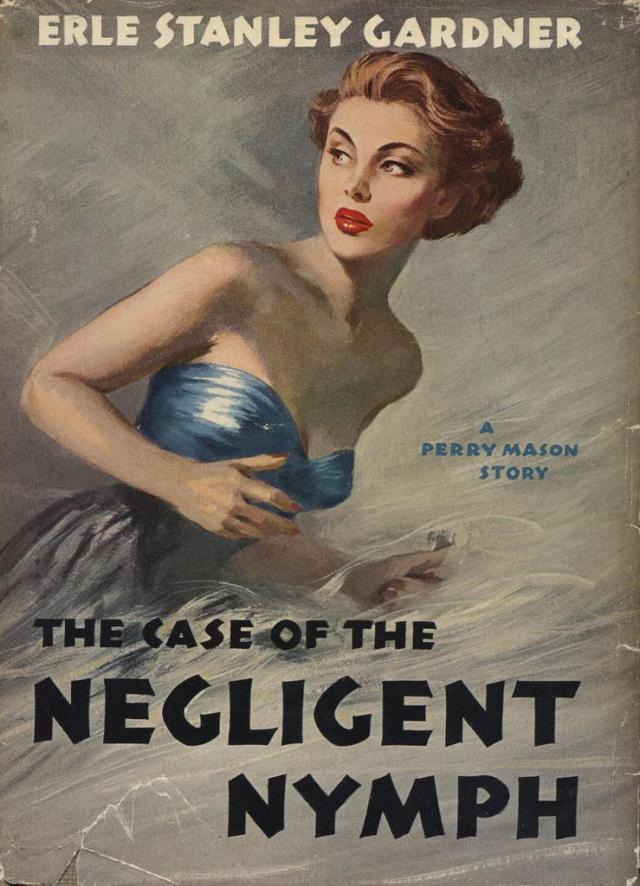
The Case of the Negligent Nymph,
p.14


“I have them here, sir, in this second envelope.”
The witness produced another sealed envelope.
“Now, those envelopes appear to be sealed and to have various signatures on them?”
“Yes, sir.”
“What are those signatures?”
“I signed my name on the envelope when the purse was sealed inside the envelope. The other officers who were there did likewise.”
“And the contents of the purse?”
“Those were placed in another envelope and these signatures are the signatures of the other witnesses.”
“And your signature is on both envelopes?”
“It is, yes, sir.”
“And are you satisfied that the seals have not been tampered with?”
“Yes, sir.”
“I believe my signature is also on there,” Claud Gloster said, smilingly.
“Yes, sir.”
“I’ll take a look at that, and I’ll ask that the envelopes be passed to the jurors so that each juror can observe that the seals have not been tampered with.”
“Any objection?” Judge Garey asked Mason.
“None whatever, Your Honor.”
The envelopes were passed around for the inspection of the jury, then the district attorney said, “I now ask that these envelopes be opened and the various articles be received in evidence. The purse as one exhibit, and the envelope containing the contents as another exhibit.”
Mason said, “I would like to interpose an objection, Your Honor, and would like the privilege of cross-examining the witness concerning the two exhibits in connection with my objection.”
“Very well.”
Mason faced the sheriff and said, “By using a water-glass, you saw this woman’s purse lying on the bottom of the bay?”
“Yes, sir, aided by the beam of a flashlight.”
“Sand or muddy bottom?”
“Sandy at that point. A white sand. The purse showed up very plainly.”
“Exactly,” Mason said. “And that purse was lying where you could see it with a waterglass while you were lying face down on the little landing wharf?”
“Yes, sir.”
“The purse was then very close to the wharf?”
“Yes, sir.”
“Where anyone could have dropped it while standing on the wharf?”
“Where a woman would most naturally have dropped it in jumping from the wharf to a boat.”
Mason said, “Just answer my question, if you will, please, Sheriff. The purse was lying on the bottom where it could have been dropped by a person standing on the wharf?”
“Well, I suppose so, yes, but in that event a woman would certainly know she had dropped the purse and … ”
“Exactly,” Mason interrupted. “I see that you’re quite anxious to make your point, Sheriff, so we’ll concede it. But the fact remains that the purse could quite readily have been dropped by someone standing on the wharf.”
“Well, it could have been, yes.”
“Now, you saw this purse lying on the bottom, and then what did you do?”
“I recovered it.”
“How?”
“By going in after it.”
“How deep was the water?”
“Oh, I would say six or seven feet.”
“And who went in after it?”
“One of my deputies.”
“Oh,” Mason said, smiling, “you discovered the purse and then sent one of your deputies in after it.”
“I have a deputy who’s a very good swimmer.”
“And he brought the purse out?”
“Yes.”
“Now, Sheriff, there was nothing about that purse itself that showed you when it had been dropped?”
“Well, when you come right down to it, if you take a look at the … ”
Mason interrupted firmly, “Sheriff, I’m going to insist on a categorical answer to my question. There was nothing about that purse which indicated when it had been dropped. I’m speaking now about the purse itself.”
“No, sir.”
“It was simply lying there on the sand.”
“Well, of course, it couldn’t have stayed right there in that position on the sand very long.”
“Why not, Sheriff?”
“Well, there’s the question of tides and sand drifting in.”
“How long would it have stayed there without having been covered with sand? Remember now, you’re on oath, Sheriff.”
“Well … of course I don’t know.”
“I gathered that you didn’t,” Mason said, smiling. “Now, since you have stated quite frankly there was nothing about the purse which would show when it was dropped, for all you know that purse could have been dropped by anyone, including the defendant the Saturday night before the murder.”
“You’re talking about the purse now?”
“About the purse,” Mason said.
“Well, if you want to limit it to the purse, I guess so, but when you take the contents … ”
“I’m talking now about the purse,” Mason said.
“Very well, about the purse.”
“There was nothing that would indicate the purse couldn’t have been dropped on Saturday night?”
“Well, I guess not, no, sir.”
“Now, did you know anything about the defendant having been out at that place the Saturday night before the murder?”
“No, sir, not of my own knowledge.”
“Well, do you know anything at all about it?”
“Oh, Your Honor,” Gloster said, “I’m going to object to anything that the sheriff doesn’t know of his own knowledge.”
“That’s quite right,” Mason said. “I thought perhaps you were going to bring the facts out sooner or later and we might as well get them before the Court.”
Gloster said, “The only facts I intend to bring out are the facts indicating that this defendant murdered George Alder. If there are any other facts it’s up to the defense to bring them out.”
Mason gave that matter frowning consideration for a moment, then said, “Very well, if that’s your position I’ll remain within the technical limitations of evidence and expect you to do the same, sir.”
The sheriff volunteered a statement. “The contents of the purse show when it was dropped,” he said.
“The contents?” Mason asked.
“When we looked inside the purse,” the sheriff explained, grinning triumphantly, “we found a clipping which had been cut from the Express on the morning of the third, a clipping which related to a fifty thousand dollar jewel burglary, and the complaint of Alder that
“Just a moment, Sheriff,” Mason said. “The clipping itself is the best evidence, not your recollection of its contents.”
“Very well. The clipping’s right here.”
Mason hesitated for a moment while he gave the situation swift consideration, then he said, “Now, Your Honor, I am going to object to the introduction of the purse itself on the ground that no proper foundation has been laid as to a question of time, and I am going to object to the contents of the purse being received in evidence on the ground that the contents are incompetent, irrelevant and immaterial, except insofar as those contents may show the ownership of the purse. I am going to object particularly to any newspaper clipping by which the prosecution may seek to prejudice the defendant in the eyes of the jury.”
“Of course, Your Honor,” Gloster pointed out, “if the contents of the purse are material and relevant, and we insist they are, the fact that they may also disclose matters which the defense would like to keep from this jury does not affect their being received in evidence.”
“Let me take a look at the contents of that purse,” Judge Garey said.
The sheriff handed up the envelope.
Judge Garey inserted his hand in the envelope, fumbled through the contents for a moment, then dumped them all on his desk, made a painstaking inventory, and seemed considerably interested in the newspaper clipping.
“This clipping was from the Express?” he asked.
“On the morning of the third,” Gloster said.
“Under those circumstances, it would seem to be relevant. Of course, the Court will permit its introduction in evidence solely for the purpose of proving the date at which the purse must have been dropped into the water. It will not be evidence as to anything contained in the clipping itself. That is, any matters set forth in the clipping are not part of the evidence in this case, and the jury will be instructed to limit their consideration to the question of time.”
Mason said, “Your Honor, you’ll recognize that in view of the contents of that clipping it would be absolutely impossible for any human being on the jury to follow the Court’s instructions and limit the consideration they are to give it.”
“Well,” Judge Garey said, “the Court gives the instructions. The rest of it is up to the conscience of the jurors.”
Mason said, “If we are going to open the door, I would much prefer to have all of the evidence brought in and treat the entire transaction as part of the res gestae. Let’s have the court record as to what happened in connection with the charge made.”
“I don’t want it handled that way,” Gloster said. “I’ll put on the prosecution’s case and if the defendant wants to put in any justification or any other matters that’s the defendant’s privilege … providing only the evidence is pertinent. But the thing he’s asking for now won’t be pertinent. We’re trying a murder case, not a burglary which took place some time previously. All we want is to show by this clipping when the purse was dropped into the water.”
“All right then,” Mason said, “I’ll stipulate that the testimony will be that the purse contained a clipping which came from a newspaper published on the day of the murder, and with that stipulation the prosecution won’t need to put the clipping into evidence.”
“I don’t want your stipulation,” Gloster said. “I want the jury to judge that clipping.”
“You see, Your Honor,” Mason said. “He wants to have the jurors read the clipping and be prejudiced by the contents. This talk of limiting the purpose for which it is to be introduced is utterly meaningless.”
Judge Garey said, “The question of the date is rather important there, and if this newspaper clipping is from a paper which didn’t appear on the streets till around noon on the third, and the purse was recovered on the evening of the third shortly after the murder had been committed, the Court would seem to have no alternative but to admit this as evidence but limit it purely for the purpose of showing date … unless Counsel wishes to accept your stipulation, and apparently Counsel does not.”
Mason said, “Very well, Your Honor. I have two or three additional questions to ask about the purse itself.”
“Go ahead.”
“Now, Sheriff, you have stated that when this purse was recovered it was placed in an envelope and sealed. The contents were placed in another envelope and that envelope was sealed.”
“Yes, sir.”
“And the various parties present wrote their names on the envelopes?”
“That’s right.”
“And the envelopes were then sealed?”
“Yes, sir.”
“When was this done?”
“Almost immediately after the purse was recovered.”
“What do you mean by almost immediately?”
“Well, within a very short time.”
“What do you mean by a short time?”
“I can’t express it any better than that.”
“As much as an hour?”
“I would say almost immediately, Mr. Mason. I can’t time it in a question of minutes.”
“No,” Mason said, “you would prefer to leave it in terms of generality wouldn’t you, Sheriff?”
“What do you mean by that?”
“You don’t dare to tie it down to any particular period of time.”
The sheriff flushed and said, “That’s not the case, Mr. Mason. I had a great many things on my mind that night, and all I can say is that it was done almost immediately after the purse was recovered. I wasn’t wearing a stop watch.”
Gloster permitted himself an audible chuckle and glanced at the jury to see if they approved. An answering smile or two convinced him he had done right, and had the approval of the jury.
Mason said, “I notice some of these signatures are in pencil and some of them are in ink, Sheriff.”
“That’s right. Mine is in ink. Some of them are in pencil.”
“All made at the same time?”
“All made at the same time.”
“Almost immediately after the purse was recovered?”
“Almost immediately after the purse was recovered.”
“Now, then,” Mason said, “can you tell me how these signatures were made?”
“How does anyone make his signature? He writes his name,” the sheriff said irritably.
“Oh, Your Honor,” Gloster said, “this examination is going far afield. Counsel is evidently sparring for time.”
Judge Garey said, “It would seem to me, Mr. Mason, that you have already explored the possibilities of the situation.”
“If Your Honor will bear with me,” Mason said, “I am about to make a point which I think will be of great importance.”
“Very well, go ahead.”
Mason took the envelope, placed the purse in the envelope, then held a sheet of paper over the envelope. “Now, go ahead and sign your name,” he said to the sheriff.
“What’s the idea?”
“I simply want to compare your signatures.”
The sheriff took a fountain pen from his pocket, balanced the envelope on his knee, and started to write his name on the piece of paper, then frowned, pushed the envelope to one side and placed the paper on the judge’s desk.
“No, no,” Mason said. “Hold the paper right over the purse.”
The sheriff wrote his name.
Mason took the paper, said, “Thank you, Sheriff,” produced another sheet of paper which he placed on the judge’s desk, and said, “Now please sign your name once more on this sheet of paper.”
“I don’t see why,” the sheriff growled.
“Simply to compare the signatures,” Mason said.
The sheriff, with poor grace, signed his name and resumed his position on the witness stand.
“Exactly as I thought,” Mason said.
“What is?” the sheriff demanded irritably.
“You can see,” Mason said, “by comparing the signatures, that this signature which you made when the purse was in the envelope is certainly not the same as the signature which is on the envelope.”
“Well, that purse got in the way. You can’t write your name over an object that bulges all over the place.”
“Exactly,” Mason said. “It’s a physical impossibility to sign your name under such circumstances so that the signature compares with a signature such as is on this piece of paper which you made on the judge’s desk.”
“Well, then, why did you have me do it?” the sheriff asked.
“Because,” Mason said triumphantly, pointing to the sheriff’s signature on the envelope, “you can see that your signature on the envelope, and the signatures of all these other gentlemen on the envelope are perfect signatures. They couldn’t have been made while the purse was in the envelope. Moreover, Sheriff, I’ll call your attention to the fact that when the purse was taken out of the water it must have been soaking wet. It couldn’t have been put in this envelope in that condition without soaking the paper in the envelope so that any ink would have run all over the envelope when a fountain pen was placed on it. Now, then, can you explain these perfect signatures to the Court and the jury?”
“Well, sure,” the sheriff said. “We couldn’t sign our names with the purse in the envelope. We simply all signed our names on the envelope before we put the purse in. That’s the only way our signatures would have meant anything.”
“Oh, then,” Mason said, “you, and the gentlemen with you, signed an empty envelope. Is that it?”
“I didn’t say that. I said we signed the envelope before the purse was put in it.”
“How long before?”
“Immediately before.”
“What do you mean by immediately? A matter of seconds, a matter of hours, or a matter of days?”
“I told you I didn’t carry a stop watch with me.”
“But the fact remains,” Mason said, “that you did sign an empty envelope.”
The sheriff, half raising himself from the chair, shouted, “I told you we signed it just before the purse was put in it.”
“All right,” Mason said. “Much as you dislike to admit it, you all signed an empty envelope. Now, then, how does it happen that when that purse was put in it, if it was dripping wet, the water didn’t blur the fresh ink on the signatures, and didn’t soak the paper of this envelope so that even after drying the marks of moisture would still remain on the envelope?”
“I … well, as to that … ” the sheriff said.
He glanced uncomfortably at Gloster, crossed his legs, uncrossed them, shifted his position, and stroked the angle of his jaw.
“I’m waiting for an answer,” Mason said.
“Well, of course,” the sheriff said, “you couldn’t put a soaking wet purse into a paper envelope. That’s absurd.”
“Well, what did you do?”
“Well, I put the purse in the envelope and sealed it.”
“When?”
“Well, within a reasonable time after it had been recovered.”
“Oh,” Mason said, “now it’s a reasonable time. Before it was immediately after. A matter of seconds, I believe you said.”
“Well, I didn’t carry a stop watch.”
“You keep saying that, Sheriff, but the physical appearance of the envelope would indicate that the purse was entirely dry before it was placed in the envelope. Now, suppose you tell us exactly what happened.”
“Well,” the sheriff blurted, “when I recovered the purse I told the fellows that were with me that we’d have to identify it some way, and I told them we could all sign an envelope and I’d seal it. I had these envelopes with me and we signed them, but—well, naturally, I couldn’t put the wet purse in there. I waited until the purse dried.”