H g wells omnibus, p.1
H G Wells Omnibus,
p.1


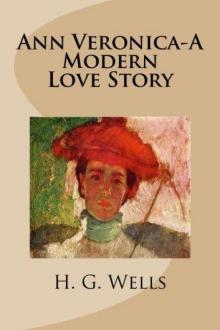
Ann Veronica
H. G. Wells
Published: 1909
Categorie(s): Fiction, Romance
Source: http://www.gutenberg.org/etext/524
About Wells:
Herbert George Wells, better known as H. G. Wells, was an English writer best known for such science fiction novels as The Time Machine, The War of the Worlds, The Invisible Man and The Island of Doctor Moreau. He was a prolific writer of both fiction and non-fiction, and produced works in many different genres, including contemporary novels, history, and social commentary. He was also an outspoken socialist. His later works become increasingly political and didactic, and only his early science fiction novels are widely read today. Wells, along with Hugo Gernsback and Jules Verne, is sometimes referred to as “The Father of Science Fiction”. Source: Wikipedia
Also available on Feedbooks Wells: The War of the Worlds (1898)
The Time Machine (1895)
A Modern Utopia (1905)
The Invisible Man (1897)
The Island of Dr. Moreau (1896)
Tales of Space and Time (1900)
The Sleeper Awakes (1910)
The Food of the Gods and How It Came to Earth (1904)
The Story of the Inexperienced Ghost (1902)
The First Men in the Moon (1901)
Copyright: This work is available for countries where copyright is Life+50 or in the USA (published before 1923).
Note: This book is brought to you by Feedbooks
http://www.feedbooks.com
Strictly for personal use, do not use this file for commercial purposes.
“The art of ignoring is one of the accomplishments of every well-bred girl, so carefully instilled that at last she can even ignore her own thoughts and her own knowledge.”
Chapter 1
ANN VERONICA TALKS TO HER FATHER
1.
One Wednesday afternoon in late September, Ann Veronica Stanley came down from London in a state of solemn excitement and quite resolved to have things out with her father that very evening. She had trembled on the verge of such a resolution before, but this time quite definitely she made it. A crisis had been reached, and she was almost glad it had been reached. She made up her mind in the train home that it should be a decisive crisis. It is for that reason that this novel begins with her there, and neither earlier nor later, for it is the history of this crisis and its consequences that this novel has to tell.
She had a compartment to herself in the train from London to Morningside Park, and she sat with both her feet on the seat in an attitude that would certainly have distressed her mother to see, and horrified her grandmother beyond measure; she sat with her knees up to her chin and her hands clasped before them, and she was so lost in thought that she discovered with a start, from a lettered lamp, that she was at Morningside Park, and thought she was moving out of the station, whereas she was only moving in. “Lord!” she said. She jumped up at once, caught up a leather clutch containing notebooks, a fat text-book, and a chocolate-and-yellow-covered pamphlet, and leaped neatly from the carriage, only to discover that the train was slowing down and that she had to traverse the full length of the platform past it again as the result of her precipitation. “Sold again,” she remarked. “Idiot!” She raged inwardly while she walked along with that air of self-contained serenity that is proper to a young lady of nearly two-and-twenty under the eye of the world.
She walked down the station approach, past the neat, obtrusive offices of the coal merchant and the house agent, and so to the wicket-gate by the butcher’s shop that led to the field path to her home. Outside the post-office stood a no-hatted, blond young man in gray flannels, who was elaborately affixing a stamp to a letter. At the sight of her he became rigid and a singularly bright shade of pink. She made herself serenely unaware of his existence, though it may be it was his presence that sent her by the field detour instead of by the direct path up the Avenue.
“Umph!” he said, and regarded his letter doubtfully before consigning it to the pillar-box. “Here goes,” he said. Then he hovered undecidedly for some seconds with his hands in his pockets and his mouth puckered to a whistle before he turned to go home by the Avenue.
Ann Veronica forgot him as soon as she was through the gate, and her face resumed its expression of stern preoccupation. “It’s either now or never,” she said to herself… .
Morningside Park was a suburb that had not altogether, as people say, come off. It consisted, like pre-Roman Gaul, of three parts. There was first the Avenue, which ran in a consciously elegant curve from the railway station into an undeveloped wilderness of agriculture, with big, yellow brick villas on either side, and then there was the pavement, the little clump of shops about the post-office, and under the railway arch was a congestion of workmen’s dwellings. The road from Surbiton and Epsom ran under the arch, and, like a bright fungoid growth in the ditch, there was now appearing a sort of fourth estate of little red-and-white rough-cast villas, with meretricious gables and very brassy window-blinds. Behind the Avenue was a little hill, and an iron-fenced path went over the crest of this to a stile under an elm-tree, and forked there, with one branch going back into the Avenue again.
“It’s either now or never,” said Ann Veronica, again ascending this stile. “Much as I hate rows, I’ve either got to make a stand or give in altogether.”
She seated herself in a loose and easy attitude and surveyed the backs of the Avenue houses; then her eyes wandered to where the new red-and-white villas peeped among the trees. She seemed to be making some sort of inventory. “Ye Gods!” she said at last. “WHAT a place!
“Stuffy isn’t the word for it.
“I wonder what he takes me for?”
When presently she got down from the stile a certain note of internal conflict, a touch of doubt, had gone from her warm-tinted face. She had now the clear and tranquil expression of one whose mind is made up. Her back had stiffened, and her hazel eyes looked steadfastly ahead.
As she approached the corner of the Avenue the blond, no-hatted man in gray flannels appeared. There was a certain air of forced fortuity in his manner. He saluted awkwardly. “Hello, Vee!” he said.
“Hello, Teddy!” she answered.
He hung vaguely for a moment as she passed.
But it was clear she was in no mood for Teddys. He realized that he was committed to the path across the fields, an uninteresting walk at the best of times.
“Oh, dammit!” he remarked, “dammit!” with great bitterness as he faced it.
2.
Ann Veronica Stanley was twenty-one and a half years old. She had black hair, fine eyebrows, and a clear complexion; and the forces that had modelled her features had loved and lingered at their work and made them subtle and fine. She was slender, and sometimes she seemed tall, and walked and carried herself lightly and joyfully as one who commonly and habitually feels well, and sometimes she stooped a little and was preoccupied. Her lips came together with an expression between contentment and the faintest shadow of a smile, her manner was one of quiet reserve, and behind this mask she was wildly discontented and eager for freedom and life.
She wanted to live. She was vehemently impatient—she did not clearly know for what—to do, to be, to experience. And experience was slow in coming. All the world about her seemed to be—how can one put it?—in wrappers, like a house when people leave it in the summer. The blinds were all drawn, the sunlight kept out, one could not tell what colors these gray swathings hid. She wanted to know. And there was no intimation whatever that the blinds would ever go up or the windows or doors be opened, or the chandeliers, that seemed to promise such a blaze of fire, unveiled and furnished and lit. Dim souls flitted about her, not only speaking but it would seem even thinking in undertones… .
During her school days, especially her earlier school days, the world had been very explicit with her, telling her what to do, what not to do, giving her lessons to learn and games to play and interests of the most suitable and various kinds. Presently she woke up to the fact that there was a considerable group of interests called being in love and getting married, with certain attractive and amusing subsidiary developments, such as flirtation and “being interested” in people of the opposite sex. She approached this field with her usual liveliness of apprehension. But here she met with a check. These interests her world promptly, through the agency of schoolmistresses, older school-mates, her aunt, and a number of other responsible and authoritative people, assured her she must on no account think about. Miss Moffatt, the history and moral instruction mistress, was particularly explicit upon this score, and they all agreed in indicating contempt and pity for girls whose minds ran on such matters, and who betrayed it in their conversation or dress or bearing. It was, in fact, a group of interests quite unlike any other group, peculiar and special, and one to be thoroughly ashamed of. Nevertheless, Ann Veronica found it a difficult matter not to think of these things. However having a considerable amount of pride, she decided she would disavow these undesirable topics and keep her mind away from them just as far as she could, but it left her at the end of her school days with that wrapped feeling I have described, and rather at loose ends.
The world, she discovered, with these matters barred had no particular place for her at all, nothing for her to do, except a functionless existence varied by calls, tennis, selected novels, walks, and dusting in her father’s house. She thought study would be better. She was a clever girl, the best of her year in the High School, and she made a valiant fig
ht for Somerville or Newnham but her father had met and argued with a Somerville girl at a friend’s dinner-table and he thought that sort of thing unsexed a woman. He said simply that he wanted her to live at home. There was a certain amount of disputation, and meanwhile she went on at school. They compromised at length on the science course at the Tredgold Women’s College—she had already matriculated into London University from school—she came of age, and she bickered with her aunt for latch-key privileges on the strength of that and her season ticket. Shamefaced curiosities began to come back into her mind, thinly disguised as literature and art. She read voraciously, and presently, because of her aunt’s censorship, she took to smuggling any books she thought might be prohibited instead of bringing them home openly, and she went to the theatre whenever she could produce an acceptable friend to accompany her. She passed her general science examination with double honors and specialized in science. She happened to have an acute sense of form and unusual mental lucidity, and she found in biology, and particularly in comparative anatomy, a very considerable interest, albeit the illumination it cast upon her personal life was not altogether direct. She dissected well, and in a year she found herself chafing at the limitations of the lady B. Sc. who retailed a store of faded learning in the Tredgold laboratory. She had already realized that this instructress was hopelessly wrong and foggy—it is the test of the good comparative anatomist—upon the skull. She discovered a desire to enter as a student in the Imperial College at Westminster, where Russell taught, and go on with her work at the fountain-head.
She had asked about that already, and her father had replied, evasively: “We’ll have to see about that, little Vee; we’ll have to see about that.” In that posture of being seen about the matter hung until she seemed committed to another session at the Tredgold College, and in the mean time a small conflict arose and brought the latch-key question, and in fact the question of Ann Veronica’s position generally, to an acute issue.
In addition to the various business men, solicitors, civil servants, and widow ladies who lived in the Morningside Park Avenue, there was a certain family of alien sympathies and artistic quality, the Widgetts, with which Ann Veronica had become very friendly. Mr. Widgett was a journalist and art critic, addicted to a greenish-gray tweed suit and “art” brown ties; he smoked corncob pipes in the Avenue on Sunday morning, travelled third class to London by unusual trains, and openly despised golf. He occupied one of the smaller houses near the station. He had one son, who had been co-educated, and three daughters with peculiarly jolly red hair that Ann Veronica found adorable. Two of these had been her particular intimates at the High School, and had done much to send her mind exploring beyond the limits of the available literature at home. It was a cheerful, irresponsible, shamelessly hard-up family in the key of faded green and flattened purple, and the girls went on from the High School to the Fadden Art School and a bright, eventful life of art student dances, Socialist meetings, theatre galleries, talking about work, and even, at intervals, work; and ever and again they drew Ann Veronica from her sound persistent industry into the circle of these experiences. They had asked her to come to the first of the two great annual Fadden Dances, the October one, and Ann Veronica had accepted with enthusiasm. And now her father said she must not go.
He had “put his foot down,” and said she must not go.
Going involved two things that all Ann Veronica’s tact had been ineffectual to conceal from her aunt and father. Her usual dignified reserve had availed her nothing. One point was that she was to wear fancy dress in the likeness of a Corsair’s bride, and the other was that she was to spend whatever vestiges of the night remained after the dance was over in London with the Widgett girls and a select party in “quite a decent little hotel” near Fitzroy Square.
“But, my dear!” said Ann Veronica’s aunt.
“You see,” said Ann Veronica, with the air of one who shares a difficulty, “I’ve promised to go. I didn’t realize—I don’t see how I can get out of it now.”
Then it was her father issued his ultimatum. He had conveyed it to her, not verbally, but by means of a letter, which seemed to her a singularly ignoble method of prohibition. “He couldn’t look me in the face and say it,” said Ann Veronica.
“But of course it’s aunt’s doing really.”
And thus it was that as Ann Veronica neared the gates of home, she said to herself: “I’ll have it out with him somehow. I’ll have it out with him. And if he won’t—”
But she did not give even unspoken words to the alternative at that time.
3.
Ann Veronica’s father was a solicitor with a good deal of company business: a lean, trustworthy, worried-looking, neuralgic, clean-shaven man of fifty-three, with a hard mouth, a sharp nose, iron-gray hair, gray eyes, gold-framed glasses, and a small, circular baldness at the crown of his head. His name was Peter. He had had five children at irregular intervals, of whom Ann Veronica was the youngest, so that as a parent he came to her perhaps a little practised and jaded and inattentive; and he called her his “little Vee,” and patted her unexpectedly and disconcertingly, and treated her promiscuously as of any age between eleven and eight-and-twenty. The City worried him a good deal, and what energy he had left over he spent partly in golf, a game he treated very seriously, and partly in the practices of microscopic petrography.
He “went in” for microscopy in the unphilosophical Victorian manner as his “hobby.” A birthday present of a microscope had turned his mind to technical microscopy when he was eighteen, and a chance friendship with a Holborn microscope dealer had confirmed that bent. He had remarkably skilful fingers and a love of detailed processes, and he had become one of the most dexterous amateur makers of rock sections in the world. He spent a good deal more money and time than he could afford upon the little room at the top of the house, in producing new lapidary apparatus and new microscopic accessories and in rubbing down slices of rock to a transparent thinness and mounting them in a beautiful and dignified manner. He did it, he said, “to distract his mind.” His chief successes he exhibited to the Lowndean Microscopical Society, where their high technical merit never failed to excite admiration. Their scientific value was less considerable, since he chose rocks entirely with a view to their difficulty of handling or their attractiveness at conversaziones when done. He had a great contempt for the sections the “theorizers” produced. They proved all sorts of things perhaps, but they were thick, unequal, pitiful pieces of work. Yet an indiscriminating, wrong-headed world gave such fellows all sorts of distinctions… .
He read but little, and that chiefly healthy light fiction with chromatic titles, The Red Sword, The Black Helmet, The Purple Robe, also in order “to distract his mind.” He read it in winter in the evening after dinner, and Ann Veronica associated it with a tendency to monopolize the lamp, and to spread a very worn pair of dappled fawn-skin slippers across the fender. She wondered occasionally why his mind needed so much distraction. His favorite newspaper was the Times, which he began at breakfast in the morning often with manifest irritation, and carried off to finish in the train, leaving no other paper at home.
It occurred to Ann Veronica once that she had known him when he was younger, but day had followed day, and each had largely obliterated the impression of its predecessor. But she certainly remembered that when she was a little girl he sometimes wore tennis flannels, and also rode a bicycle very dexterously in through the gates to the front door. And in those days, too, he used to help her mother with her gardening, and hover about her while she stood on the ladder and hammered creepers to the scullery wall.
It had been Ann Veronica’s lot as the youngest child to live in a home that became less animated and various as she grew up. Her mother had died when she was thirteen, her two much older sisters had married off—one submissively, one insubordinately; her two brothers had gone out into the world well ahead of her, and so she had made what she could of her father. But he was not a father one could make much of.