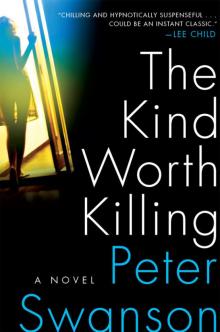
The kind worth saving, p.3
The Kind Worth Saving,
p.3


“Oh,” I said again.
They gave me a night to think about it, and Dagmar, my girlfriend at the time, convinced me that it was too good an opportunity to pass up. “They’ll offer you a full-time job at the end of the year,” she said. “It’s a good school.” Dagmar and I had met at the same master’s program out in Western Mass and she was teaching middle school in the Hudson school system. I had a sudden vision of the two of us fixing up a farmhouse in Central Massachusetts, and spending our lives complaining about grading papers. I couldn’t quite decide how I felt about that.
I took the job, and that December, with Dagmar back in the Midwest with her family, I holed up in my squalid apartment in Cambridge and planned the remainder of the year with my honors class. They’d given me leeway, so I planned a whole unit on poetry, and one on mid-century suburban literature, thinking they might enjoy some Cheever stories, and was considering assigning Deep Water by Patricia Highsmith or some Richard Yates. I was reading a lot, and I was trying to write poetry, but I could feel my life unfolding before me, and it felt like a life both quiet and a little bit desperate. And once that thought got into my head, it was like catching a chill from a cold swim—I just couldn’t shake it.
I started teaching again in January, and the feeling didn’t go away. Entering the classroom each morning, after walking from my unreliable Omega through a dim, freezing dawn, I was consumed with a kind of existential terror at the day ahead. Once the day began, it was okay. There were even moments of joy. John Cheever’s “The Swimmer” turned out to be a hit, although the majority of the students were enraged by the ending of the story, by the way it slipped into the surreal. They were literalists, these affluent high school seniors, and they had one foot out of their high school towns and into prestigious colleges, then grad school, then good entry-level jobs in Boston or New York or Washington, DC. They comprehended suburban ennui, but they didn’t want to feel it.
I wish I remembered more about James Pursall but mostly what I recall was a quiet loner who sat at the back of the room. He handed in his assignments, and he would comment during class discussions, but only if I called on him. He had very white skin, dusted with acne, and very black hair that always looked unwashed. The classroom was cold, and I remember he never took off his jacket, a bulky winter parka that was either navy or black. I do remember that before the shooting, I had dubbed him “boy most likely to go on a killing spree” in my mind, picturing compact Russian machine guns suddenly emerging from his puffy winter coat. But I never thought it would really happen.
I do, however, remember Joan Grieve. She sat in the first row, made sure to comment at least once a class, and came to me after tests and essays to see if she could get me to raise her A minus to an A, or her B plus to an A minus. I knew she was a gymnast because the gymnastics team was good that year, and people were talking about them. She wore tights to class a lot, and hooded sweatshirts, and there was always a large water bottle on her desk. What I really remember about her was that she was a watcher, one of the students who kept her eyes firmly on me when I was lecturing or trying to lead a class discussion. She wasn’t the only student who kept their eyes at the front of the class, but it was still rare, most of my students staring into space or directly at their scarred and doodled-on desktops. She watched me when she wasn’t taking notes, and instead of making me feel as though I was making some kind of difference … If you reach just one kid … it made me feel exposed.
There was one odd incident with Joan, right before the Easter break. I had handed back a pop quiz so, unsurprisingly, Joan came up to me after the class had ended. I was sitting at my desk chair and she was standing, but even so, her head was only a little higher than mine as she argued that the quiz wasn’t entirely fair because I hadn’t been clear that they were supposed to read all the Anne Sexton poems I’d assigned them.
As she was talking, there was one other student still gathering her things in the classroom. Madison Brown was also a gymnast, plus a close friend of Joan’s, and I assumed she was taking her time in order to wait for Joan to plead her case. But once Madison’s giant backpack was zippered up, she slung it over her shoulder and headed for the door. Just before she exited, she turned and said, “Better look out, Mr. K, Joan told me she has the hots for you.”
I rolled my eyes dismissively, hoping to alleviate the embarrassment of the moment, but when I looked at Joan her face had gone red. I thought at first it was embarrassment, but her eyes were on the door that had just swung shut, and I remember thinking it was closer to rage that I was seeing. Still, I got up to prop open the door, hearing Maureen Block’s voice in my head—Never be alone with a student behind a closed door—and when I came back, Joan’s face had returned to a more normal color.
“You don’t need to worry, Mr. Kimball,” she said. “Madison is just being a bitch, pardon my French.”
“I thought you two were close.”
“Who? Madison and me? I mean, she’s on the team, too, but we’re not exactly close. And what she said about me … I mean you’re good-looking for a teacher, but you’re not my type.”
I laughed. “Don’t worry about it,” I said, wanting this particular strain of conversation to end. “And just because this has turned awkward, I’ll cut you a deal. Write a few sentences tonight about the meaning behind ‘The Room of My Life’ and I’ll up your grade on the pop quiz.”
“Thank you, thank you.” She bounced a little on her sneakers and left the room.
Two weeks later Madison Brown bled out on the floor of that same classroom while James Pursall stood over her with a gun in his hand. I stood staring at the tableau, about three feet away, and my bones had turned to rubber, and then James lifted the gun, angling it toward his own chest, toward that bulky winter parka, and pulled the trigger.
I think the entire incident—from the moment James pulled the gun from the depths of that coat to the moment he lay next to Madison on the floor—took all of two minutes, maybe even less, but time in those two minutes moved at its own sickening pace. It was hours from the moment the gun emerged to the moment when the entire class, including me, became aware of it. I’d been talking about their upcoming public speaking assignment, where they each had to give a mock valedictorian speech for graduation. I’d been telling them that they should be creative, that I was not interested in hearing the exact same speech twenty-four times. And then James had yelled, “On the ground, everyone,” and no one moved. I thought it was some kind of joke, maybe he was demonstrating a very untraditional valedictorian speech, but then he was standing on his desk chair, the gun in his hand, and half the students dropped down below their desks, and a girl named Missy Robertson—I remember it because she’s a local weatherperson now—began to loudly sob.
“Everyone,” he said, louder this time, and the rest of the students got down on the floor.
I was leaning up against the front of my desk, my usual position when I was teaching, and I remember my hands were out in front of me, and I said something like, “James, let’s talk.”
It made him look at me from across the room, his eyes wide beneath the shock of greasy, inky hair. I opened my mouth to speak again but didn’t. I wanted to live and somehow I knew if I made another attempt to defuse the situation he was going to shoot me. That decision, to not speak, to keep quiet like the students on the floor, altered my body chemistry. I can’t think of a better way to describe it. My bones hollowed out, my organs liquefied. My chest was empty, as though I’d pulled my heart out of it and handed it across to James Pursall. I was frozen in place.
He came down off his desk, and walked between the cowering students, swiveling his gun, and saying, “Eenie, meenie, miney, moe,” in a shaky, unreal voice, and even at the time, from back within the dusty cave where I was cowering, I remember thinking his heart wasn’t in it, that he’d decided in advance to try to terrorize the other students, but that he just wanted to get the whole thing over with.
At the front of the room, when he was only a few feet from me, he turned around and took a few small steps, so that he was standing above Madison Brown, curled into a ball around the bulk of her backpack. He aimed the gun at her, then braced his trembling right hand with his left, and I knew he was about to shoot. I pictured myself springing from the desk I was still leaning against, grabbing him around the chest so his arms would point upward, shaking that gun loose, dropping him to the hard linoleum floor.
Instead, I watched as he put two bullets into Madison Brown. She didn’t even move when he did it, like she was already dead.
Then I watched James Pursall make like he was returning the gun into his coat, but he pulled the trigger instead, and dropped to the floor next to Madison.
I’ve gone over those memories a thousand times since that day, and I no longer entirely trust the details. I realize it might have been worse had I tried to do more, but that doesn’t stop me from knowing, deep down, I failed in that particular situation. Yes, it could have been worse. But as it was, it was pretty bad.
So it was a surprise to realize that Joan Whalen, faced with a crisis in her personal life, had sought me out as someone who could solve it. I’d always assumed the kids from that classroom only remembered me as a mediocre teacher, plus the adult who had failed them on the worst day of their lives. But somehow Joan remembered me differently. And I wondered why.
CHAPTER 4
JOAN
After dinner on Monday night—some sort of chicken thing with ham and cheese—Joan wandered the resort, hoping to find Richard, while at the same time hoping to avoid his cousin Duane. She’d seen them both in the dining room, at a far table, but had purposefully made sure to not make eye contact with either of them.
Ever since Saturday night, when he’d attacked her on the beach, she’d been obsessing about getting even with Duane. All through dinner—her parents and her sister planning tomorrow’s scenic drive—she’d plotted her revenge, acutely aware of the throbbing bruises he’d left on the inside of her arm when he’d grabbed her. If he ever spoke to her again she’d tell him that he looked like an ape and she found him physically repulsive. She imagined kicking him in the balls as hard as she could, and she even allowed herself images of doing worse things to him, like gouging out one of his eyes with a butter knife. Having that thought was a strange mix of pleasure and disgust. Joan was always happiest when she had an enemy.
She’d looked for Richard, his nerdy cousin, on the front porch of the resort, and in the bar area, where kids were allowed to hang out and drink soft drinks. There was a game room near the dining hall, a long narrow room with a foosball table, two pinball machines, and a couple of old arcade games. No one was in there but two little boys with their father. One of the boys was standing on a stool, whacking at a pinball machine even though it wasn’t on.
Joan went back to the lobby, scanning for empty chairs. But some old folk singer had set up in the corner of the lobby, singing a song about margaritas, and the lobby was full. She went over to the small gift shop area and spun the rack that contained paperbacks, then remembered her sister saying that there was a library somewhere in the resort. She thought maybe Richard, if he was anywhere, might be there. She asked the girl at the front desk, who wasn’t a whole lot older than her, where the library was. The girl looked confused, then said, “Oh, the free library. It’s all the way up on the third floor.”
“Is it open?”
“Oh, yeah. I mean, as far as I know it’s always open.”
Joan climbed the stairs to the third floor of the resort, where the reek of mold and dust was particularly strong. She found the library, its lights on. It was just a room, really, an old handwritten sign calling it uncle murray’s book nook, and inside the room were floor-to-ceiling bookshelves, plus several freestanding shelves in the middle of the space. In the two corners of the room that she could see were worn leather chairs for reading. She thought she heard a noise, the dry sound of a page being turned maybe, and she said, “Hello,” into the room, her voice sounding frail in her own head.
“Uh, hello,” came a voice back, and she moved around the center shelves, and there was Richard, sitting in one of the leather chairs, holding a book.
“Oh, hey,” she said, trying to act as though she hadn’t been looking for him.
“Hey,” he said.
“Is this your hangout?” she said.
“What, this library? Yeah, I guess so.”
She walked over to a wall of books, touched one of the spines with a finger. “What are you reading?”
He held up a hardcover with a black cover. “The Bachman Books,” Joan read. “By Stephen King. My mom reads him, I think.”
“I actually have this book back at home, but I didn’t bring it with me, and now I’m rereading it.”
“Is it good?”
“It’s four books that he wrote under a different name. Richard Bachman.”
“Do you like them because he called himself Richard?”
Richard looked confused, then glanced at the cover himself. “Oh, it never occurred to me that we have the same name.”
“Really? I always notice when someone’s called Joan because no one is called Joan anymore. It’s an old person’s name.”
“I guess it kind of is,” Richard said.
“Thanks a lot.”
“Old names are good names. Would you rather be called Madison or something?”
“I’m going to tell Madison you said that,” Joan said.
Richard shrugged. Joan could tell that he kind of wanted to get back to reading his book.
“So remember last night when you asked me if your cousin Duane attacked me?” she said.
He shifted in his seat. “Yeah.”
“I think he would have done it, if he’d had the chance. I had to run away from him and everything.” She thought about showing him the bruises, but they were high up on her inner arm and she’d have to take off her sweatshirt.
Richard put the book down on his lap. “You’re lucky he didn’t catch you. Like I told you, he’s one of the worst human beings I’ve ever met. I’m sure he’s a rapist, too. He talks like one.”
“What do you mean?”
“Like he always points out girls and says really disgusting things, like what he wants to do with their ass and stuff.”
Joan shivered. “Ugh, gross. Did you like him when you were little kids?”
“No, he was terrible. He used to steal my toys, and he used to beat me up.”
“I’m sorry about that,” Joan said.
“You’re laughing.”
“Am I?” Joan said, and laughed some more. “I’m an inappropriate laugher. That’s what Madison calls me. I don’t mean anything by it.”
“I don’t care,” Richard said.
They were quiet for a moment, and Joan could hear voices somewhere out on the third-floor hall. “Does anyone else ever come in here?”
“This library? Sometimes, but mostly people just come in here and get a book and leave. I come up here to read at night because Duane’s probably in our room watching sports and farting into his pillow, and I don’t really like to hang out in the lobby with all the old people.”
“It’s a little creepy in here.”
“There’s a framed letter over by that shelf with all the photography books. This place was started by some relative of the owners because he wanted to create a free lending library for all the people who came for the summer. It was his life’s work or something.”
“Is he dead now?”
“Uncle Murray? Yeah, totally dead. Can’t you sense him in here?”
Joan laughed, then worried for a moment that Richard was being serious. But he laughed too. “I have a really good sense of smell,” she said, “and when I was a kid I thought I could smell ghosts.”
“Oh, yeah.”
“Yeah. I can tell that Uncle Murray is definitely a ghost in this room.”
“What does he smell like?”
“He smells like creepy old man. Like crusty underwear and soup.”
“Ugh,” Richard said.
Joan crouched to look at the spines of some books that looked familiar. She realized she was standing in front of the young adult shelves, which included about a hundred Nancy Drew novels. It felt weird telling Richard, a boy she would never talk to at high school in a million years, how she thought she could smell ghosts. It wasn’t anything she’d told anybody else, not even her parents. Suddenly, she had a panic that when she started sophomore year Richard would always be by her side, trying to talk to her, or something.
“So this is what you’re going to do for your summer? Sit in a smelly room and read books?” she said.
“Sure,” Richard said, unfazed by what she thought was a pretty condescending tone.
“Okay, well,” she said, about to tell him she was going to go back to her room to watch television, but she spotted a cluster of books written by Joan Aiken. “Look, Joan,” she said.
He looked where she was crouched, and said, “Joan Aiken. Did you read Wolves of Willoughby Chase?”
“It’s right here,” Joan said. “No, I haven’t. Any good?”
“Not bad.”
Joan stood up, leaving the book on the shelf. She really did think she needed to go, even though the thought of going back to her room, where her sister would probably be reading or journaling or something, was not that appealing.
“So you’d help me get revenge on your cousin, right, if I wanted to?” she said.
Richard pushed his lips together, as though considering it. “Sure,” he finally said. “If I had the guts, I’d murder him, then he wouldn’t be anyone’s problem.”
Joan laughed, and said, “Oh my God.”
“What?”
“Are you serious?”
“No, but I’ve thought a lot about it. I only wouldn’t do it because I’d probably get caught and have to spend my life in prison.”